PERU
I was so excited to be going to Peru at last and unexpected free time meant I was able to add another week and spend a few days in Lima before I went to the mountains. I flew there on a 20-hour direct flight which was long, but better than a transfer, and also an opportunity to catch up with films.
Lima is a huge, sprawling city with a congestion problem. It’s not easy to get around, pedestrians aren’t provided for, and the infrastructure is inadequate for the booming population. There is no underground system, there are plenty of buses and taxis but they just add to the gridlock. My large, characterless hotel was in the misleadingly-named Miraflores area, in hindsight, it would have made more sense to stay in the older part of the city.
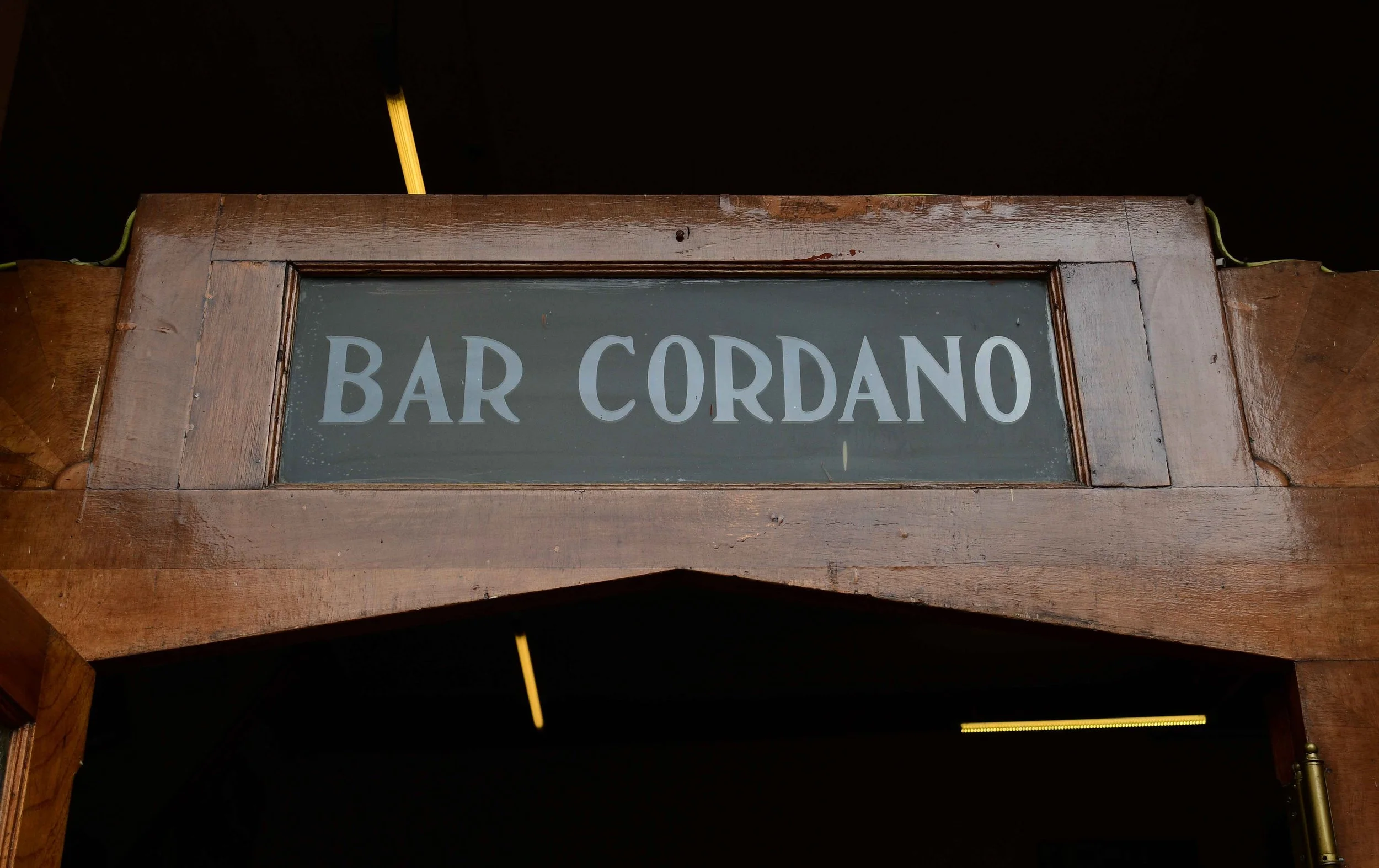
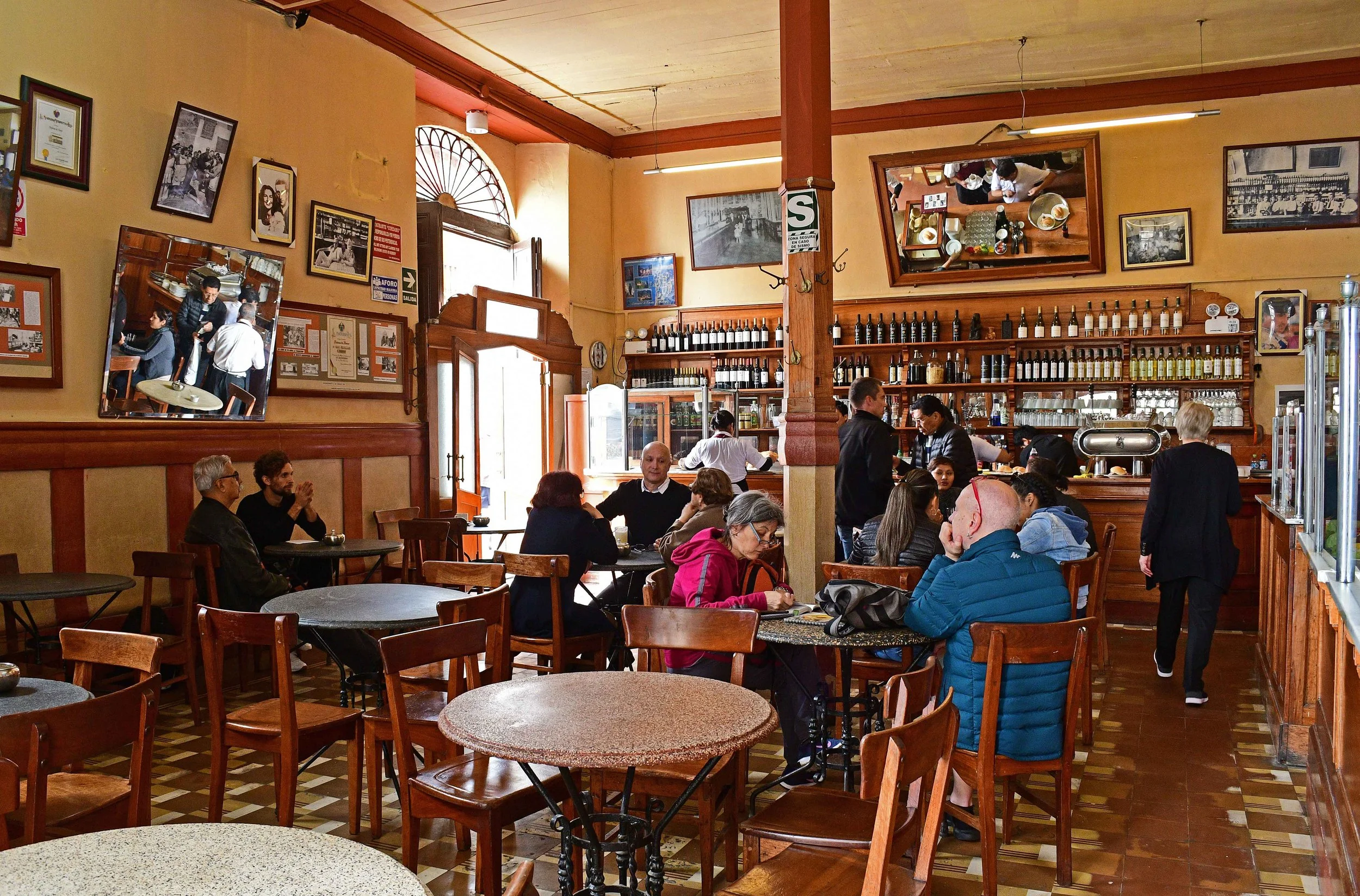
Somehow I made it to the historic centre. I enjoyed the Monsterio de San Francisco despite the creepy white walker-style catacombs with their bone arrangements. I walked across the Plaza Mayor and went into the El Cordano bar, famous for its politically powerful clientele thanks to its proximity to the goverment palace. I had my first chicha, this one was chicha morada made with purple corn, and a butifarra which was a ham and salsa criolla sandwich, both very tasty.
Lima was founded by Pizarro and the Conquistadors, one of whom, Gonzalo Jorge de Aliaga Ascenzo, built the Casa Aliaga and it has been continuously inhabited by the same family ever since.
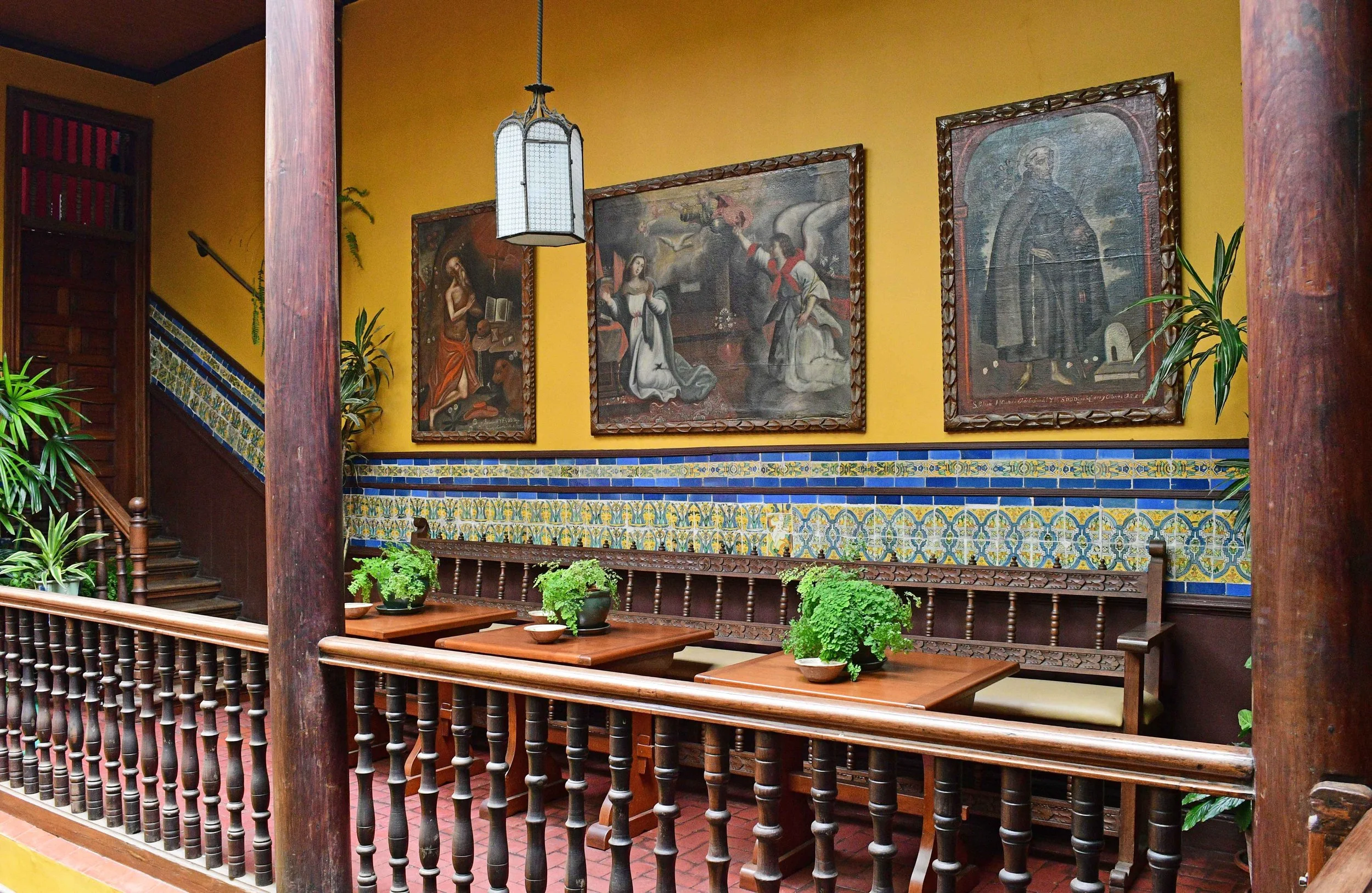
It is beautifully decorated with fine examples of art and furniture set against perfect wall colours and stunning flower arrangements. I couldn’t believe some lucky person actually lives here.
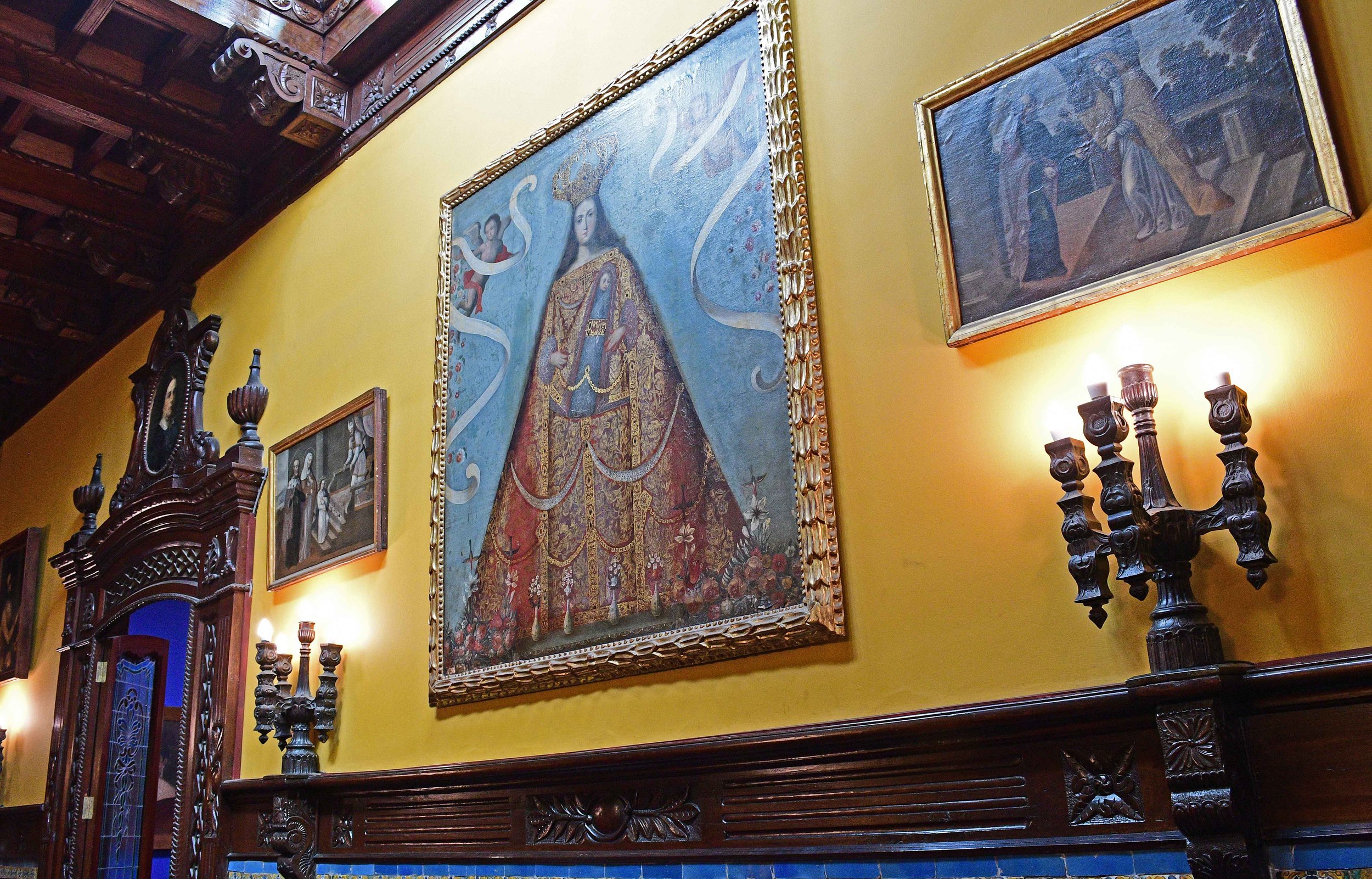
I was particularly taken with a painting of the Virgin Mary, or Virgin of the Mountains as these paintings are known. It is one of many examples of religious syncretism where Catholic imagery is blended with the indigenous deity Pachamama who was identified with mountains.
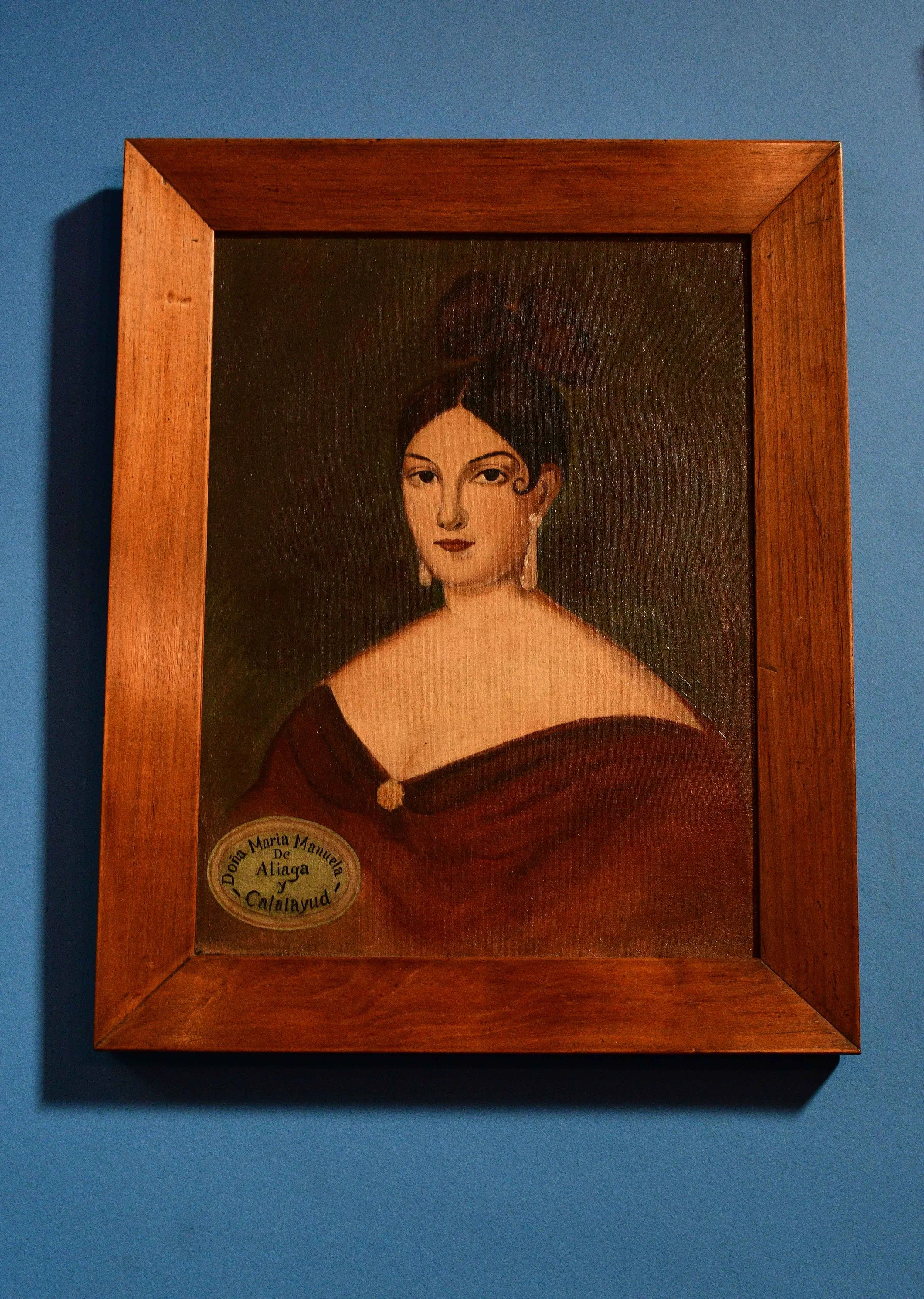
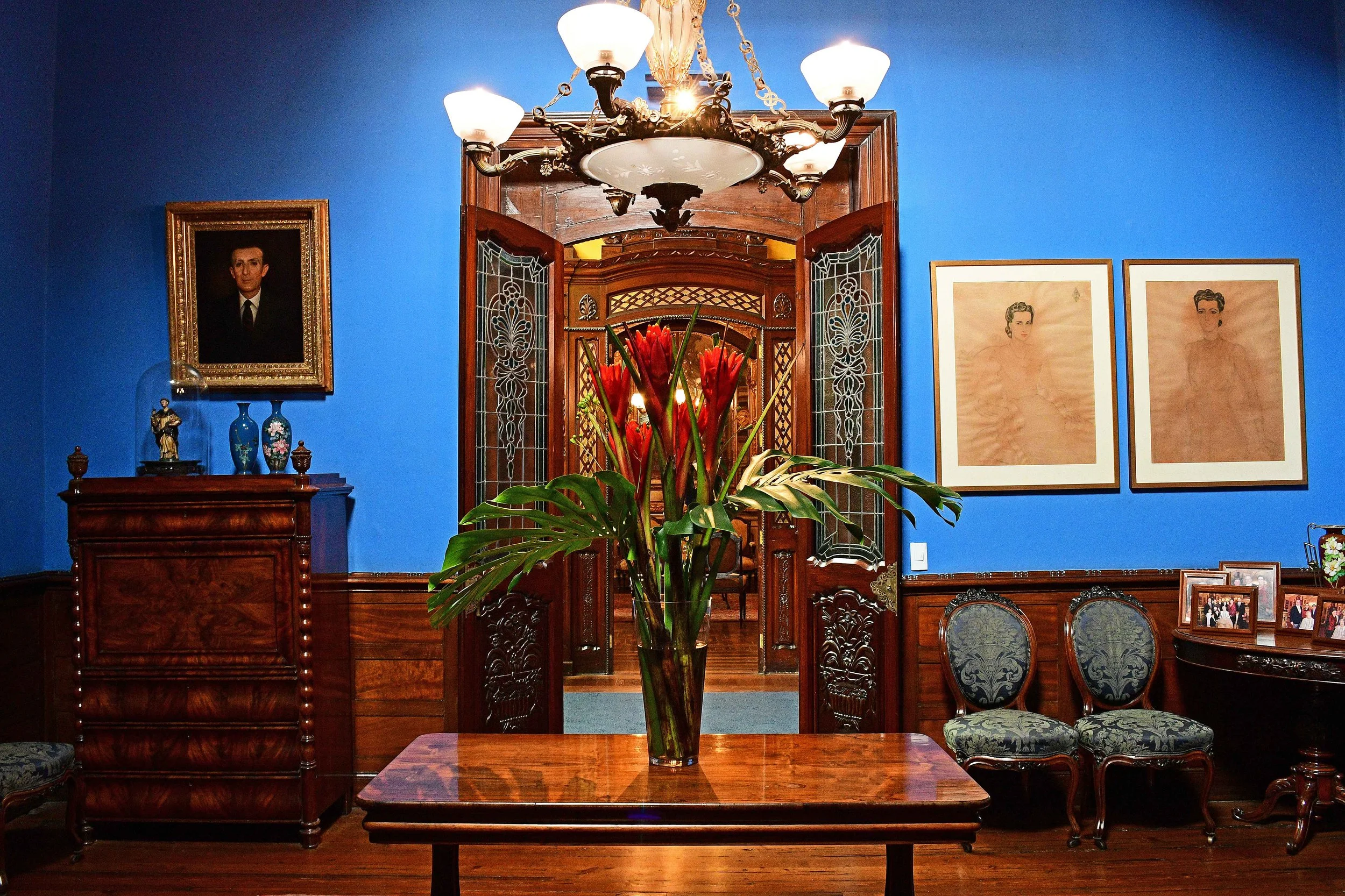
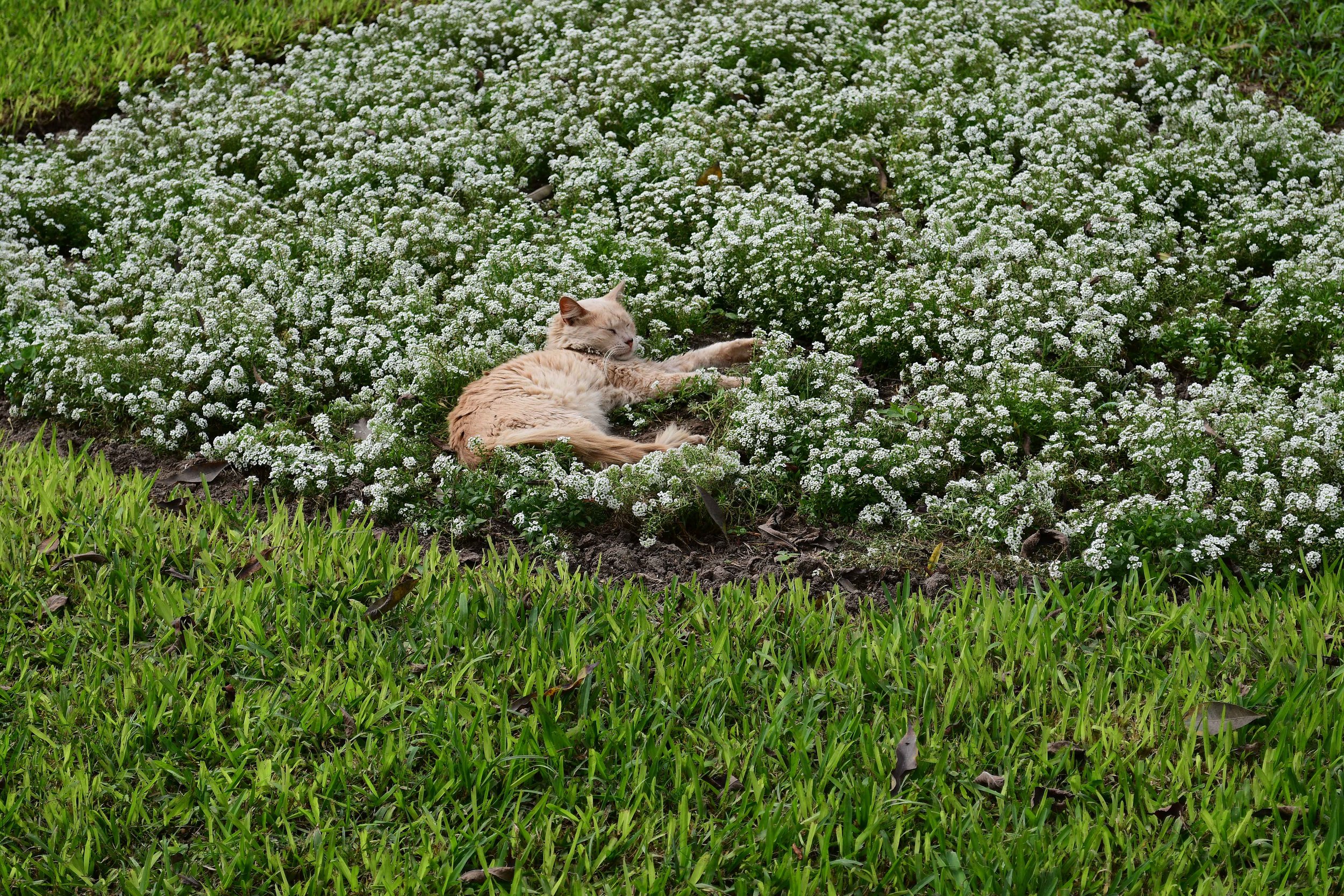
This house had been the highlight of my day and I left inspired, but this feeling was quickly forgotten as I had to get a bus back and the inevitable traffic chaos. I just about recognised where we were, so I hopped off and walked back, taking a short detour through the Parque Kennedy, home to a lot of stray but friendly cats.
I was keen to see some other sides to the city too, so I used a local company called Haku who took me out for a day to go to some less popular places.
We went to the Pantanos de Villa wildlife park in the south of the city near some of the vast shanty town areas. Under a grey sky it didn’t look very promising – under-invested and a bit shabby, struggling with pollution and encroaching development. But it’s a hugely important trip out for local school children, many of whom live in the slums, and there were plenty of them there when I went. Sadly, I seemed to be the only foreign visitor, a few more would bring some money in.
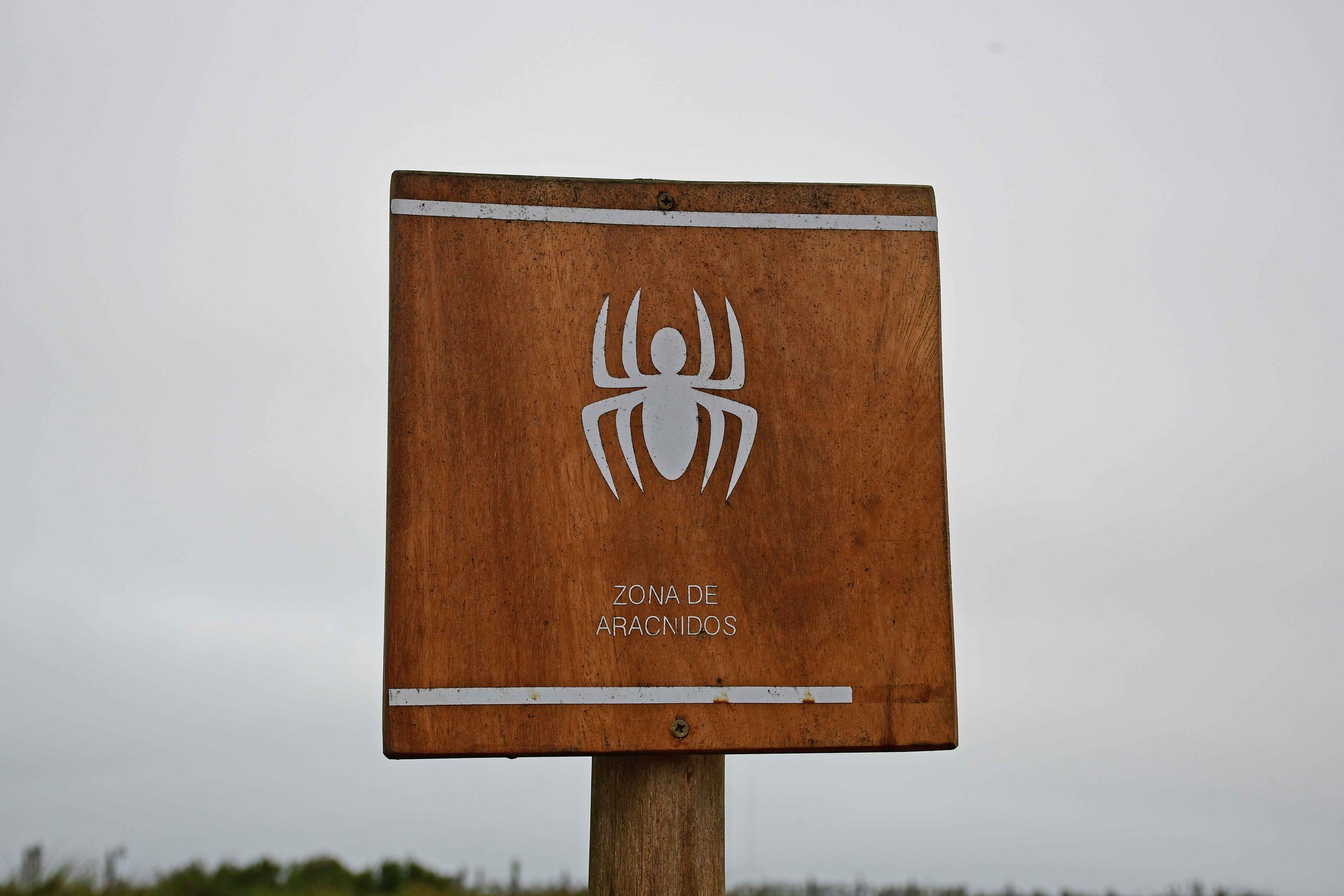
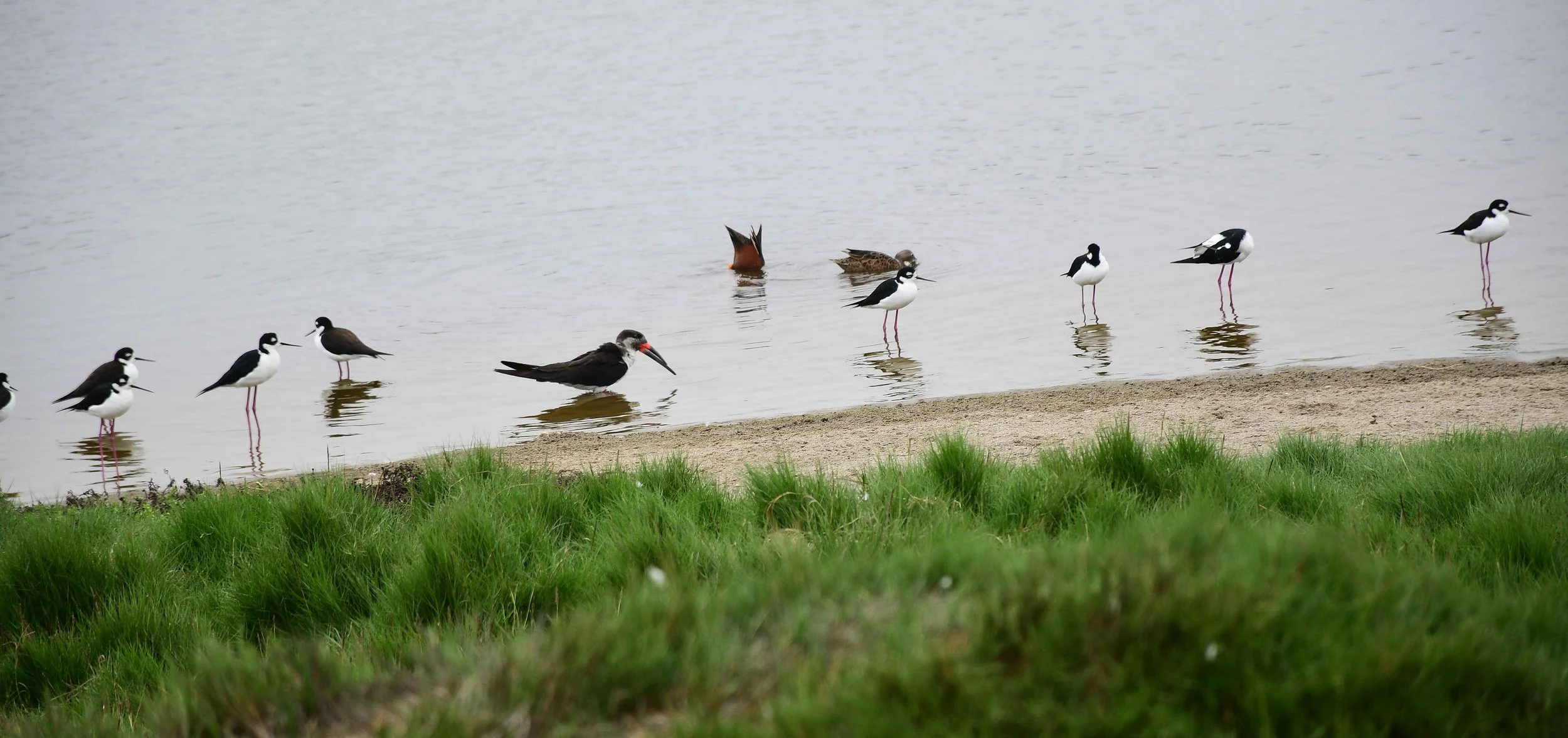
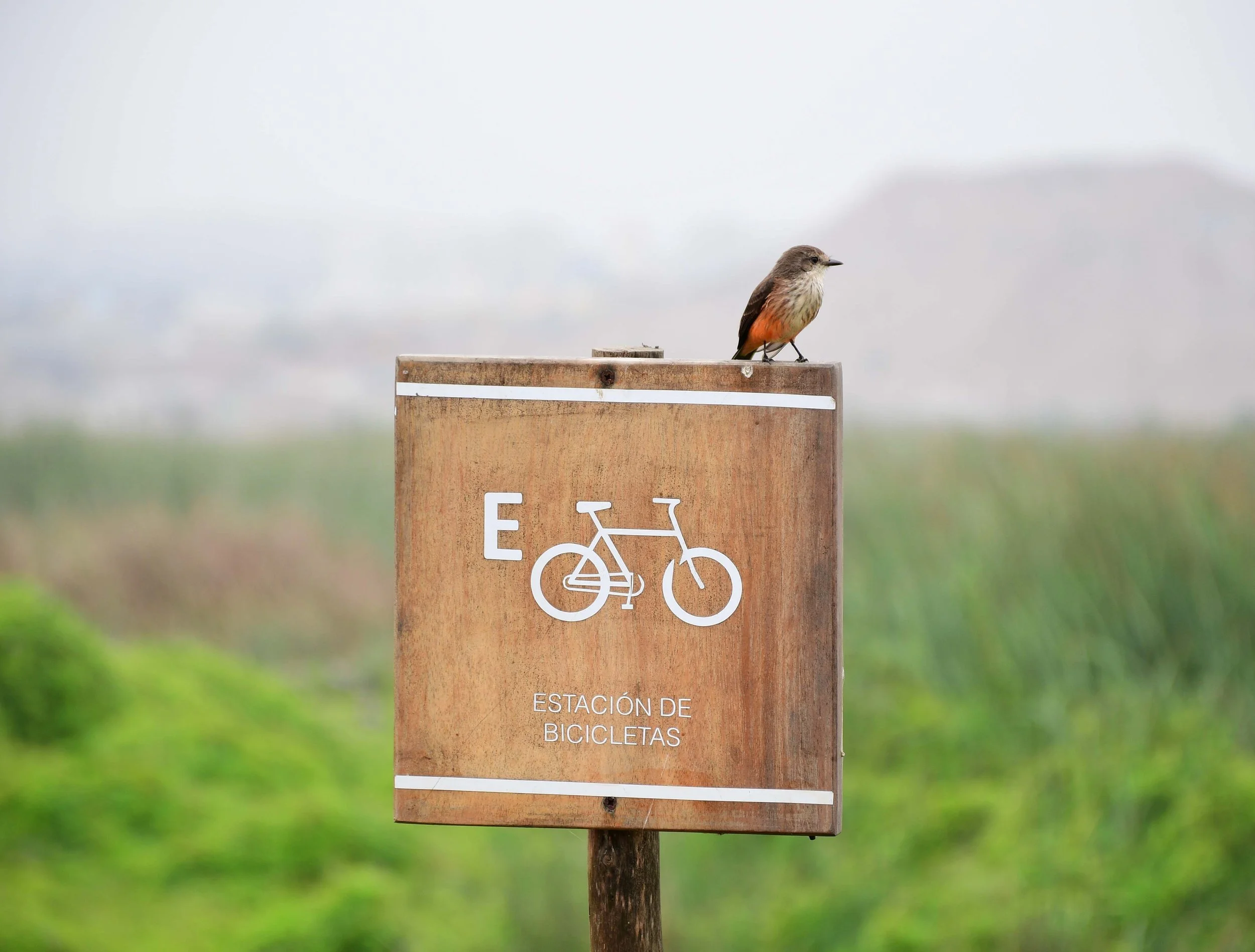
To be honest, I didn’t really see much in the way of wildlife. There was a very promising walk around an arachnid area but nothing appeared which was disappointing. It is, however, an important site for birds, and the best bit was walking down to the beach where there were lots of interesting sea birds including the neotropic cormorant and a black skimmer surfacing the water with its beak open.
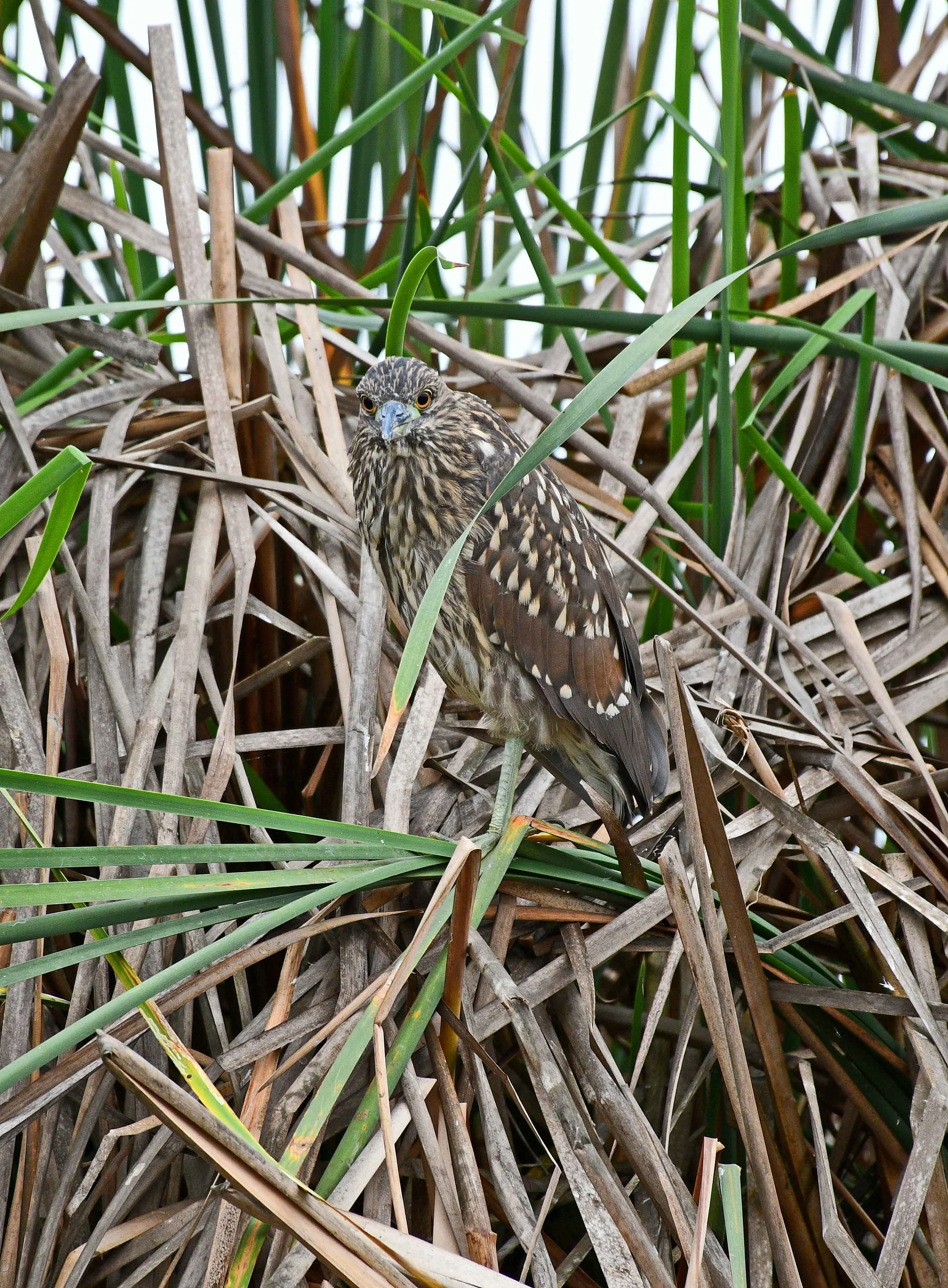
I finished the visit on a boat on a small canal where I saw a bittern for the first time in my life. All in all it had been a positive experience. It could have been depressing, but the lively, enthusiastic children, clearly enjoying their day out, and the profusion of birds, had made it special.
That afternoon Haku took me to me to a ‘pueblo jovene’ one of the shanty towns called Villa El Salvador, making it clear this wasn’t a ‘gawping at poverty’ excursion. We started in their food market where I saw the huge range of the 3000 types of potatoes Peru is famous for. I bought fruit to give out while I was walking around.

Local community leaders who live there escorted me and are proud of how they have overcome so many obstacles. The sense of community is so strong, here, if someone’s roof blows off, everyone gets together to fix it, they help each other. So many local children don’t go to school as they cannot afford the compulsory uniform, and so there are kids playing everywhere. There are also lots of stray dogs. I didn’t take any photos of this trip other than in the market, it didn’t feel appropriate. At the top of the hill is a soup kitchen funded by Haku, and a makeshift football pitch. It was a friendly, lively afternoon that I found very uplifting despite these people having so little. I am reminded once again how wasteful the Western world is with money and food.
The next day, I managed to walk across busy roads and traverse dangerous roundabouts to Barranco for a food tour. The district is much more colourful than Miraflores, there’s lots of street art and a bit more of an atmosphere. Two young brothers were trying to set up a business showing people around this area known for its food. I was to be (forgive the pun) their guinea pig on this Peruvian food tour and let them know what worked and what didn’t work. What didn’t work for me was the coffee shop start where I politely drank a strong but uninteresting espresso which I didn’t like, and the boring, ubiquitous craft beer stop which I didn’t want. Both of these I could do at home in Sussex, I had come there to eat and drink the local food and was keen to get started.
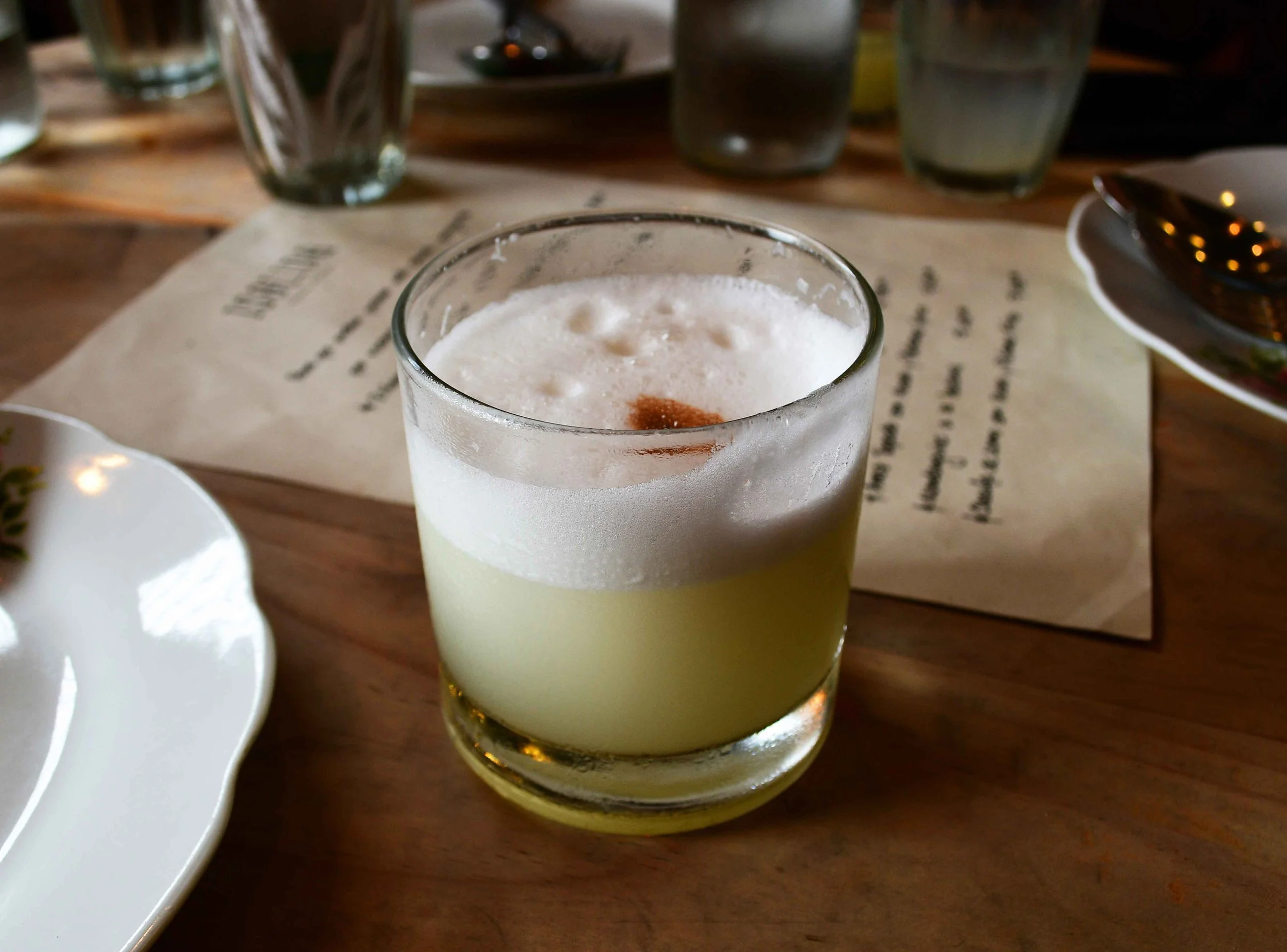
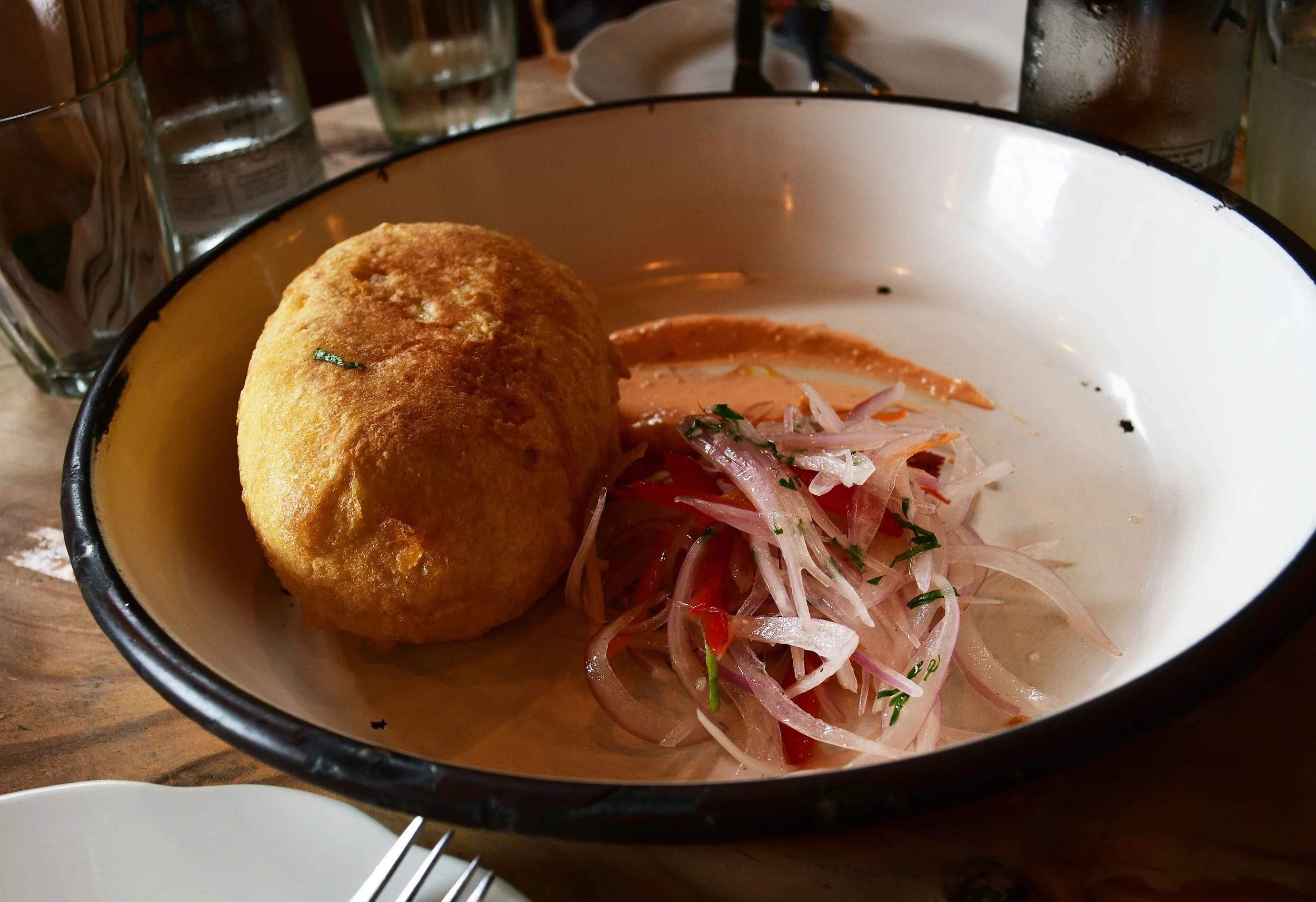
So I was very happy to go to the Isolina Taberna Peruana restaurant which specialises in Peruvian Creole food. I had my first ever pisco sour which went down very well, and then some very tasty food including Papa Rellena, a stuffed potato with chilli sauce, and plantain fried rich dish. It was slightly disconcerting eating so enthusiastically while the brothers watched me and took notes.
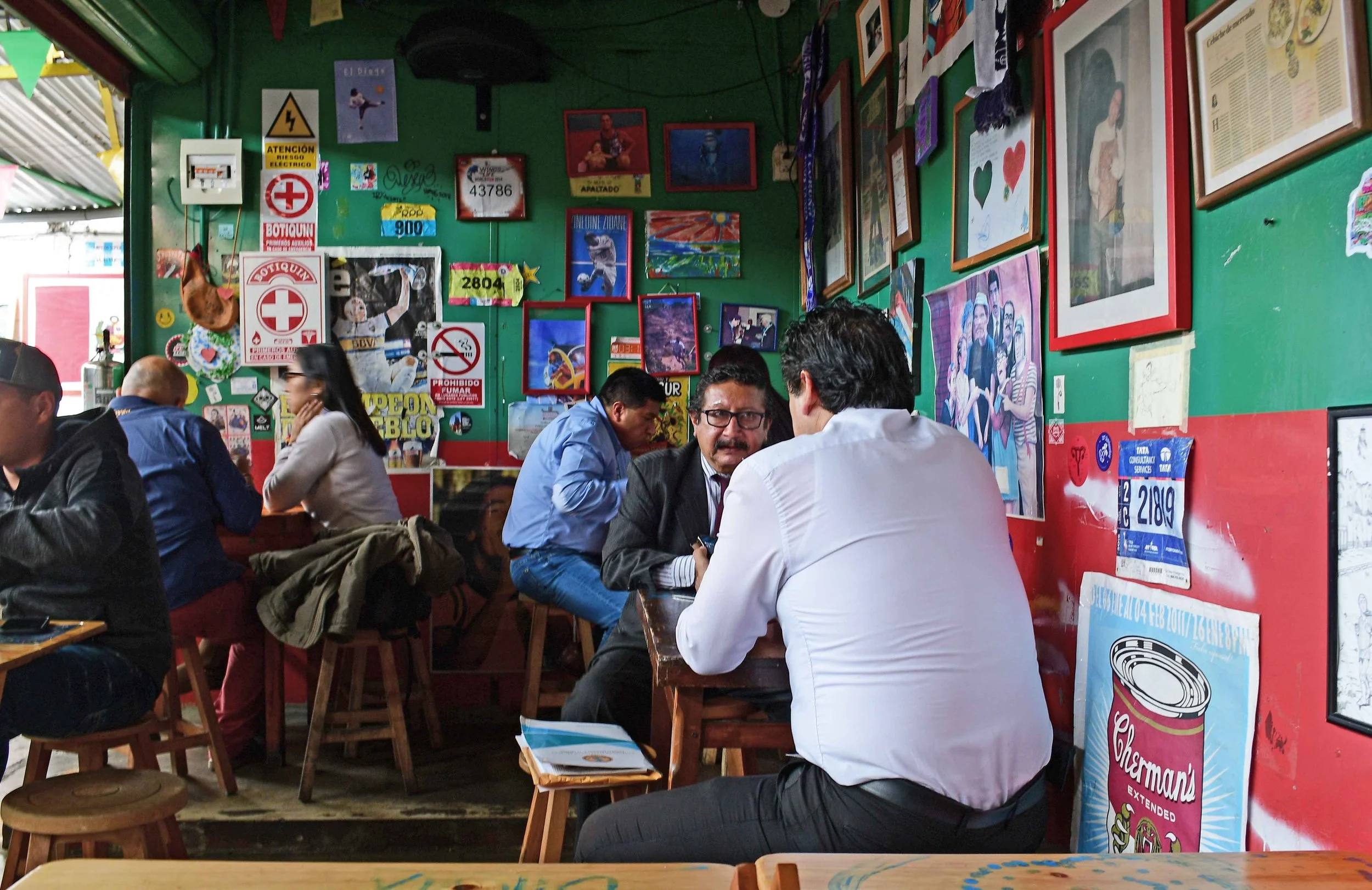
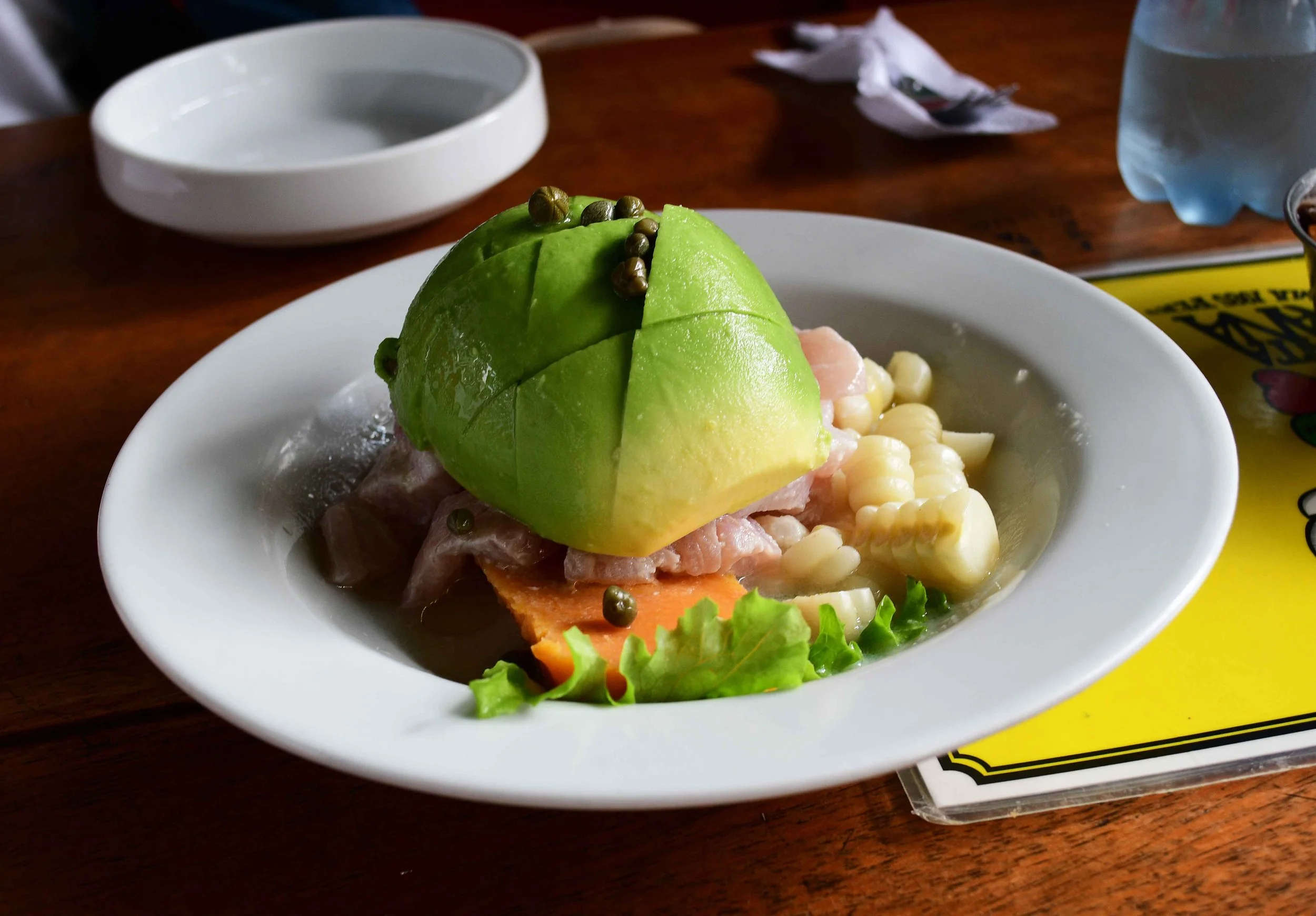
Afterwards we went down some back alleyways and came to an unpromising sports bar full of plastic chairs, and local men drinking beer and watching the football on a huge screen. I was the only ‘gringo’ there, and was wondering why we had come, then out came a plate of ceviche and avocado. It was so fresh and delicious, and I polished it off so quickly they immediately brought out another plate. The brothers were writing furiously, my enthusiasm for this local speciality clearly evident. Ceviche, this one was sea bass, is now in my top global food experiences.
The last stop was at an ice cream shop, Blu, which claimed was the best ice cream in the world. The same claim is made by ice cream shops everywhere from Lebanon to Italy, but it was very nice and they had some interesting local flavours such as chirimoya (like a custard apple) and lucuma (yellow fruit, quite butterscotch-y). The tour had been very successful I felt, mostly due to the kind, generous enthusiasm of Franco and his brother. They even showed me a much more interesting walk back to Miraflores along the seafront.
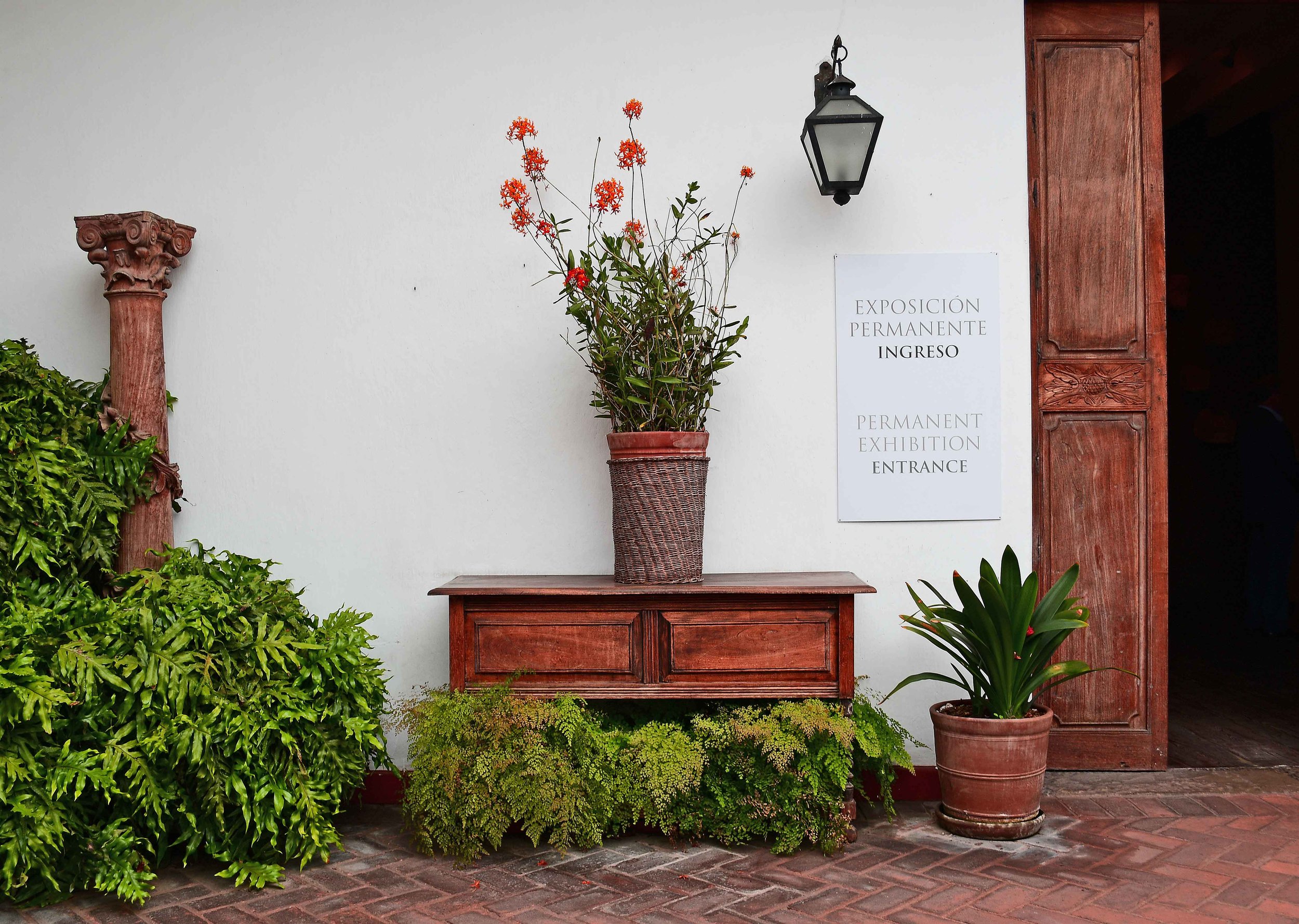
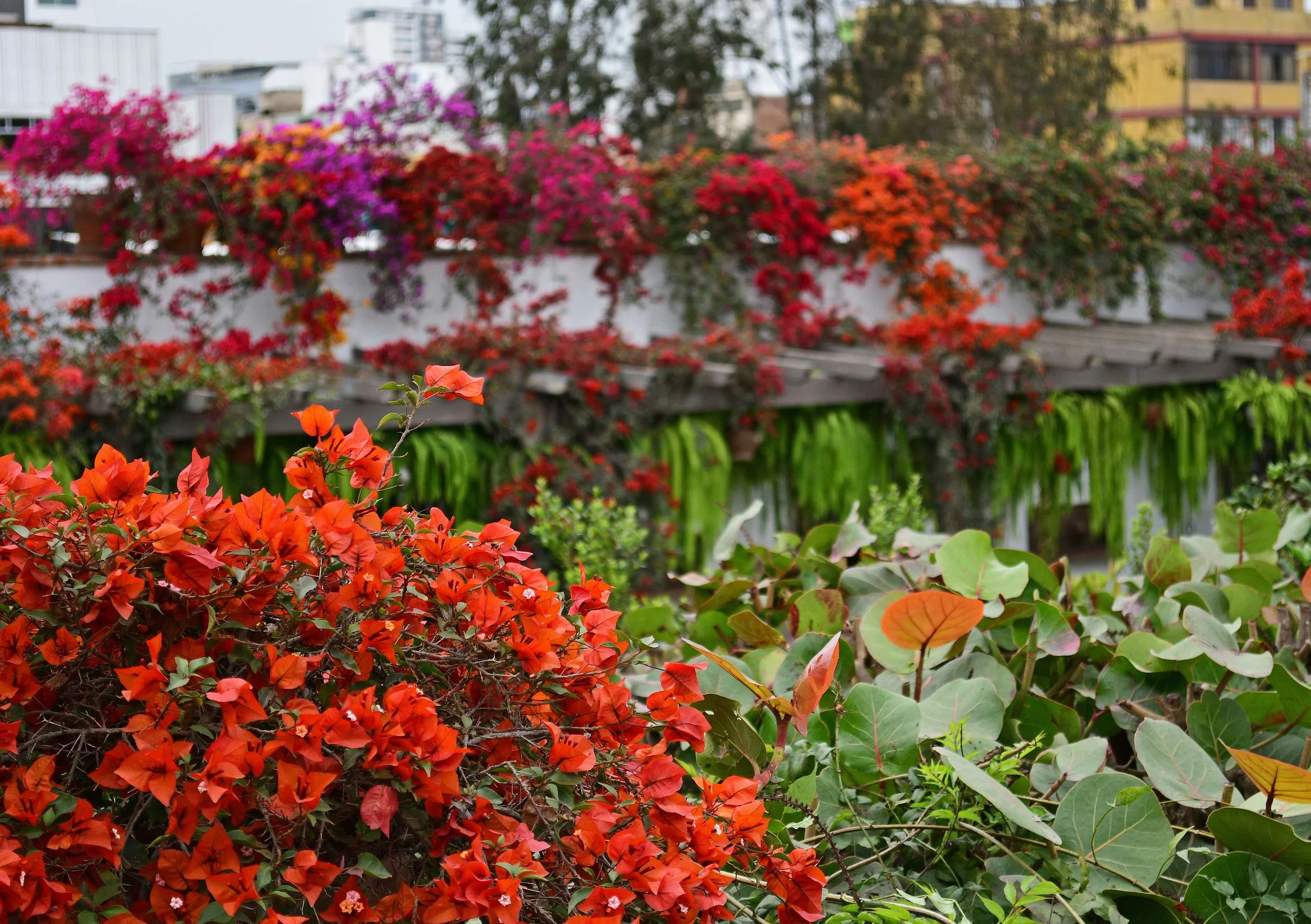
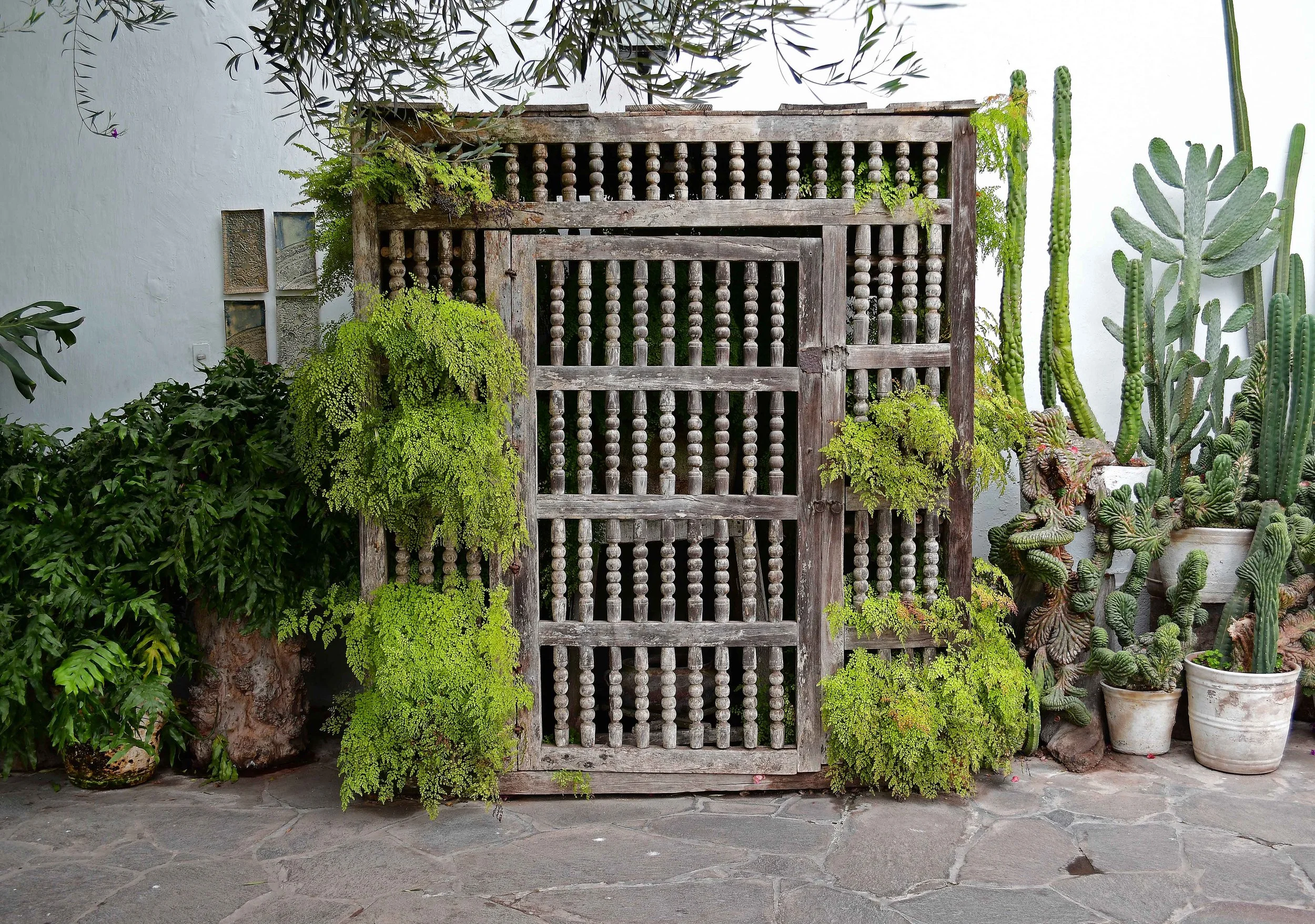
My last day in Lima was spent in the Museo Larco, one of my favourite museums anywhere. The Larco is beautifully curated, peaceful and atmospheric with lots of pots and jewellery of pre-Colombian Peru. Even the pornographic pottery section is tastefully done. Outside in the garden the planting is equally considered. Bourganvillea spills over the walls, and there are pots of ferns and cacti around doorways.
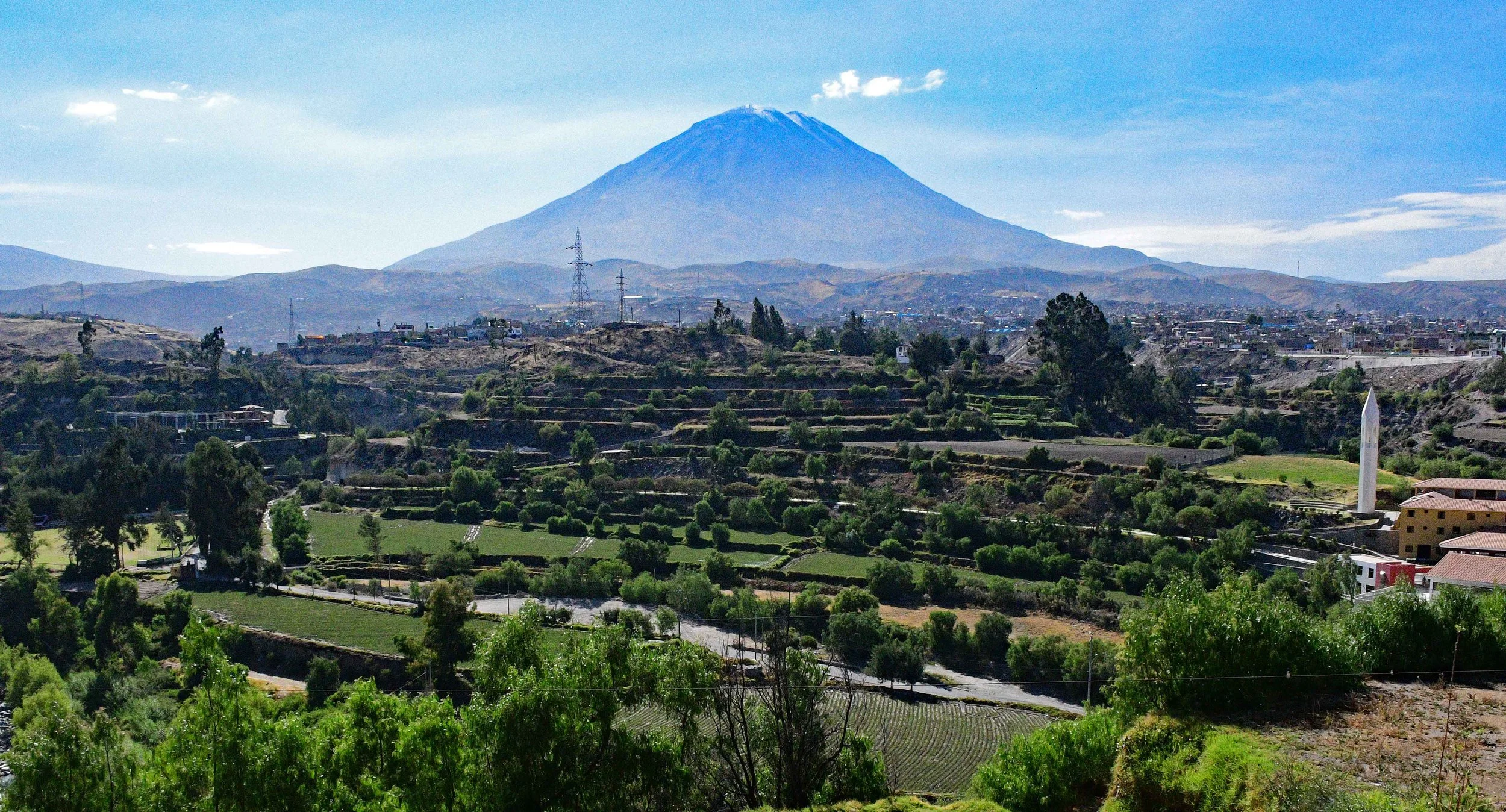
I had made the most of Lima, and enjoyed my time there but I didn’t really love Peru until I got off the plane at Arequipa and was immediately awestruck by the famous volcanoes, particularly the enormous Misti which is everything you want a volcano to be: pointed and threatening, overshadowing the city in a terrifying way.
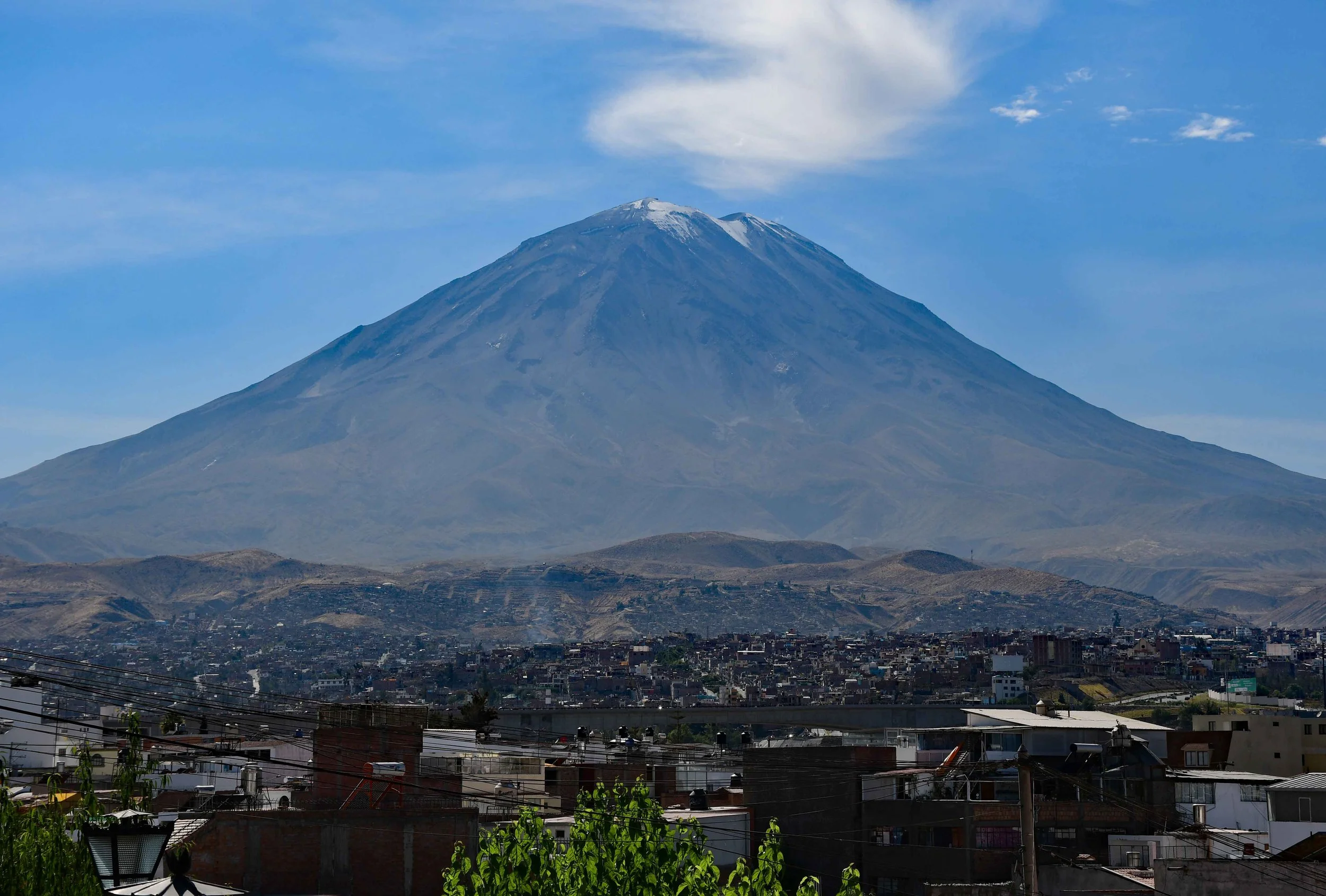
I wasn’t in the city for long but I couldn’t take my eyes off it, it followed me around the whole time I was there. It is now classed as one of the world’s most dangerous volcanoes and I was amazed at the optimism of the local people who continue to build and develop the city, including the foothills of the mountain itself. It last erupted in the 15th century and I guess the locals are assuming it won’t happen again, but until 2005 it wasn’t even being monitored.
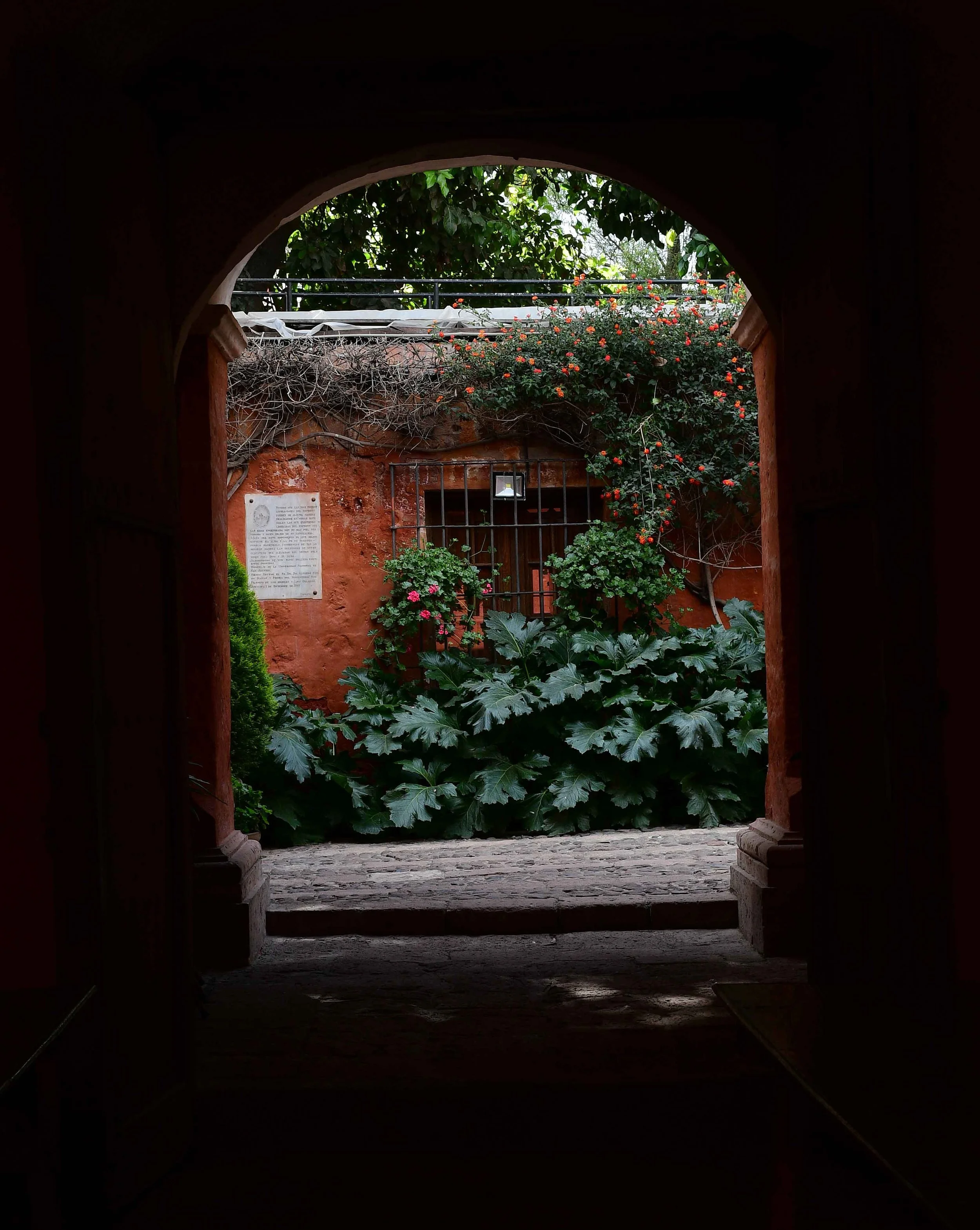
Arequipa is very much a colonial town, but before the conquistadores it was an Inca sacrifice site. One of the highlights is visiting La Juanita, a mummy of a teenage girl sacrificed on Mount Ampato. I don’t wish to be dismissive about ‘capacocha’ or child sacrifice, but I had seen it all before in Salta in Argentina and I had done the shock and disbelief bit then. Juanita was found in 1995 and there is understandably controversy as to whether she should have been left up there as intended, or put on display, but global warming means that there is no guarantee that she would have stayed covered by ice anyway.
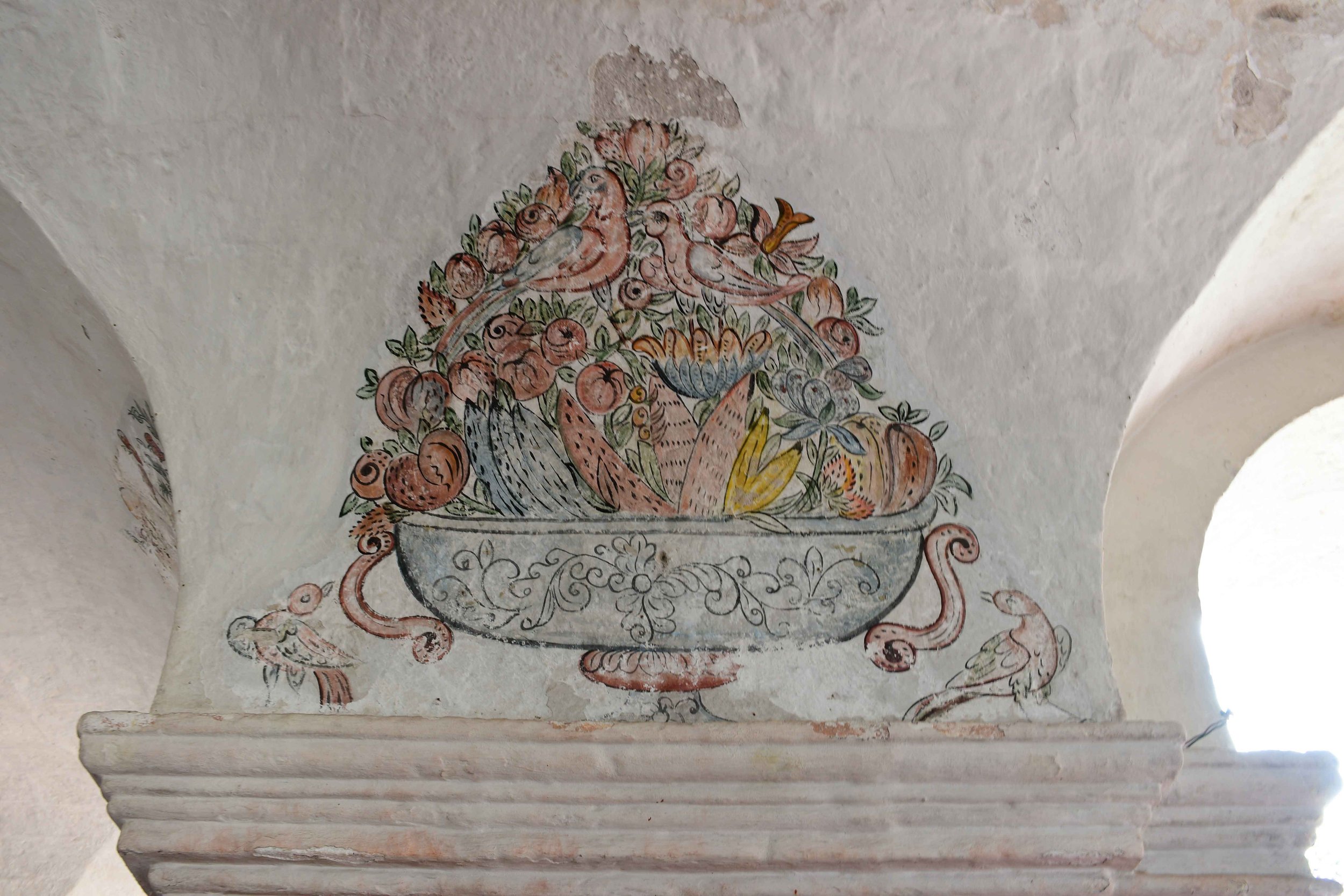
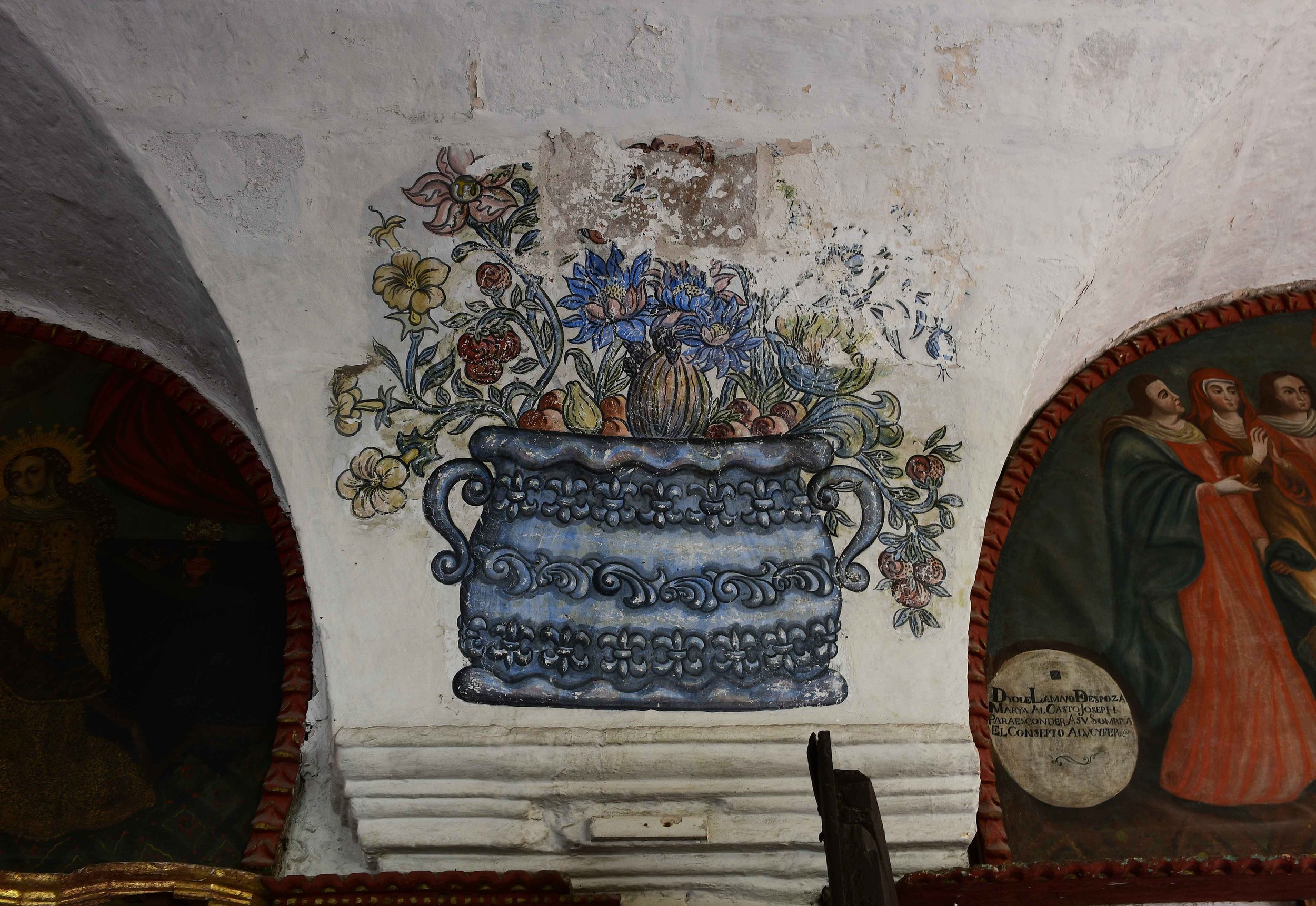
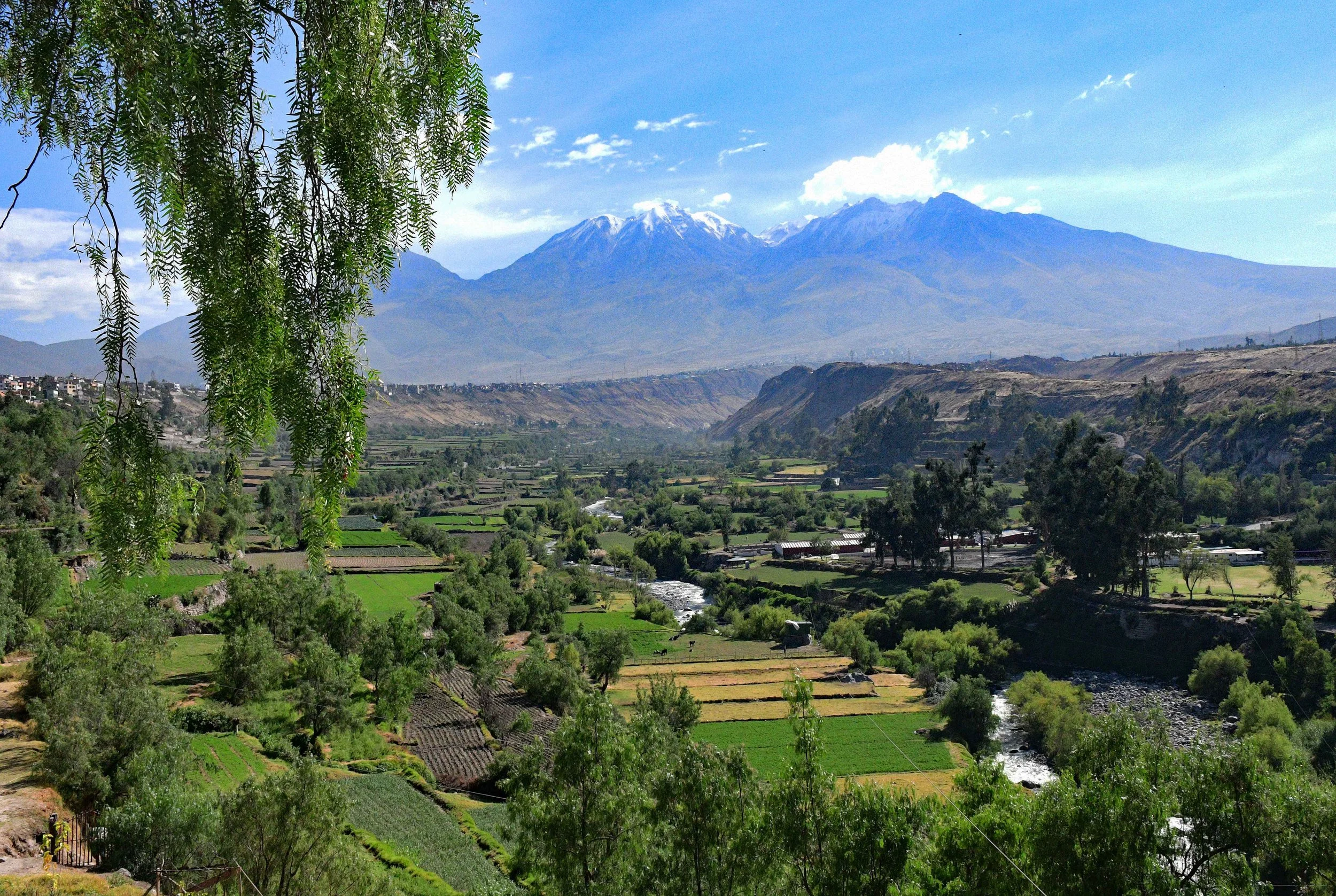
The colonial town was charming to walk around but the highlight for me were the looming volcanoes. The three main ones are Chachani, Misti and Picchu Picchu (‘picchu’ is quechua for mountain). I went to the Yunahuara district where I could see them lined up and I could also make out the remains of the terracing where the Inca used to farm.
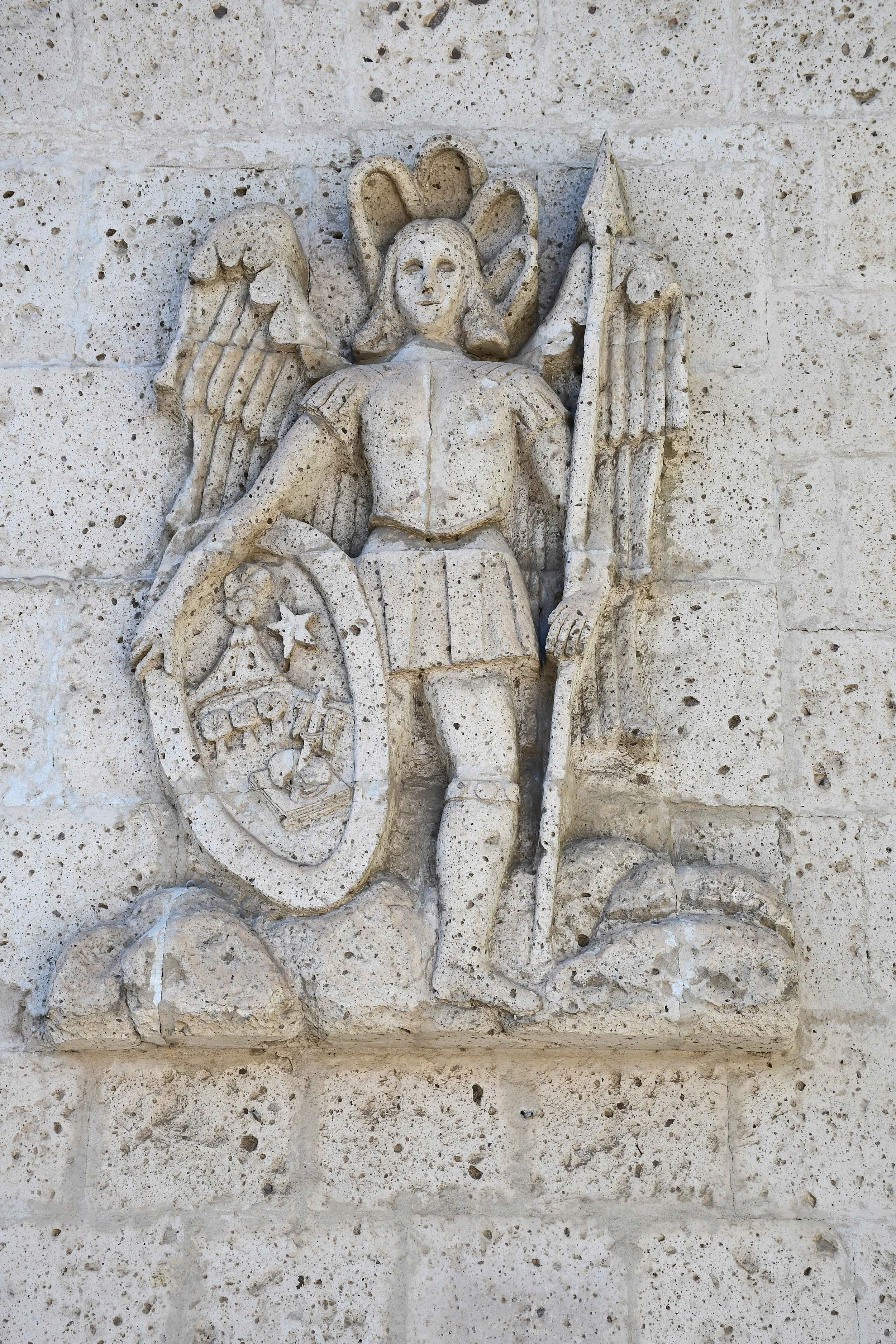
There are lots of buidlings round here built with sillar, a white volcanic rock, in particular the nearby San Juan Bautista church. I was so happy to find more of the pagan/Christian art in the form of carvings on the façade.
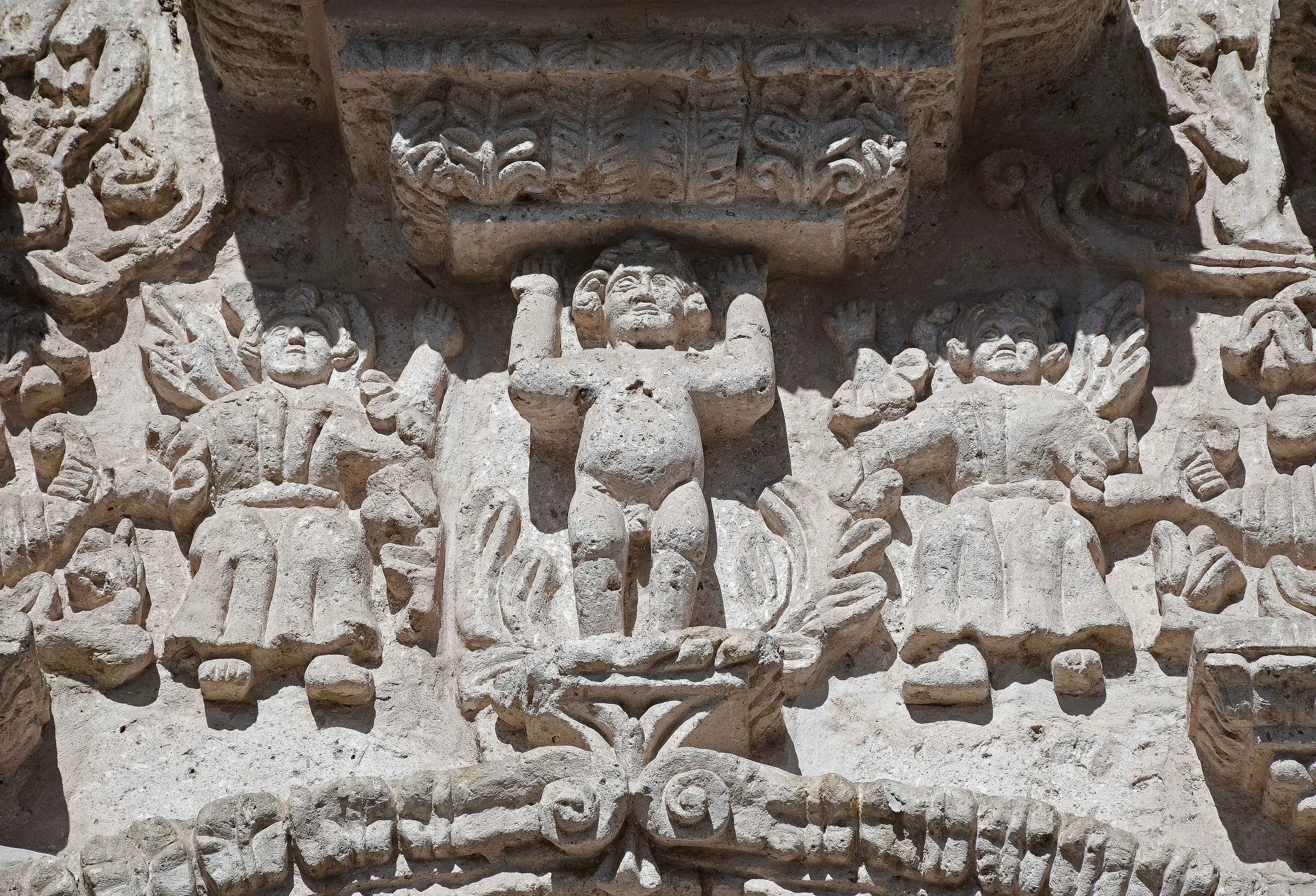
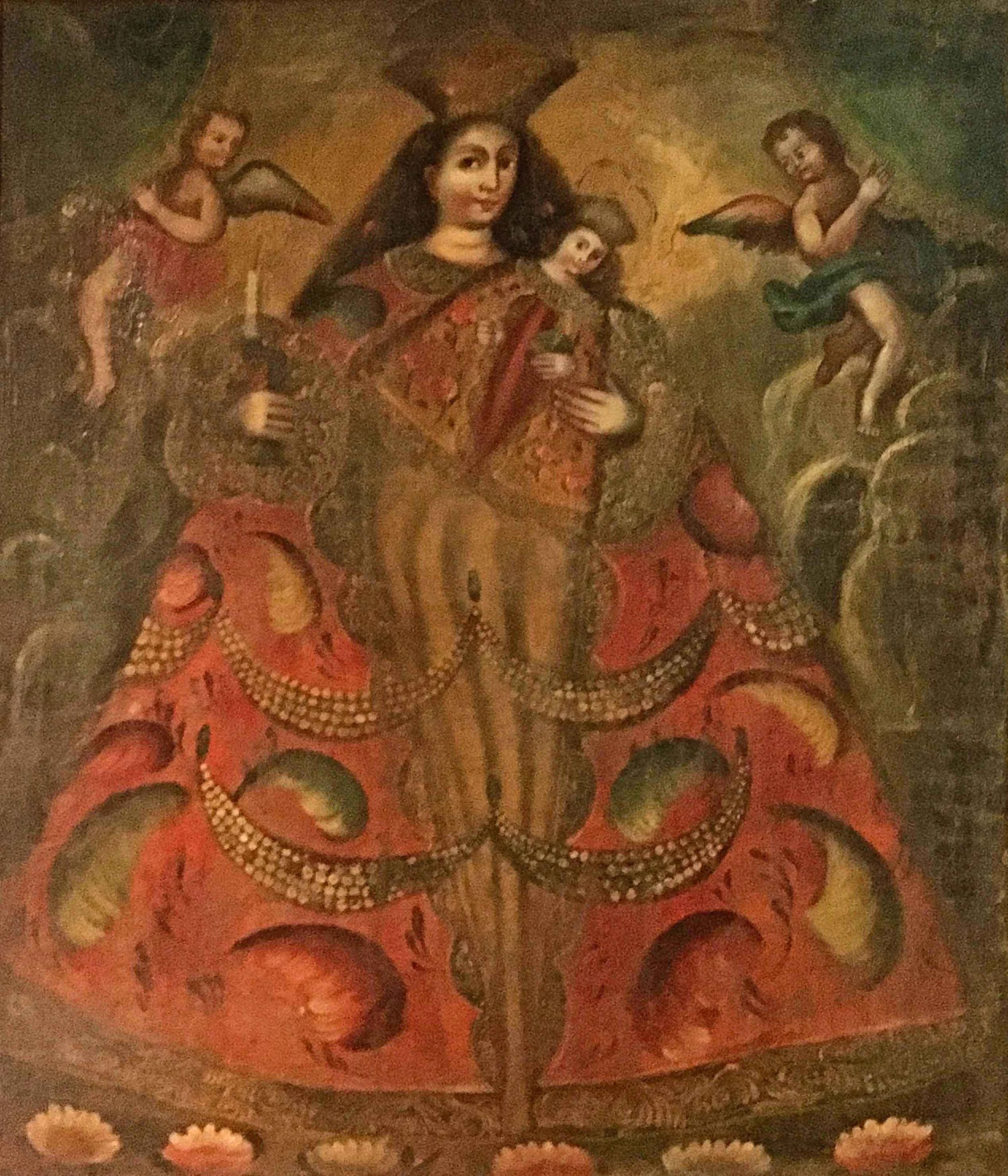
My hotel in Arequipa had another version of the Virgin of the Mountains, a meld of the Christian Mary and child and Pachamama, the Inca mother deity. I love this syncretic art, I could do a whole trip around Peru based around finding these paintings and carvings.
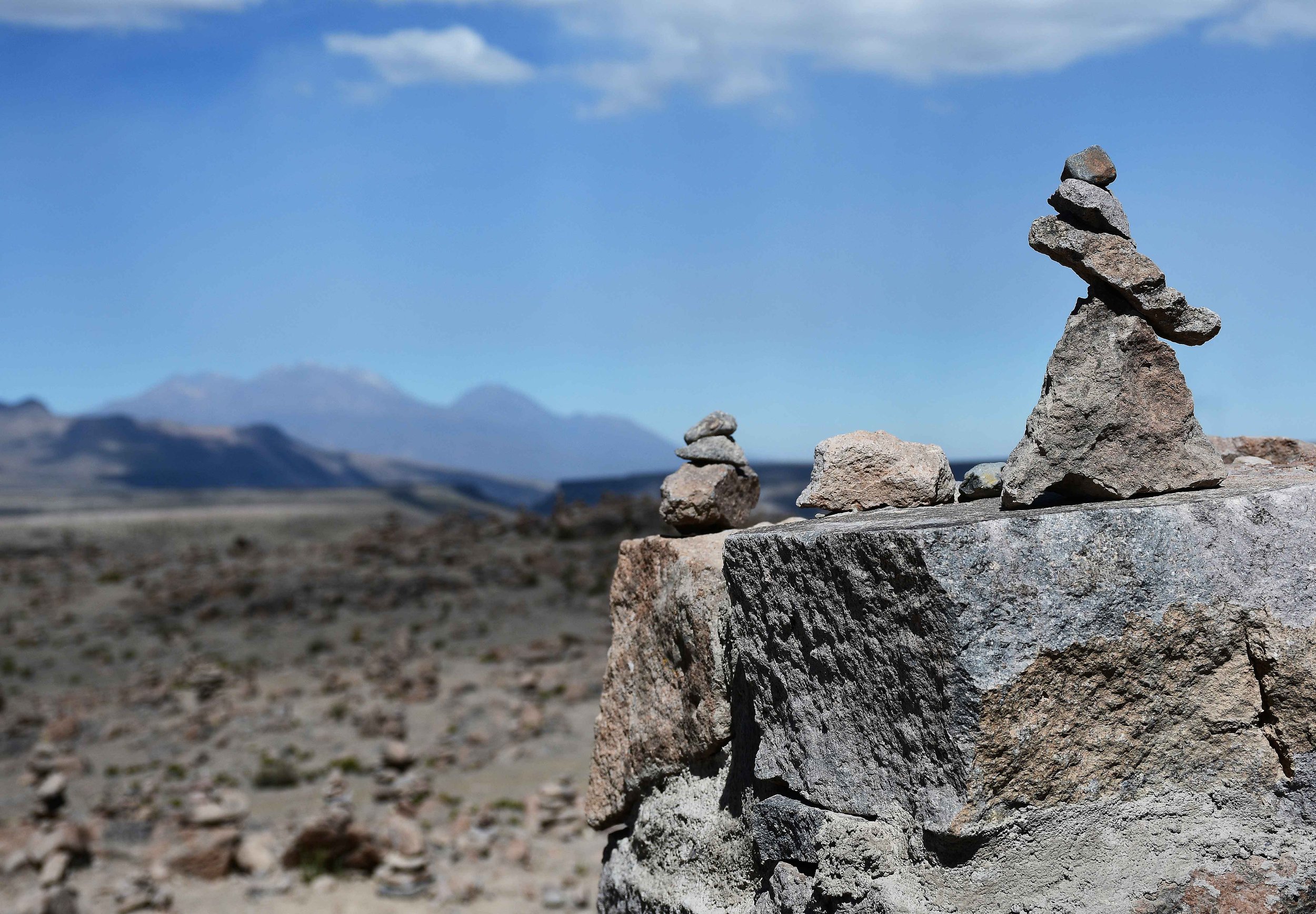
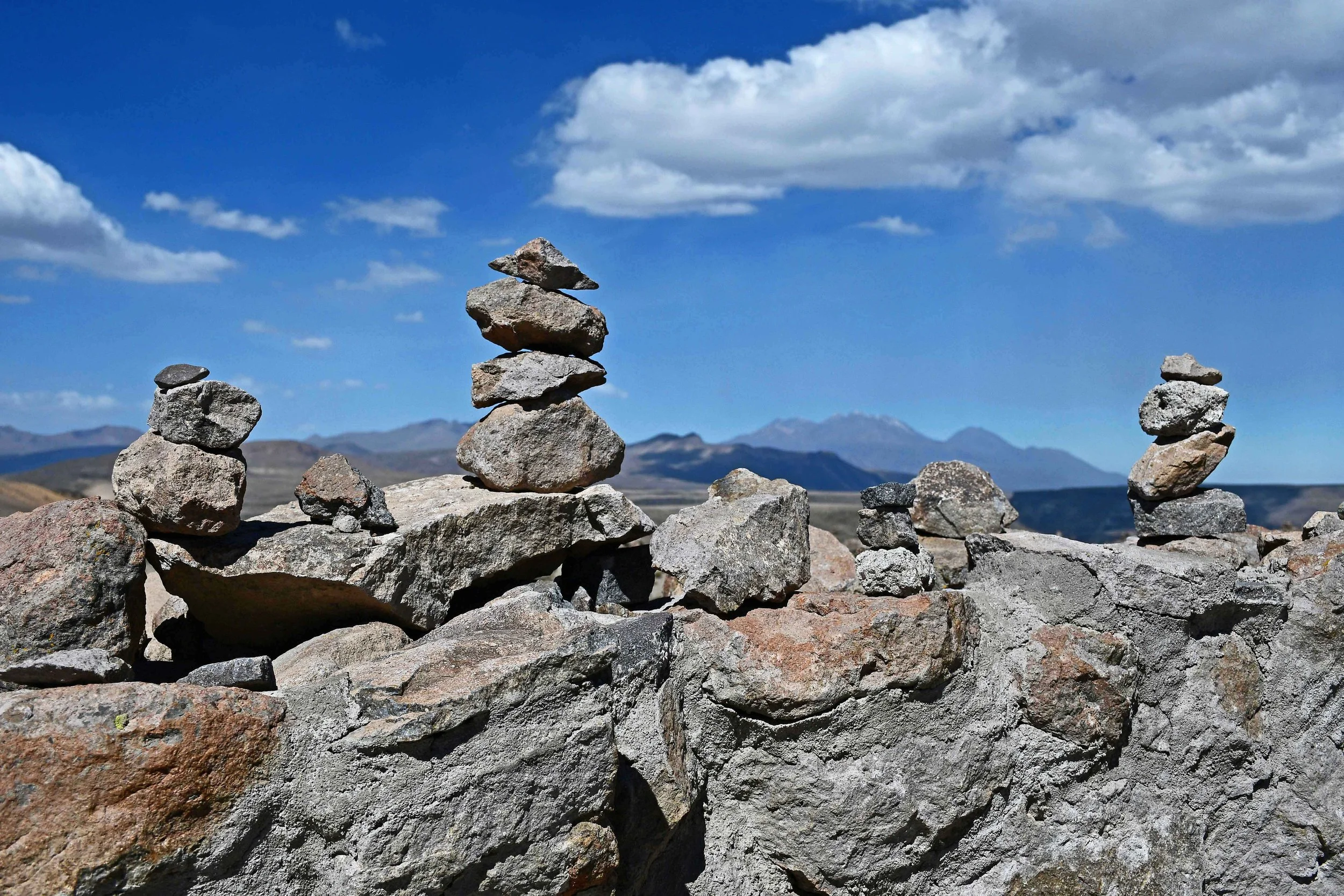
The road from Arequipa to Chivay is spectacular. I was right up in the north western tip of the Altiplano here and surrounded by more dramatic volcanoes. I have been high up in the Andes before, but this time we got so much higher to just over 5000 metres, which is only a few hundred below basecamp Everest. At the highest point, we stopped to take a look around and look at the stone pyramidal stacks known as apachetas. There are lots of places in the world where tourists leave versions of these, often carelessly and with no significance. But in the high Andes it is an ancient tradition that has deep cultural significance, serving as offerings to the mountain gods, the Apus, and as markers along old Quechuan trails.
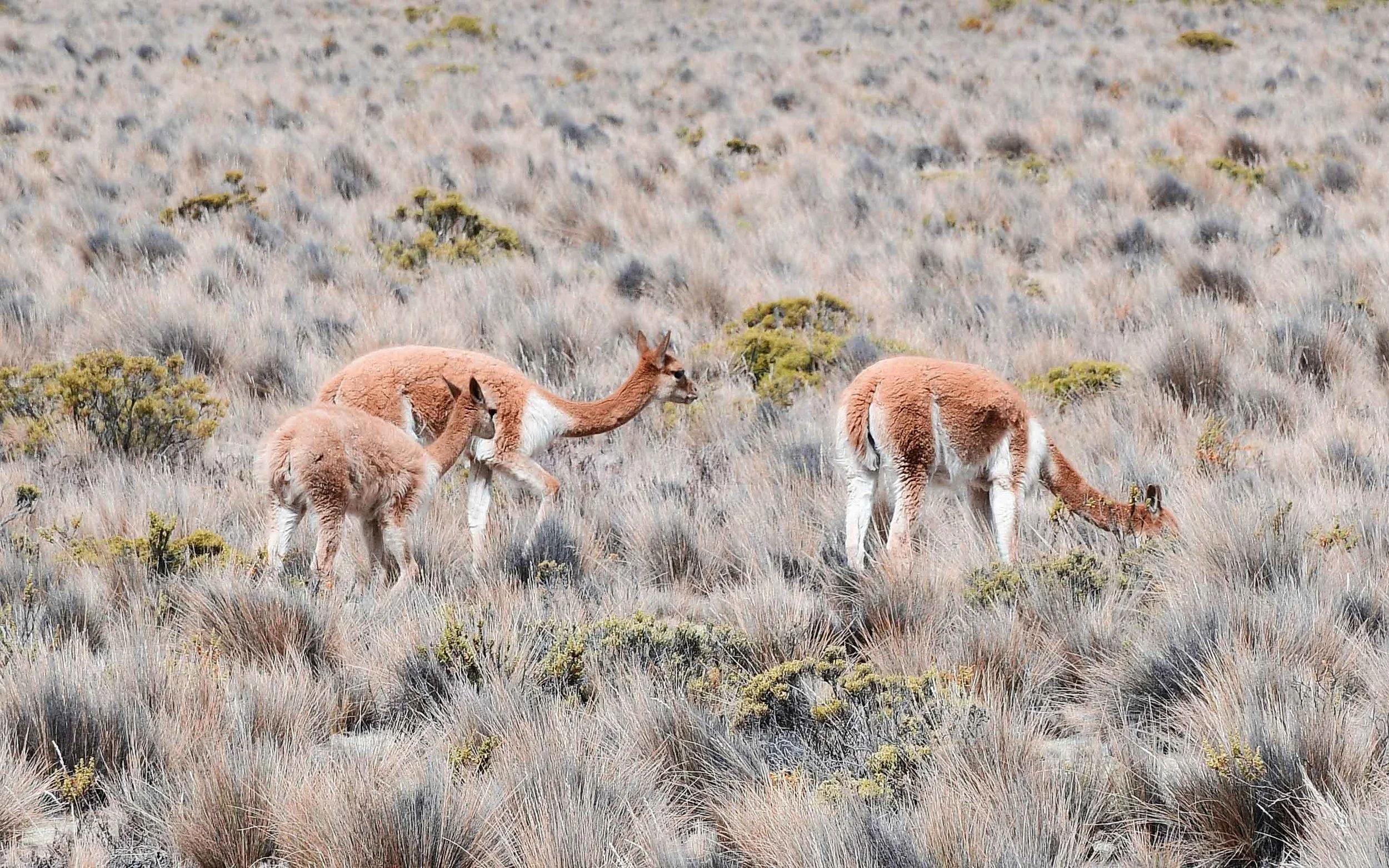
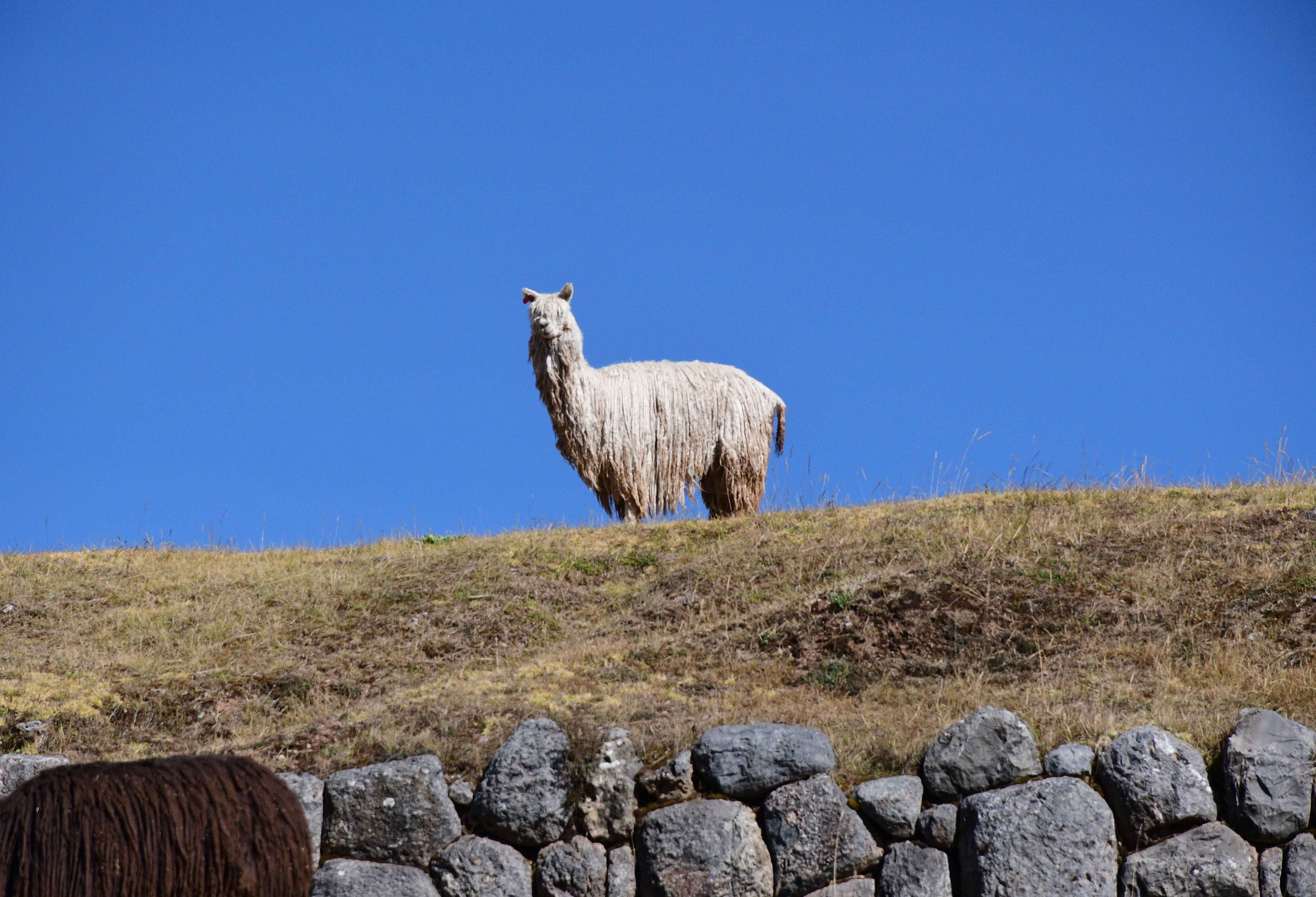
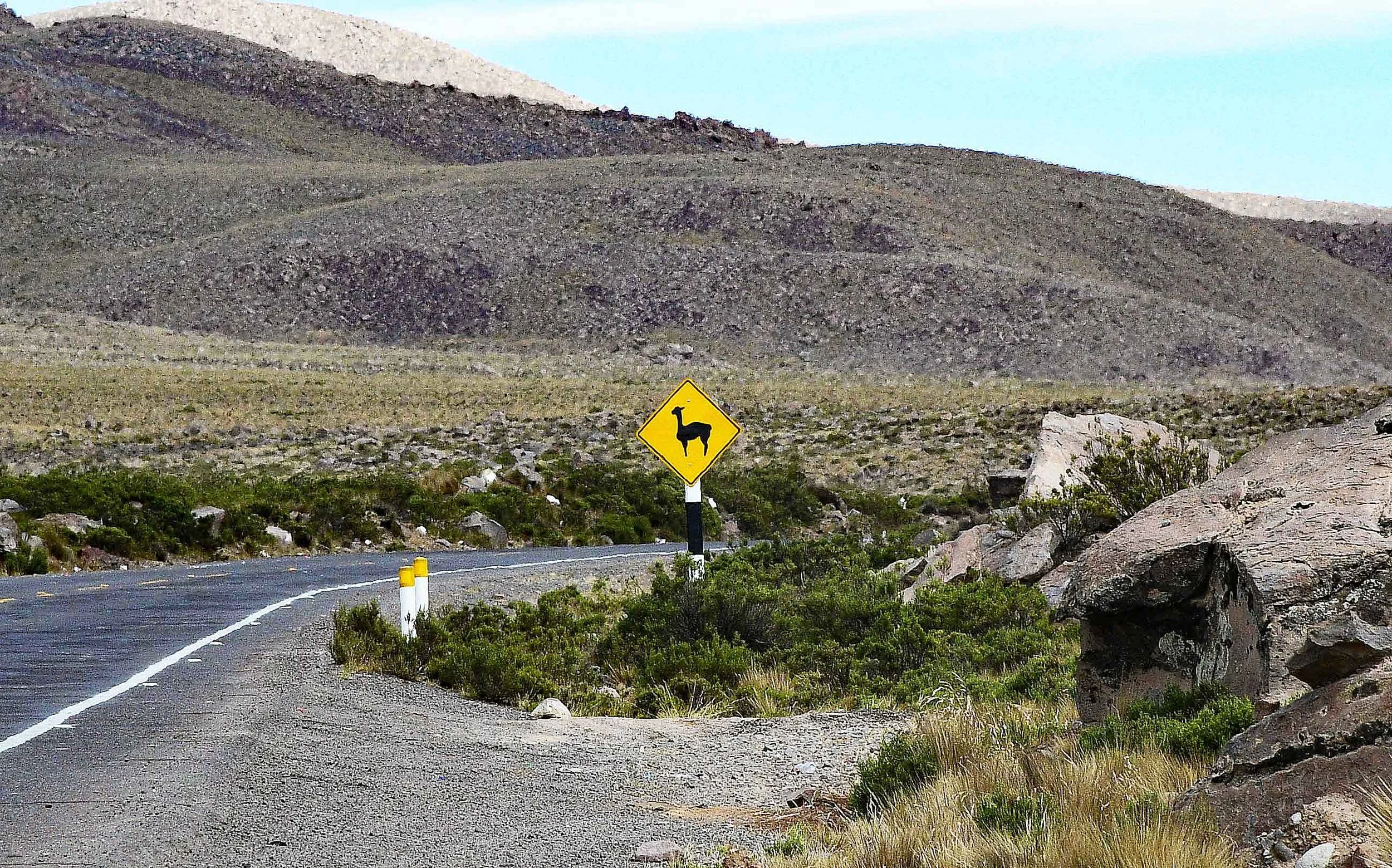
I saw vicunas, part of the llama family, which were nearly made extinct by the Incas who hunted them.
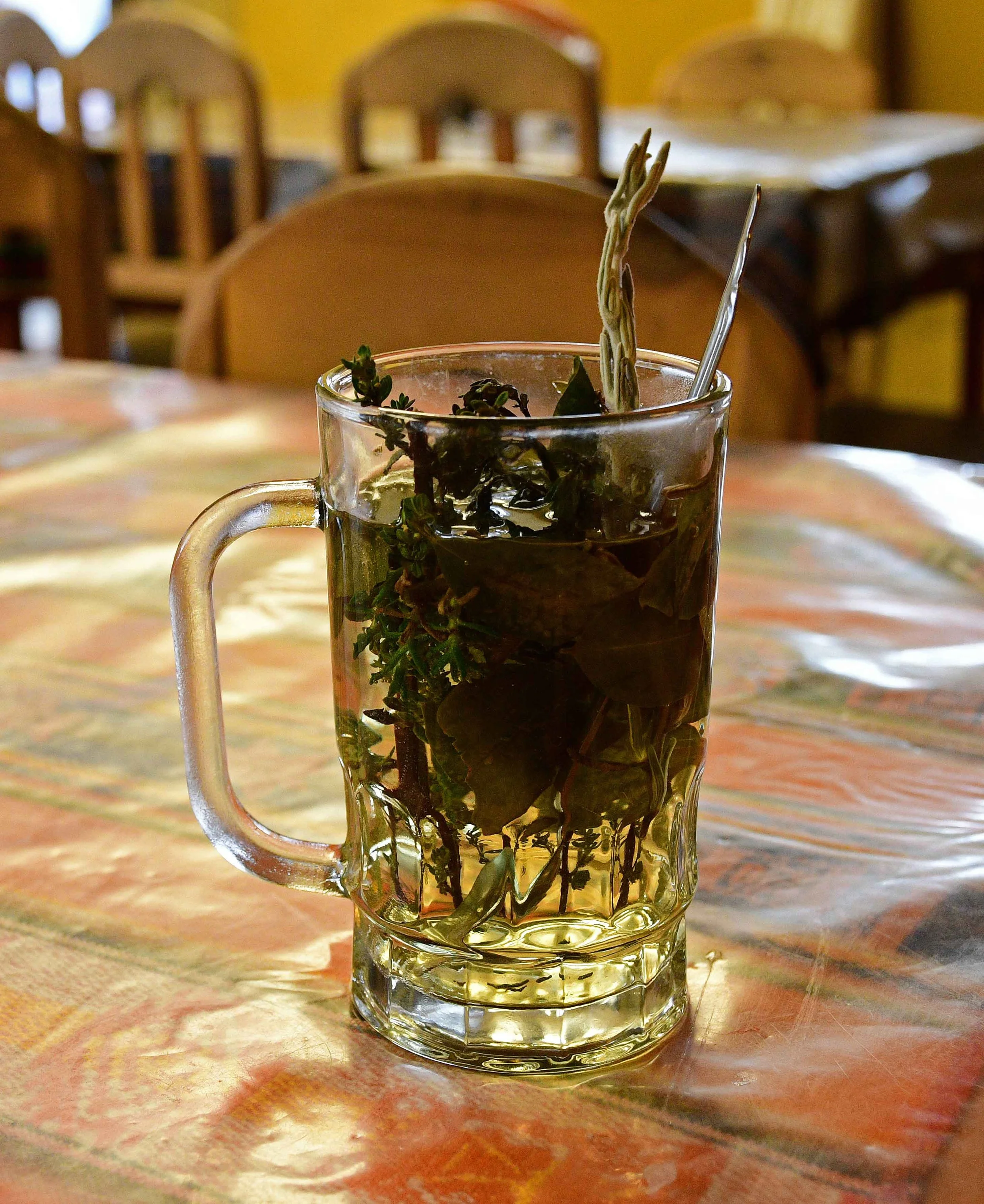
As someone who gets travel sick fairly easily, I am surprised how unaffected I am by altitude. When I was here before, I was given coca leaves to chew and even coca boiled sweets. This time we stopped at a service station and I had some tea made with coca leaves and other unspecified herbs. It works a treat and I felt absolutely fine although I noticed how quickly I got out of breath bending over to put shoes on for example.
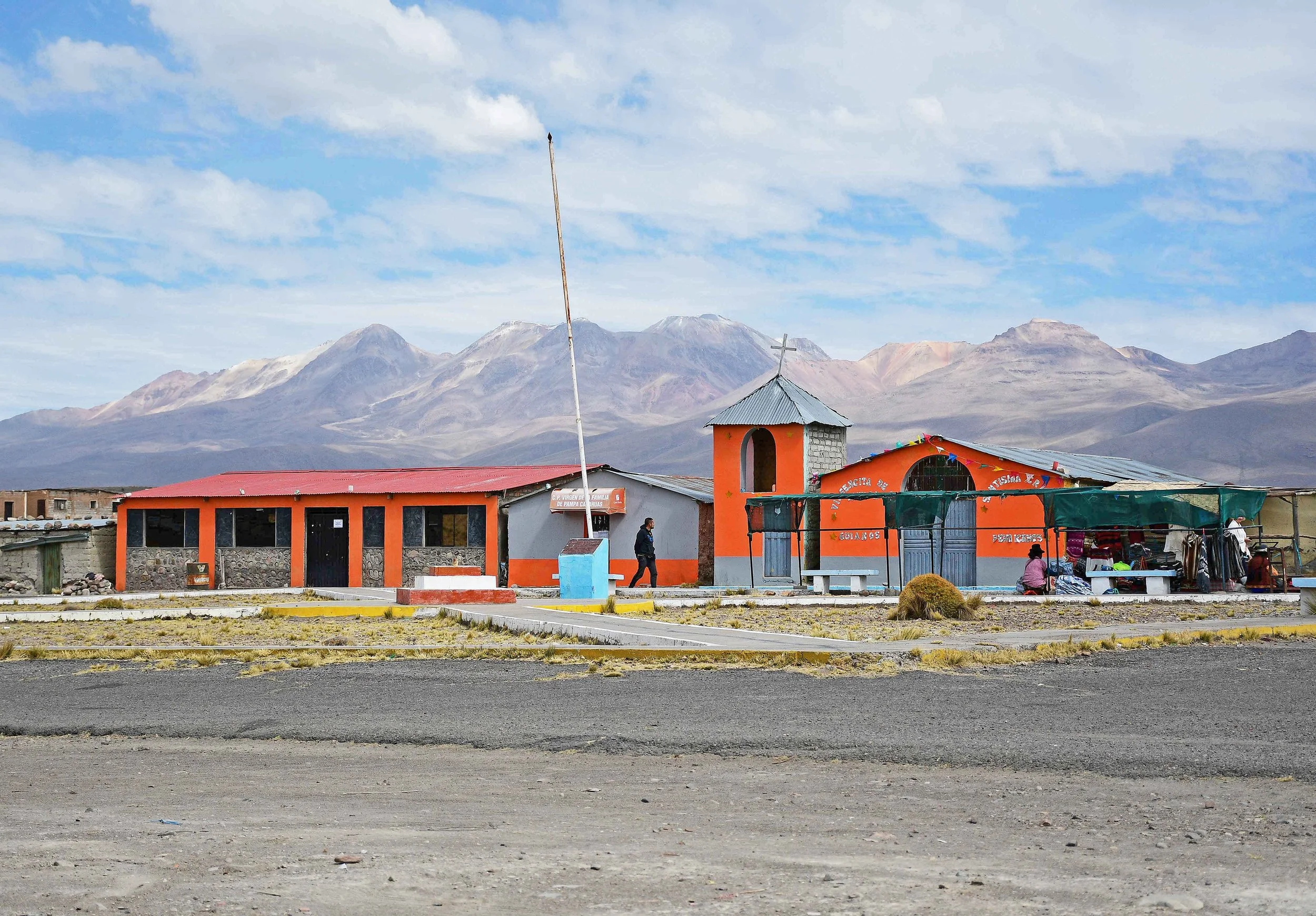
I love this photo of the service stop as it’s clear it’s high altitude, you can almost see the thin air.
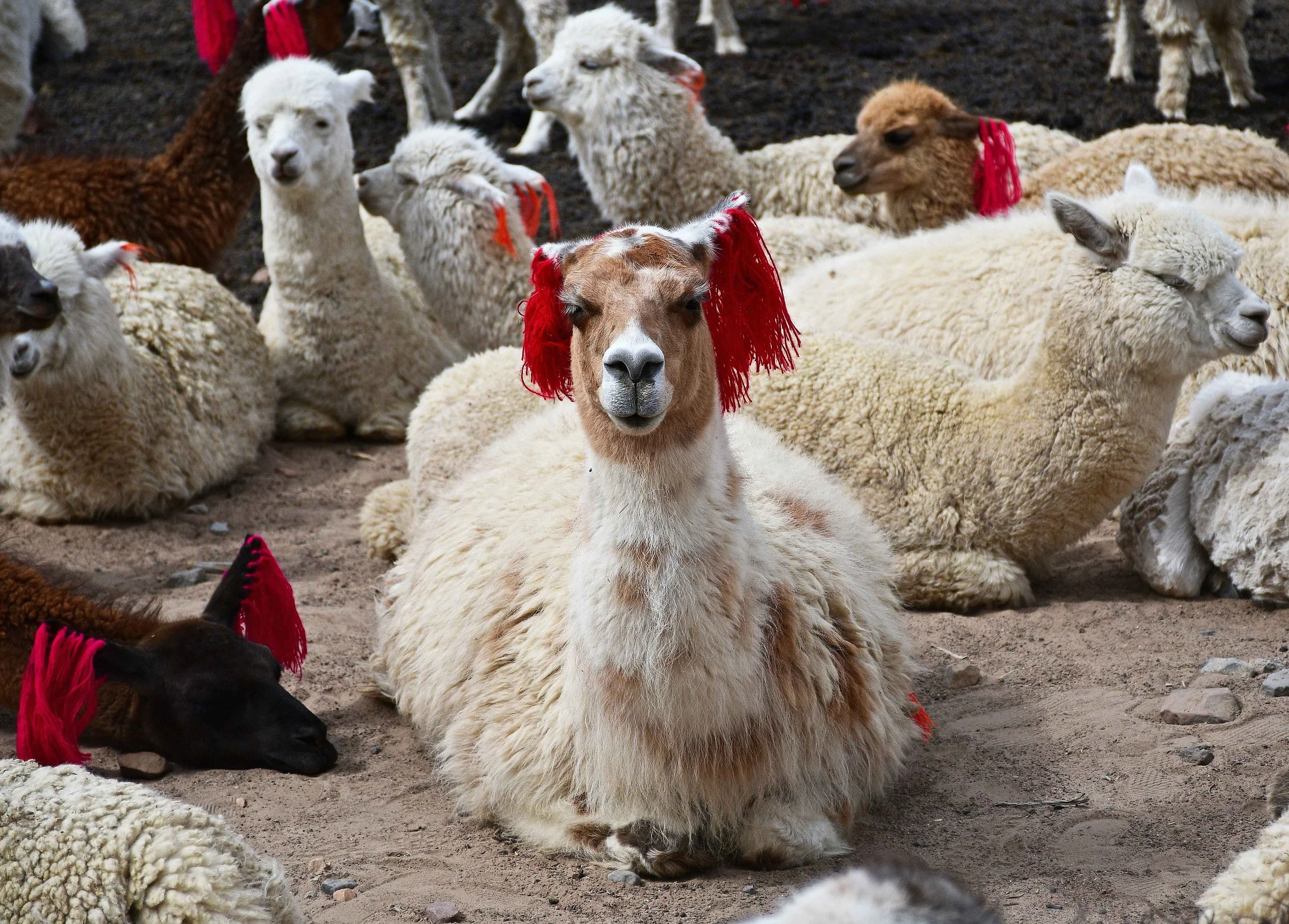
Before we got to Chivay we stopped to say ‘hello’ to some alpacas who are tagged by their herders to identify the village they belong to.
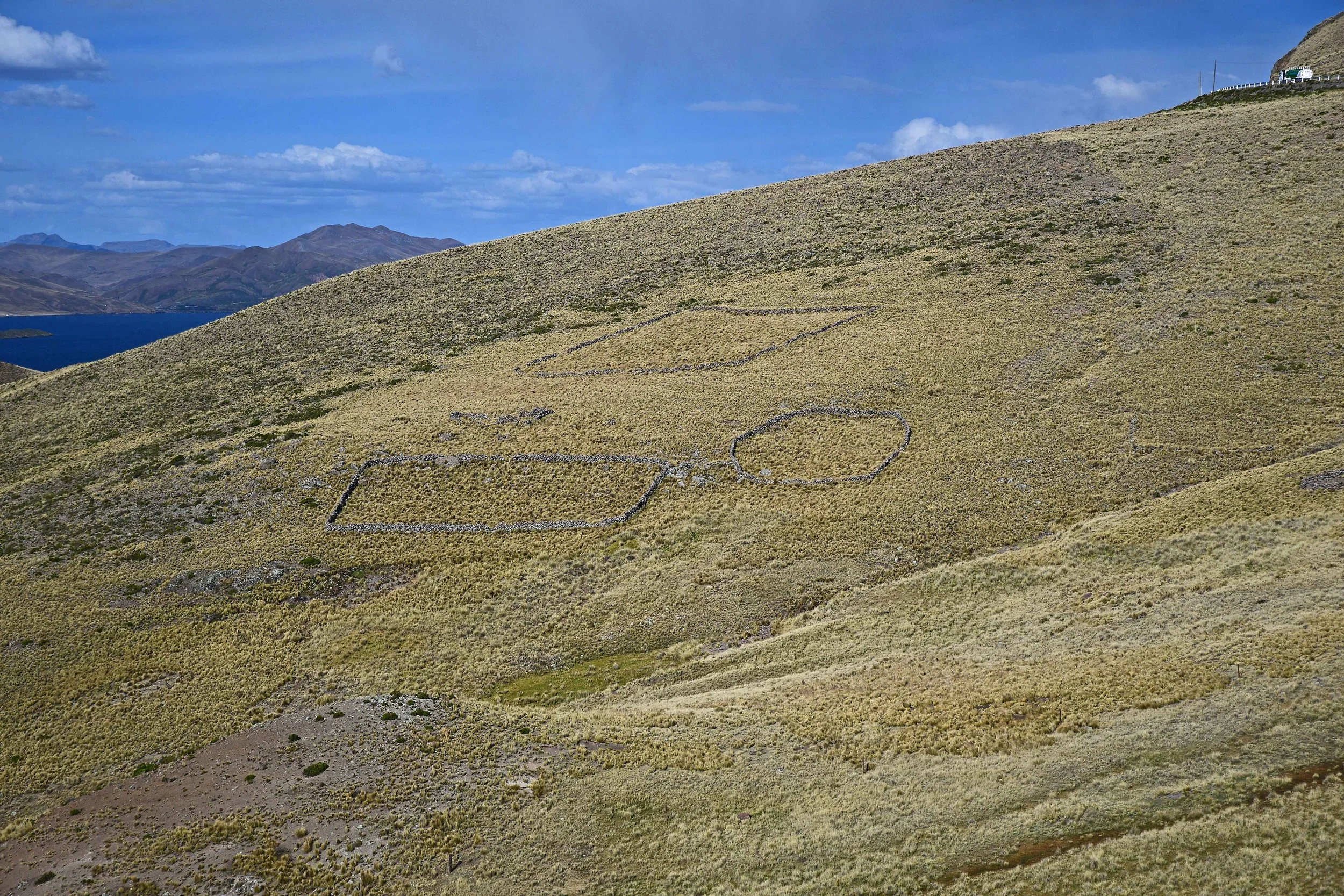
In Chivay I went to a restaurant, Zacarias, and had the best food since the ceviche in Lima: roast alpaca, cheesy beans, squash and quinoa salad. It was so good I had two big platefuls. Of course I felt immensely guilty eating alpaca just a short while after talking to some live ones. I remember feeling the same about llamas in Argentina, but it is very good meat.
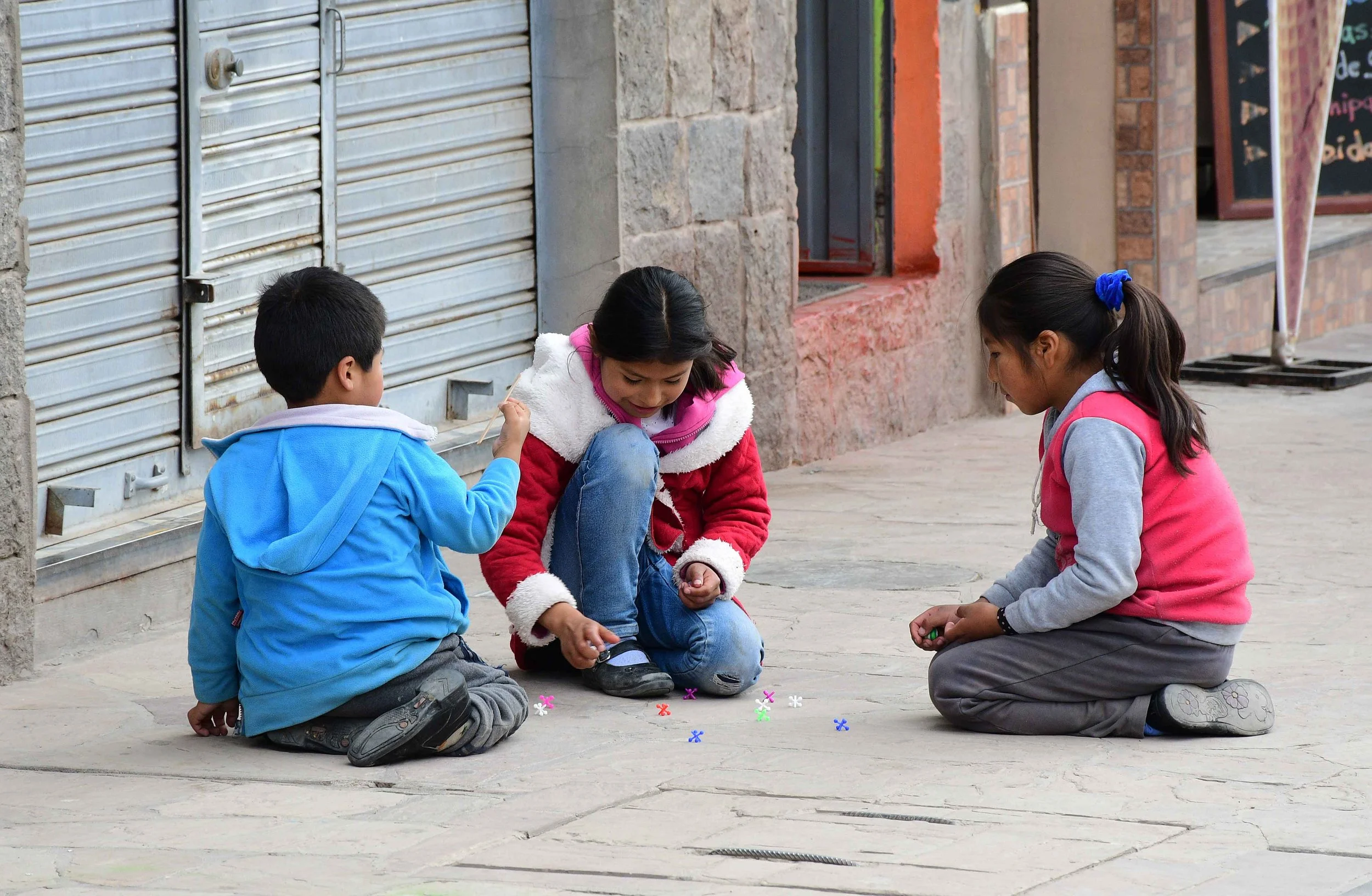
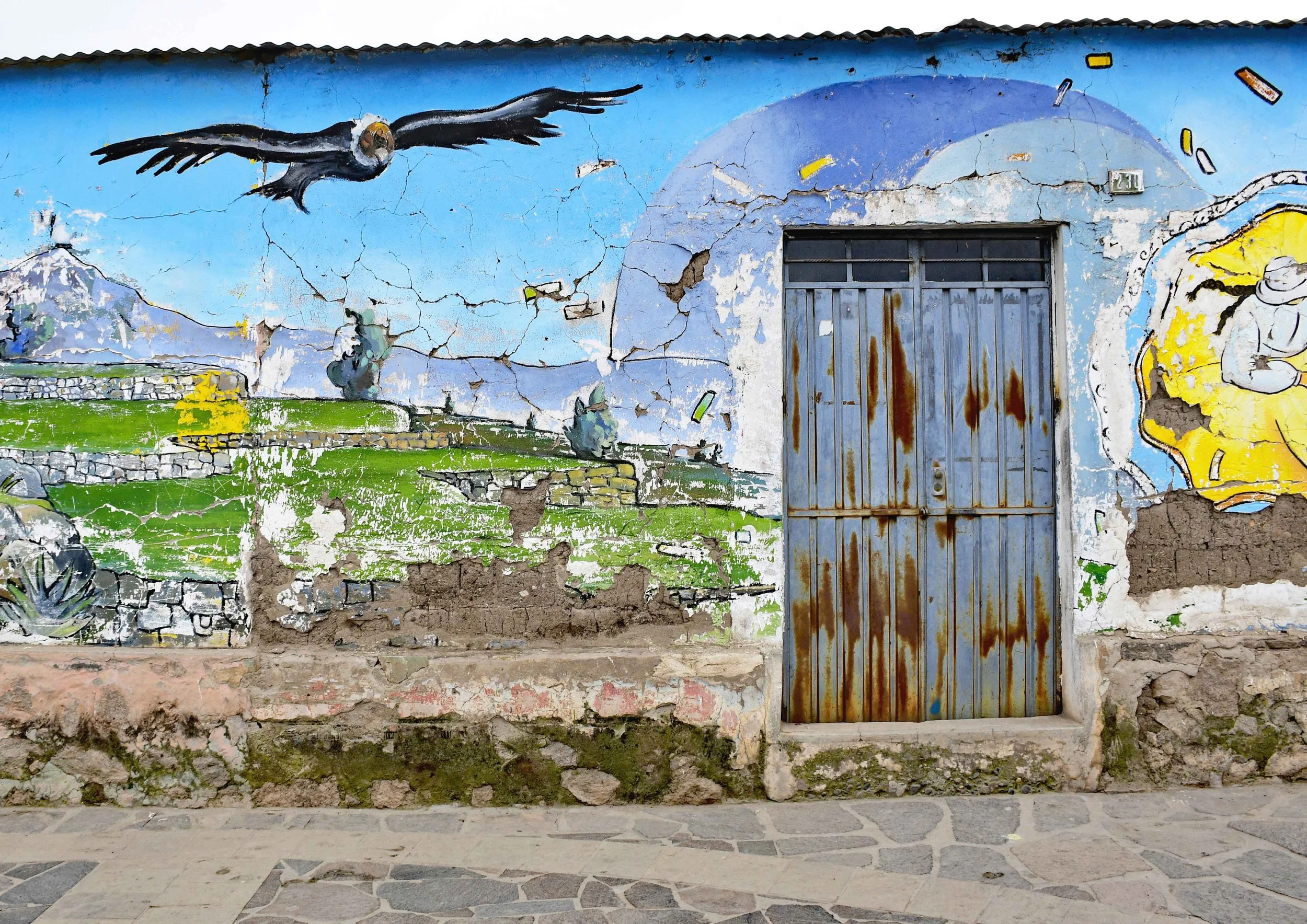
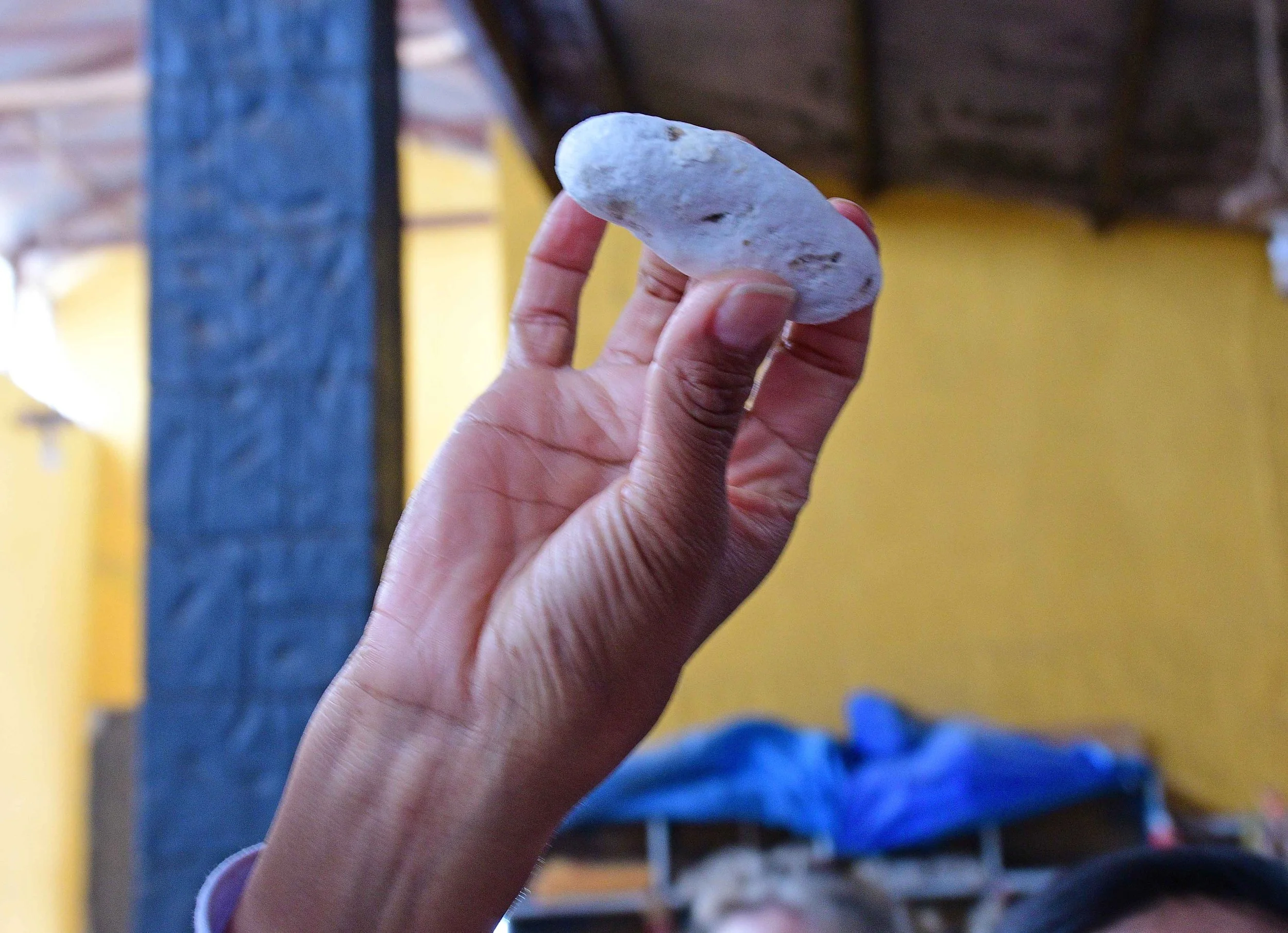
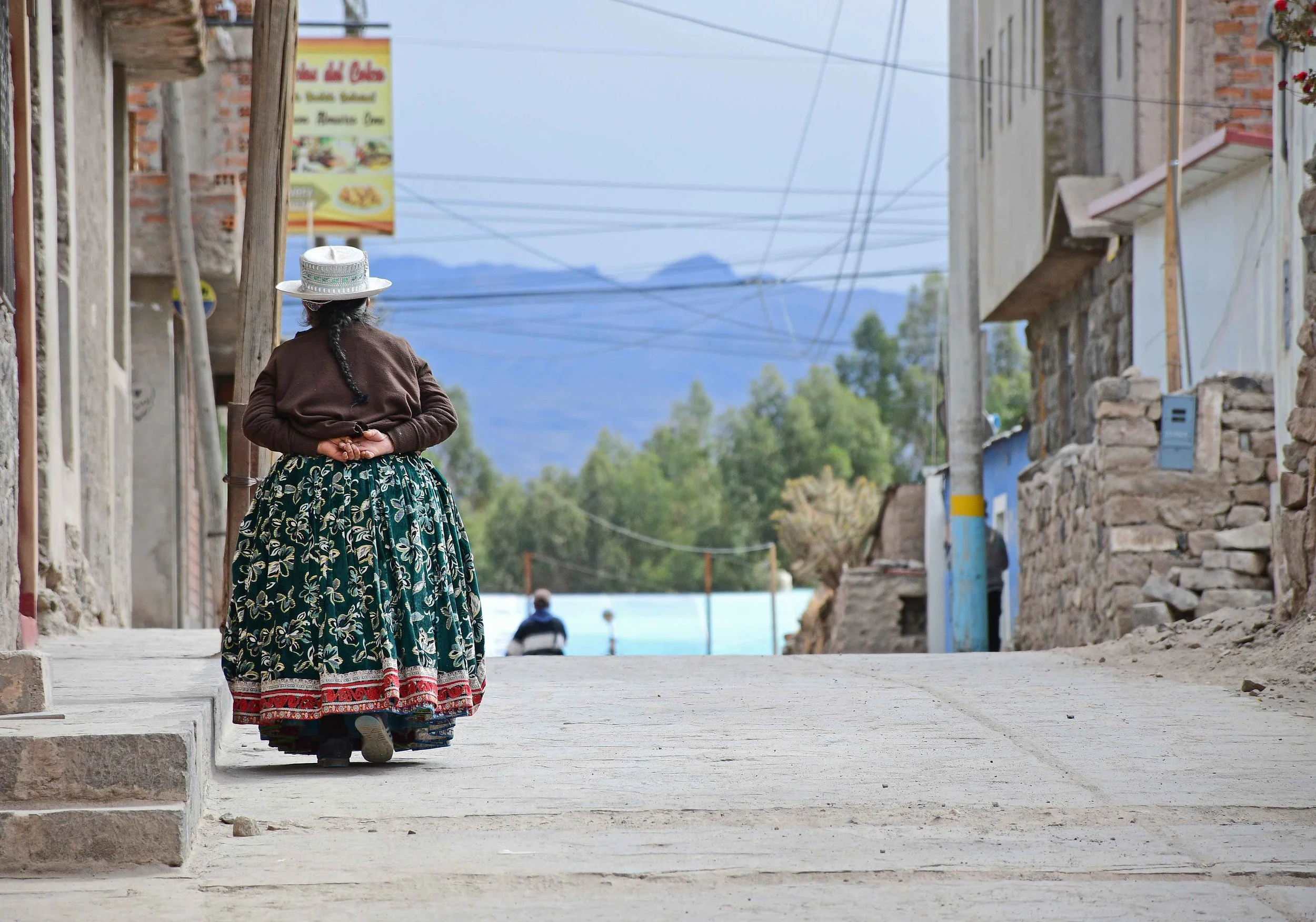
Chivay is quite a traditional town. I had a look around the little market where you can buy frozen potatoes ‘chunos’ that look like little white pellets, and are rehydrated and added to stews (possibly in the one I had just eaten). Lots of the local women still wear traditional clothes, in particular several layers of skirts called pollera. In other parts of the Altiplano, like Bolivia, these skirts have become a statement of tradition and women’s rights.
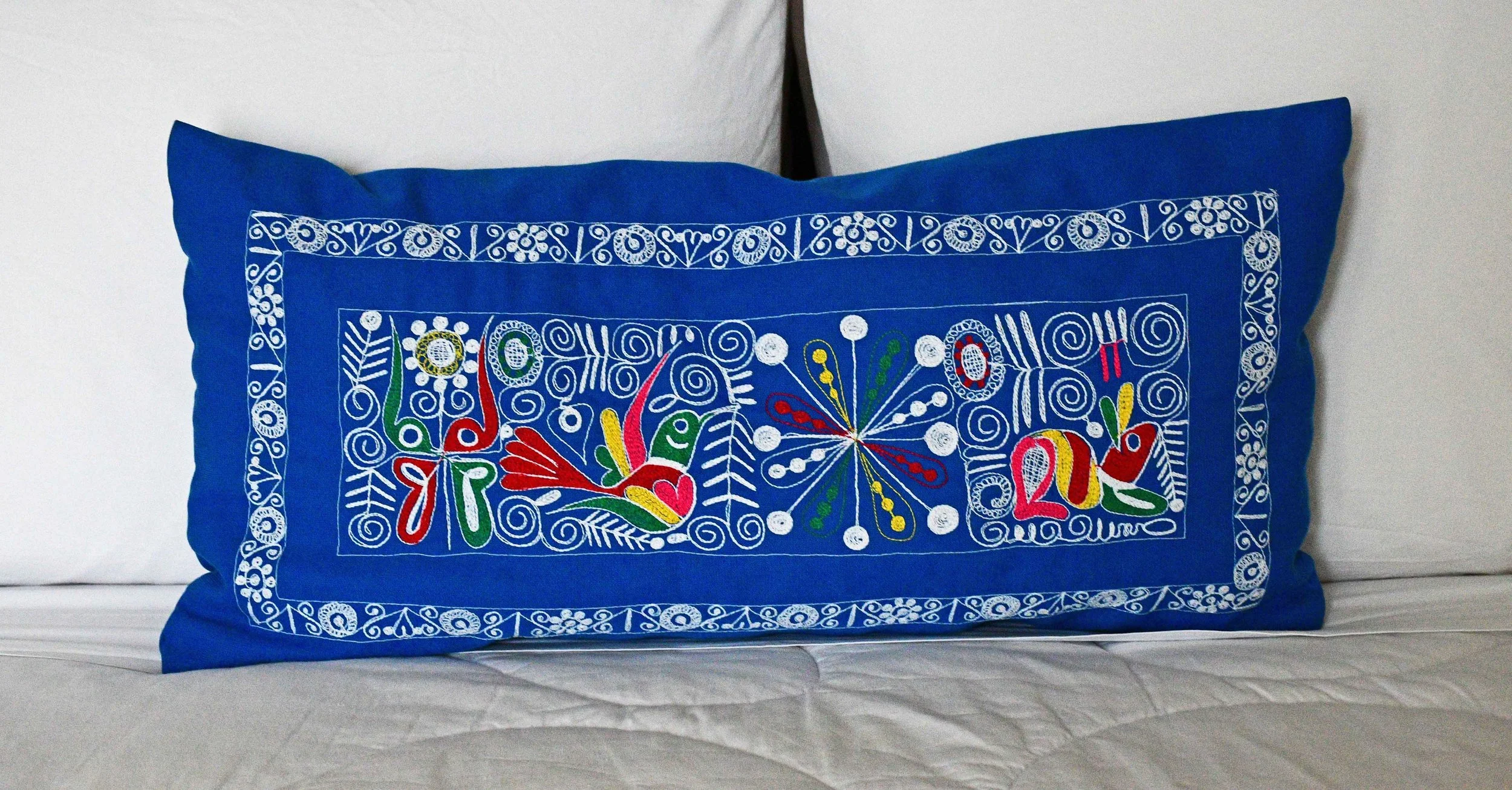
My hotel was near the hot springs, the Aguas Termales la Calera of Chivay. I was able to sit in very hot water for a while, then dive into the hotel’s freezing mountain water swimming pool on my way back afterwards. I had a sweet little chalet guarded by two llamas sitting outside my door, and inside was cosy, with beautiful embroidered bed linen.
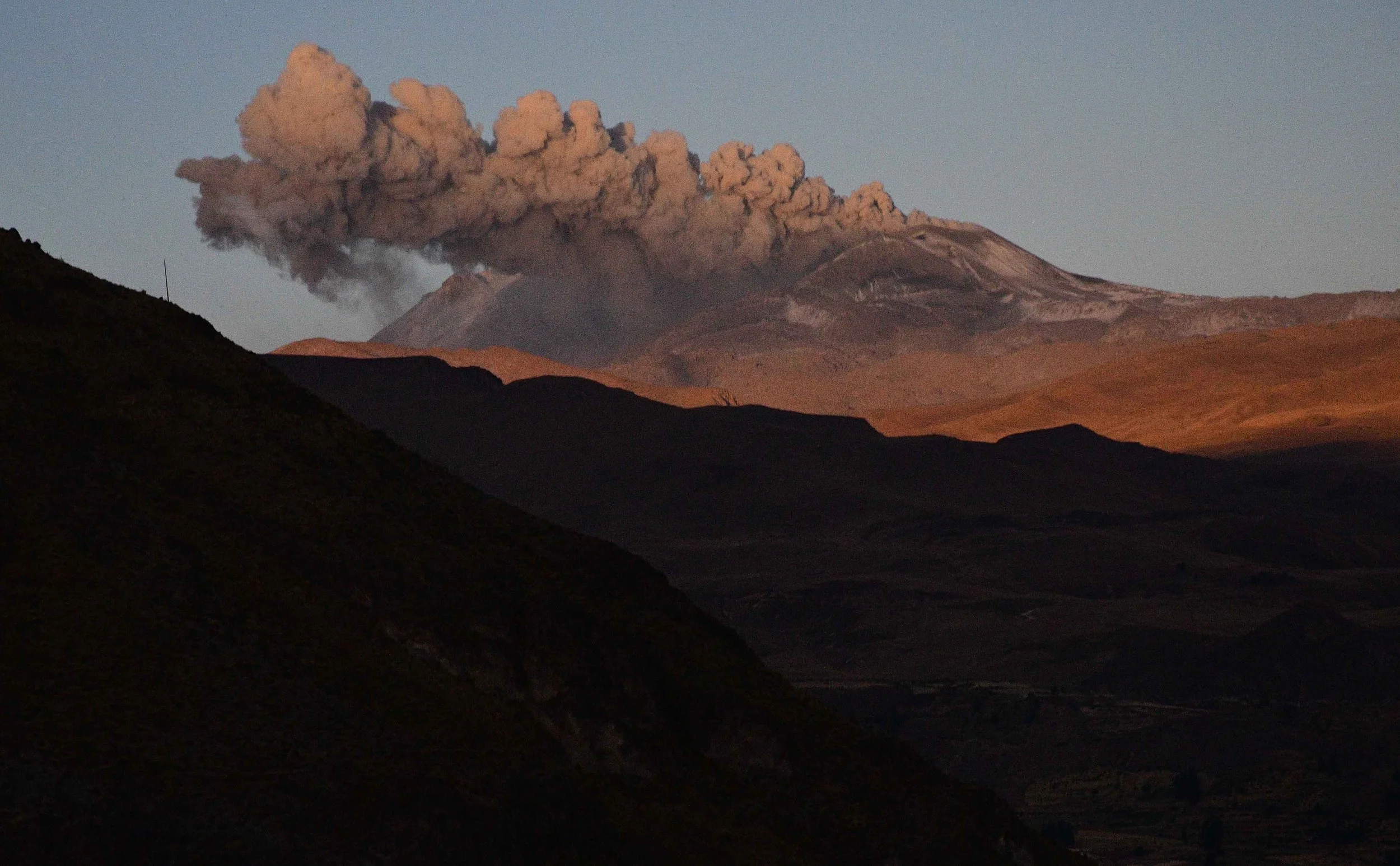
A very early start, no breakfast, to get to he other end of Colca Canyon to see the condors. On the way we saw the volcano Sabancayo which was belching out smoke like it was about to erupt. None of the locals on the bus batted an eyelid.
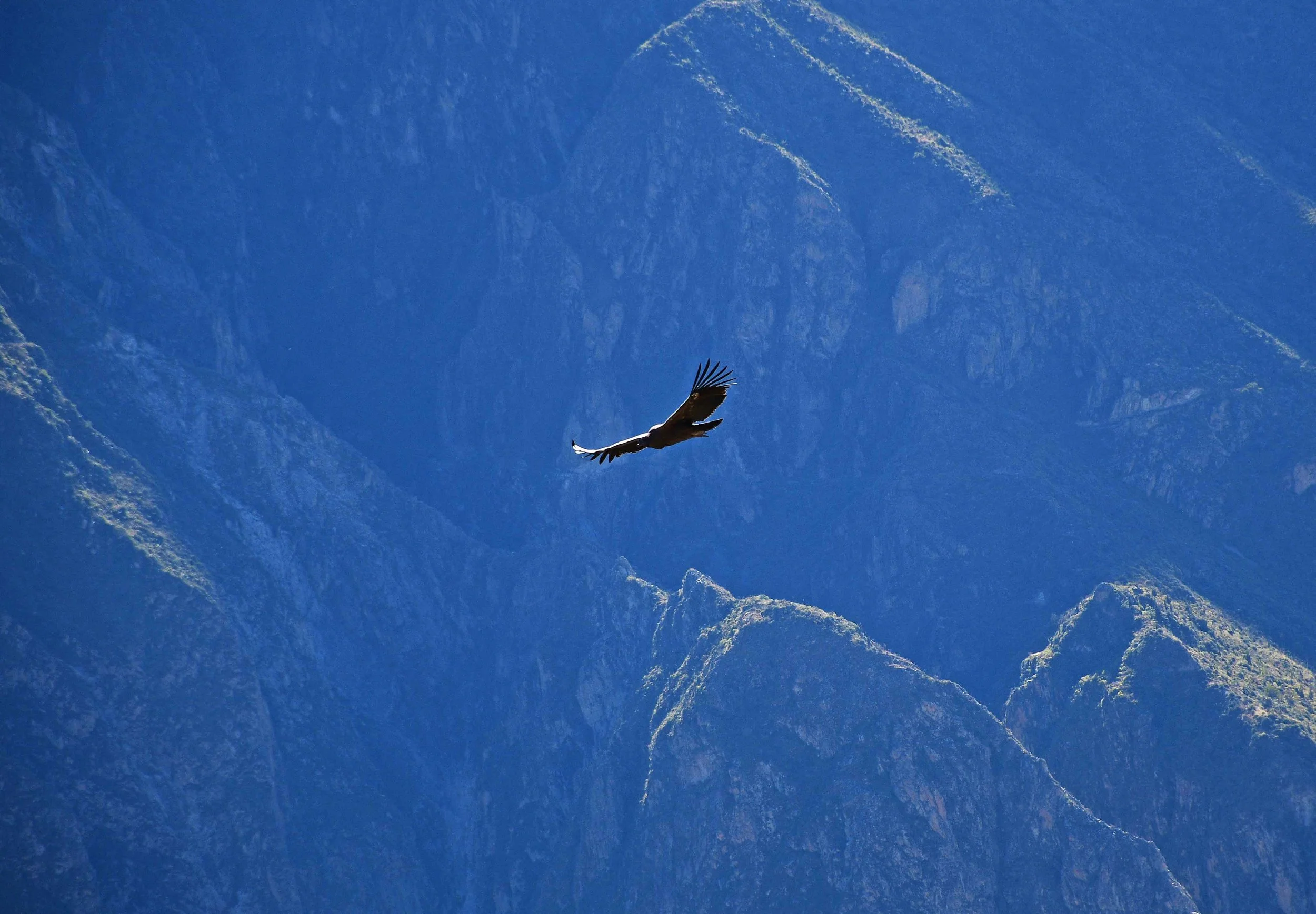
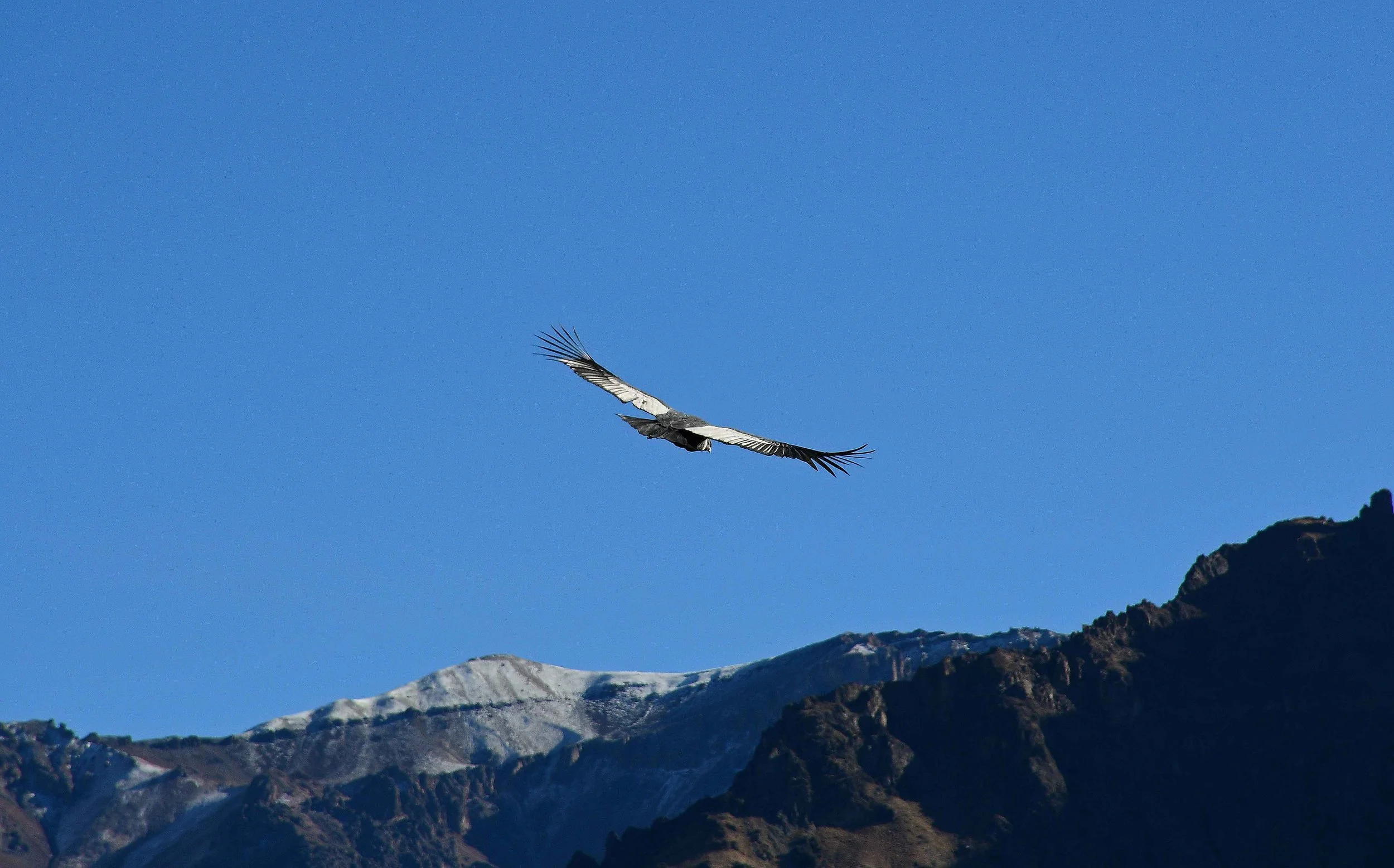
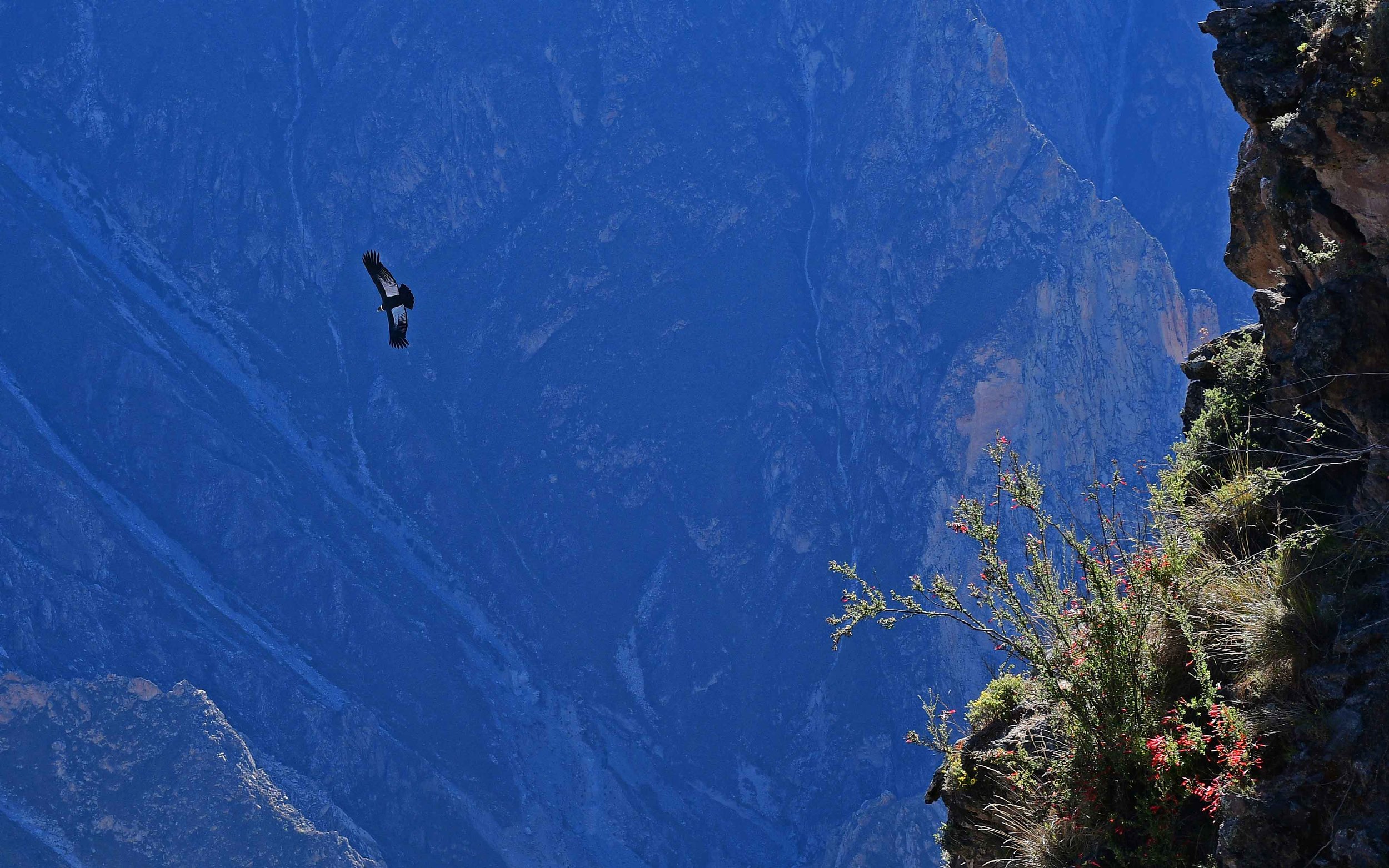
At Cruz del Condor there were lots of people all there for the same experience. The numbers of Andean condors are dwindling partly due to pollution and I was wondering why they didn’t force tourists to park further away and walk up. Despite this, it was a wonderful experience and I hope that being here and learning more about them would encourage greater attempts to protect them from some of the challenges they face. They are carrion eaters, but some local farmers needlessly poison the birds to protect their livestock. There are also traditional rituals that involve horrific treatment of the birds, which are too upsetting to describe.
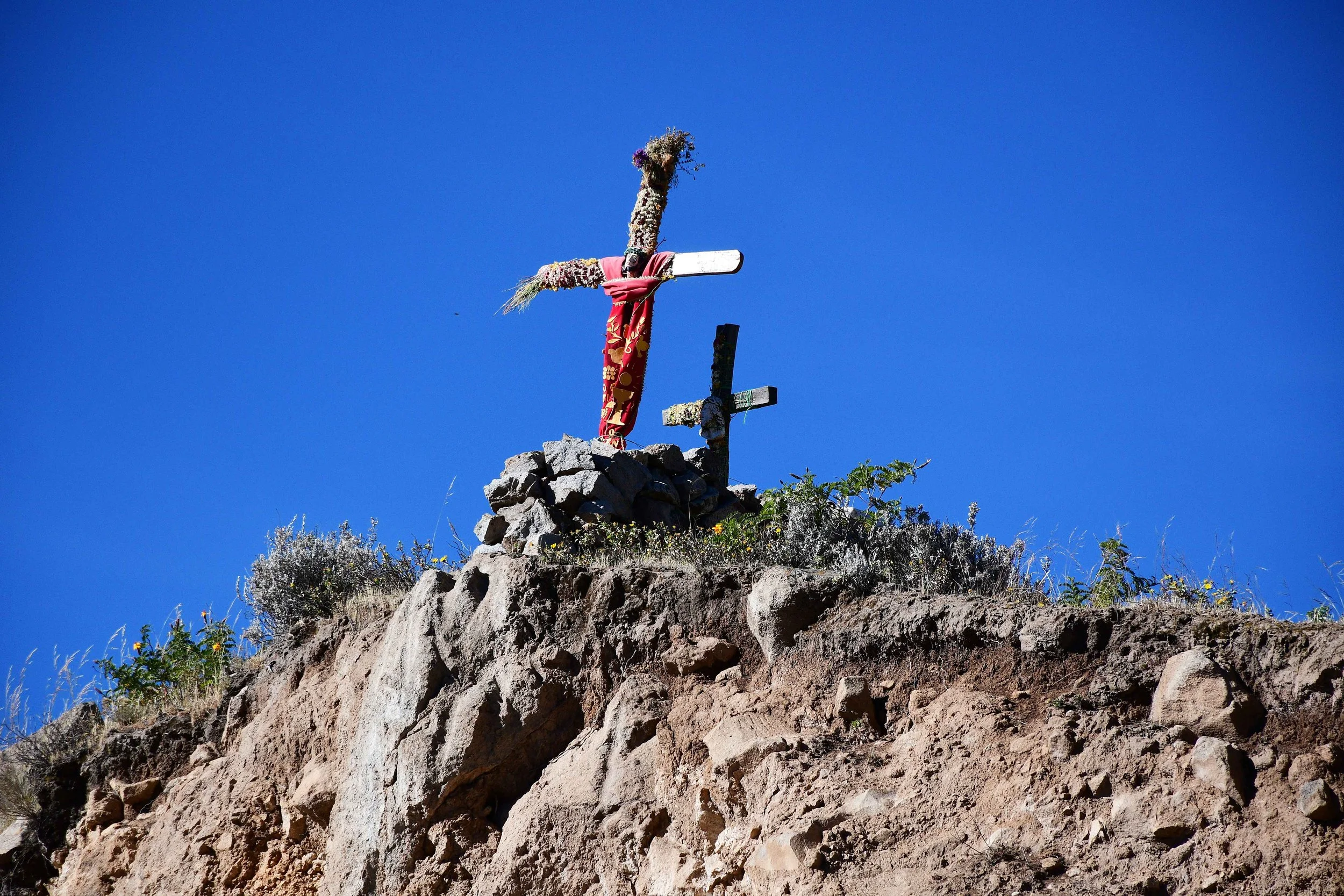
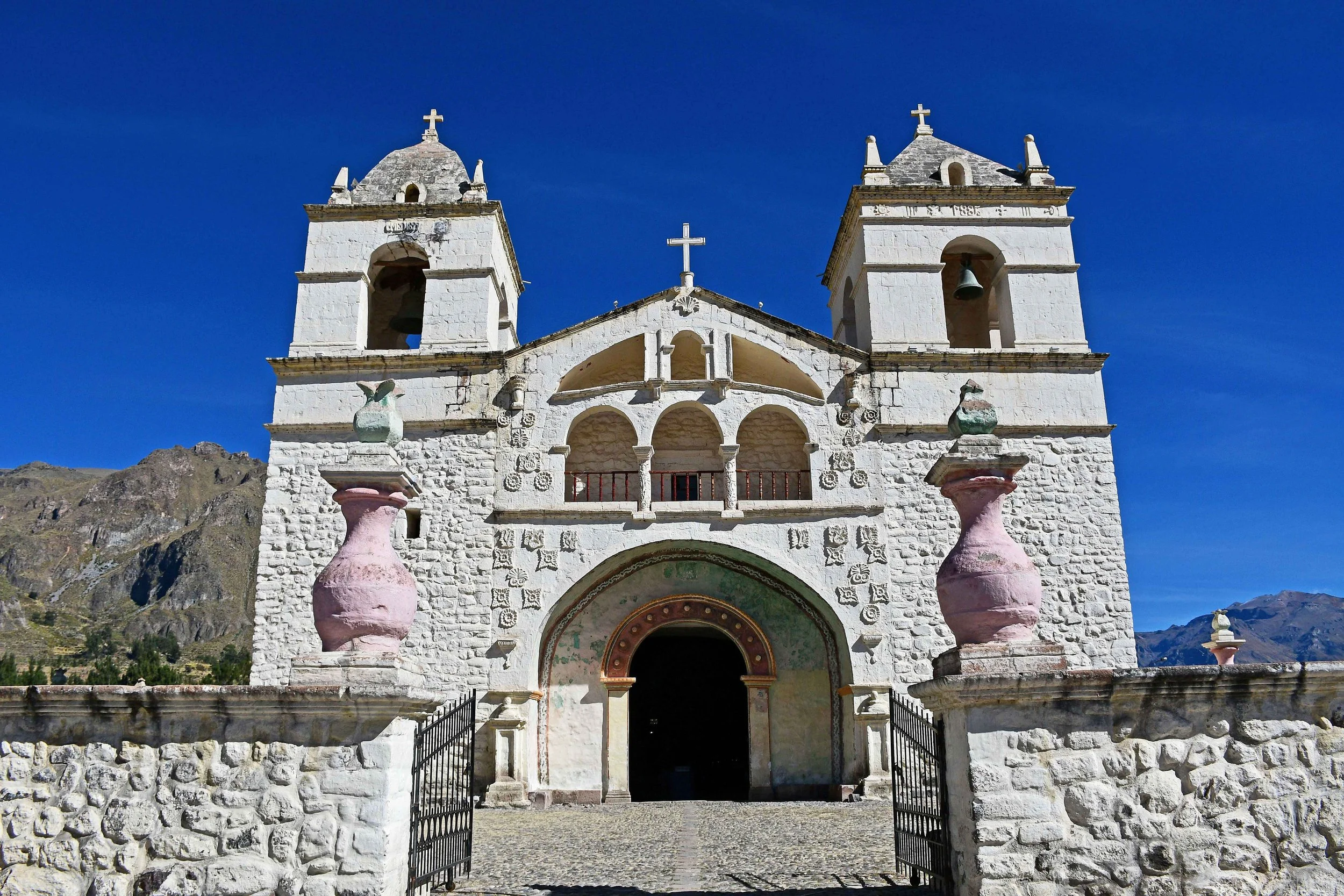
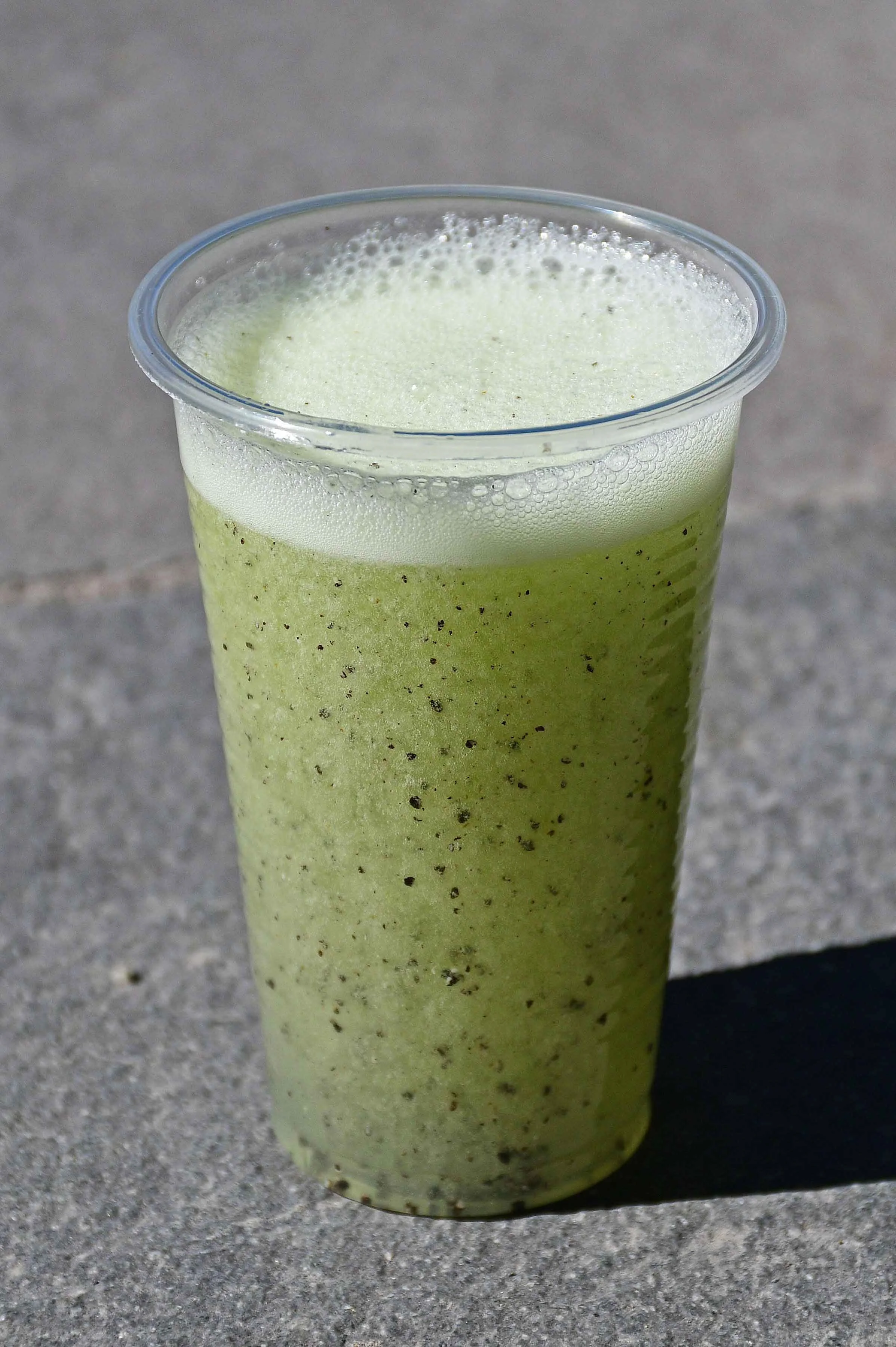
I had a walk around the nearby town of Maca where I tried a juice made from the Sancayo cactus which is sometimes used to make a version of the Pisco Sour – the Colca Sour. It was my kind of juice, slightly tart like apples.
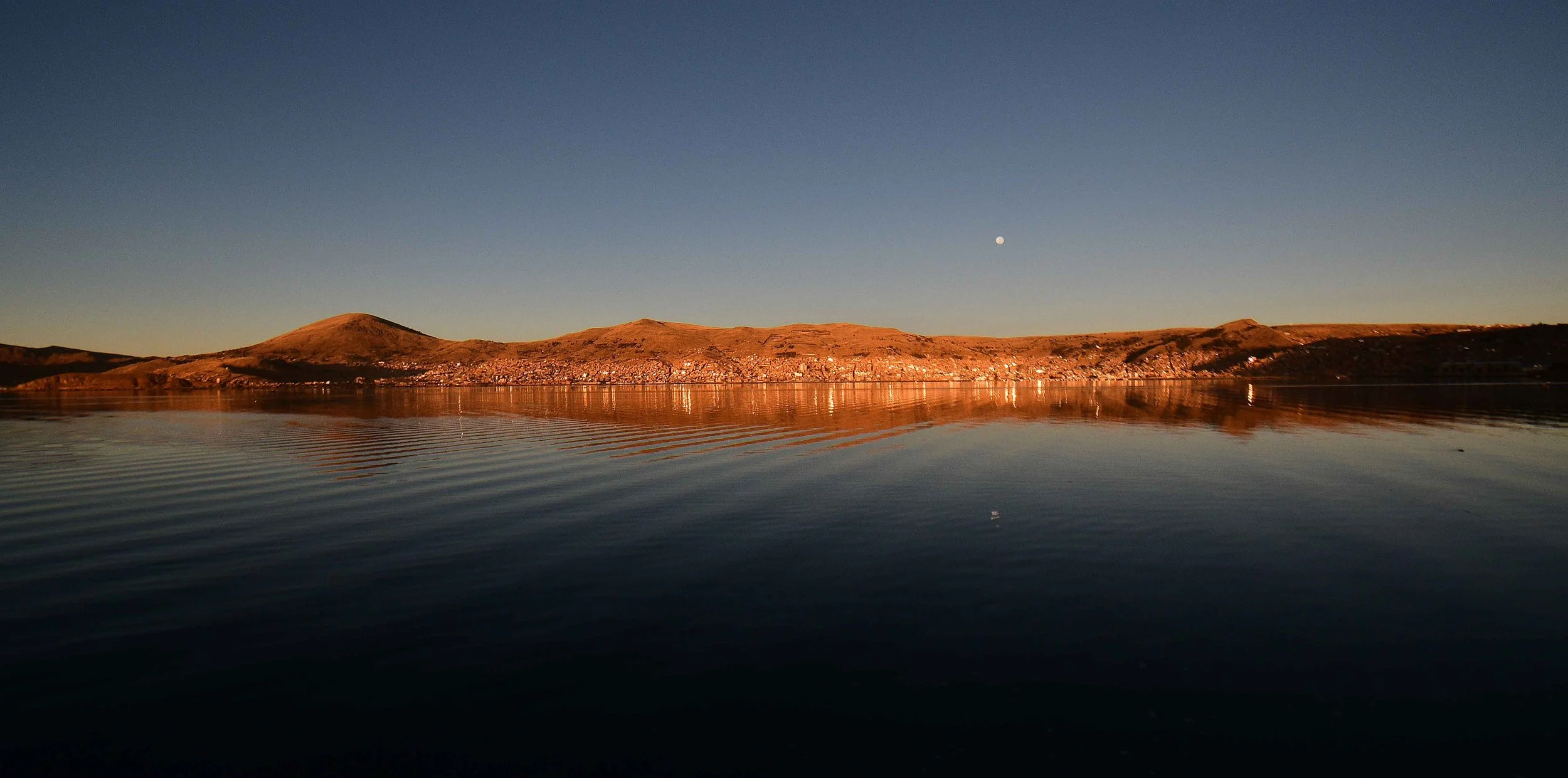
Puno, on the north edge of Lake Titicaca, is a popular point for exploring. I was able to spend a day on the water before catching the train to Cusco. It was a day of two very different experiences. First thing I joined a half-day tour of the Uros islands and regretted every minute of it. The story is that the people on these islands live here, these are their homes and they are welcoming tourists to see how they live. The reality is that, while there are some islands still inhabited further out, the ones visitors see have been brought closer to the shore, and the people you meet are essentially actors and at the end of the day they go home. Most of the people travelling there love it, and if it brings money in to the local people that’s fine. But I hated the pretence of it all. One of the homes had dressing-up boxes for visitors to try on traditional clothes. I asked the man if he really lived here and he quite happily said ‘no’ and that he wasn’t really married to the woman playing his wife either!
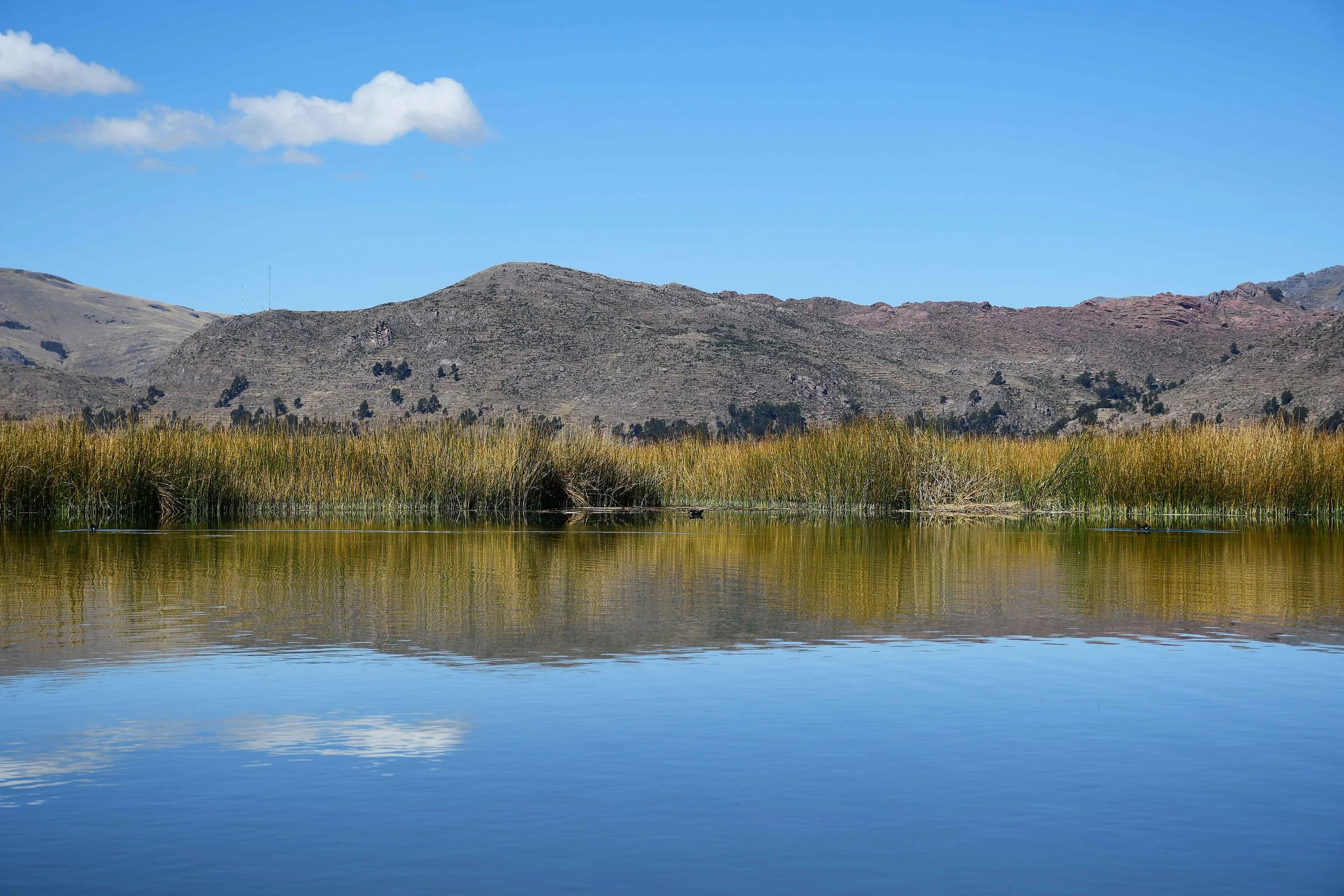
I did admire how they managed to create these floating islands from the tatora reeds you see growing around the lake. Many people used to depend on fishing, but pollution has meant that there are few fishes in the urban waters and the motorised boats bringing people to the islands isn’t helping.
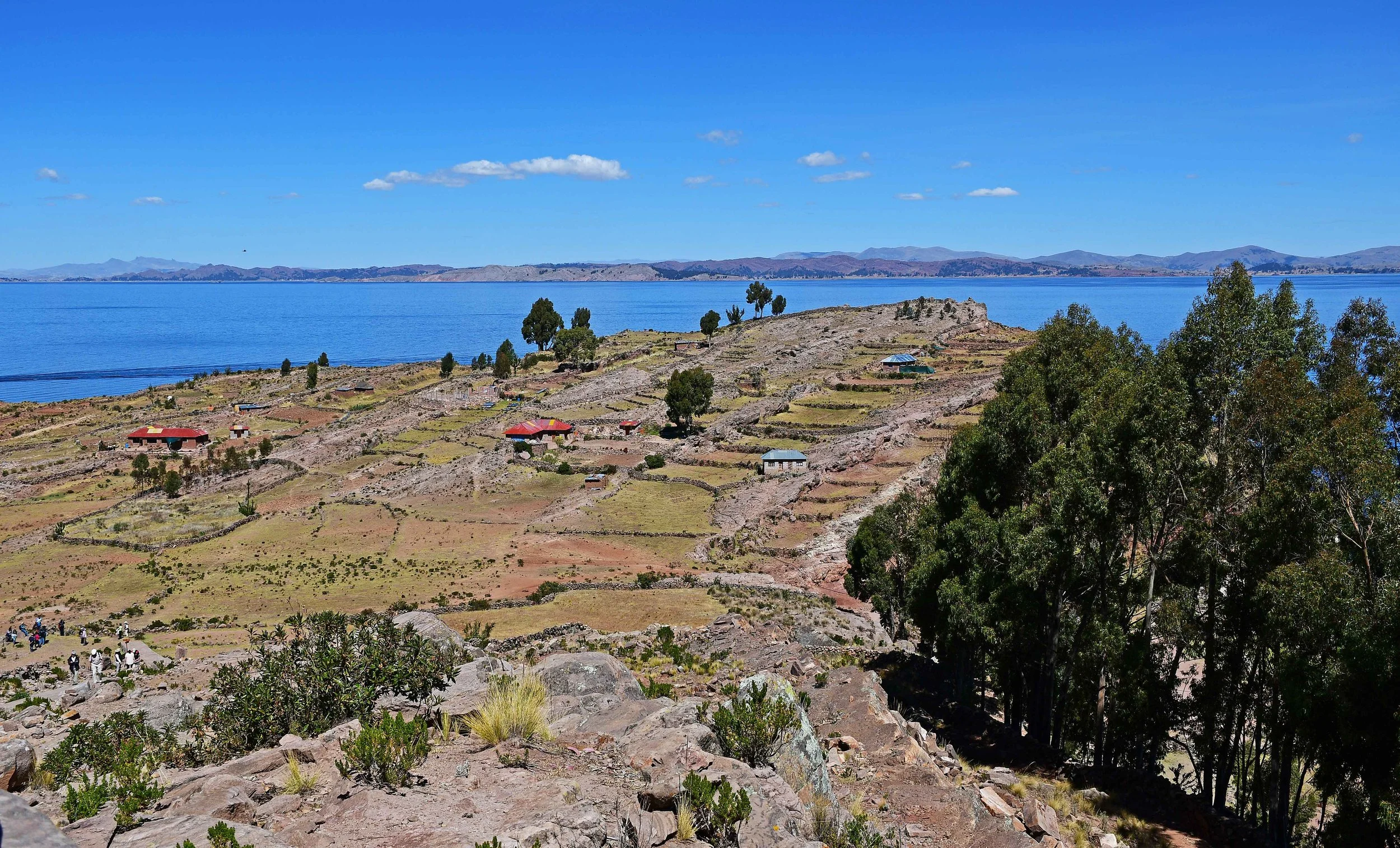
Later I took a boat out to Taquile island and had a much better time. Here the people have taken control of tourism, they limit the numbers who can come and restrict access to certain parts of the island, subsequently it’s a much more peaceful and modest experience.
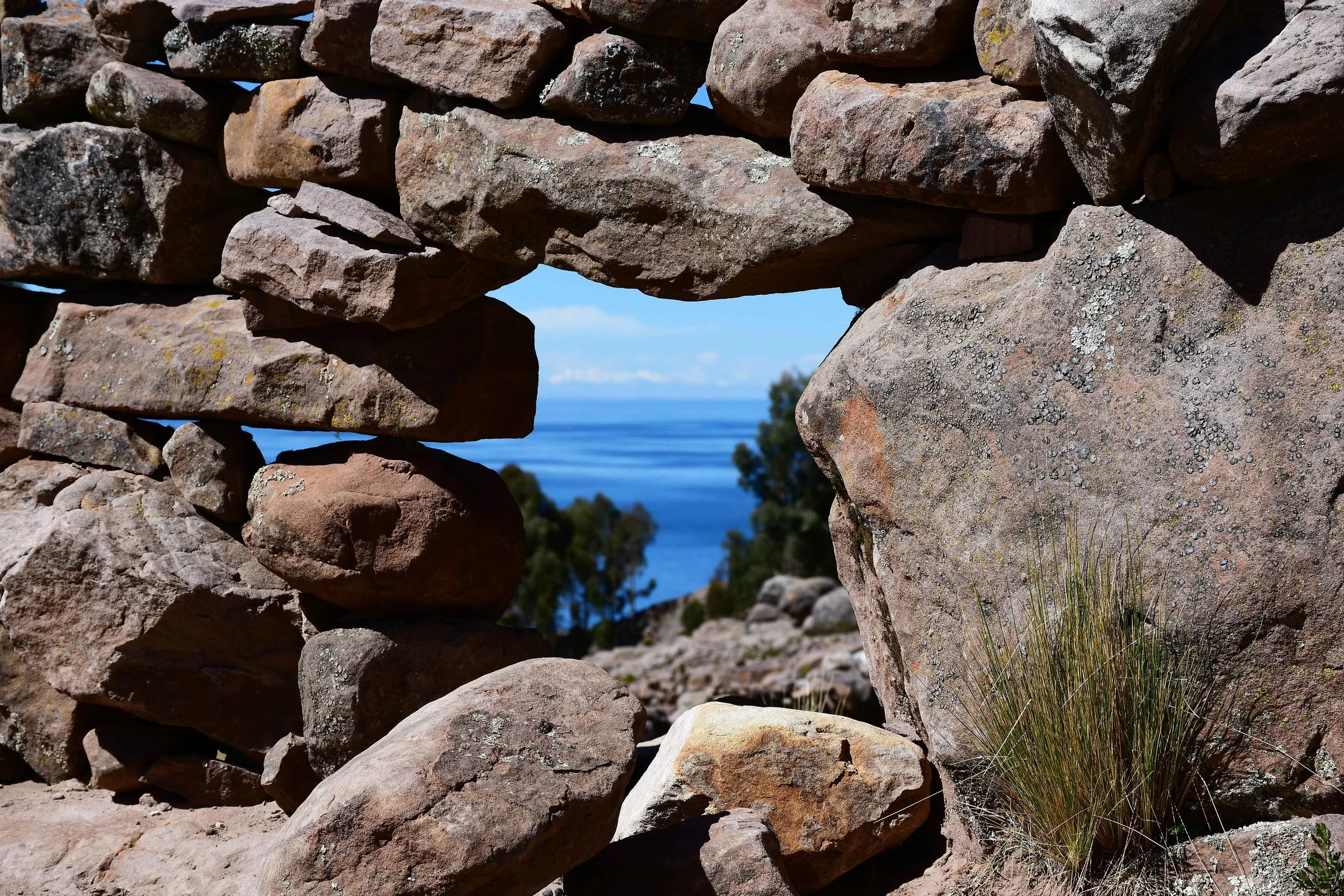
Heavily influenced by the Spanish invaders, the island feels very Mediterranean. They are famous for their textiles, the men knit, the women weave and they still wear the hats and belts they make.
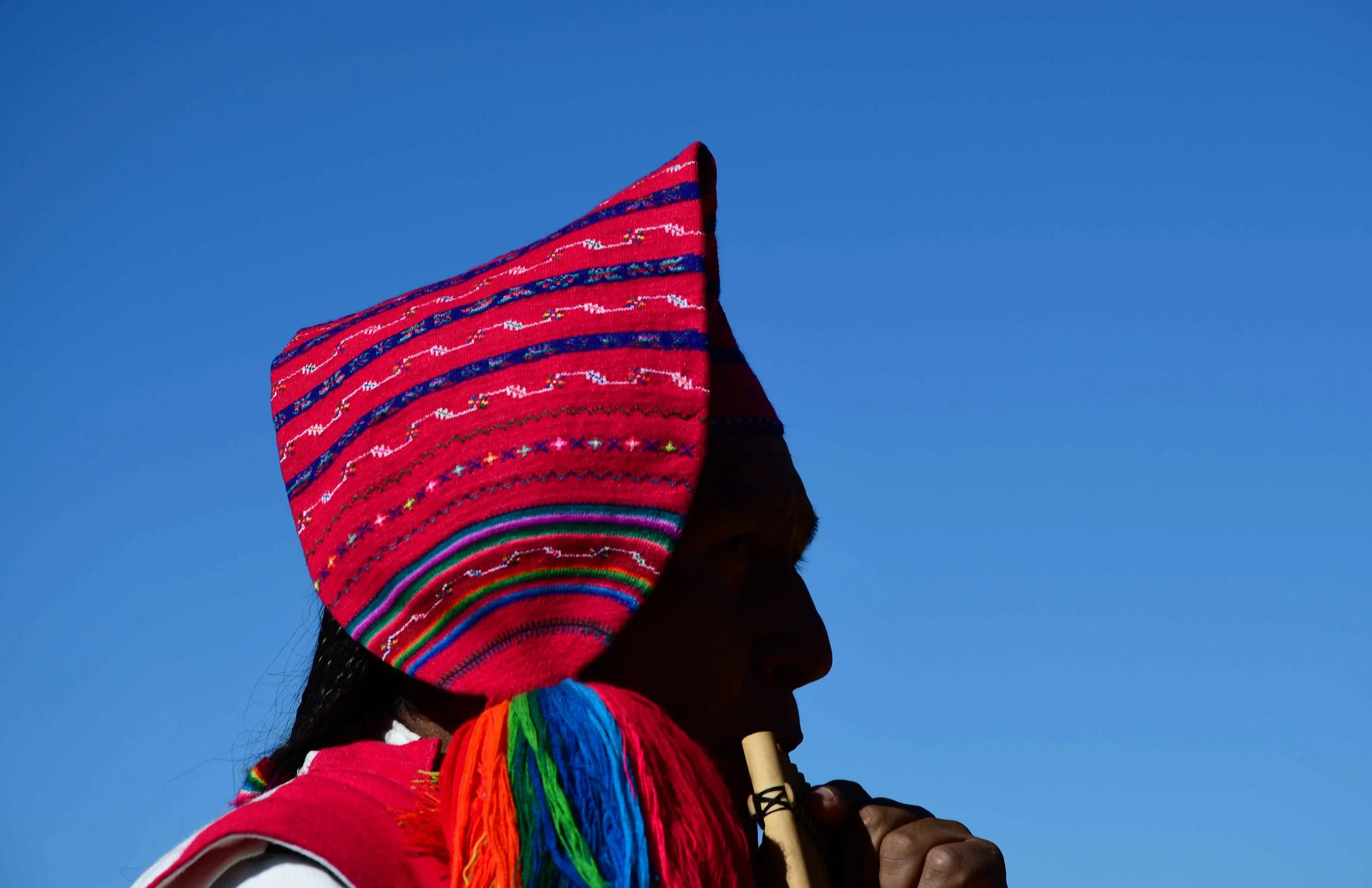
We walked around in the permitted areas, followed by a lovely lunch of lake trout and rice. They did a little dance for us and then we left them to their lives. It’s hard to escape the mass tourism in Peru, and there was no point pretending I wasn’t part of it, but I felt that the Taquilean peple had got the balance right between giving visitors a good time, offering insights into their way of life, while also protecting their privacy.
Before I left, I was given a piece of ‘Inca gold’ found on the ground here. It looks like a piece of terracotta but in direct sunlight it glitters. I still have it.
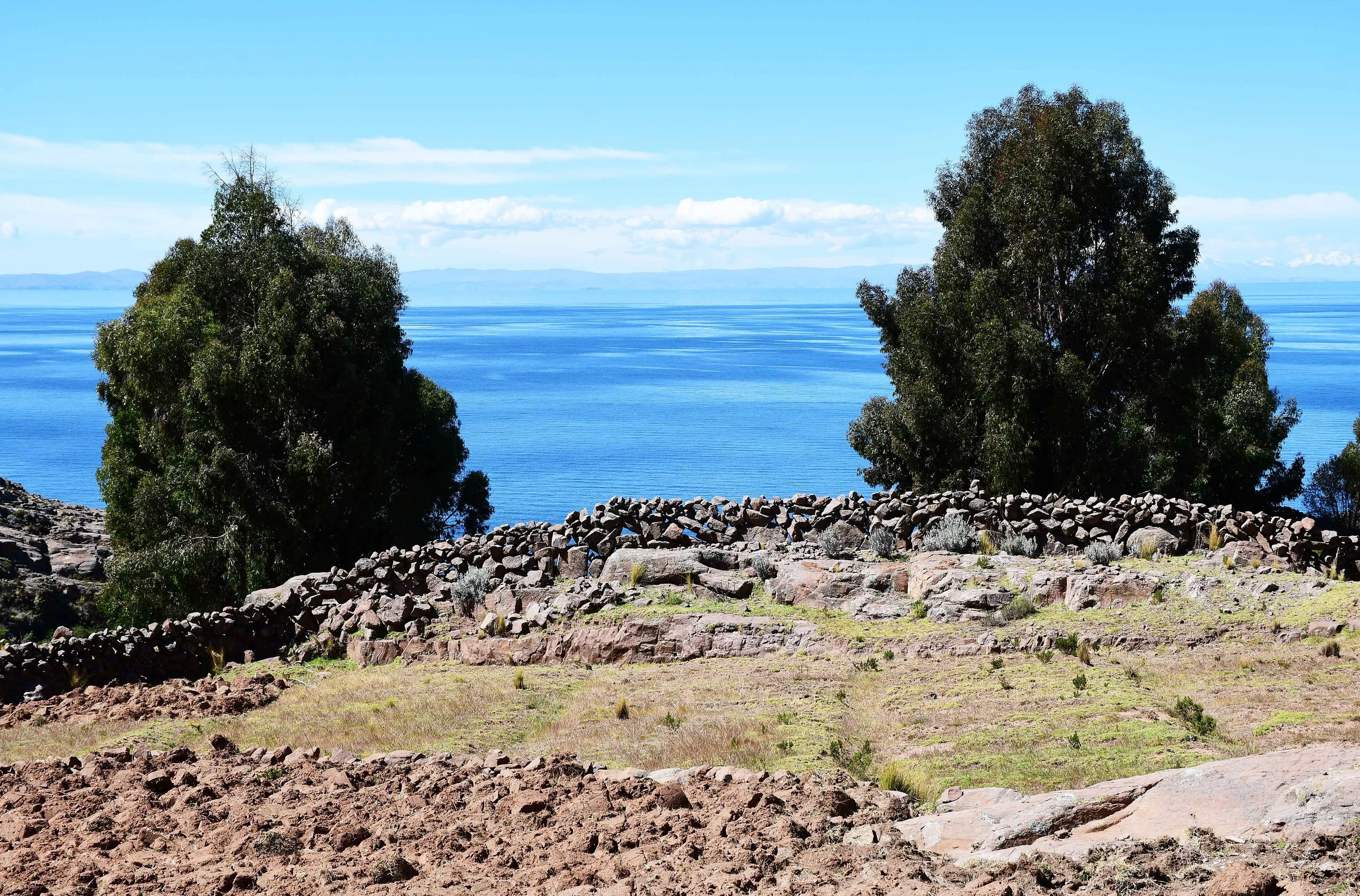
I was sad to be leaving the island. You can stay here and I wish I had done that instead of a characterless hotel back in Puno. When I got back, I ended the day walking the shores of the lake, noticing the oily slick at the edge, and seeing very little wildlife other than the odd guinea pig.
From Puno I was taking the Andean Explorer train to Cusco. The train was launched in 2017 and is partly owned by Belmond who specialise in luxury train travel, and partly by Peru Rail, who supply the engines and track. It’s a bit of a luxury admittedly, it was the most expensive part of this trip and I was conscious of our elevated position of privilege as we chugged through the poor towns of the Altiplano, but it probably the only time in my life I will get to do something like this and it was worth every sol.
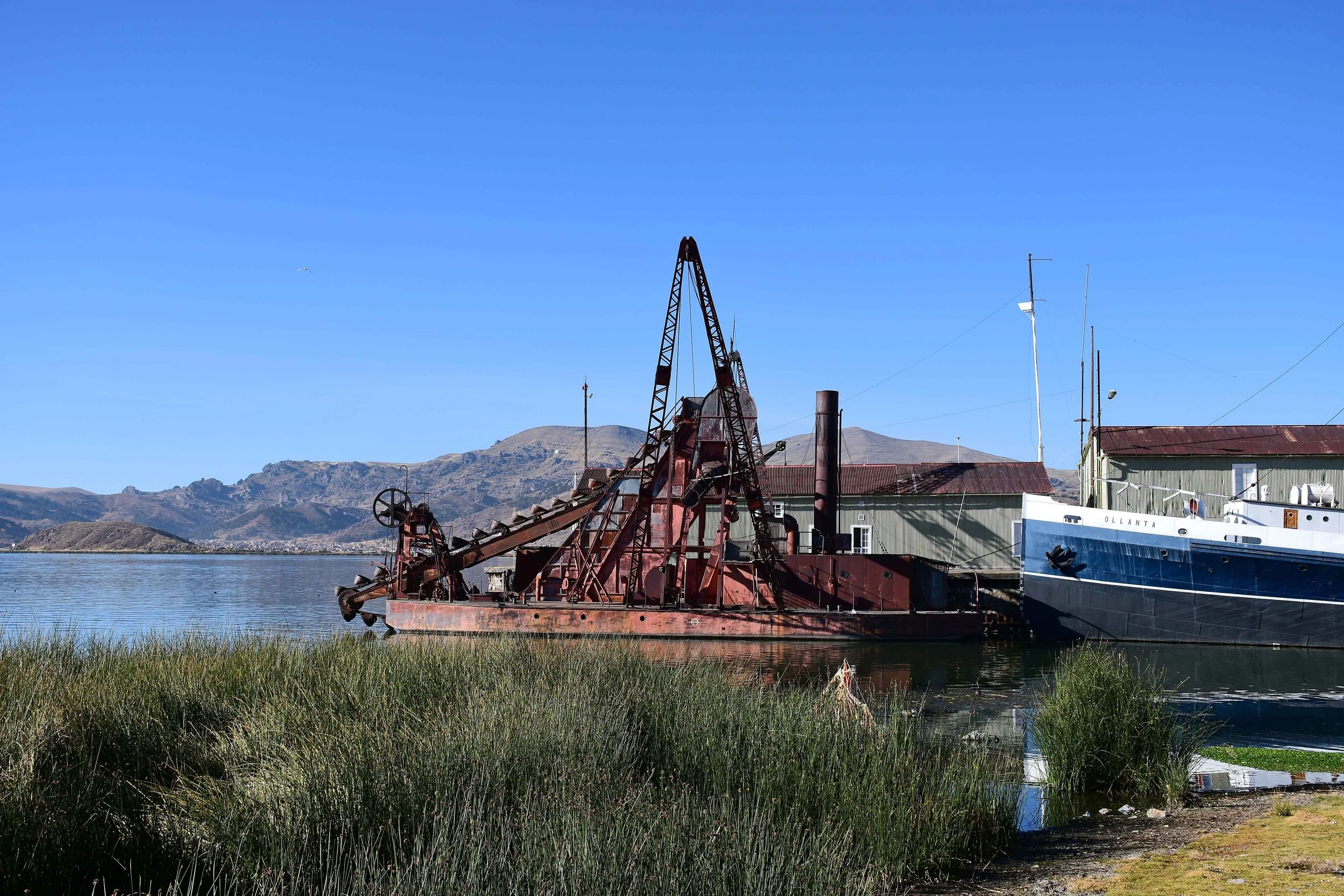
We started in a big shed in Puno that had formerly been the engine shed where the Yavari steamship was assembled and launched. It’s quite a story how this large boat was built in England, dismantled and then shipped to Peru, all the parts then loaded onto llamas and carried over the Andes to be reassembled at Lake Titicaca.
We were served very good champagne and canapés while a string quartet played Bach and Vivaldi. It was all very tasteful and I wondered if I would feel a bit self conscious on my own. Luckily I had befriended Sam and Meg from London. Sam was the director of the London Transport Museum and this train ride was his main motivation for coming here. He knew a lot about locomotion generally and he was the one who recognised the significance of the shed.
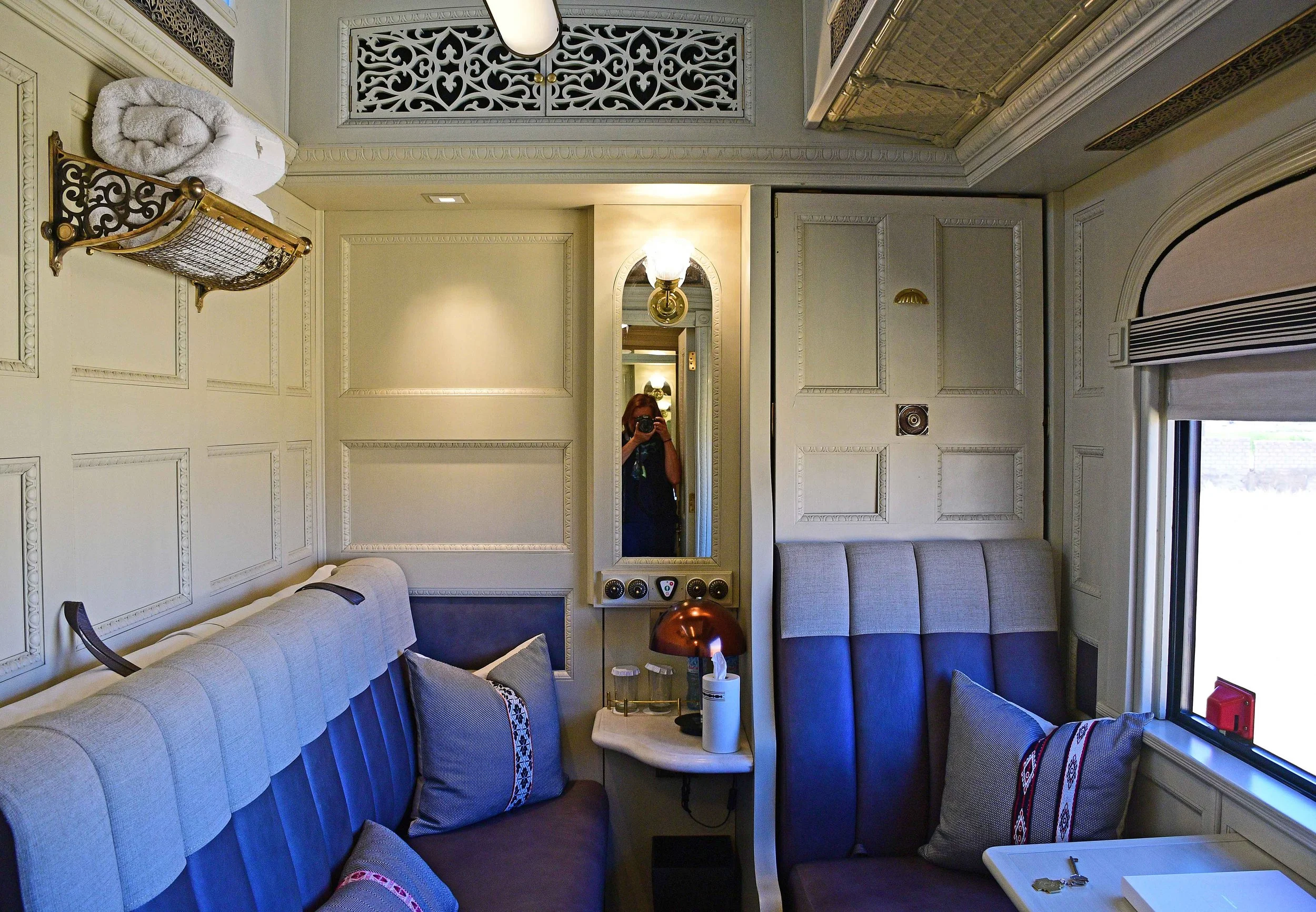
We boarded the train where our luggage had been put in our cabins. I was delighted with mine in the Totora carriage with its traditional features like net luggage racks and brass fittings. The bed was put away and I had a comfy armchair and table by the large window, and a pocket-sized shower room. I love trains and could quite happily travel around the world like this.
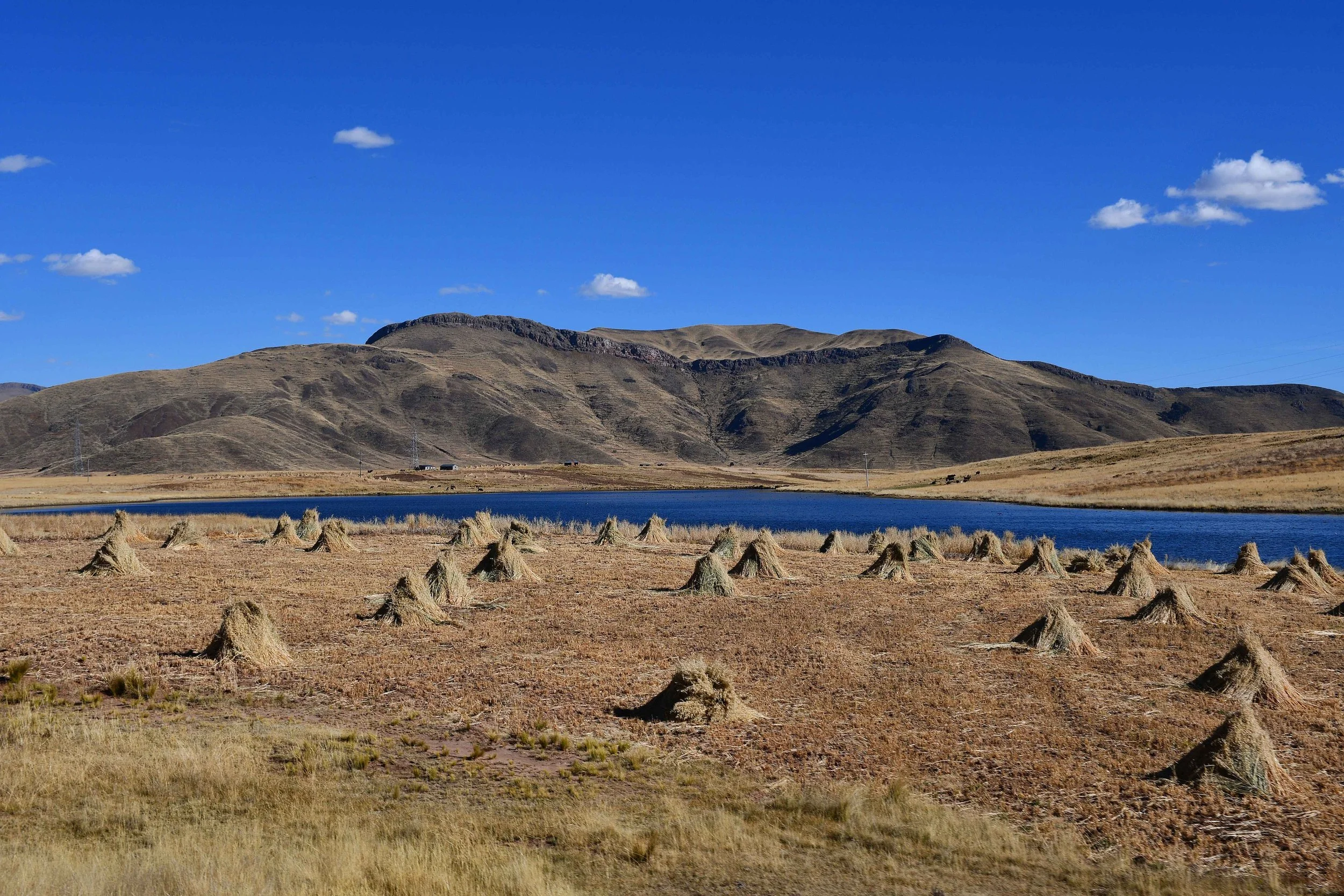
I was hooked as soon as we departed the lake and headed into the countryside where people were working the fields with their big hats and llamas. We went directly through a market at Juliaca, so close I could almost grab fruit from the stalls. I have always wanted to do this although I did wonder whether the local people on the ground felt quite so thrilled at being on show.
We had lunch, corn with cheese, sea bass and a delicious orange foam pudding, more wine. All the food I ate on board was exquisite but not too heavy, and any alcohol I drank was of such quality that I didn’t feel at all drunk or ill.
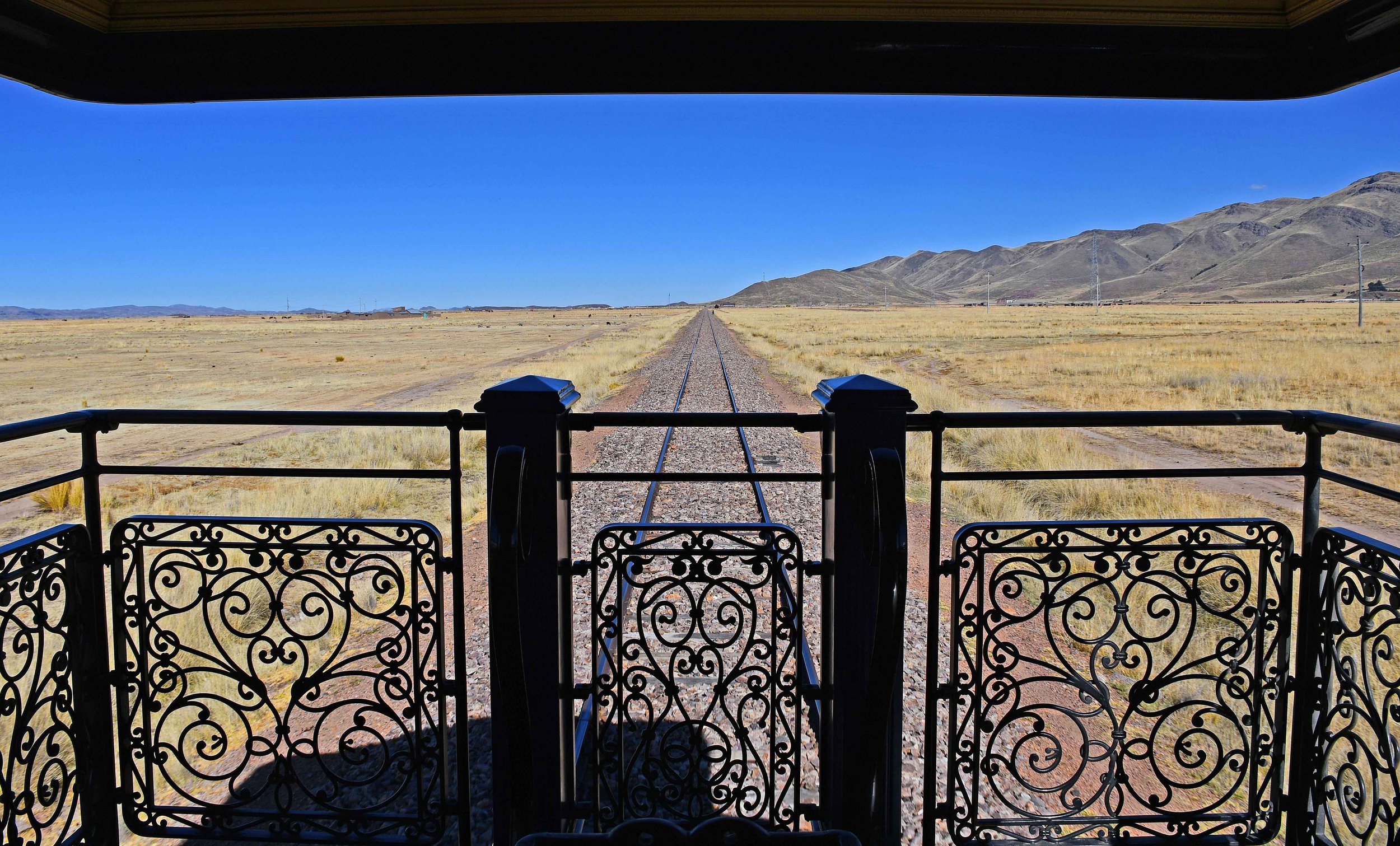
Afterwards I headed down to the observation deck right at the back of the train, another lovely old-fashioned feature. I spent a couple of hours marvelling as we ascended the altiplano at an altitude mostly over 4000 metres. I had planned to sit in my cabin before dinner and read, but i just stared out of the window the whole time and watched Peru go by.
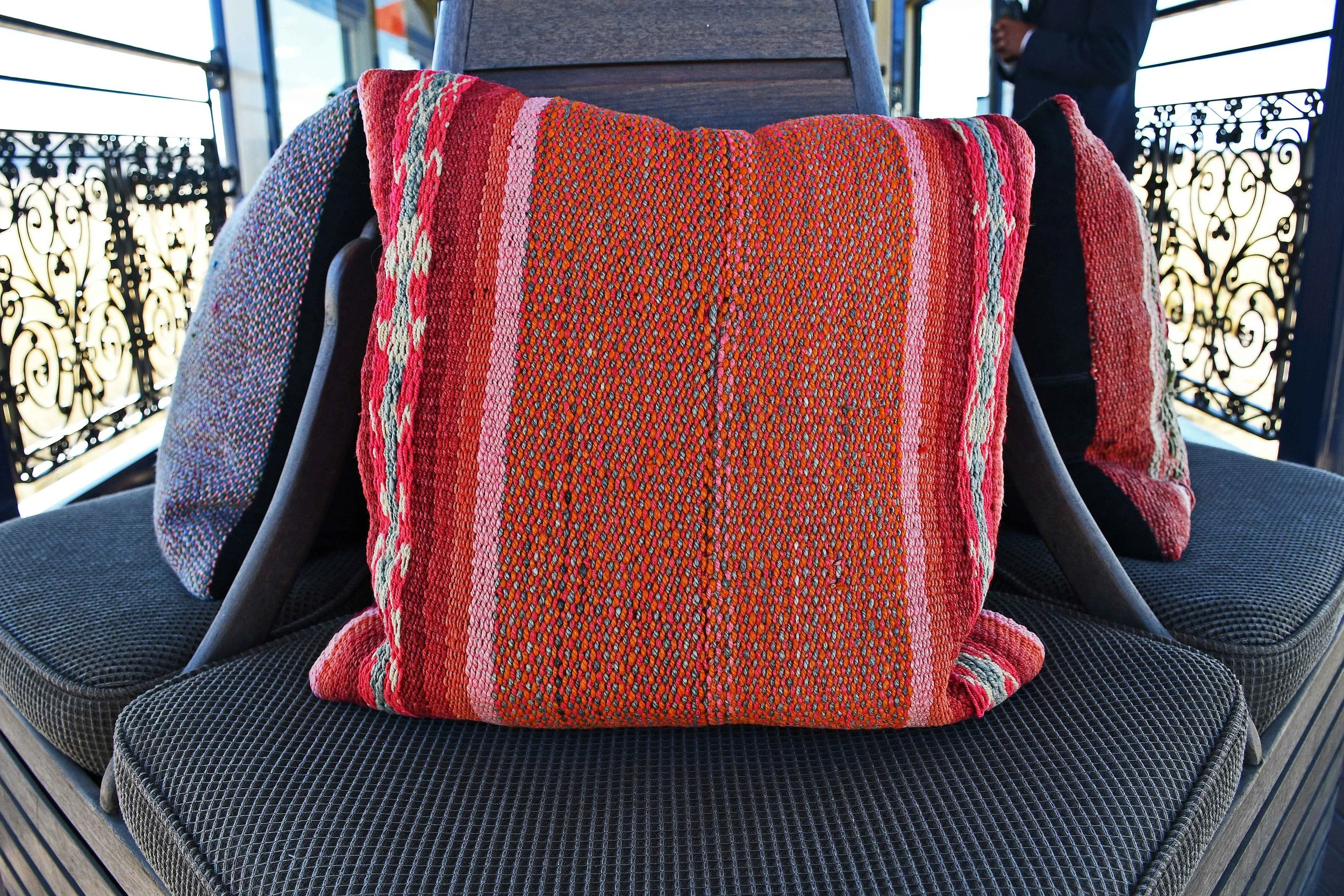
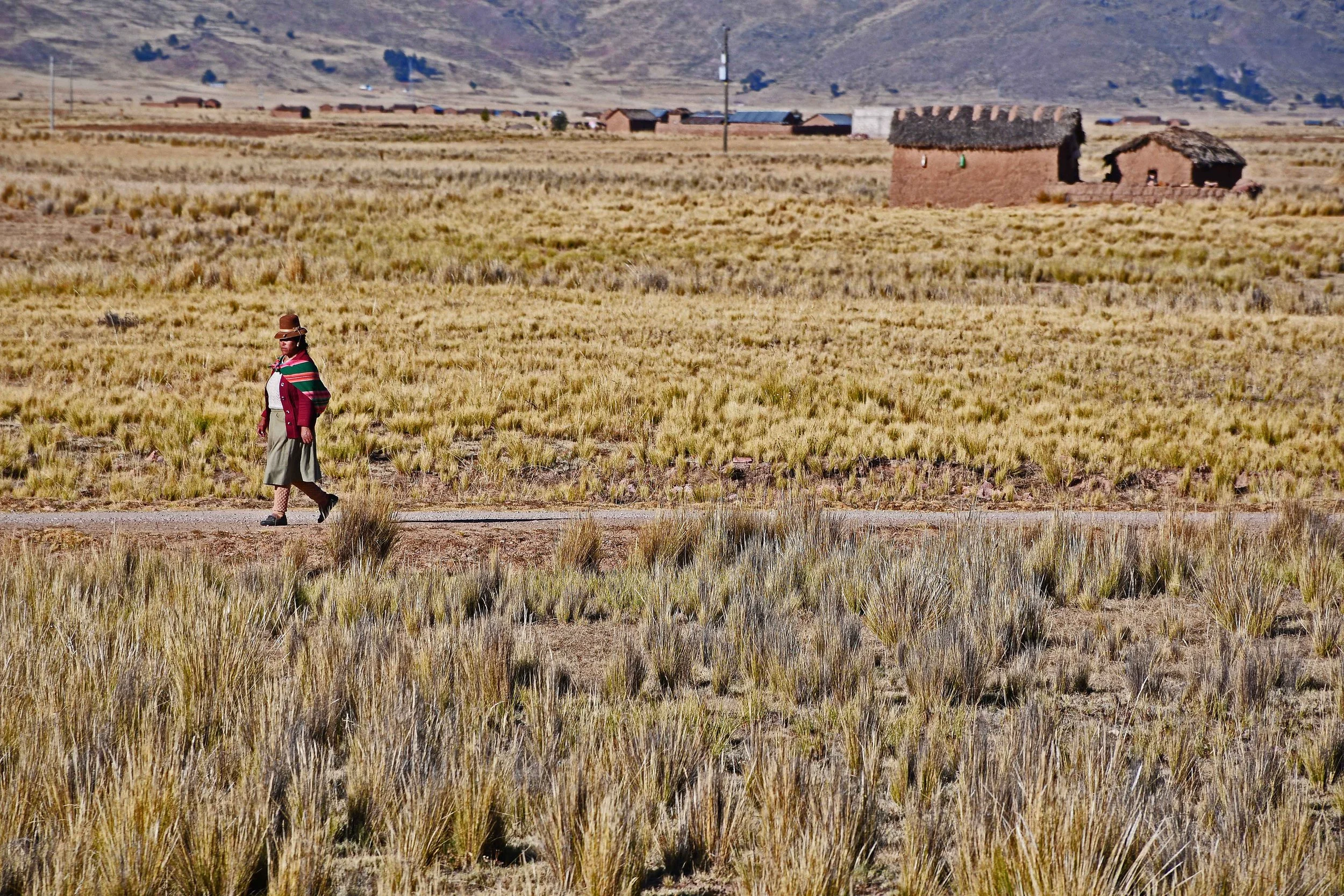
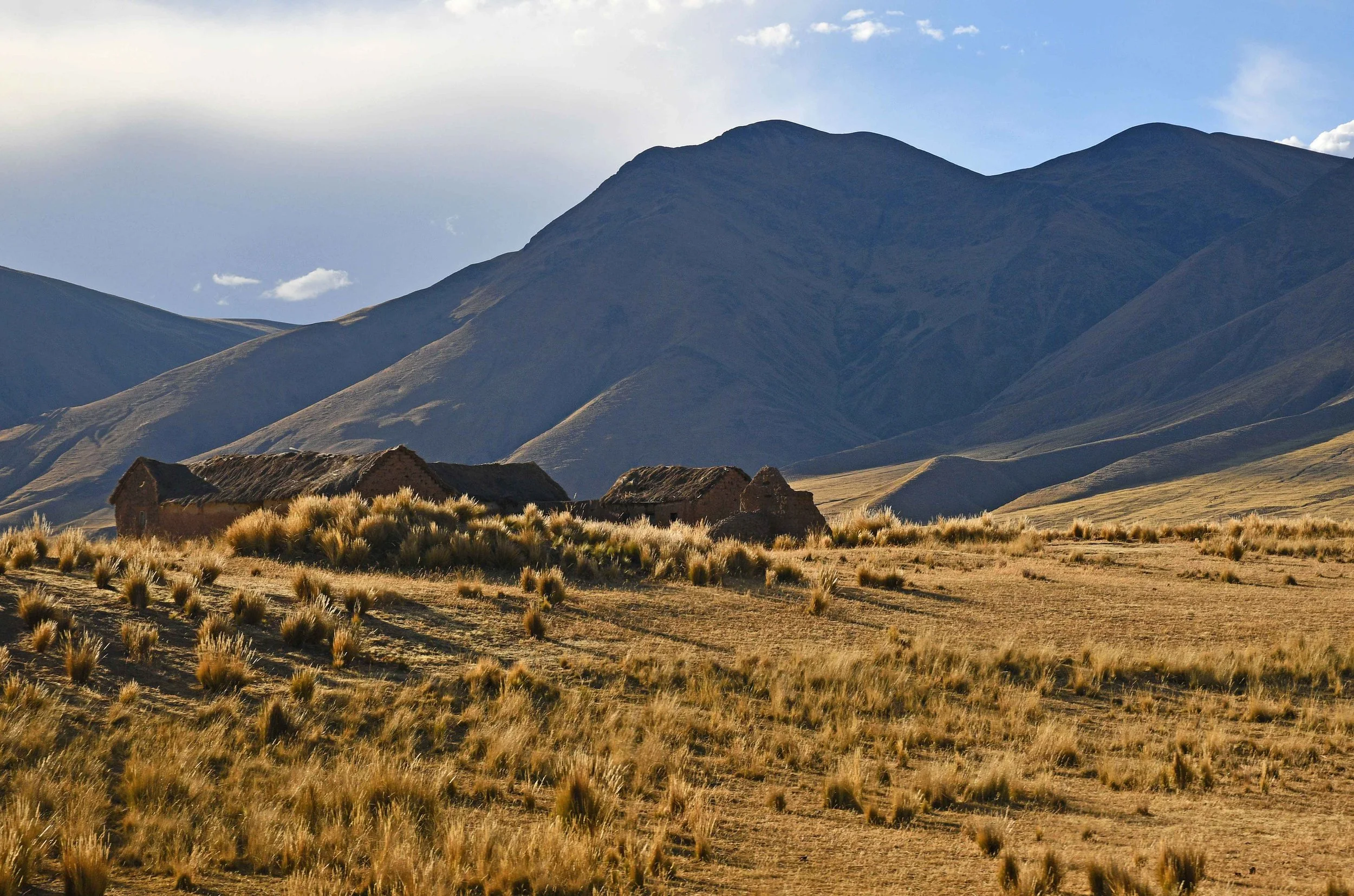
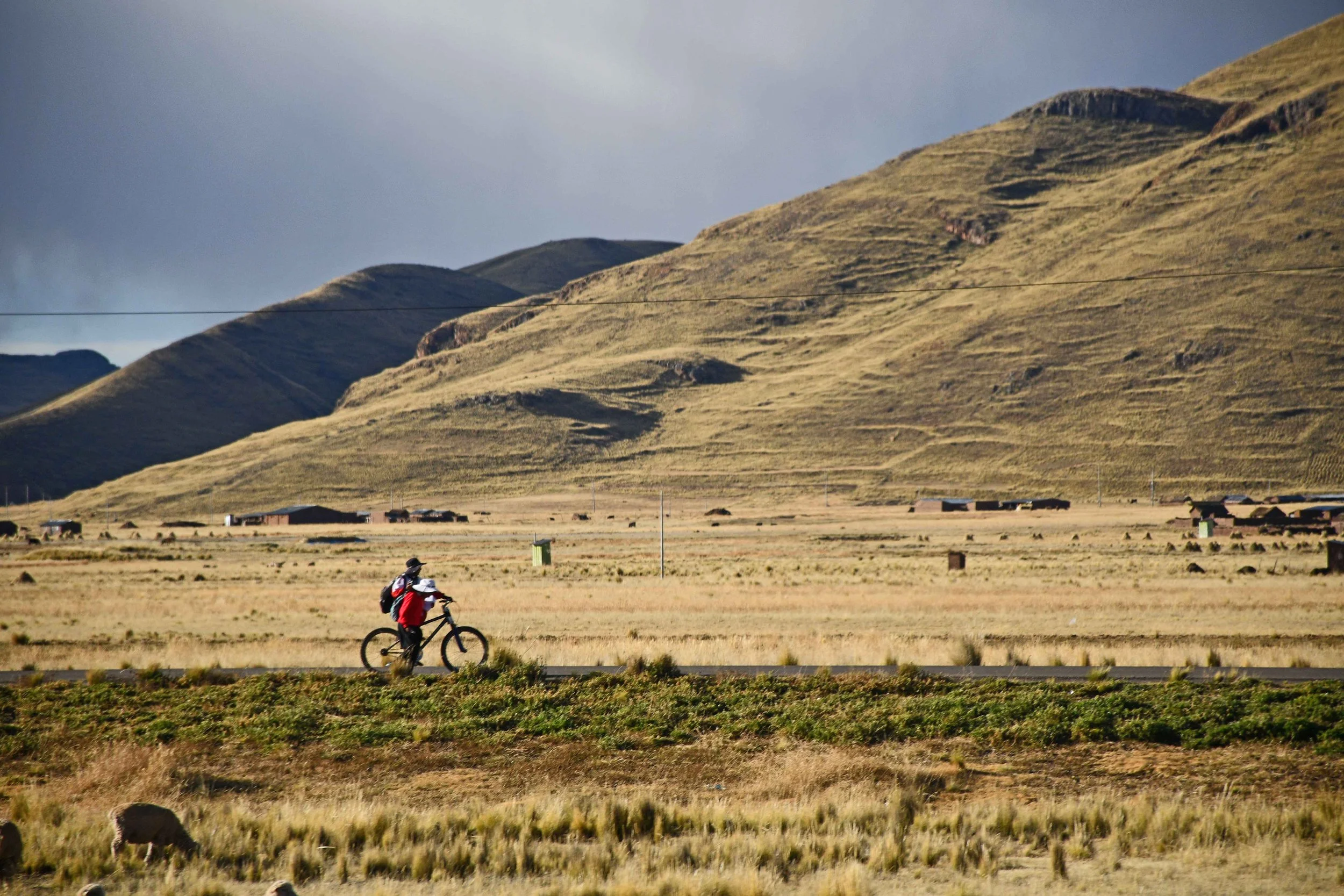
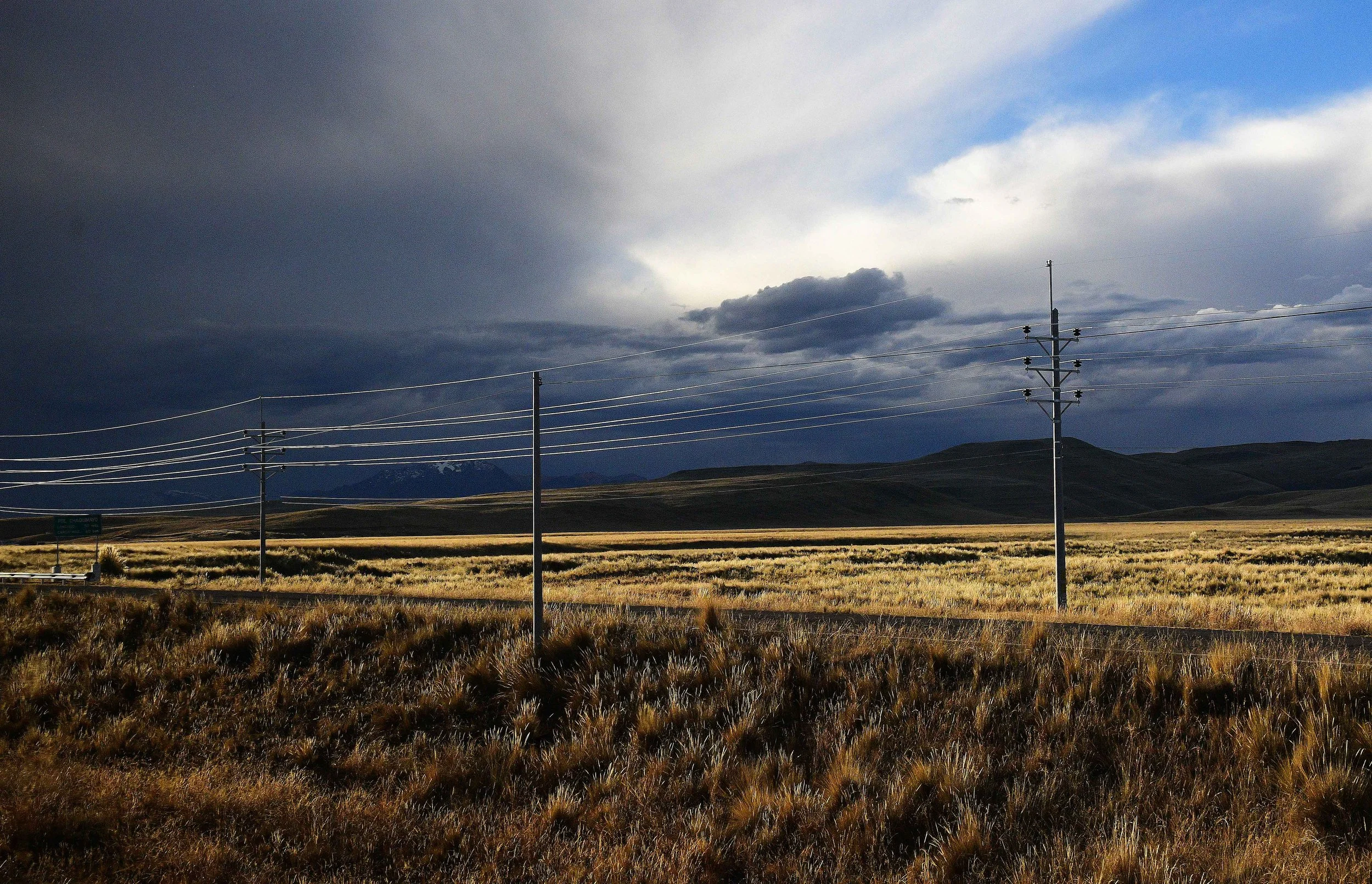
In the evening we enjoyed cocktails, one of which was made with chicha morada, while we were entertained by a tinkling piano. We had canapés, asparagus spears rolled in wasabi and smoked trout cones, followed by a dinner, lima bean cappuccino, prawns, duck ravioli and lemon and chocolate pudding. Afterwards we stopped for the night and got off the train to meet some locals selling their crafts, and marvel at the impressive canopy of stars. When I got back to my cabin, an elf had come in and made my bed. Despite the comfort, I didn’t sleep well, I think I was so overwhelmed by the experience.
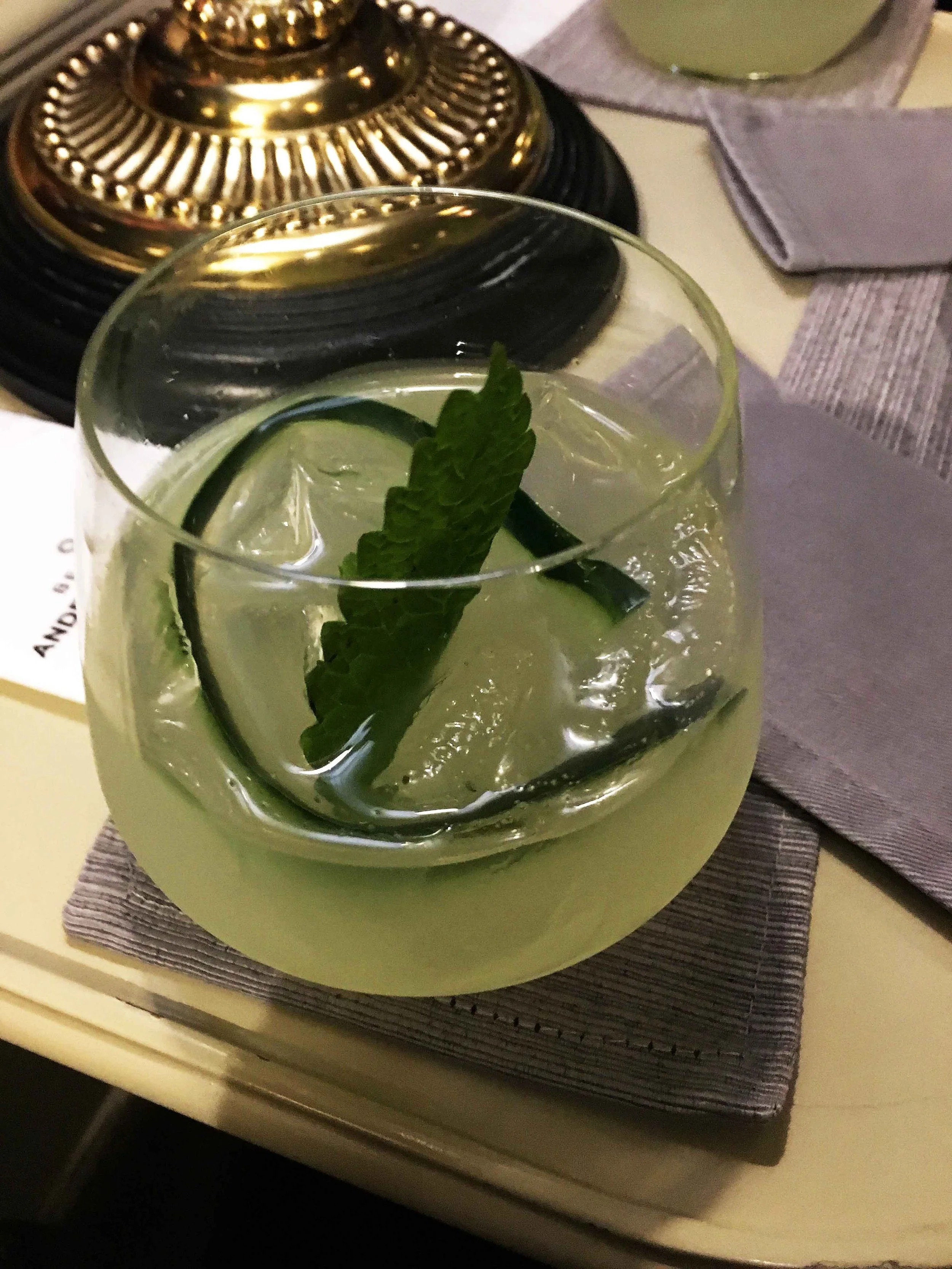
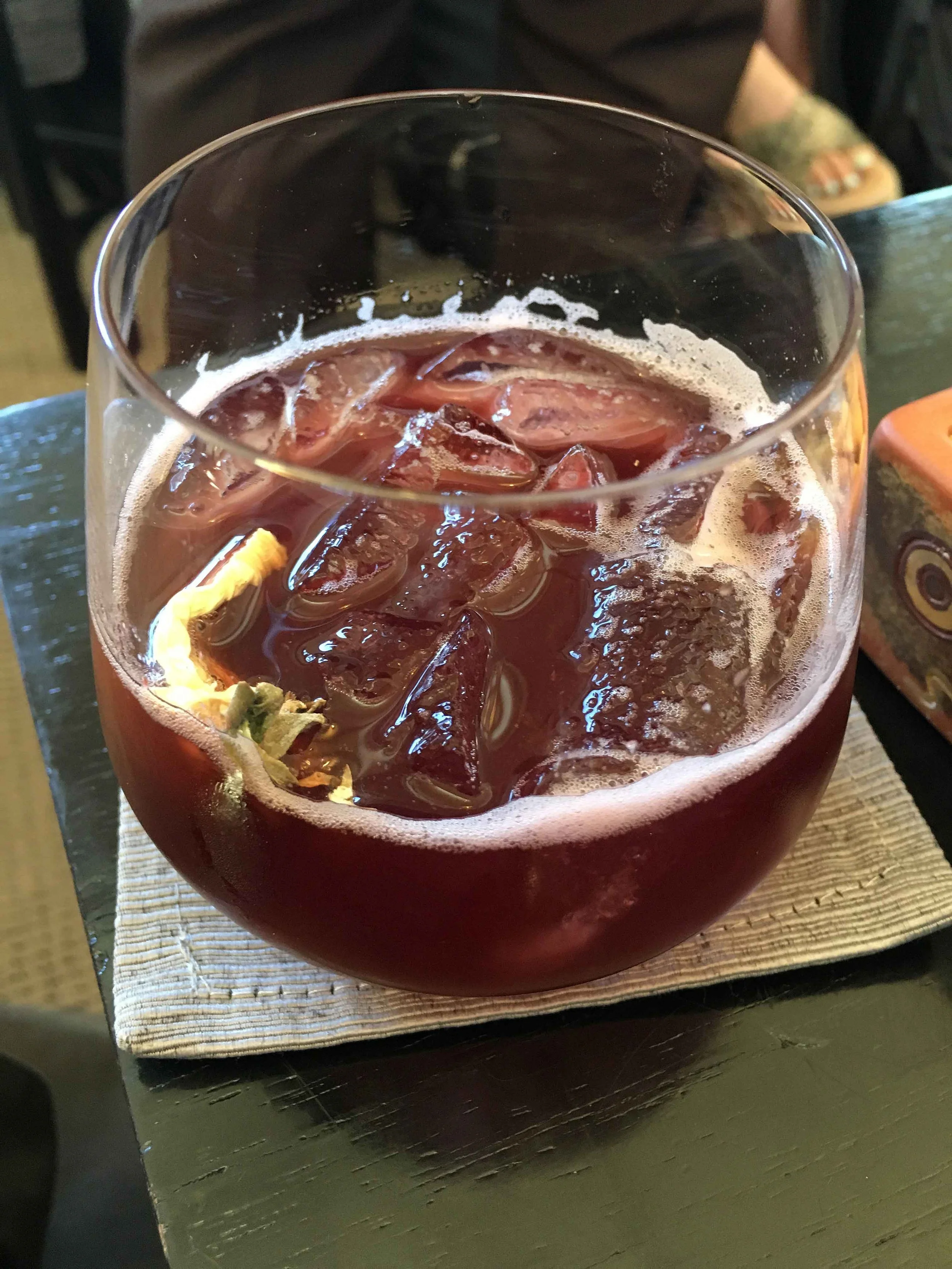
After breakfast, we pulled into Cusco. As we disembarked all the staff lined up and applauded us. I felt like we should be applauding them for making this such a special, once-in-a-lifetime treat.
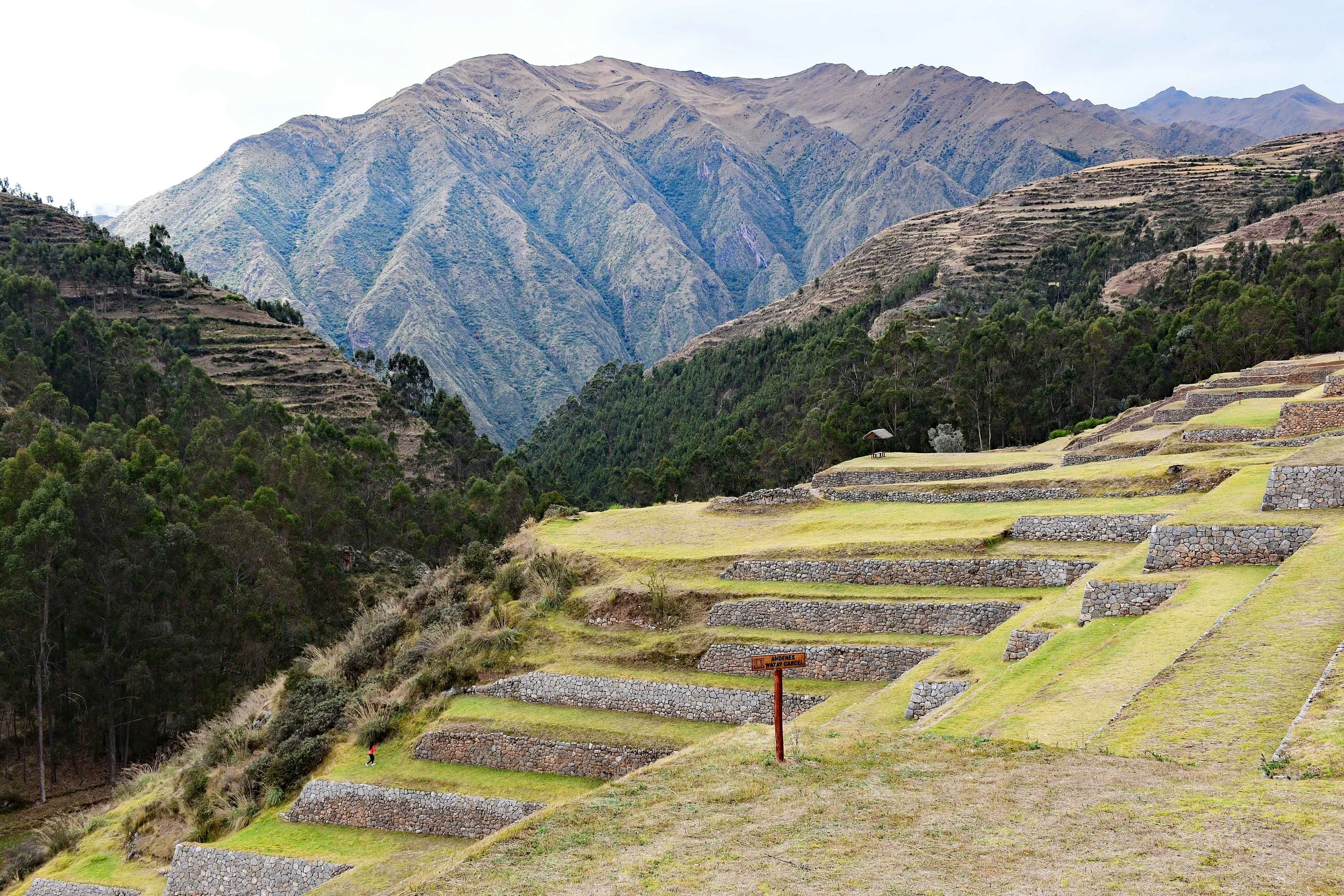
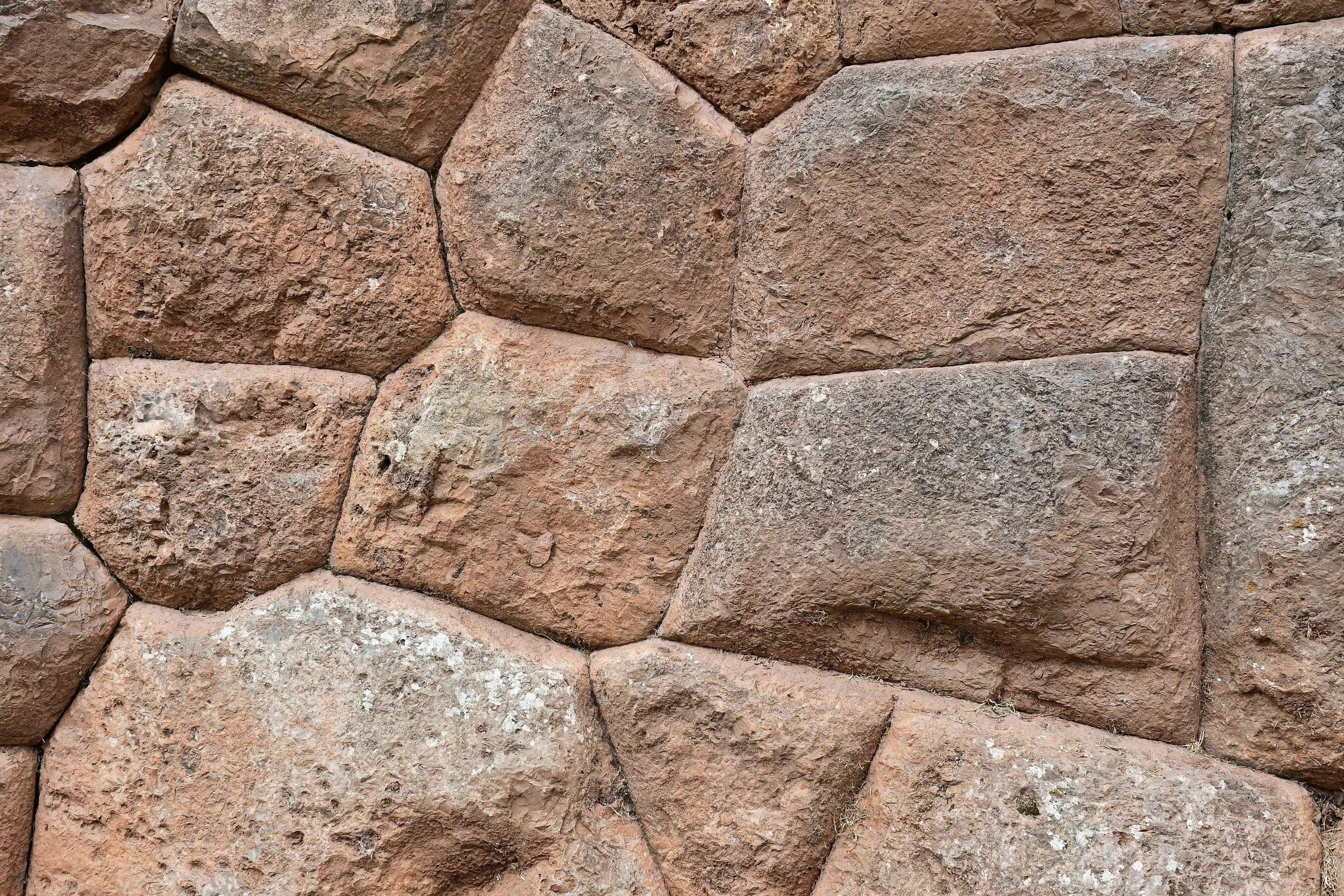
Back to earth and I was looking forward to a few days of all things Inca in Cusco and the Sacred Valley. Chinchero is a small town about 28 km from Cusco. It is called the Rainbow Village because of their abundance during the rainy season. It’s also high up, about 3700m, and surrounded by snowy peaks. It’s a perfect example of how the Spanish and Inca cultures came together. Next to the main square are the ruins of the hacienda of Inca Túpac Yupanqu. It is believed that he had the palace set on fire as he escaped the Spanish so that they wouldn’t be able to ransack supplies. What remains is a very impressive terraces and walls, and good examples of the mortarless stone walls that I would see everywhere.
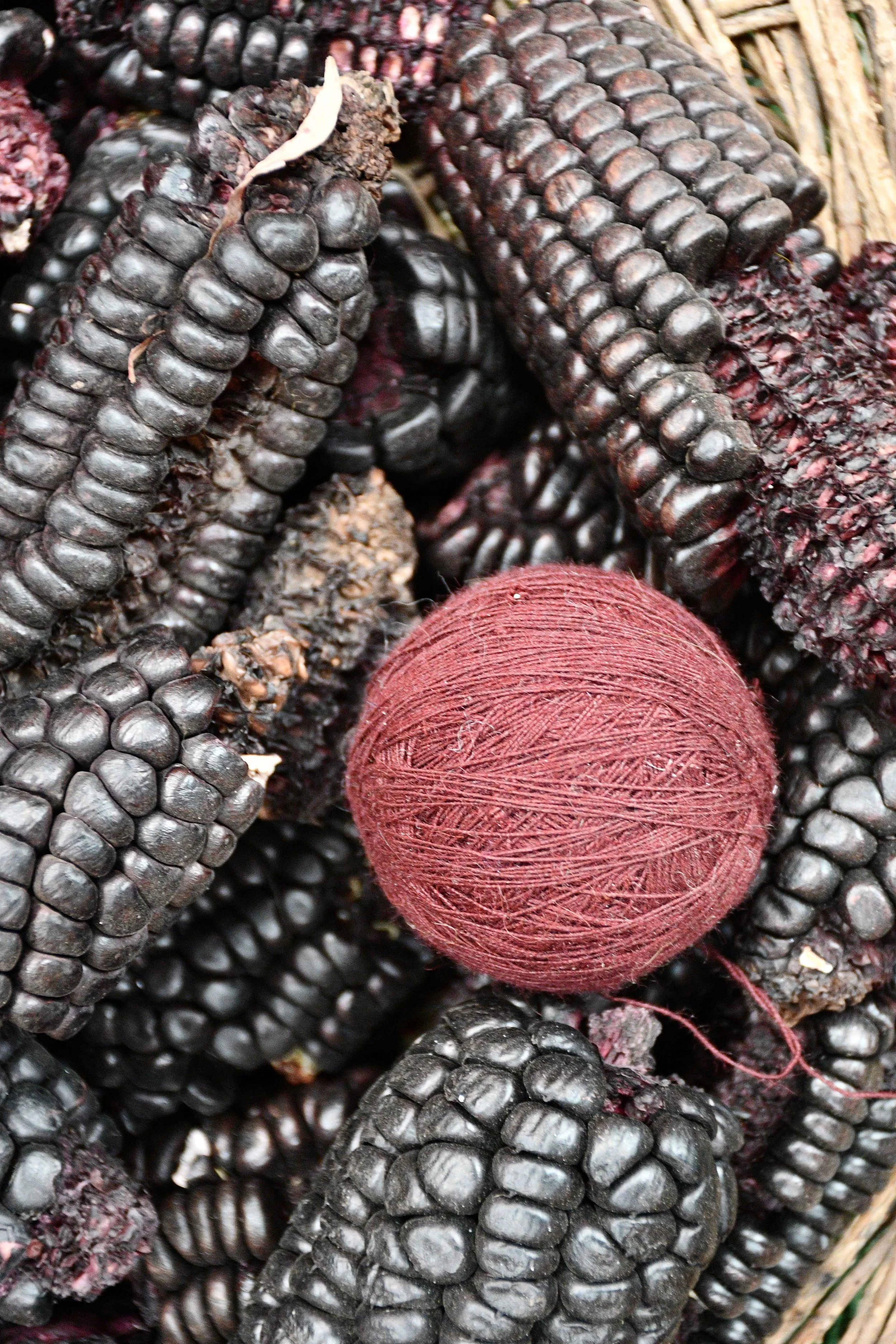
I hadn’t come to Peru to shop, but I did briefly looked in on a weaving workshop found it interesting to see what plants had been used to dye the wool. Maize had produced this beautiful plum colour.
I really enjoyed my time here as we arrived for Corpus Christi, a festival introduced by the Spanish to try and suppress local culture. They failed and, nearly 600 years later, the festival has become a fusion of the catholic and Inca elements. The costumes were a mixture of feathers and coloured and bejewelled textiles, worn with shirts and ties, some had large crosses on the front. It’s interesting that the physiognomy of the majority of the people isn’t Spanish at all, almost like they had never been conquered.

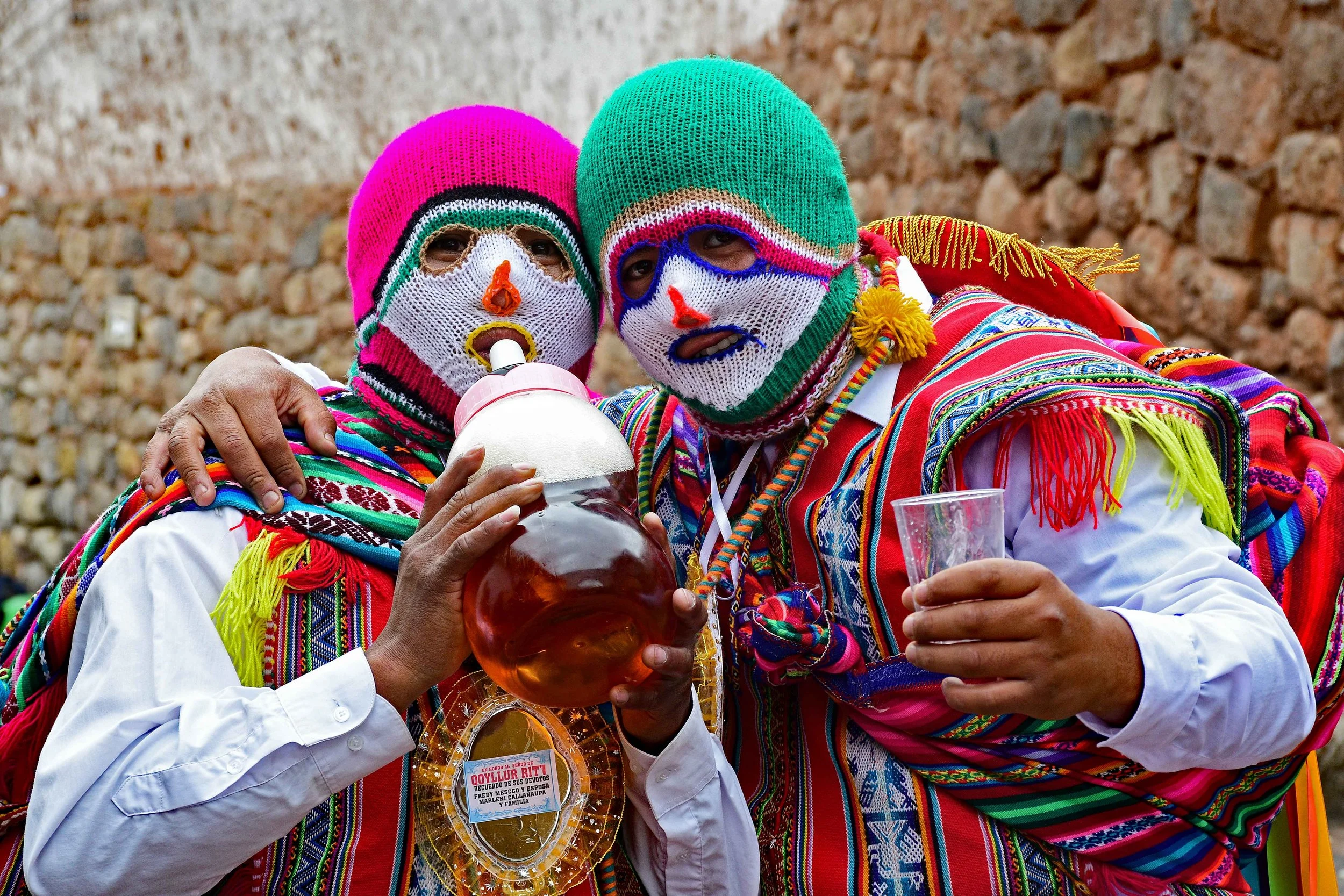
Walking around after the procession I saw lots of young men wearing woollen masks, the Waq’ollo masks representing half man, half llama. These two offered me a drink but I had a feeling it might be stronger than it looked so I declined.
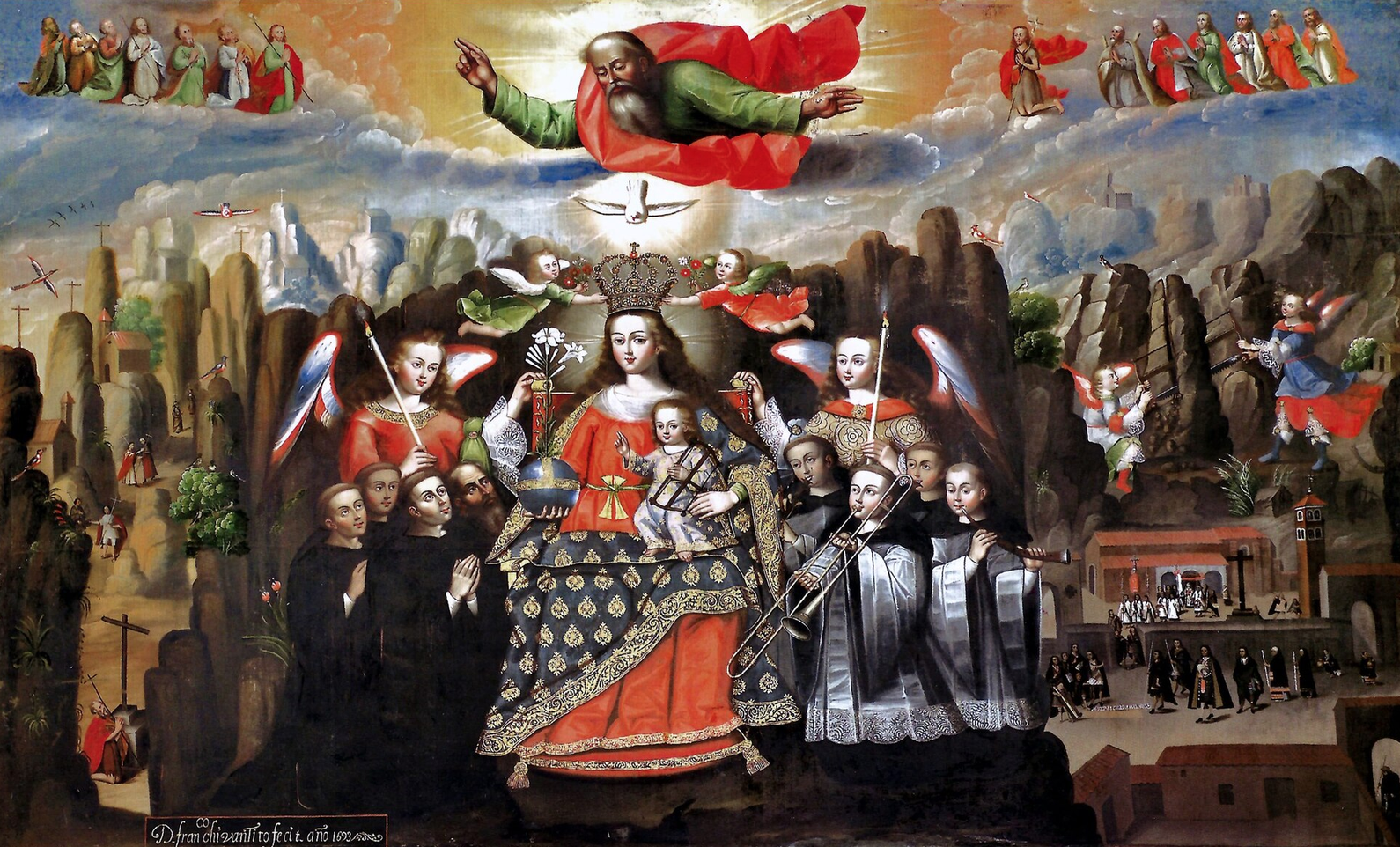
The church contains the Virgen de Montserrat painting by Francisco Chihuantito. Not quite the Pachamama as I had seen in Lima, with more Christian symbolism than pagan, but even so, the naivety of the painting, the slightly pyramidial shape of Mary, and the surrounding mountains gave it the same aura.

I stayed at the Casa Andina in the Sacred Valley and there are so many archaeologically interesting places to visit around there. Ollantaytambo has two main attractions. It’s the starting point for the many people who get to Macchu Picchu via the Inca Trail. It’s also the site of the ruins an Inca fortress and agricultural terracing. Visiting here I was reminded that the Inca themselves were colonisers, they had sacked this town not that much before the Spanish arrived.
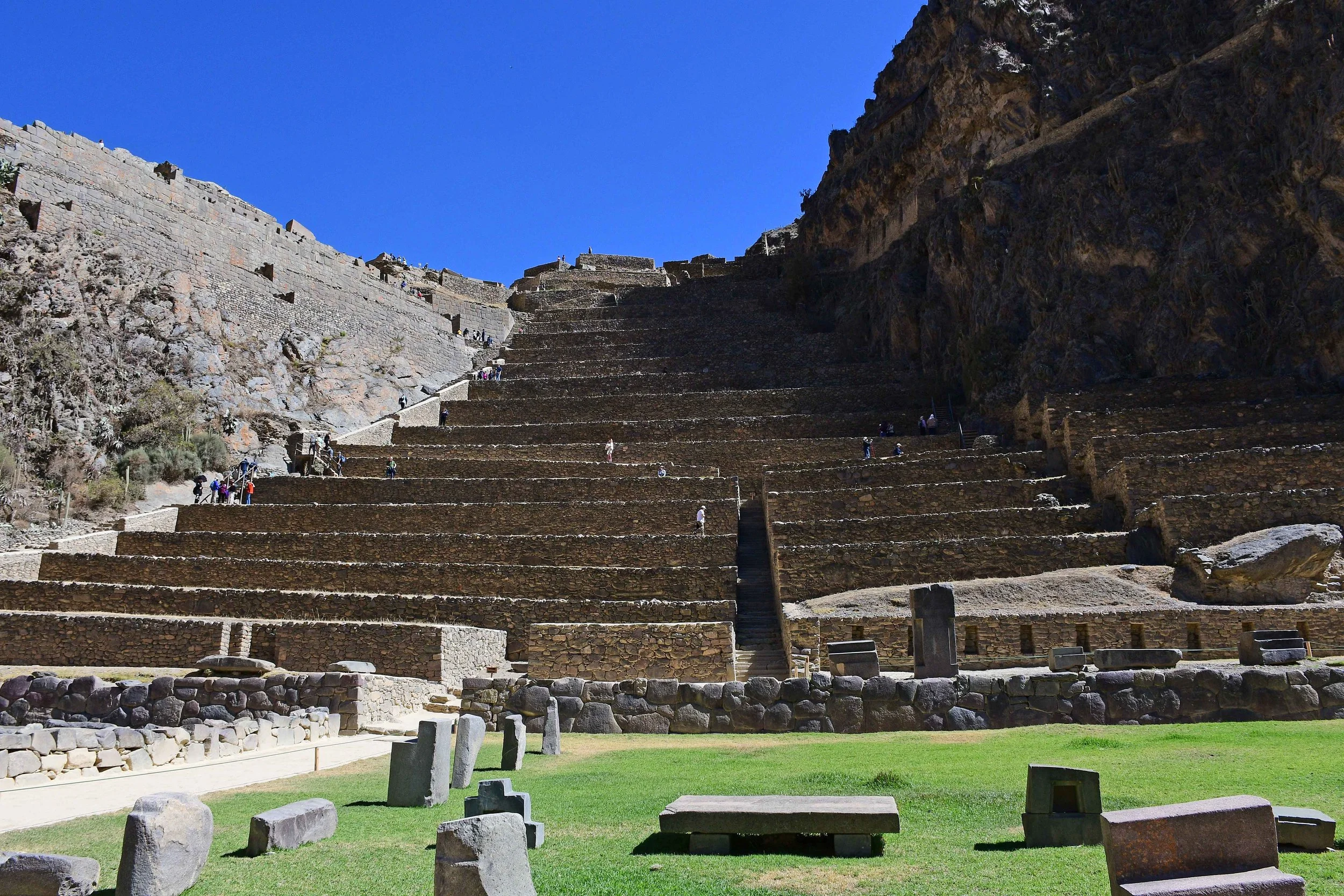
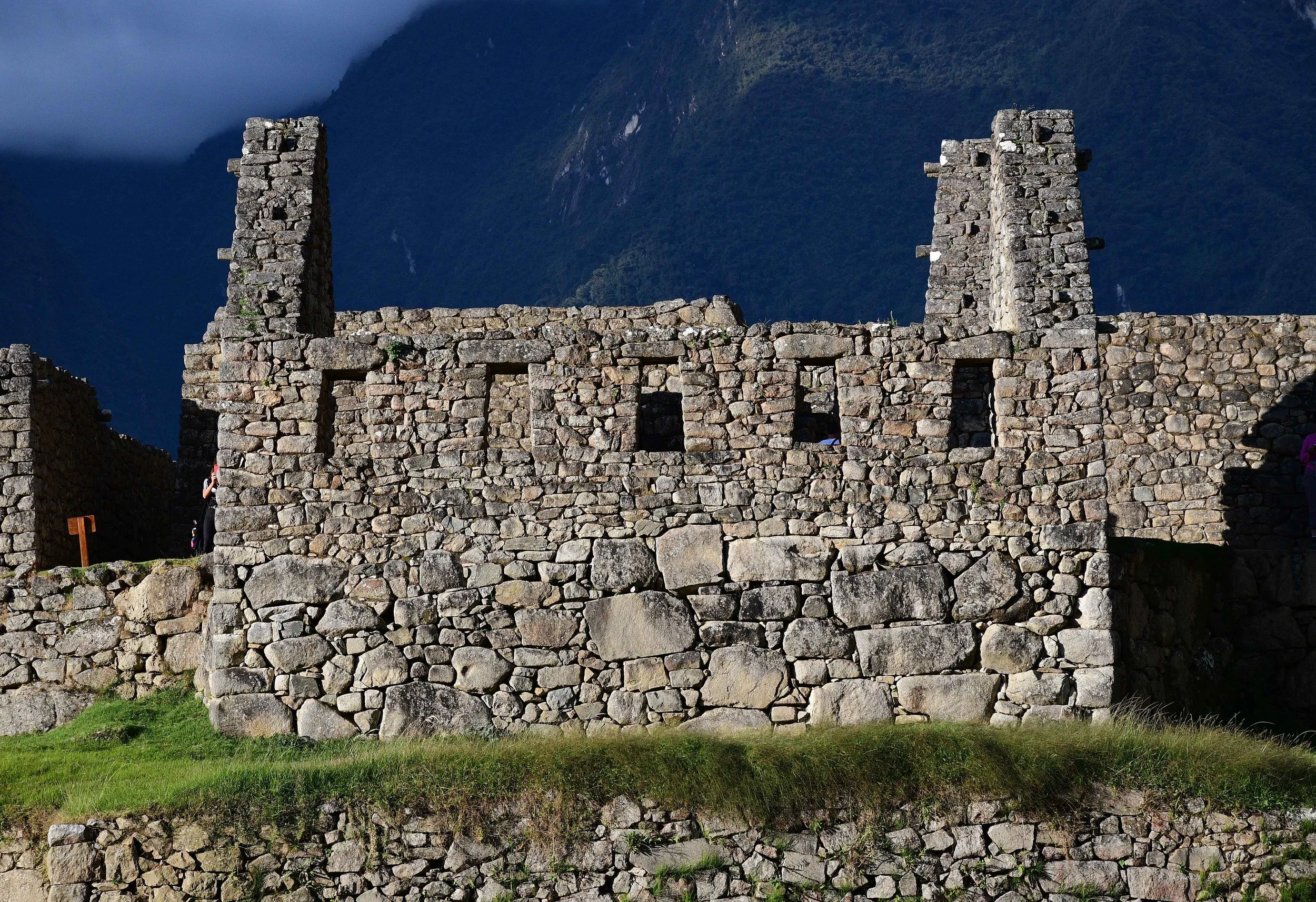
The inca knew how to build such places so solidly that many of the paths and walls are still intact and hardly ‘ruins’ at all. It’s not known how they managed to get the stones to fit together so compactly, some of the cracks in between are so tight you can’t even get a knife in. One theory is that they used a mortar that had an acidic effect, dissolving the limestone.
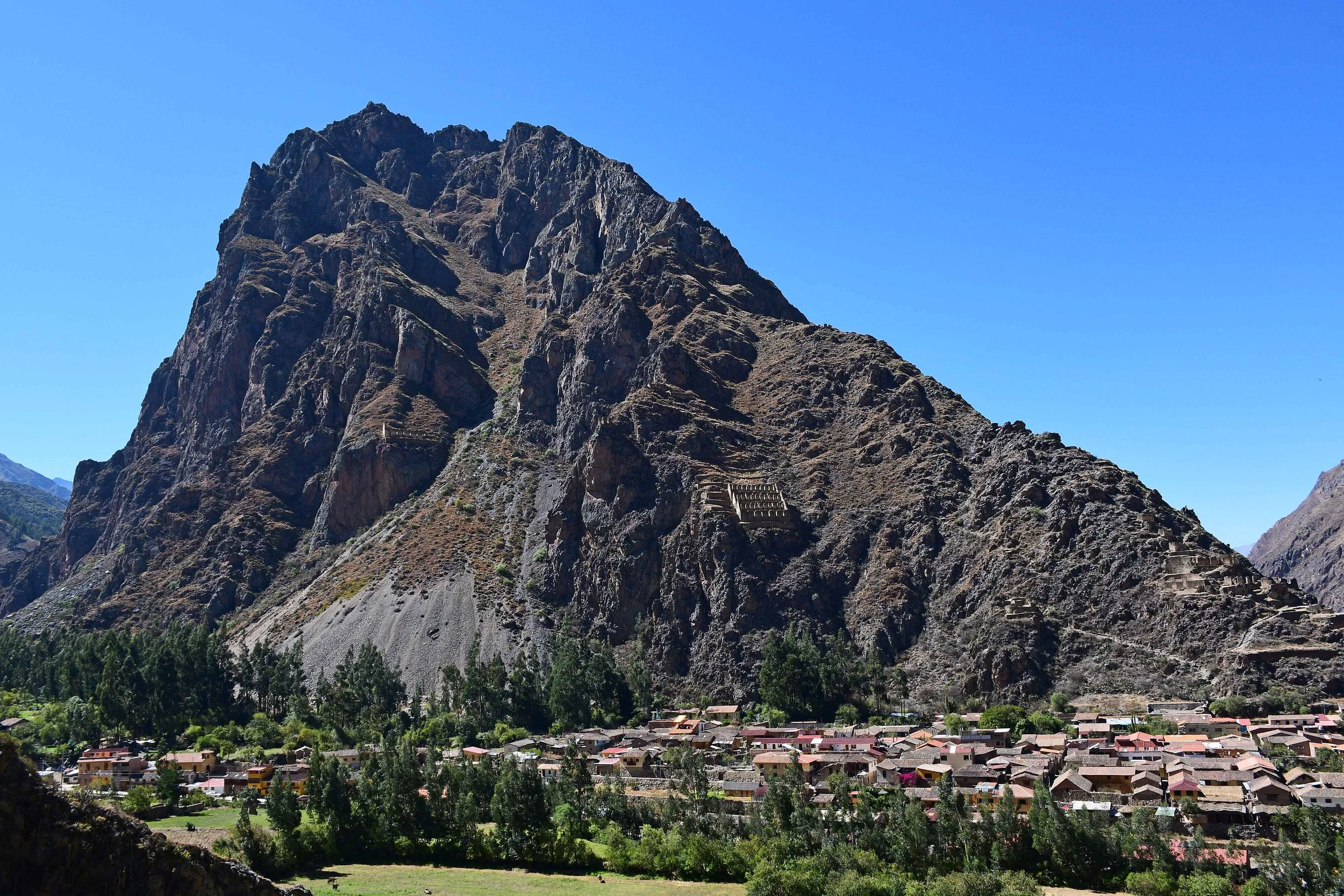
The main reason I wanted to come here was to see the agricultural warehouses or qullqas perched impressively on the rock face above the town. Here they stored grain and other foodstuffs which were protected from decay by the high altitude. Grain was tipped in on the highers side, and emptied on the lower side. With their road network they were able to feed their vast empire. How organised they were!
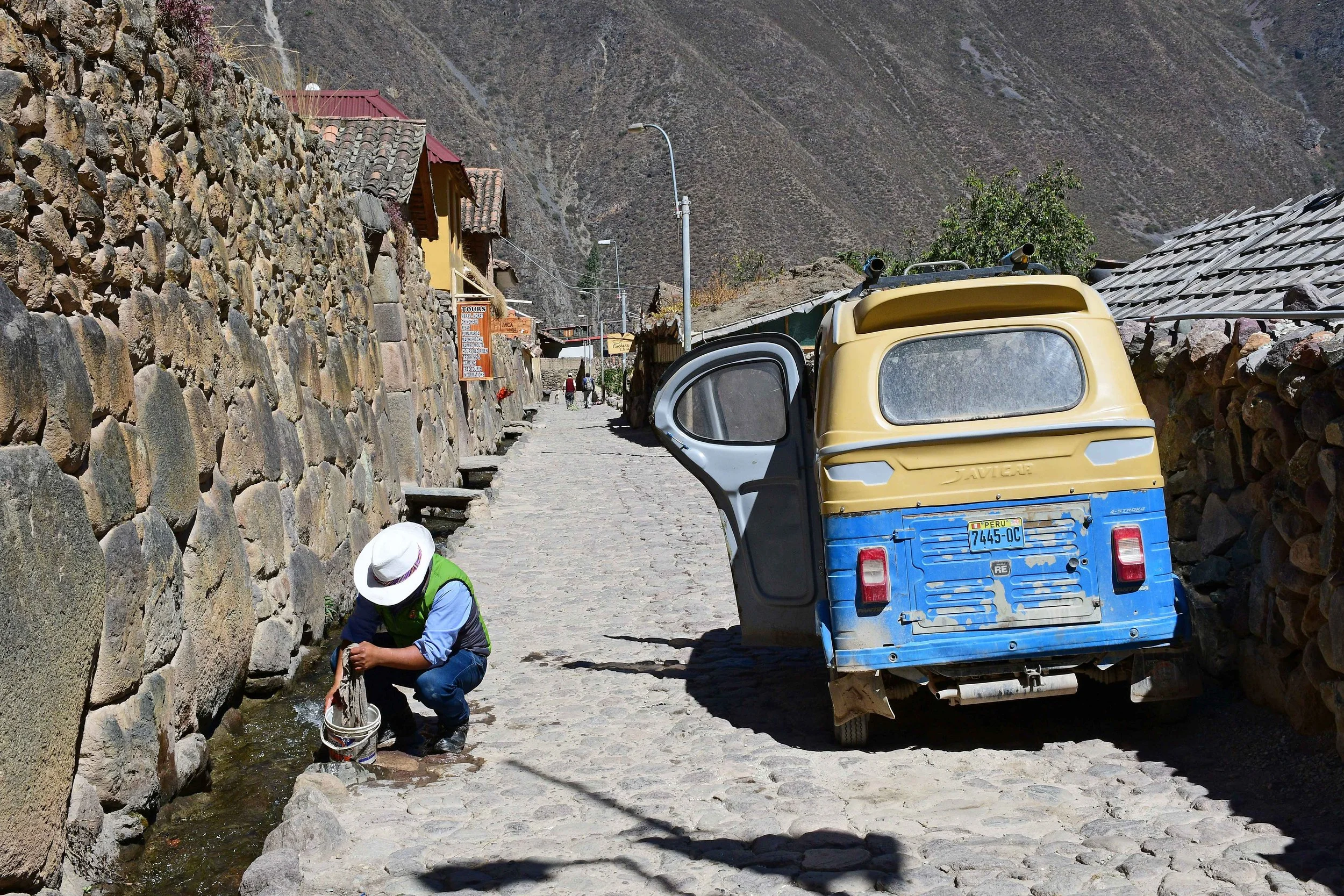
The town itself was quite sweet and still laid out to the inca plan. One of the characteristics of these mountain towns are the impressive gullies running up and down the streets. They act as more than just gutters, the water comes down from the mountains and I saw people collecting the water to use.
I had lunch at a courtyard café that had lots of very jittery guinea pigs running around. Hardly surprising they are nervous, they are still eaten in the Andes.
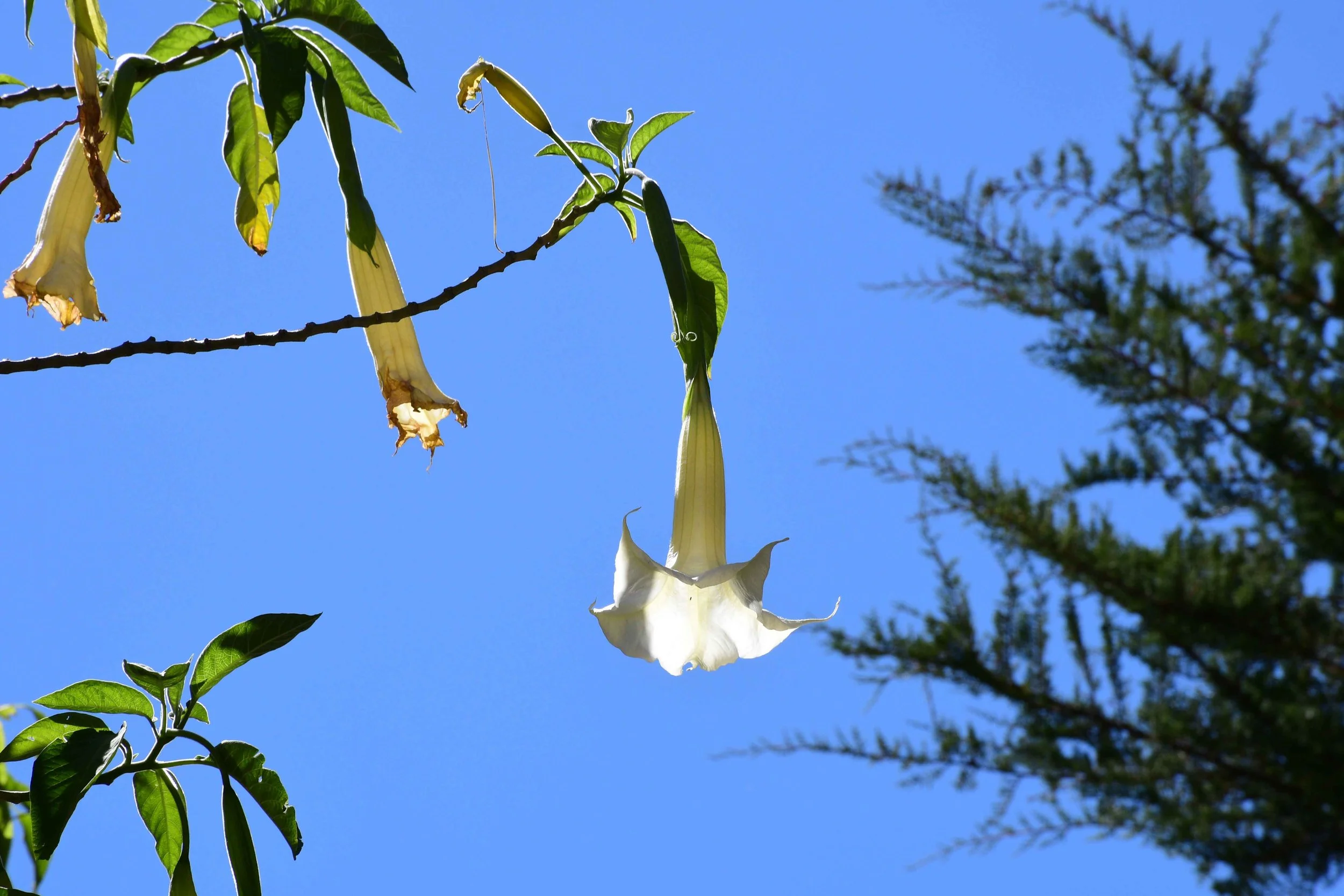
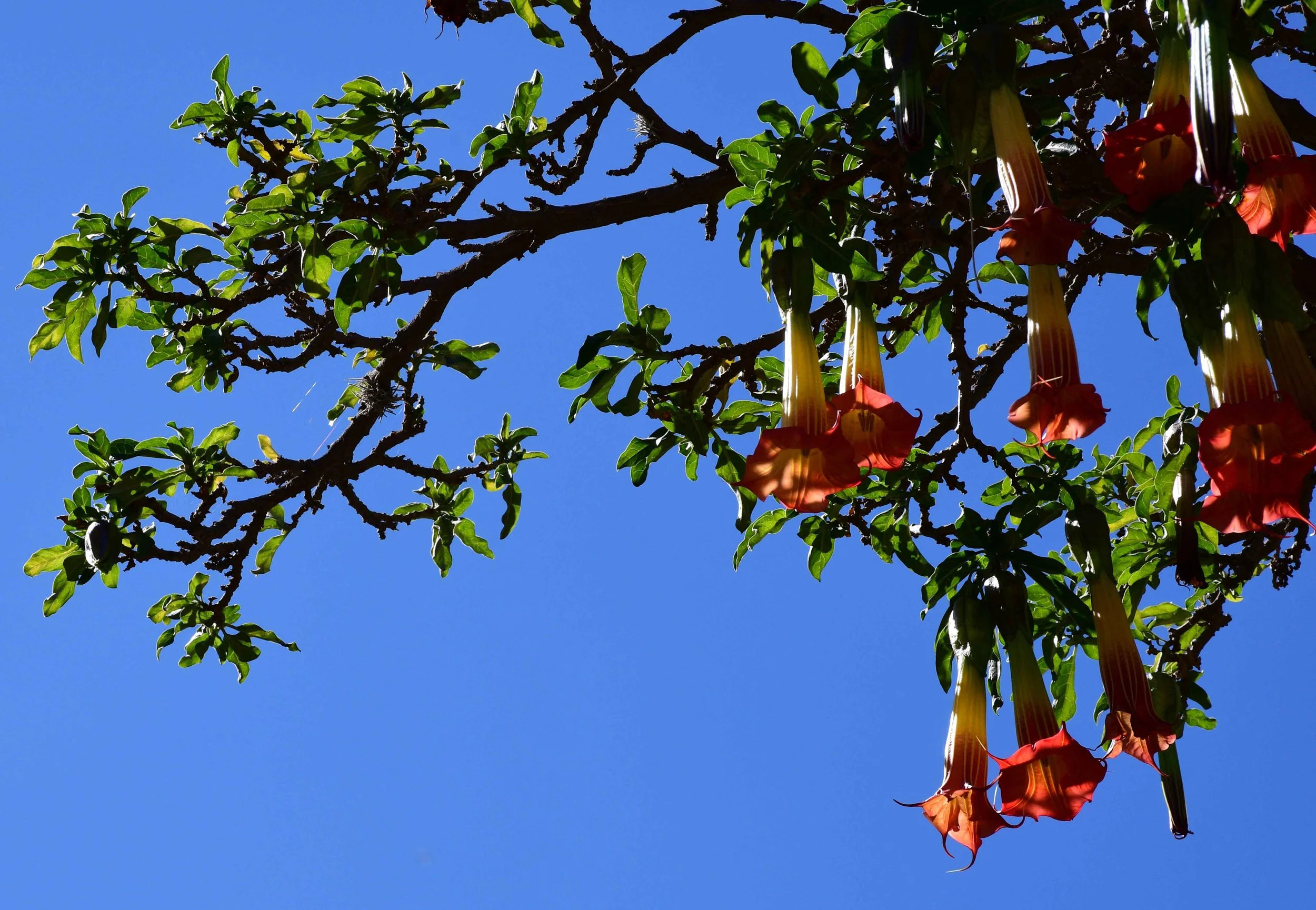
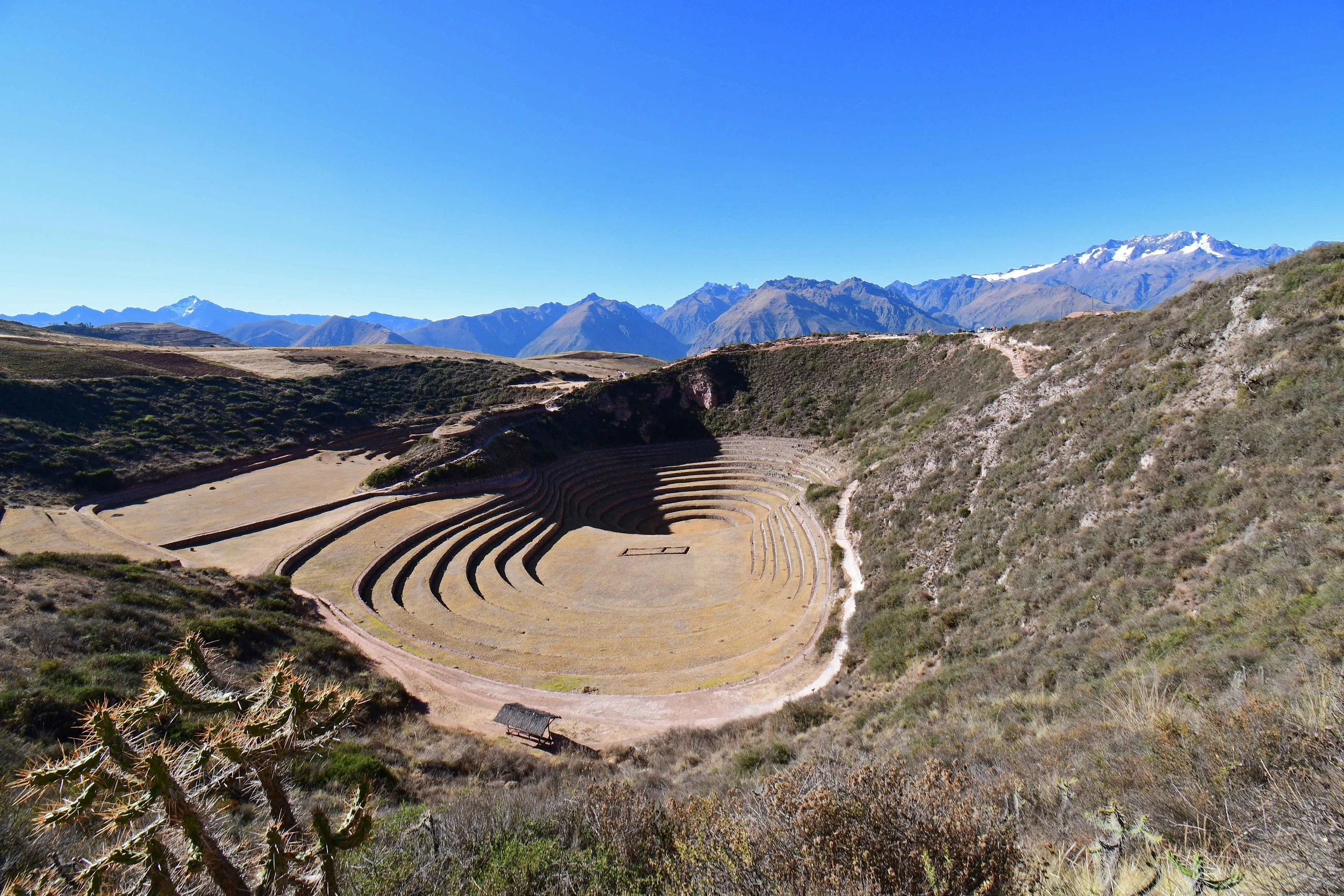
After lunch I went to the amazing Moray. Here the Inca built agricultural terraces in concentric rings. Did they dig out the original ‘bowls’ or had meteorites landed here? Digging out is more likely and more in keeping with the huge effort the Inca put into everything. Part of the main circle had collapses a few years earlier, most likely due to climate change, but the reconstruction work has been done well.
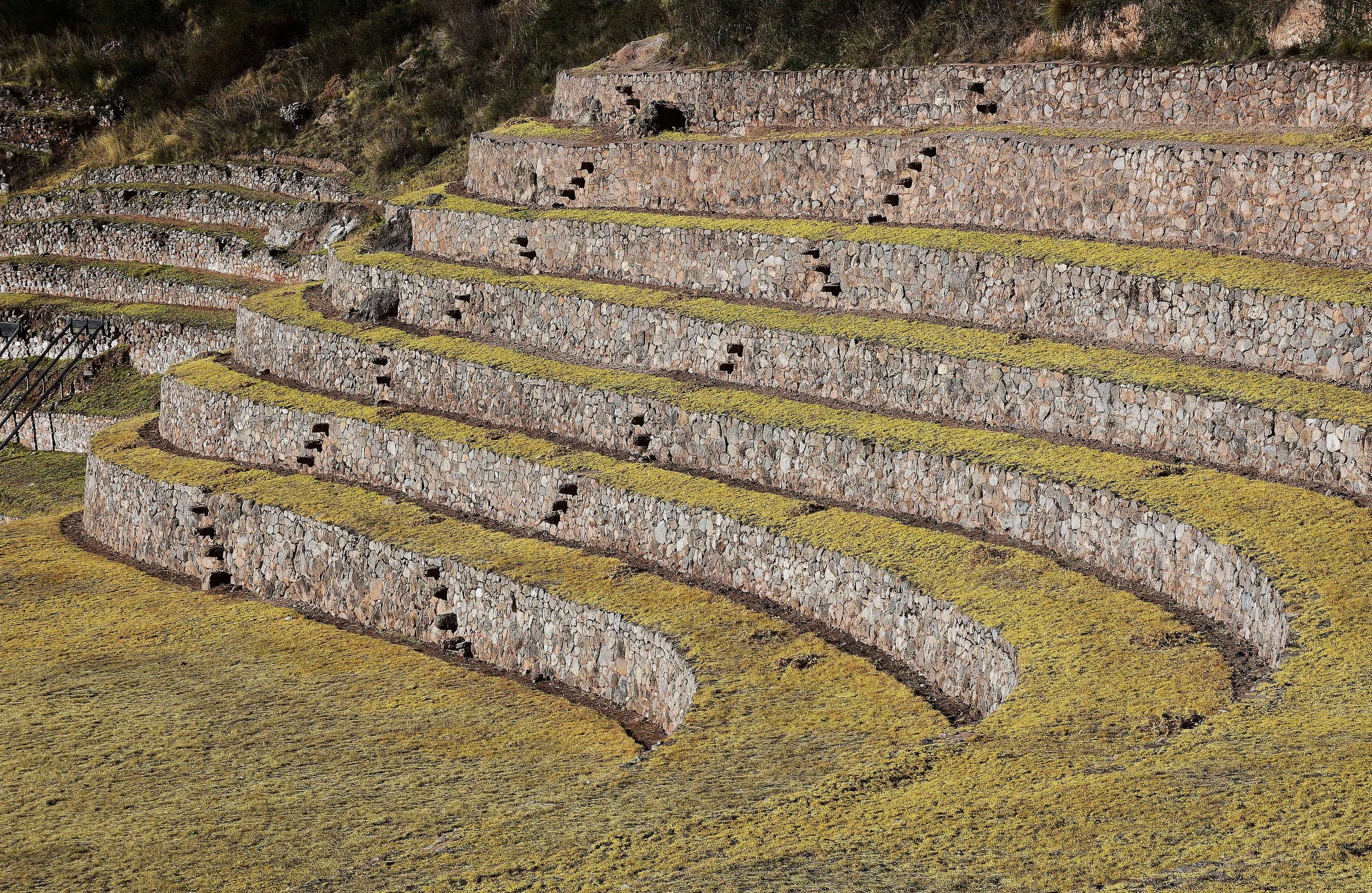
Each level has a its own microclimate and they were able to grow different crops accordingly. Soil samples suggest they were brought from different parts of the empire and seed samples show the range that was grown here. Other than the practical use of these rings, it’s an incredibly beautiful place – geometrically and geographically.
While I explored the Sacred Valley, I stayed at Casa Andina. It was a fairly average hotel, comfortable but bland apart from one thing – it had an observatory. Each night a local astronomer did a stargazing session so I signed up and was delighted to find I was the only one there – complete heaven quite literally. Why isn’t everyone interested in this? It’s one of the most perfect places I had been for night sky and it was so important to the Inca.
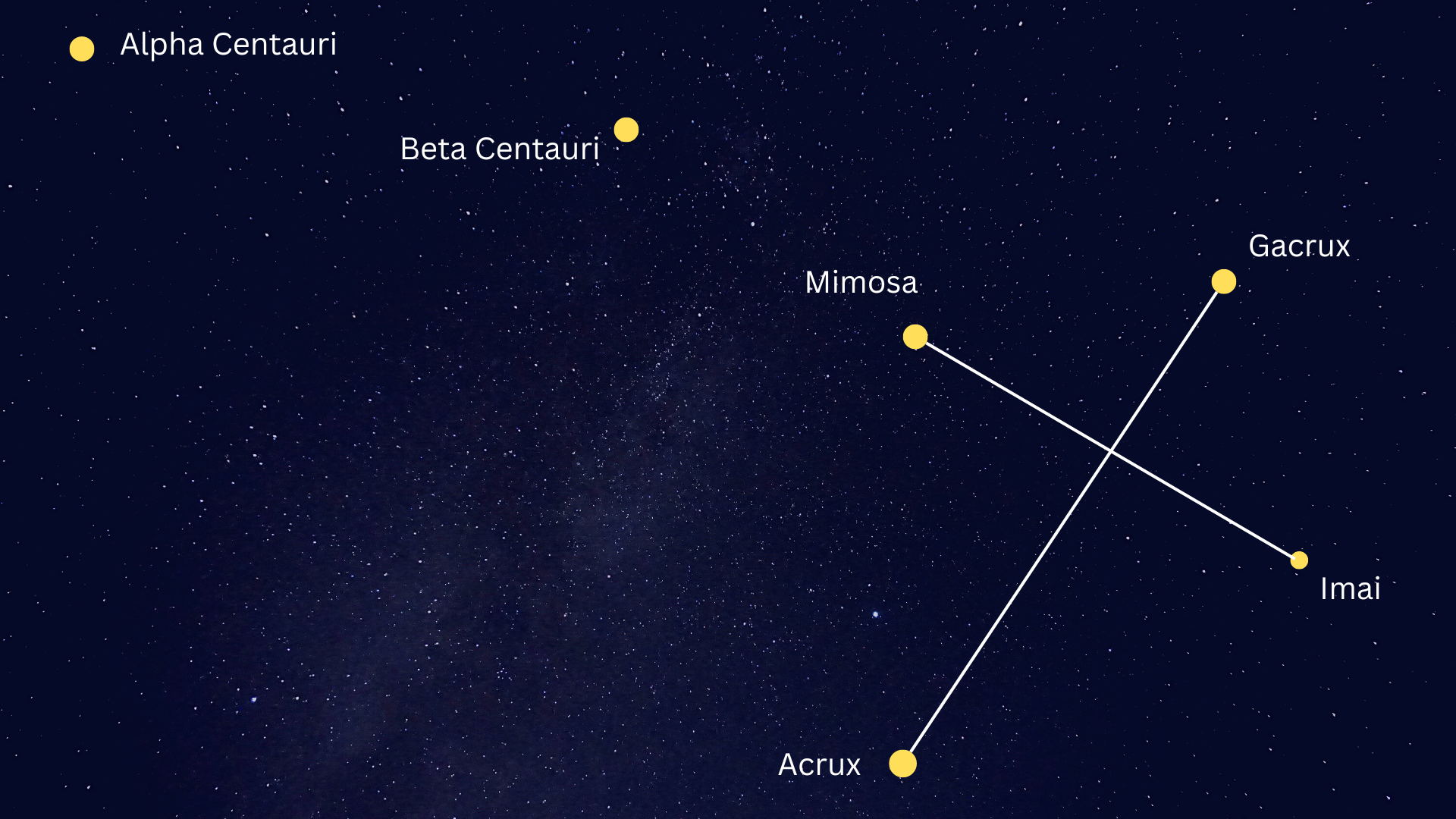
I spent a couple of happy hours with the astronomer who first of all showed me how to locate the Southern Cross, admittedly not something I will need back in the northern hemisphere but interesting anyway. And close by were Alpha and Beta Centauri, Alpha is also Proxima Centaurus, our nearest star. I learned how the Inca used the dark spaces between the stars as constellations rather than the stars themselves, the most famous is the Llama. They were able to predict likely poor harvests by recognising the arrival of what we now call El Niño by the cluster of stars called the Plenides suddenly looking hazy. This was the time that they made sacrifices of anything that was dear to them, usually children.
Upstairs was the telescope where I looked at two red giants, one of which was already dead but we are only just getting the light back on Earth, and I could see the Butterfly cluster in Scorpio which was clearly butterfly-shaped. The highlight was Jupiter, a beautiful bead-like giant, and its four moons, Io, Ganymede, Europa and Callisto. Another wonderful Andean experience, I was buzzing afterwards.
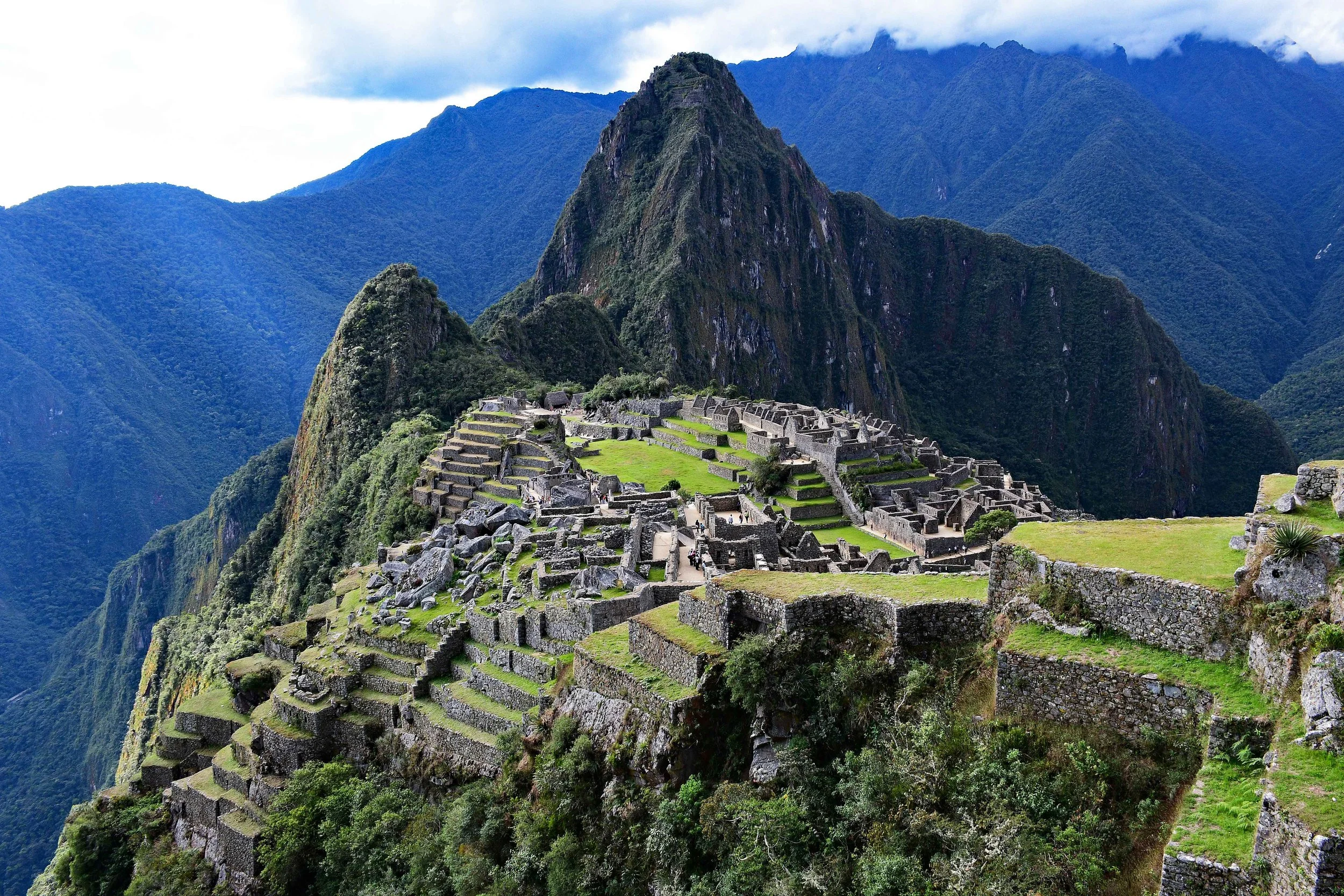
I took a train from Ollantaytambo to Aguas Calientes. There is a very steep path that you can take up to Machu Picchu but I got the bus. Before you go into the site itself, there is one last chance to use the toilets as there are none on site presumably because of plumbing logistics and the need to protect the archaeology. I went in just after lunch and spent all afternoon there until it closed at 5. Yes, there are crowds and it is intimidating just how many people are around you, but I kept my Dad’s advice of moving with the flow rather than try and fight it.
The first stopping point for just about everyone is a ‘shelf’ that gives you the money shot over the citadel. I’ve seen this view hundreds of times but nothing had prepared me for how dramatic it is. There is so much of it perched at such high altitude. Someone told me to look out for the ‘sleeping Inca’, the rock behind the buildings (above) looks like the silhouette of a Inca man lying on his side. Once you’ve seen it, you can’t unsee it.
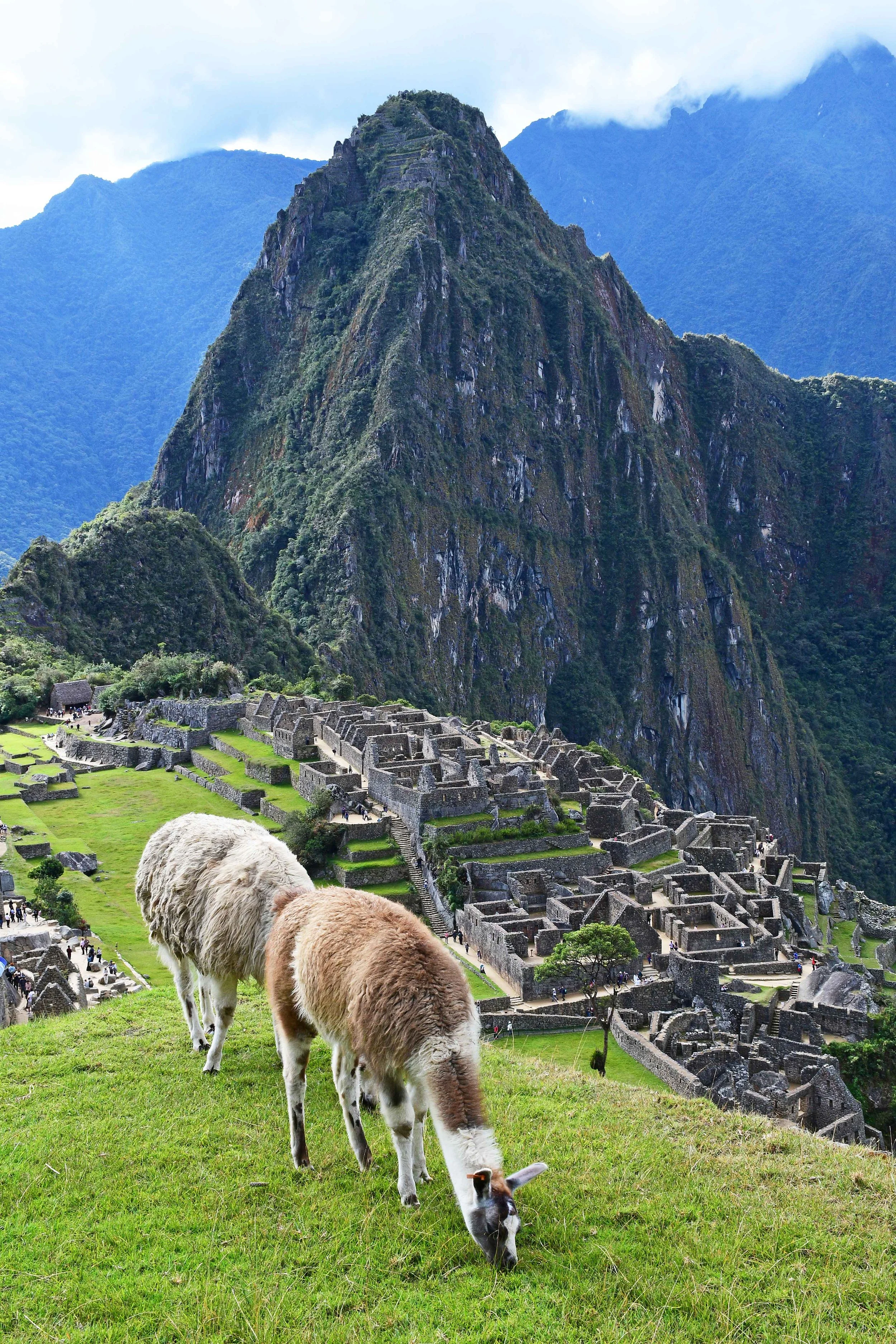
I suspect the llamas were here purely for photographic reasons so here you go.
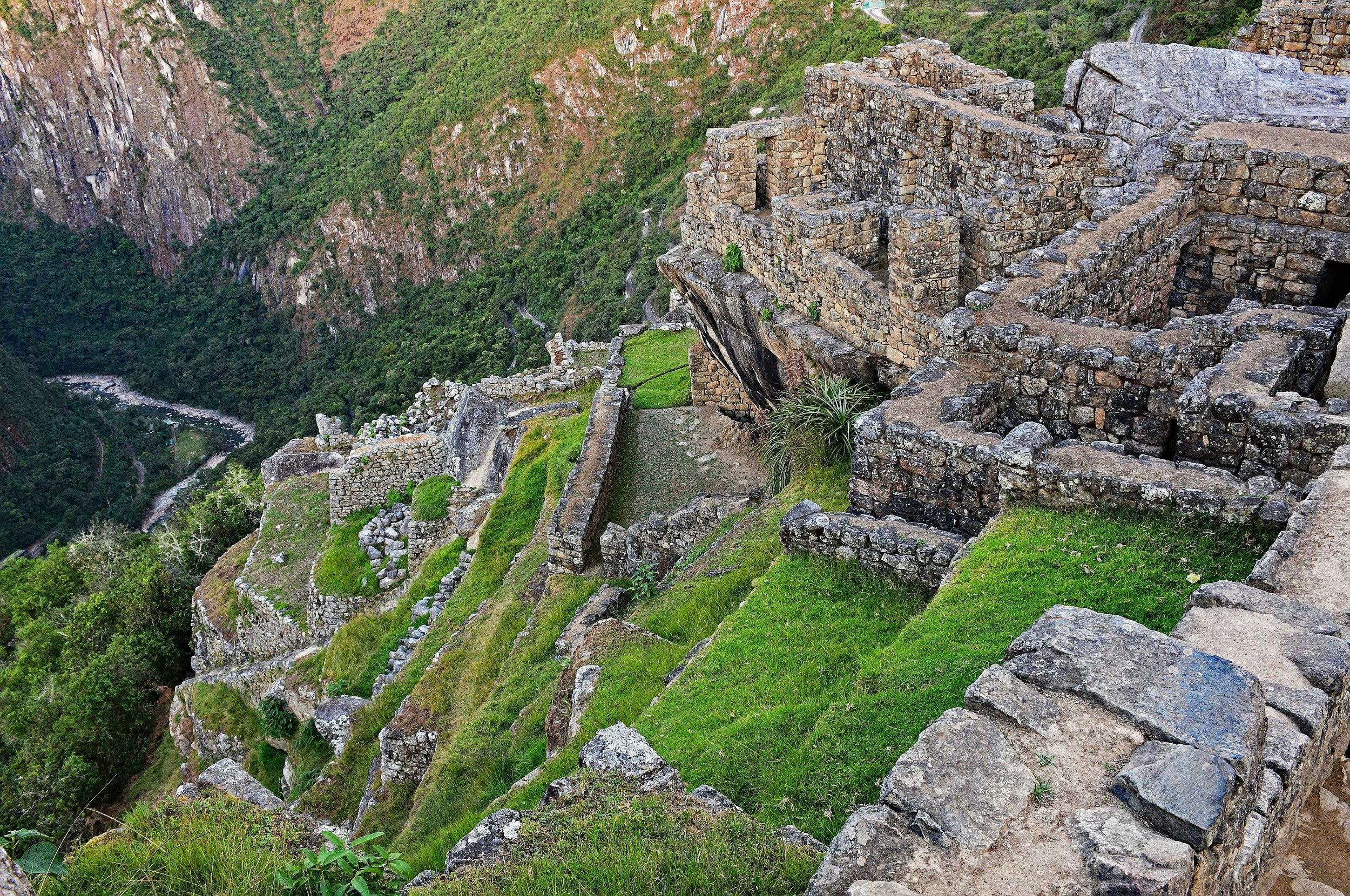
We tend to think of the Inca as an ancient civilisation but Machu Picchu was only built about 600 years ago. It stayed hidden in jungle and it’s believed the Spanish probably had no idea it existed. As time went by the vegetation took over and it was only the locals who knew it was there. Hiram Bingham didn’t discover it, but he was the first to make it known to the outside world and it was hidden no more.
The construction techniques are awe-inspiring. I was very aware of how steep the slopes were, at every turning was a vertiginous drop down to the Urubamba river. To have assembled this many stones, so high up, and cut and shaped them to achieve that Inca neatness is mind blowing.
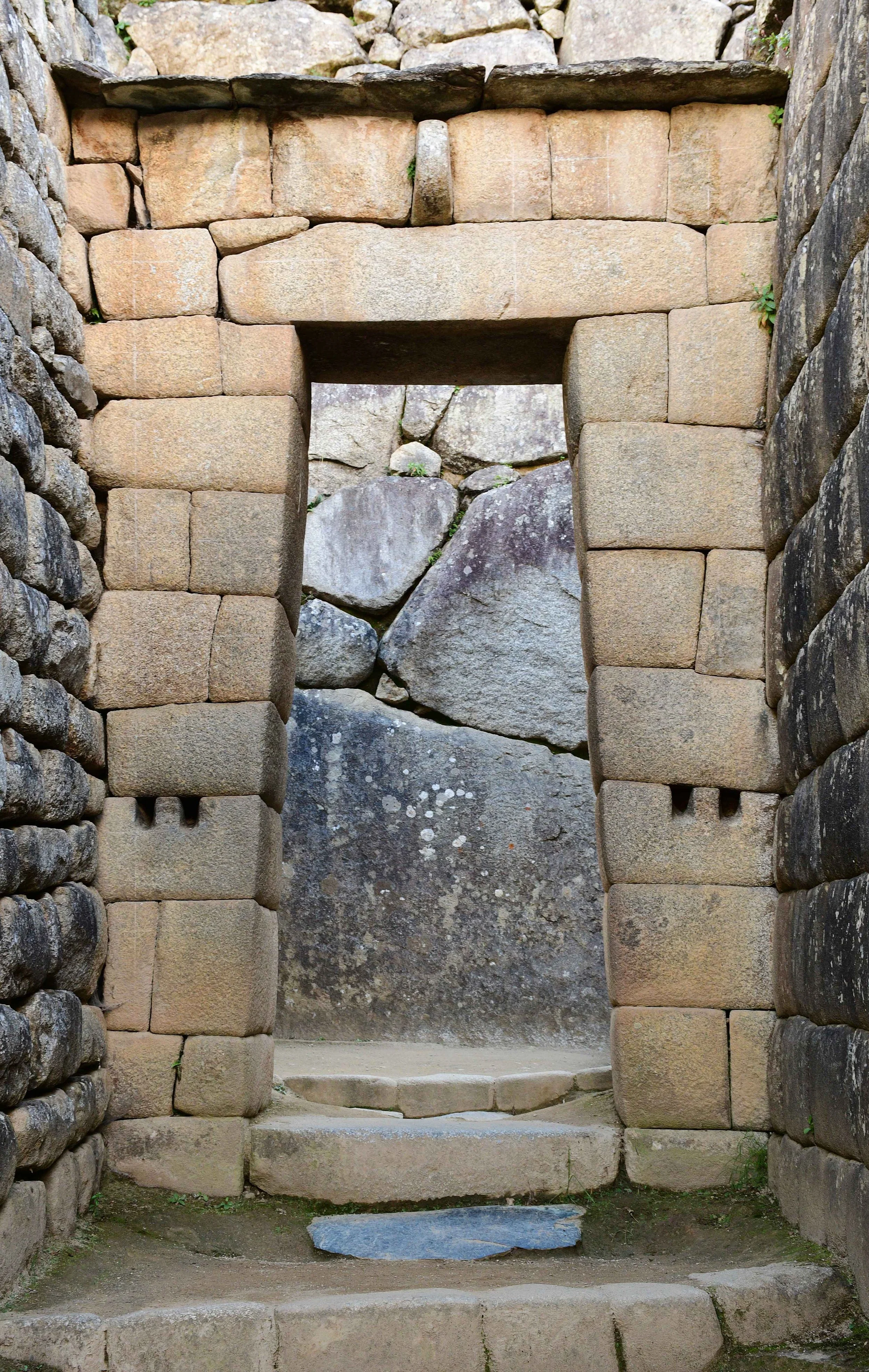
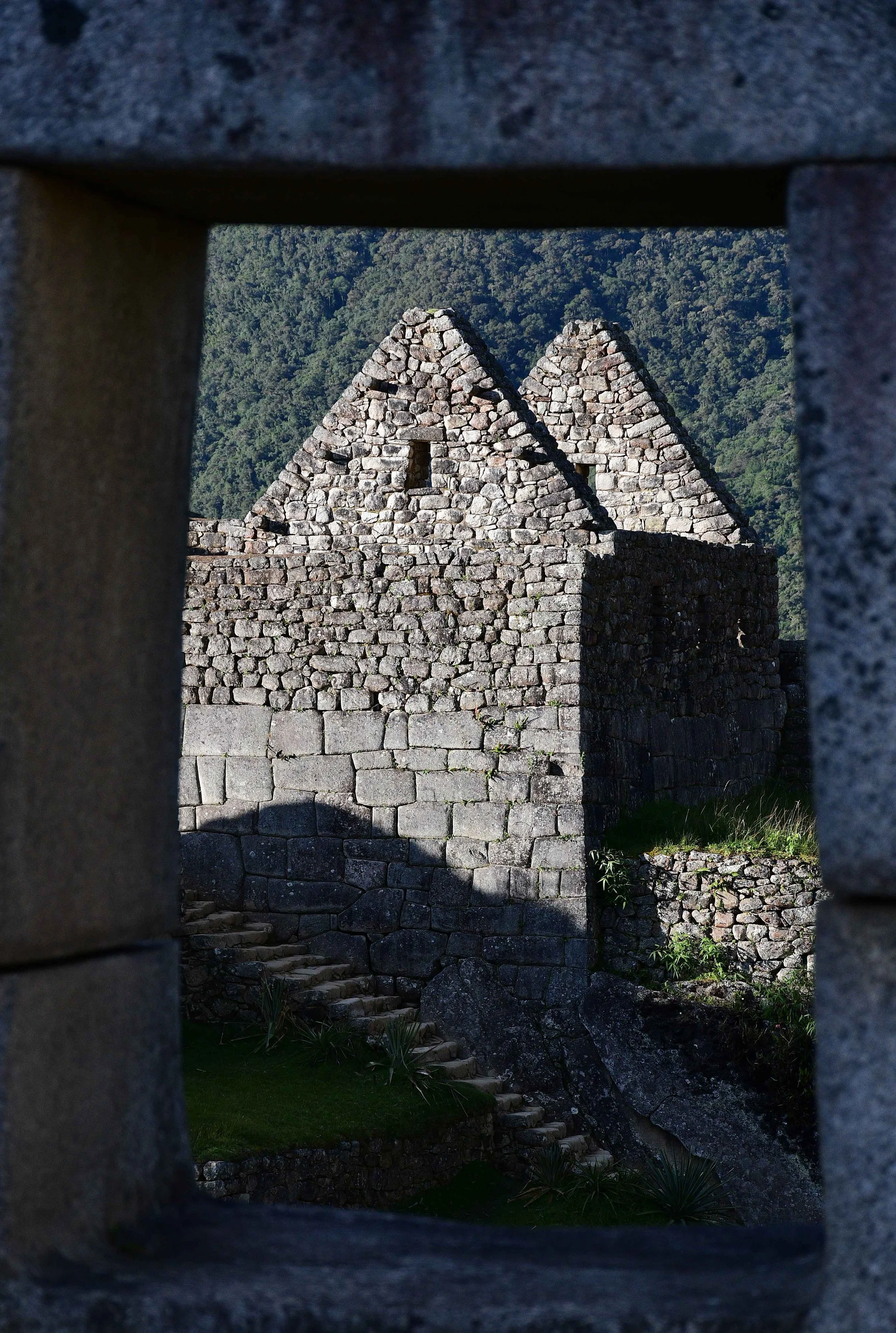
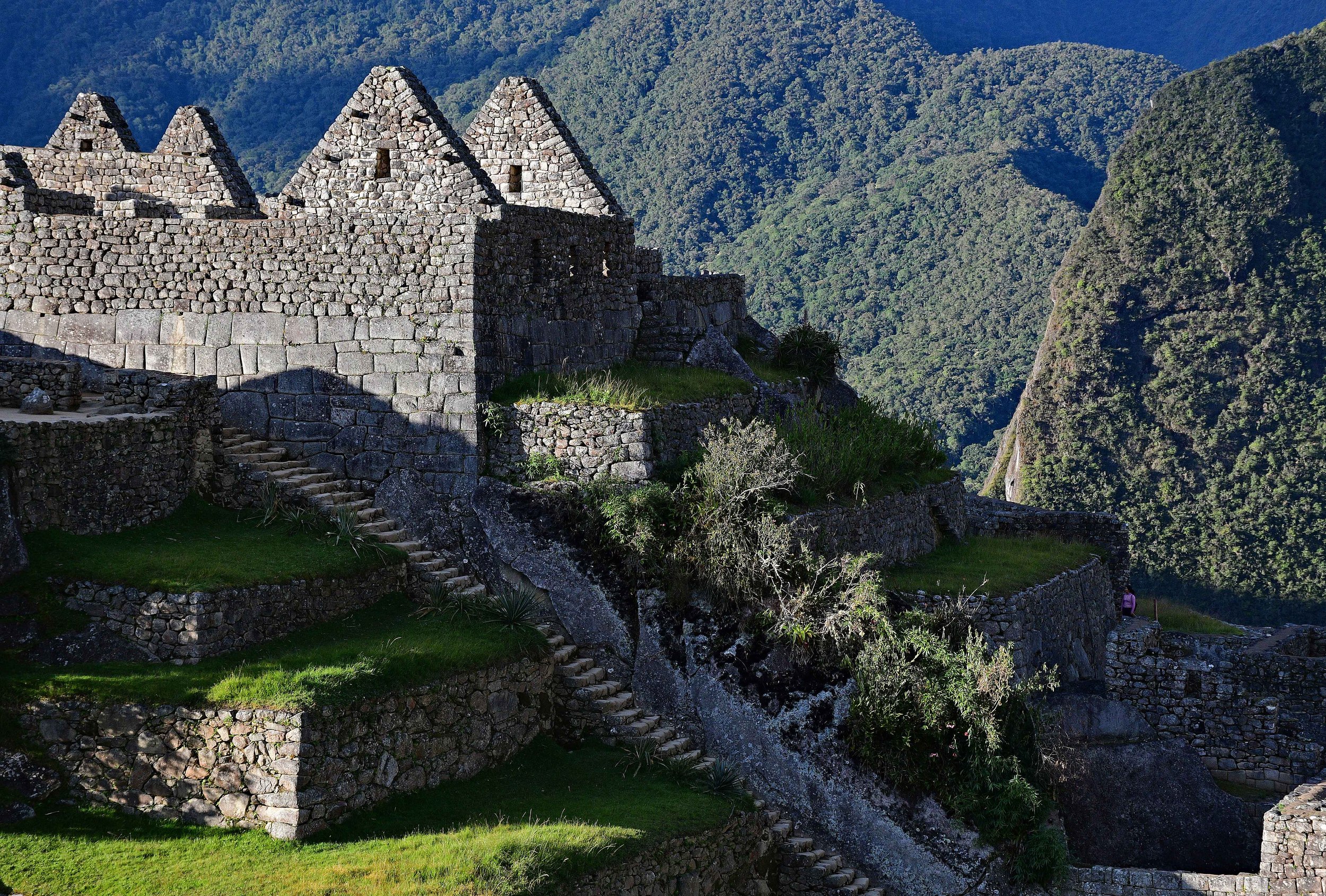
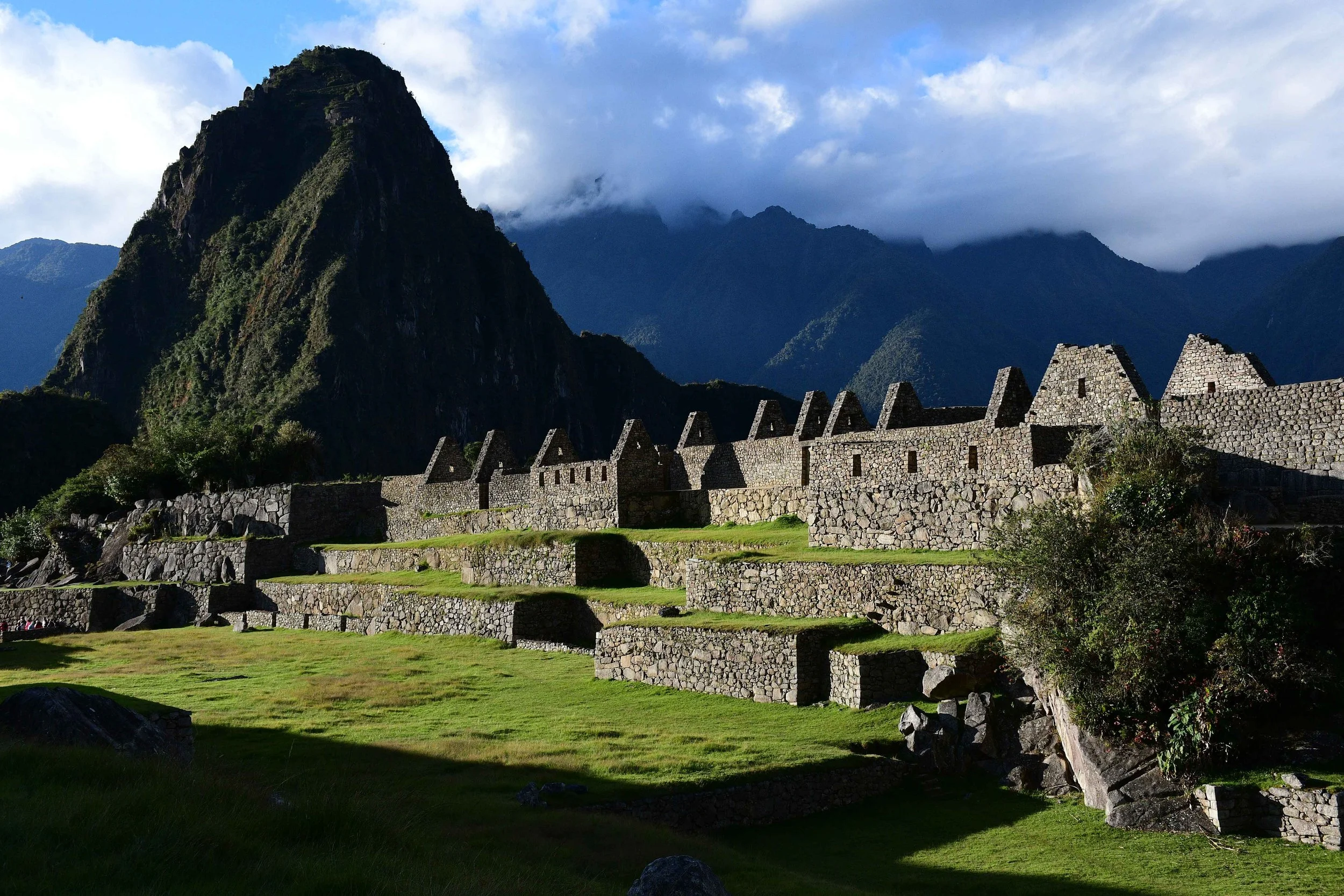
As the day went on the shadows lengthened and the stonework looked even more defined. By now most people had left and I found myself wandering around buildings on my own. Eventually, reluctantly, I made my way to the exit.
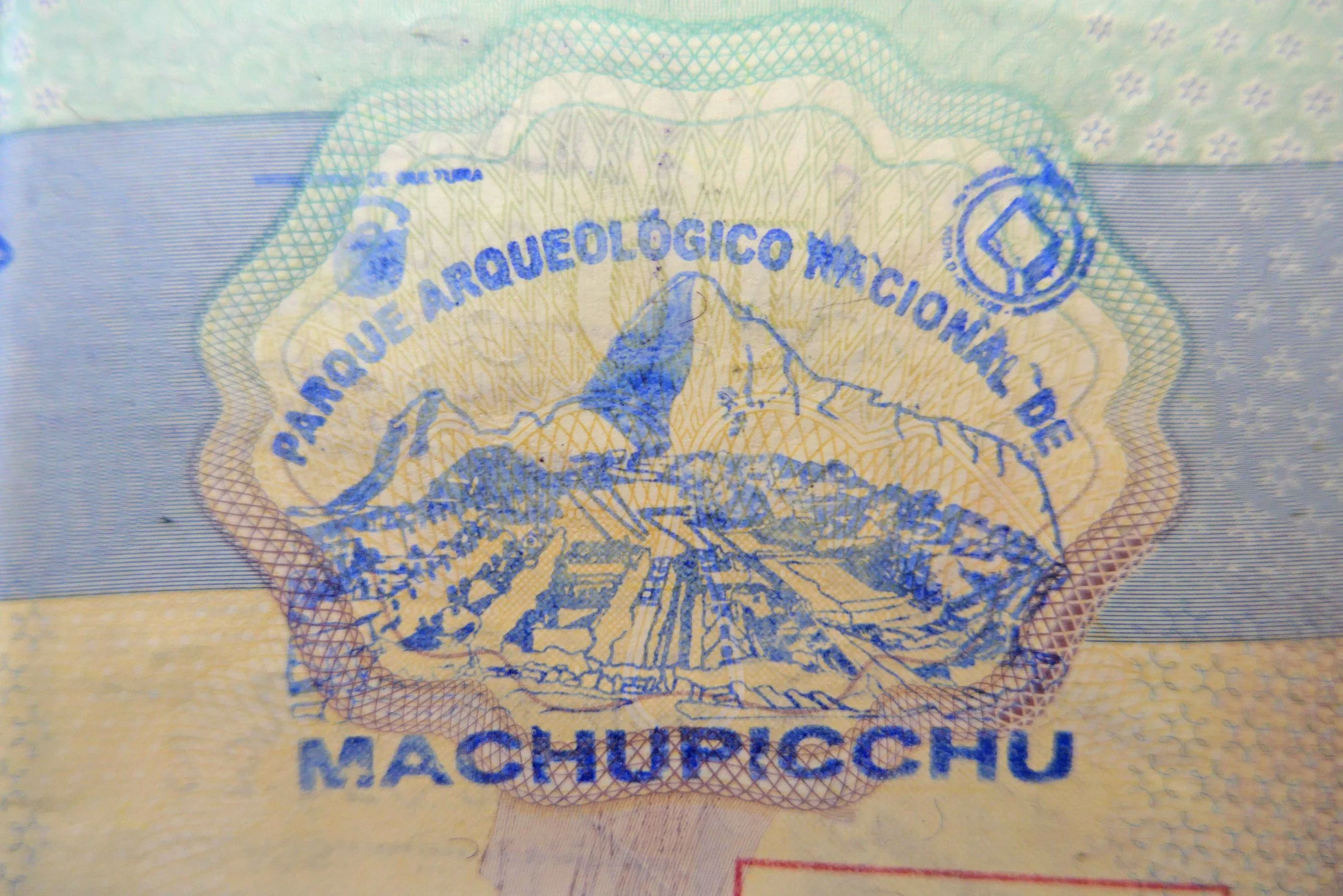
By the exit you could have have your passport stamped. which was a really nice touch.
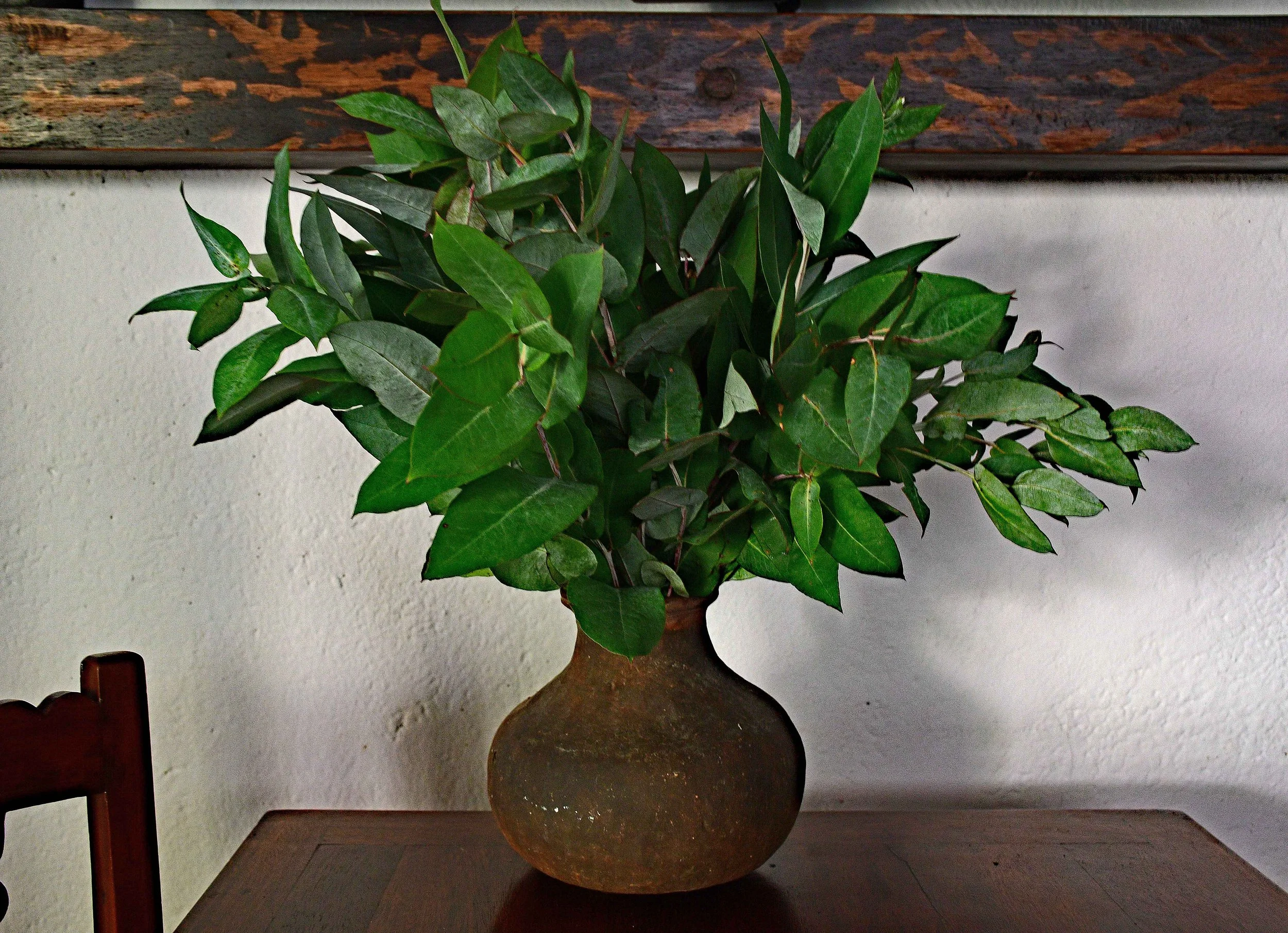
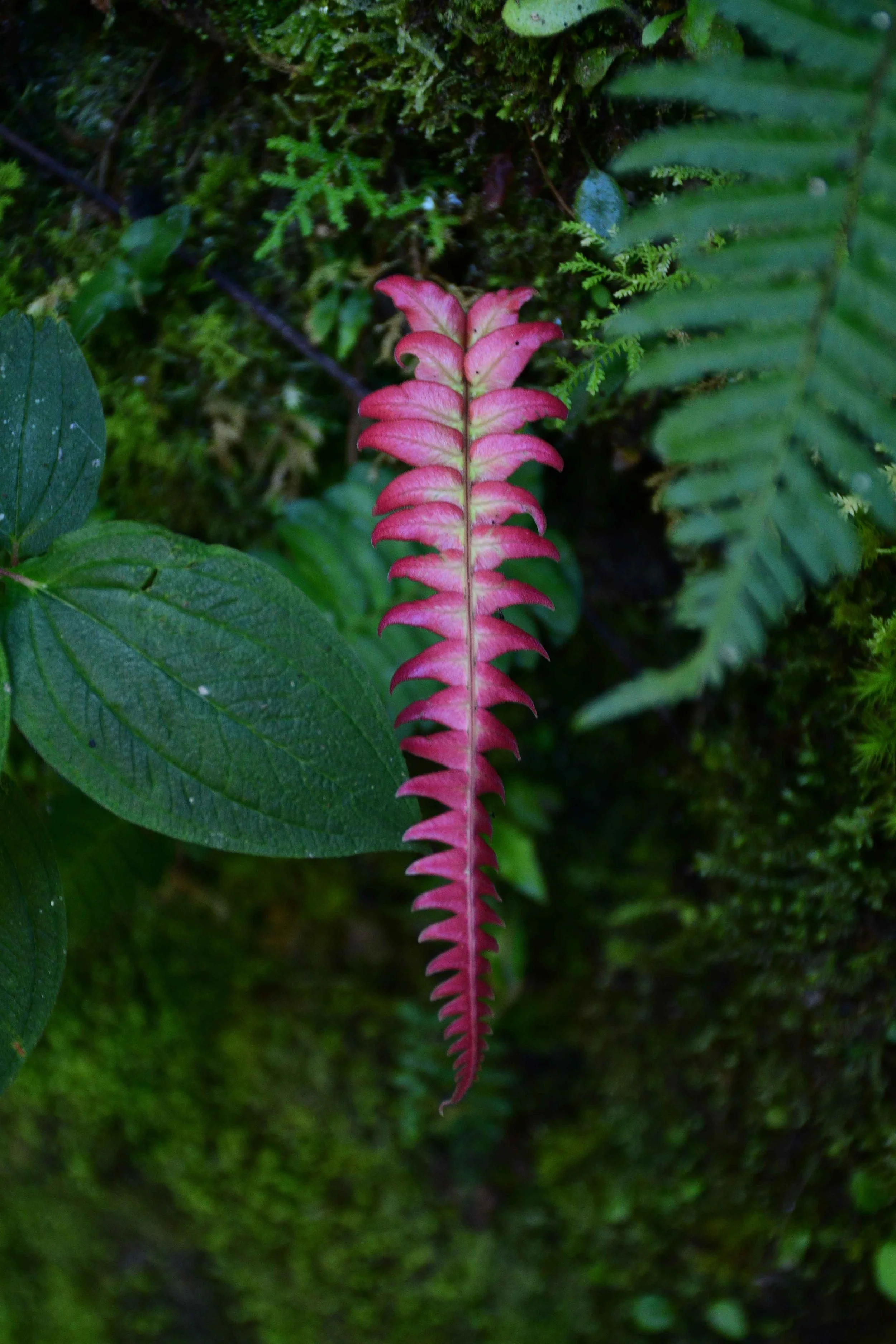
I went back to Aguas Calientes and found it quite depressing. It’s dominated by the bus stop and lots of small stalls selling Inca tat. Luckily I was staying at the Inkaterra Eco-hotel. It’s set in five hectares of lush gardens and I had one of the chalets. Their commitment to the environment is impressive: dim lights, no chemicals, no plastic bottles and organic toiletries. My room was beautifully decorated with big bunches of leaves, apparently some kind of eucalyptus, to deter insects. Someone had come in and put a hot water bottle in my bed as it can get quite cold here.
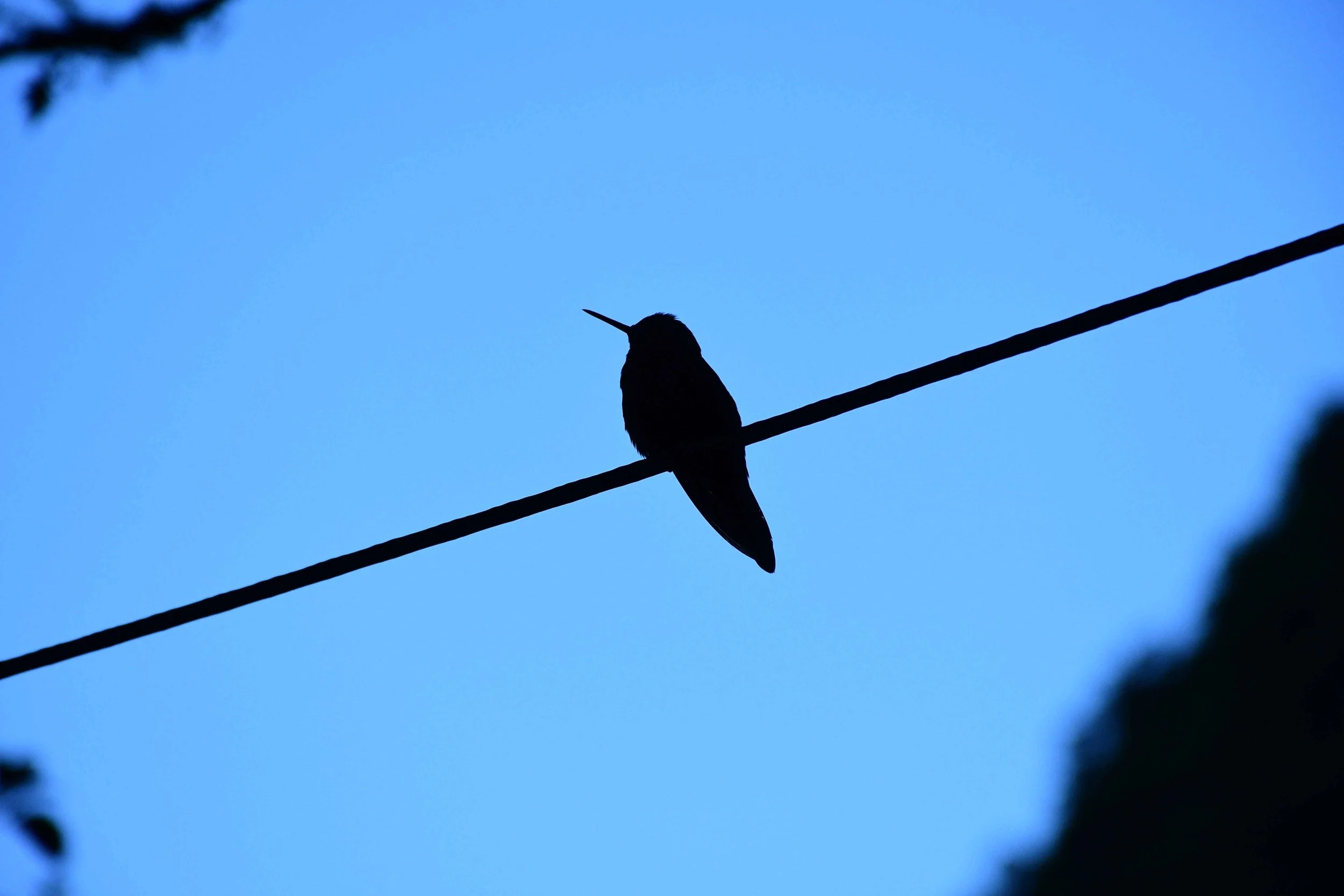
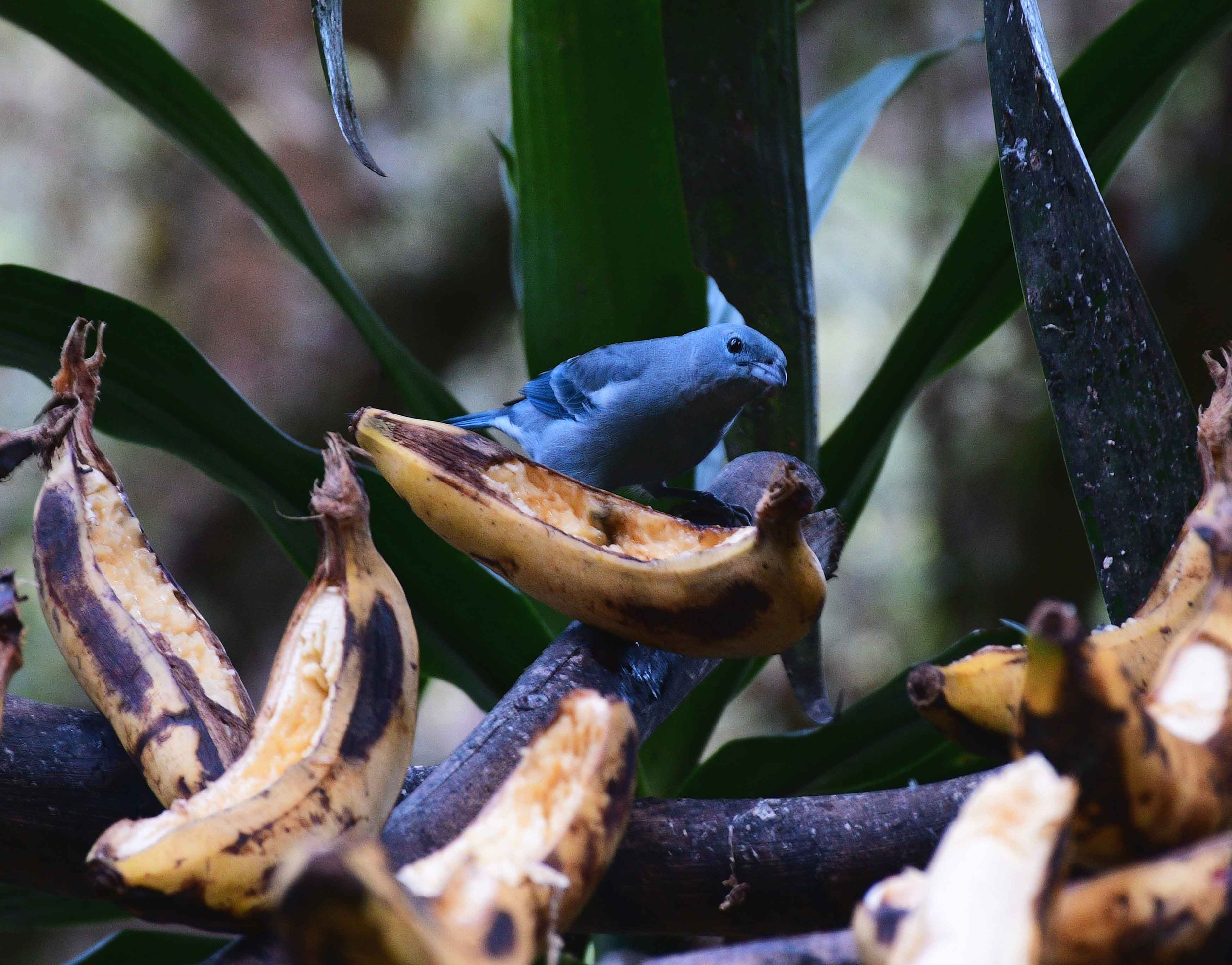
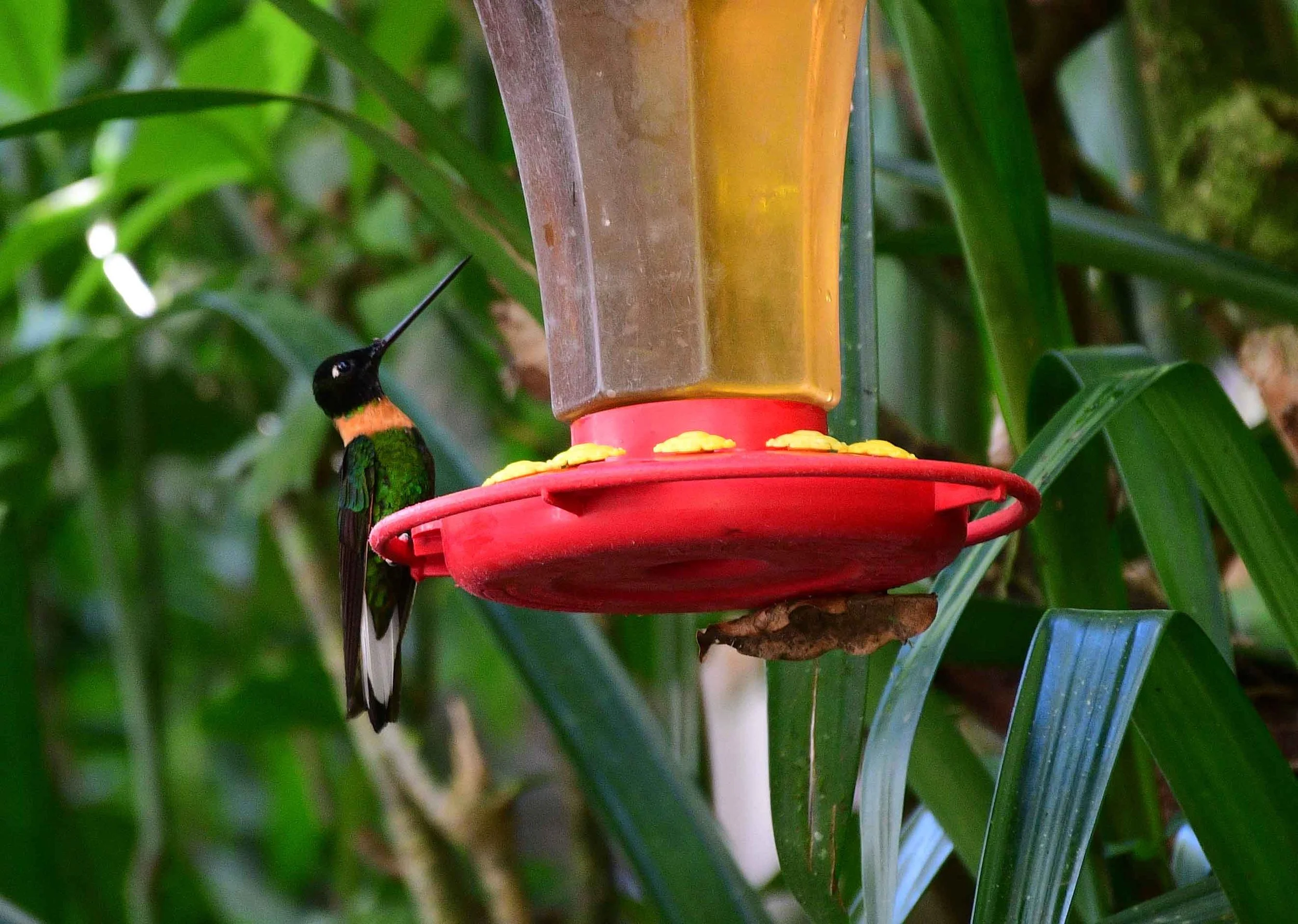
The next morning I ate the best breakfast of the trip – omelette, quinoa, veggies and a smoothie. My table was by a window and outside were bird feeders and all these very beautiful, coloured birds kept appearing to eat. Perhaps one of my all time favourite breakfasts. There was more ornithological excitement as I walked around the gardens where feeders had been placed with homemade nectar made from sugar and water to attract humming birds. I saw so many different kinds. Their wings beat so fast they are virtually impossible to photograph.
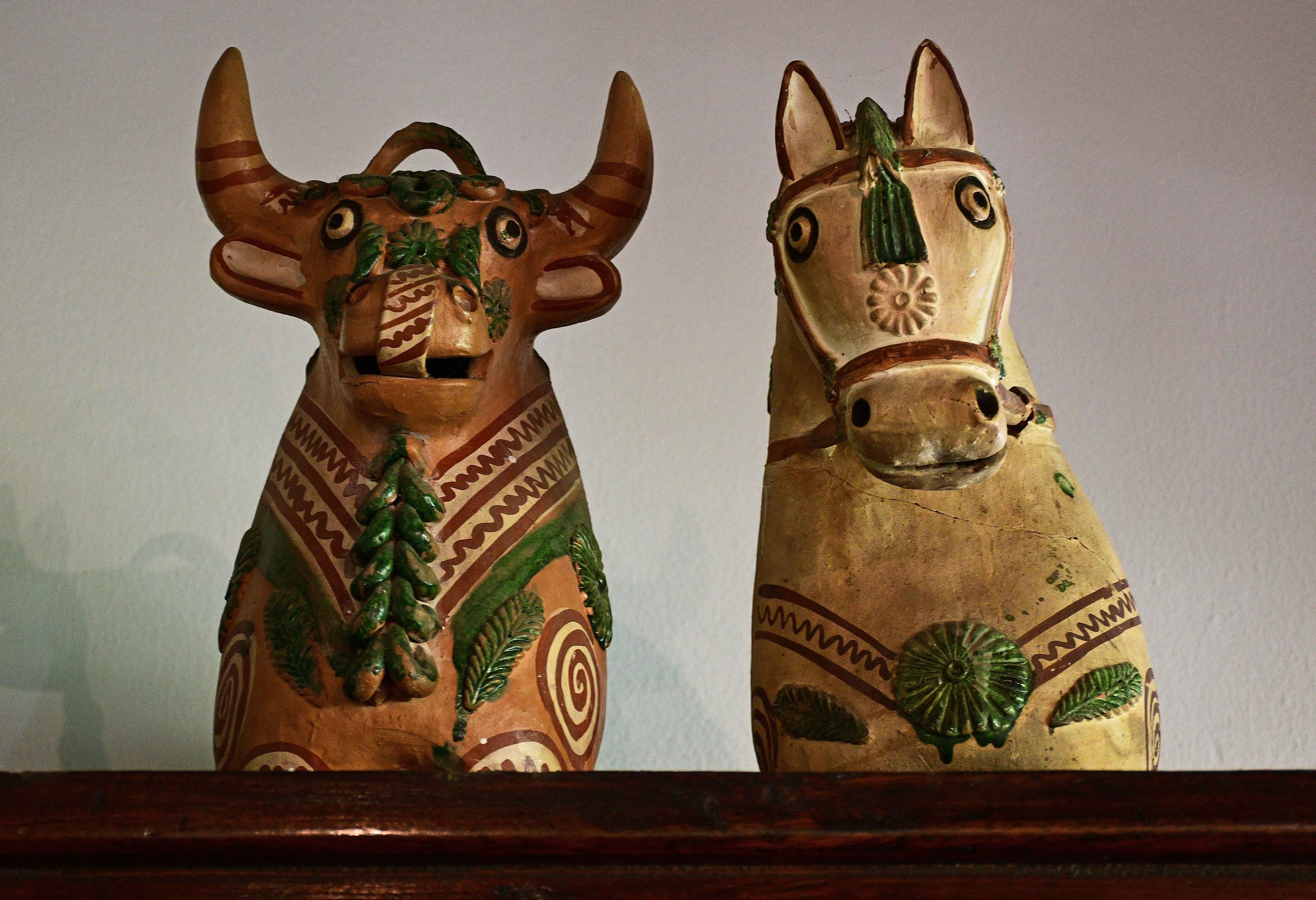
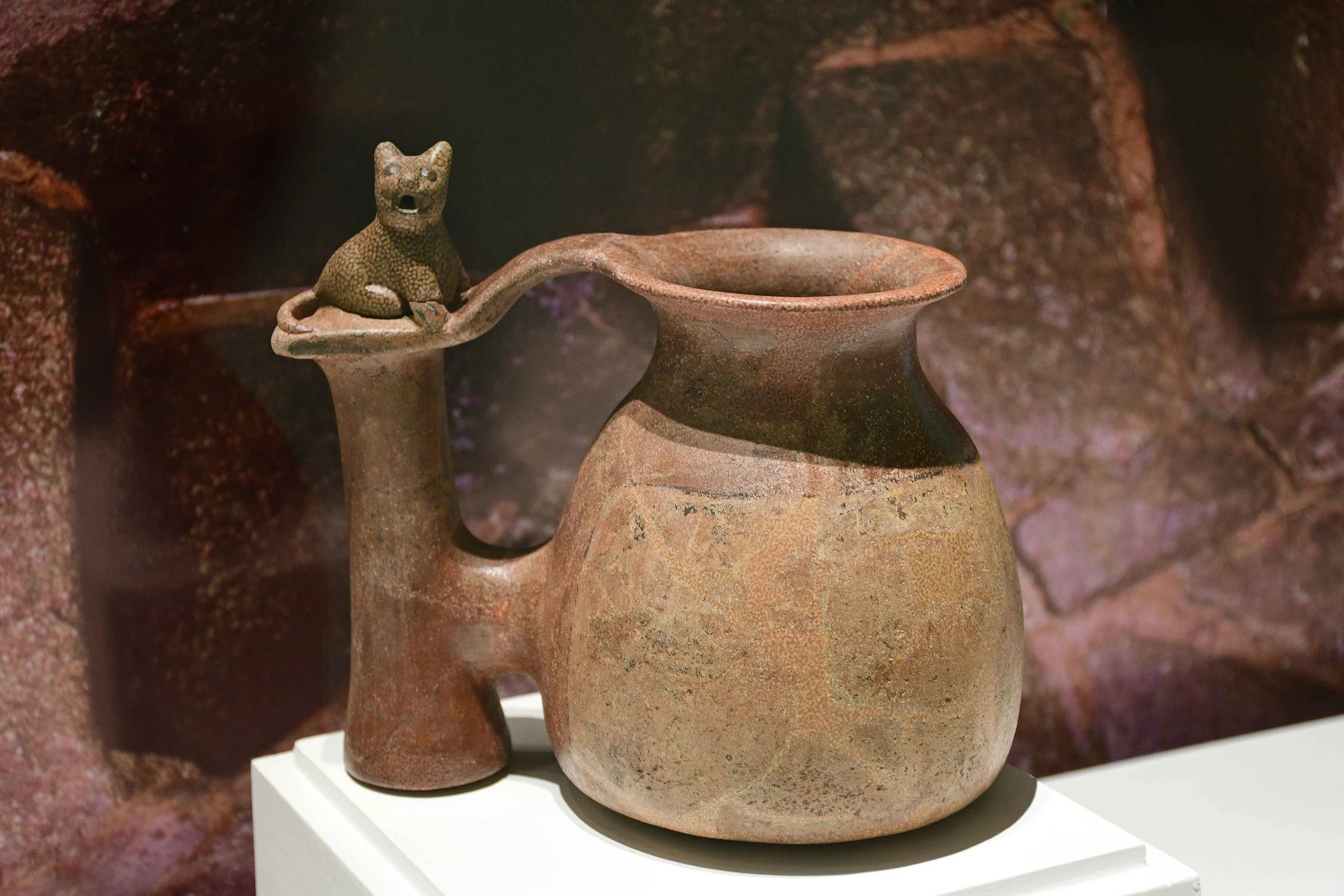
On top of many roofs around Cusco, you see these ceramic figures called Torito de Pucara, placed to bring good luck, prosperity and fertility. They are traditional and some go back to pre-conquest times when they were usually represented as llamas. Each chalet at Inkaterra had a pair on its roof, but I only realised, seeing these two displayed in the lobby, that they were a bull and a horse, neither of which the Inca had. The first time they saw a horse was when Pizarro and his mob arrived and they were so terrified by this strange beast it is believed that’s one of the reasons they were so easily conquered.
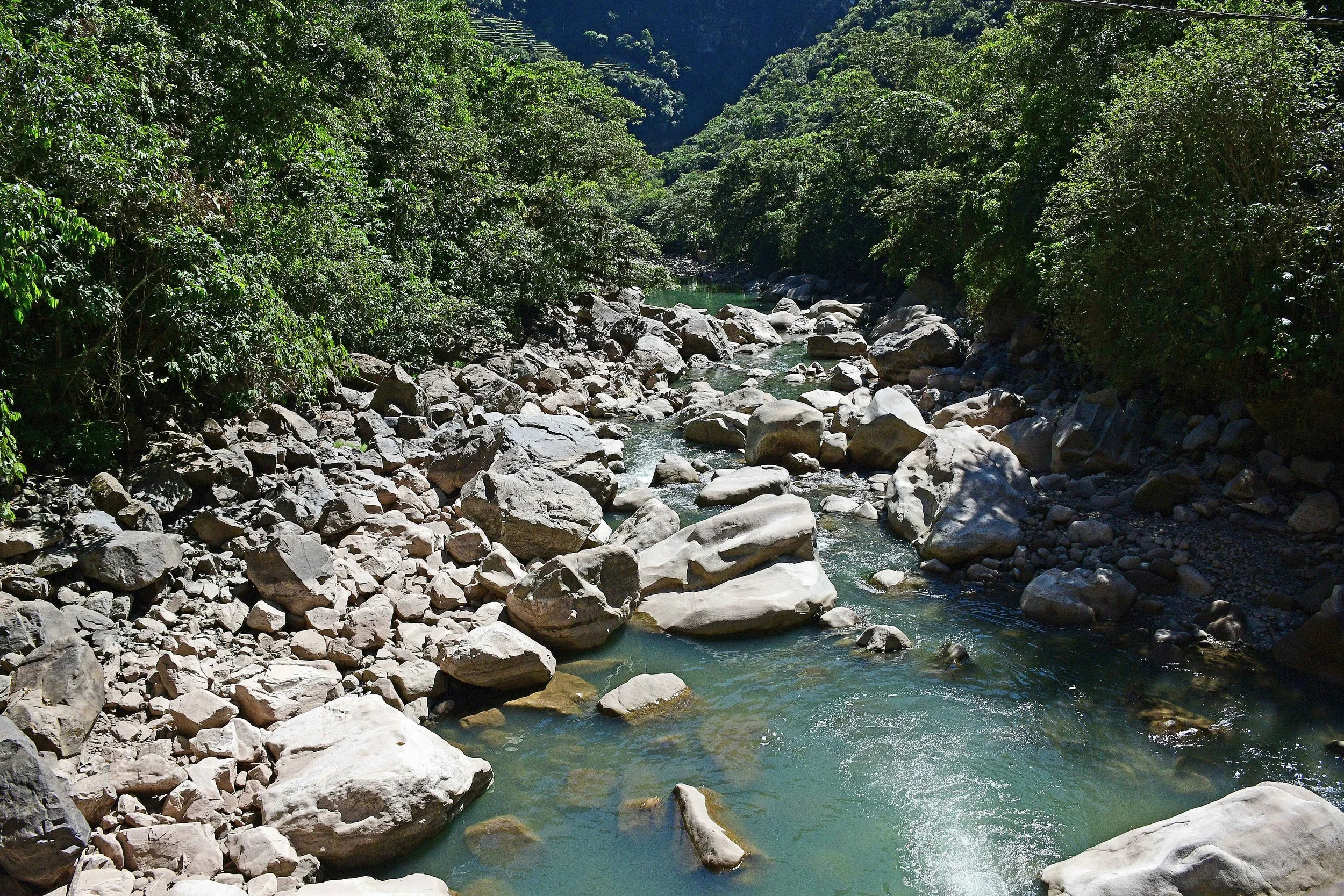
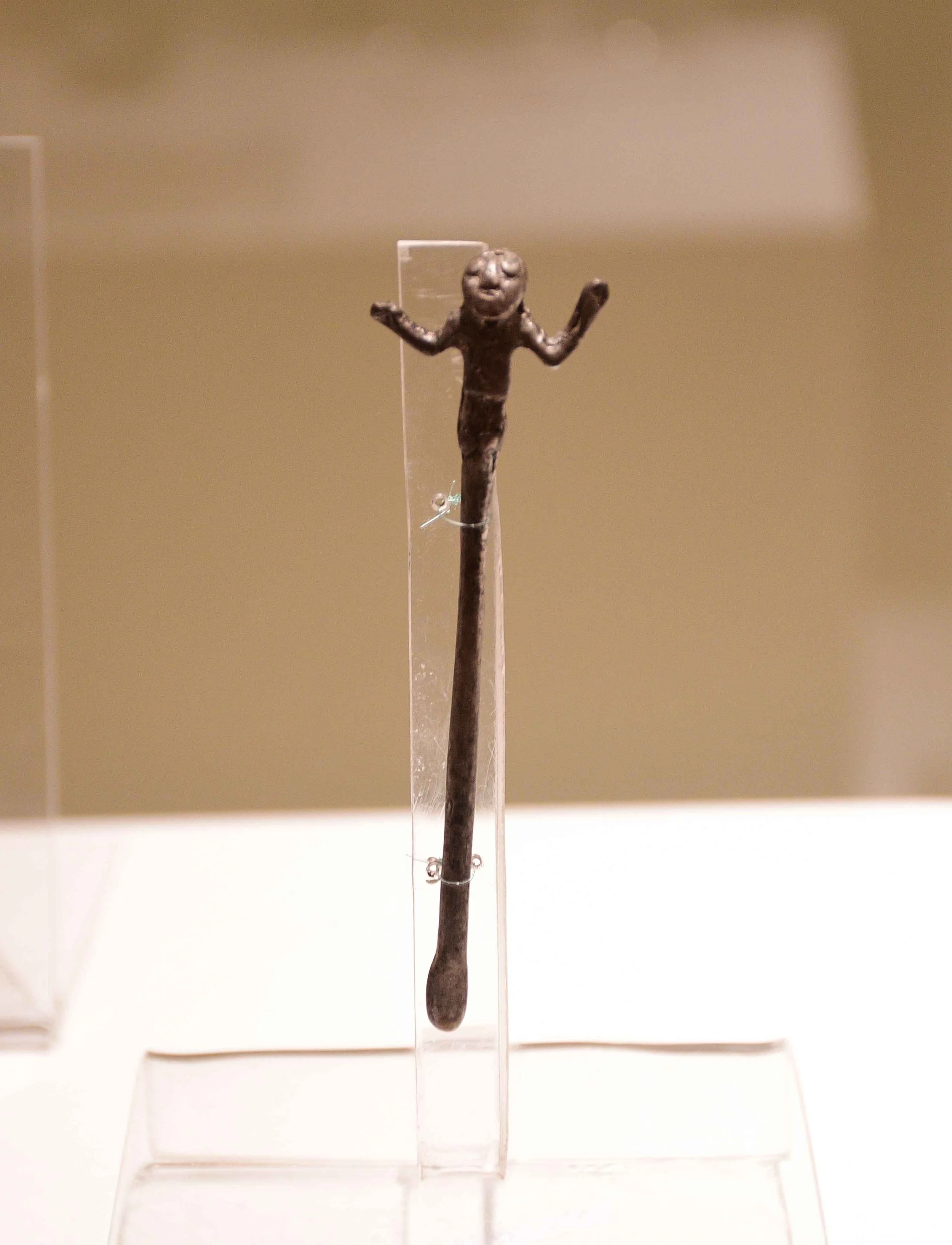
I had a few hours to kill before my train, so I walked along the river to the Museo Manuel Chavez Ballon, a small but useful museum that tells the story of Machu Picchu and how it was built and used by the Incas. There are many artefacts found on the site and I was amazed how many of them were metal, I had no idea they knew how to work metals other than the gold and silver decorative objects.
I went back to the hotel for a delicious lunch and another wander around the gardens, then caught the train. On board the staff dressed up, some in quite terrifying masks, and danced up and down the aisle. I sat there worried they may pick on me to dance but was quite disappointed afterwards that they didn’t.
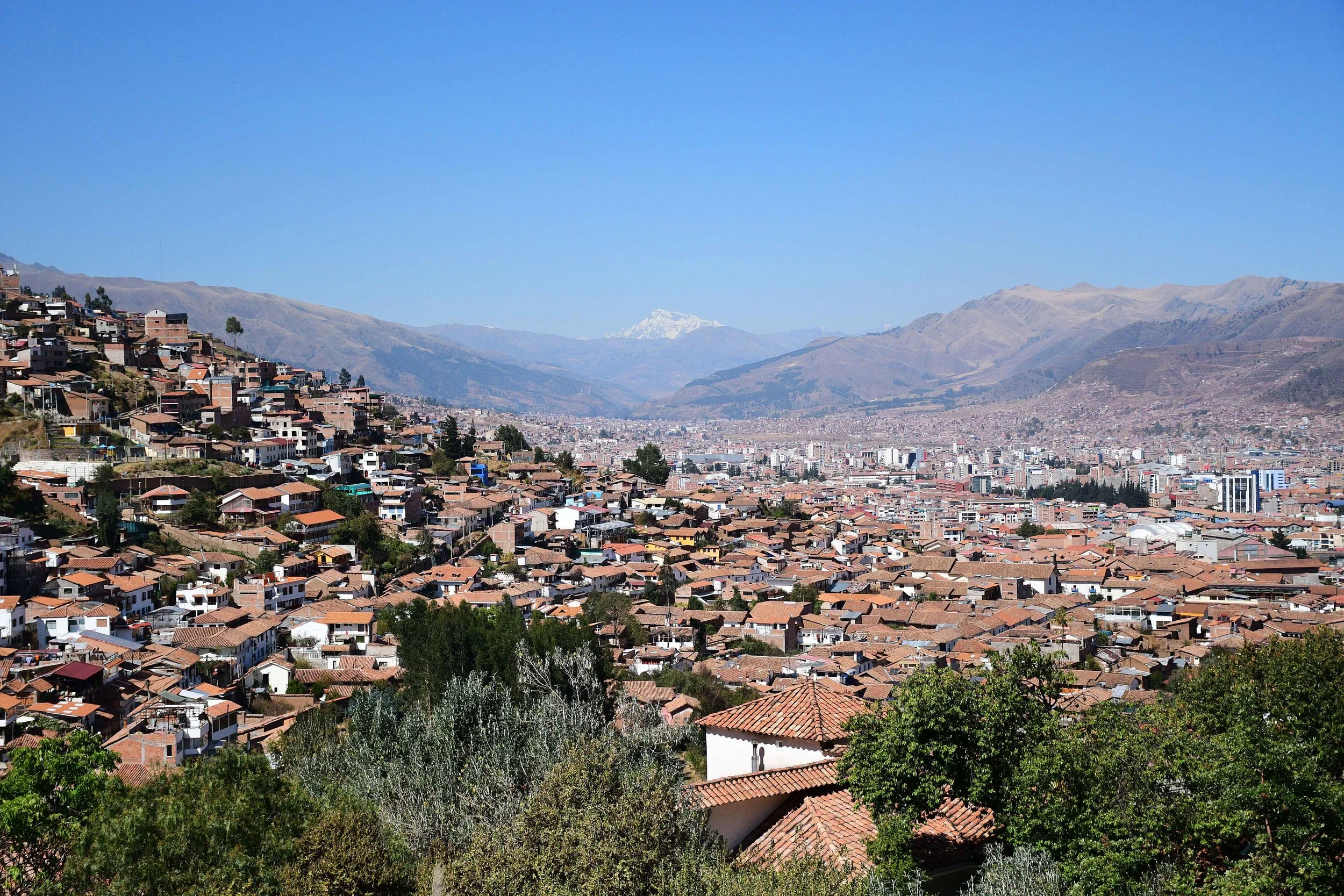
I spent my last few days in Cusco the navel of the world as the Inca called it and it certainly felt like I had arrived at my destination. I don’t know what I expected the city to be like, I had been worried it would be horribly modern, but in fact it’s a captivating place, full of Quechuan and Spanish character and nestled in the mountains at the top of the world. Most of the time I spent here was aimless but my trip did coincide with Inti Raymi a local festival in honour of the sun god, held at the winter solstice, to welcome Inti back and the return of the light.
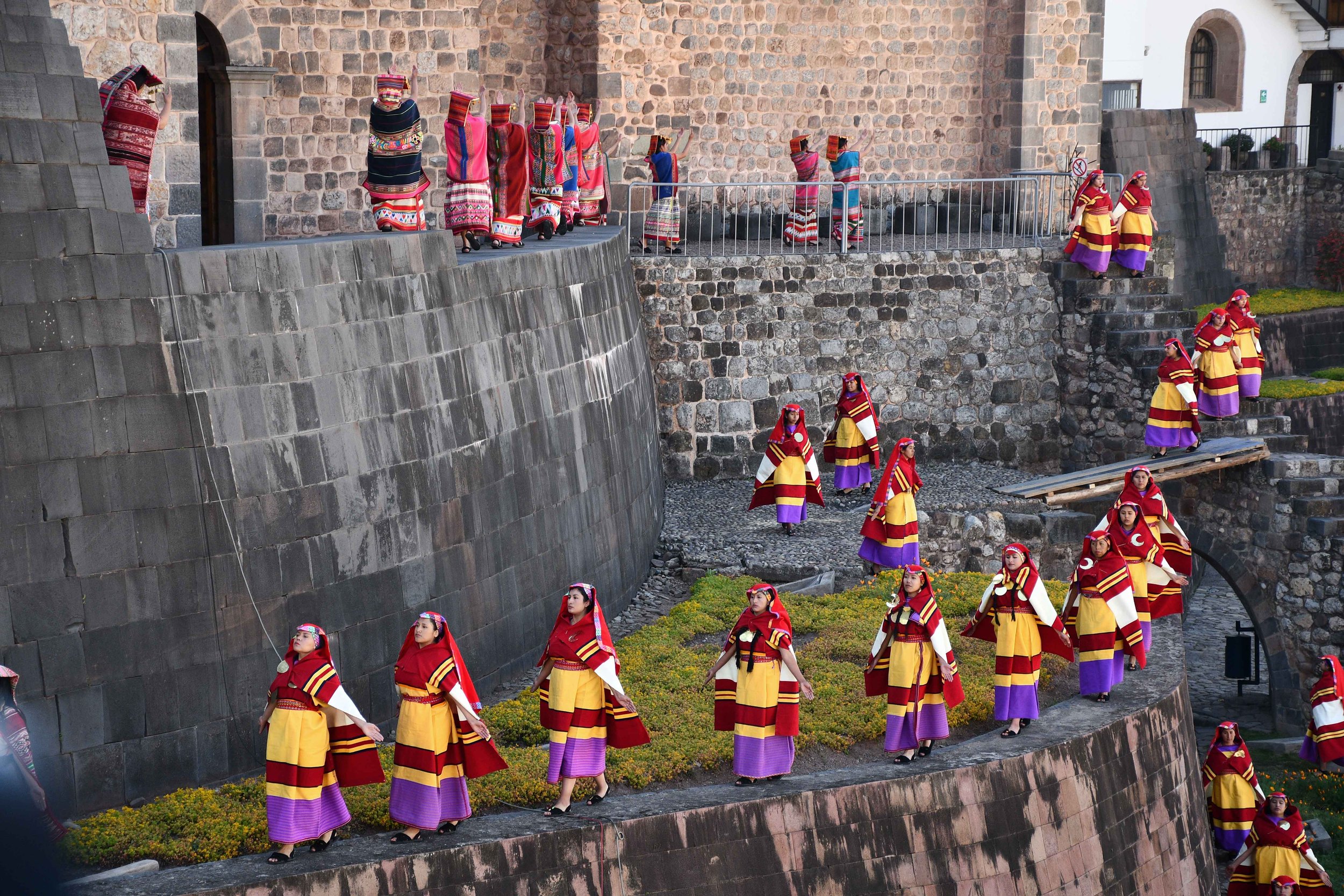
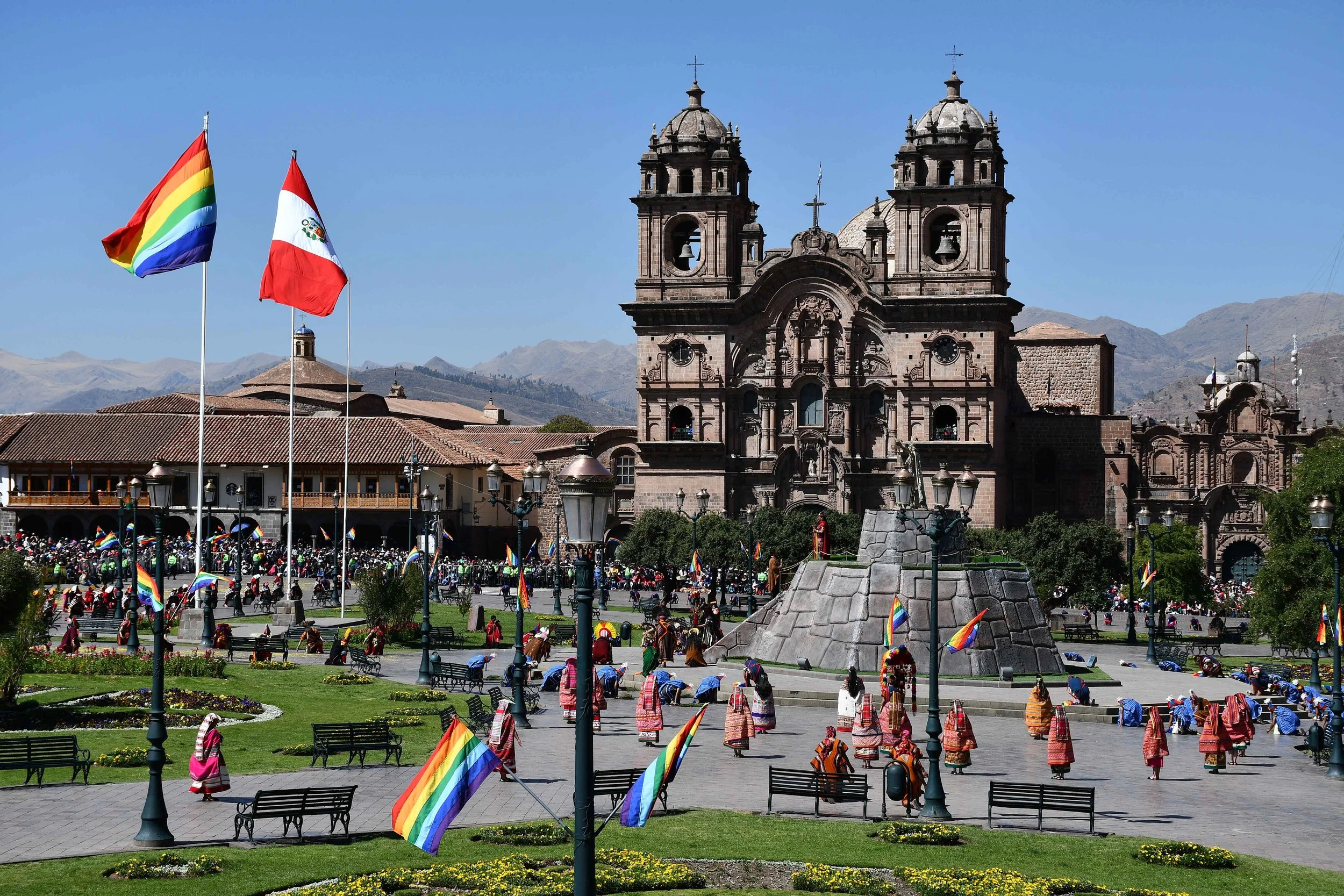
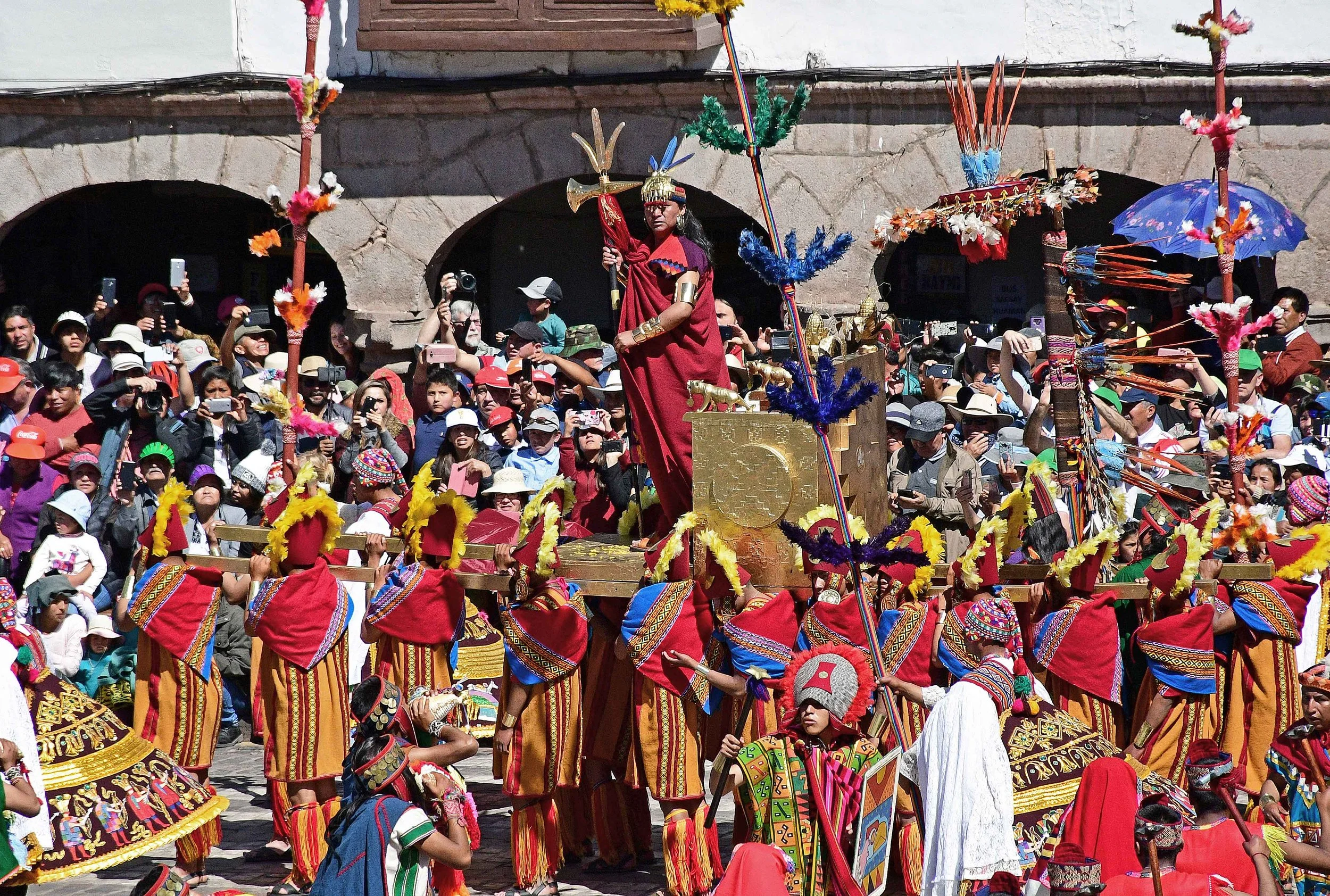
Hundreds of local peple take part in the rituals scattered over three locations. I watched the sapa inca greet the sun at Coricancha, the sun temple, from an upstairs window, then made my way into the Plaza de Armas and watched the procession from the streets.
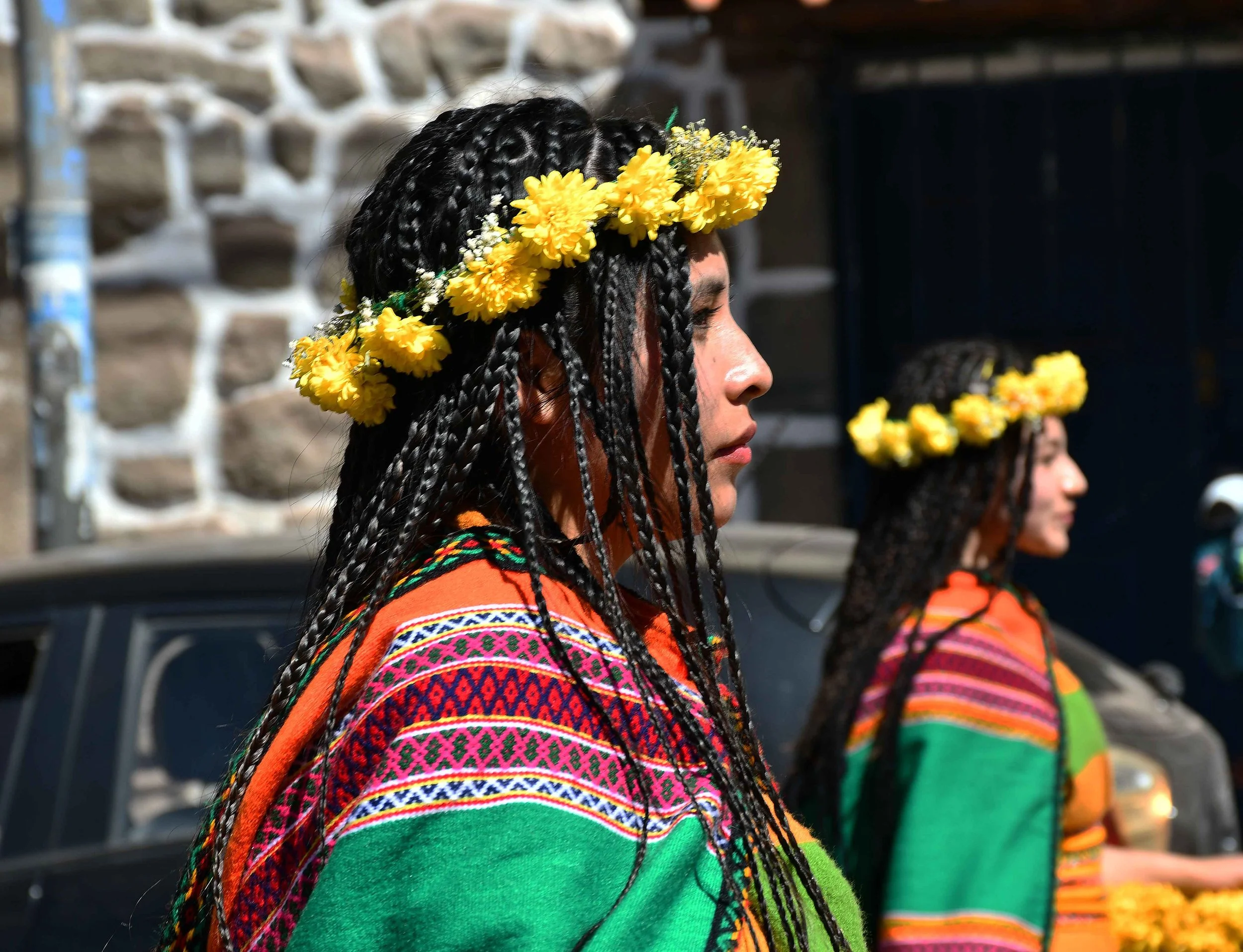
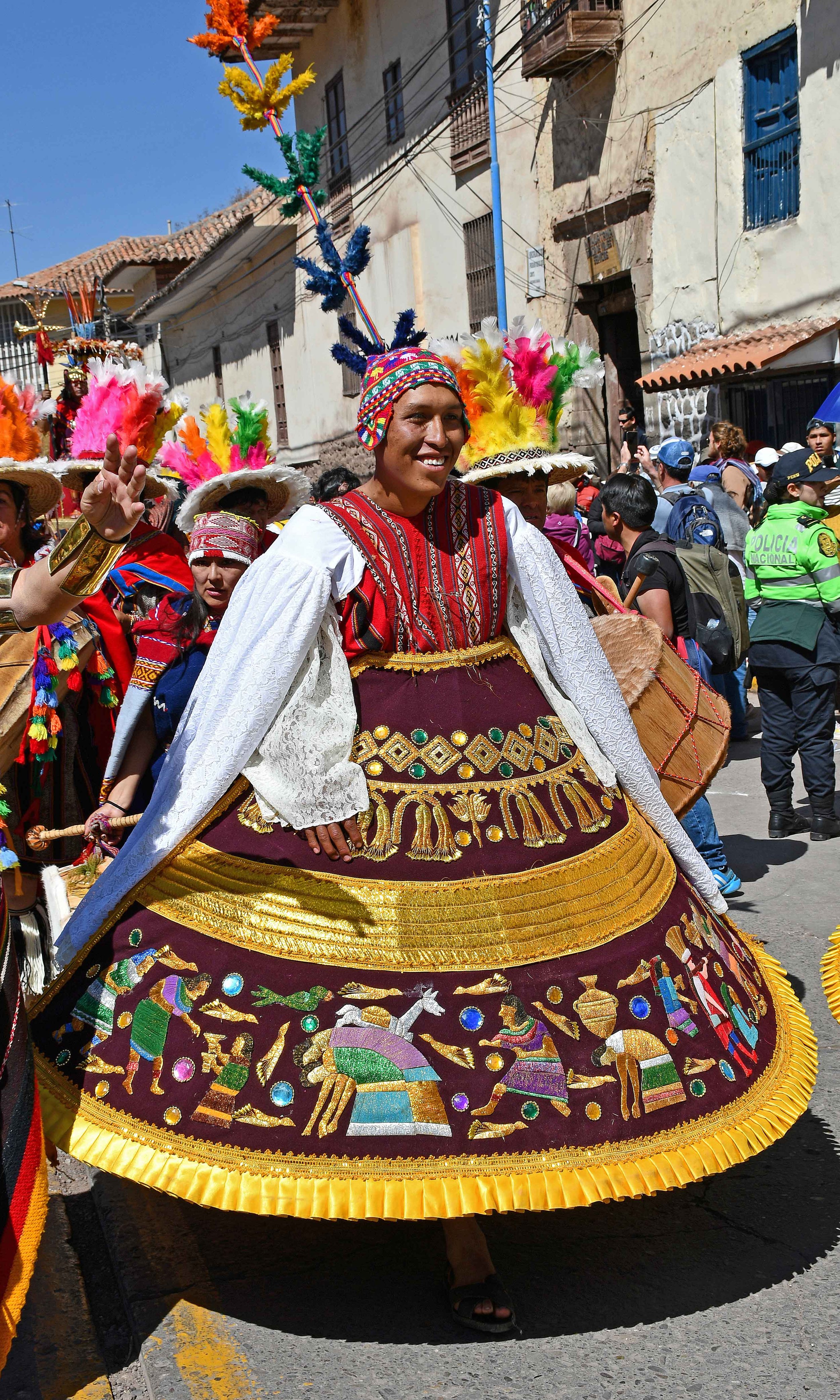
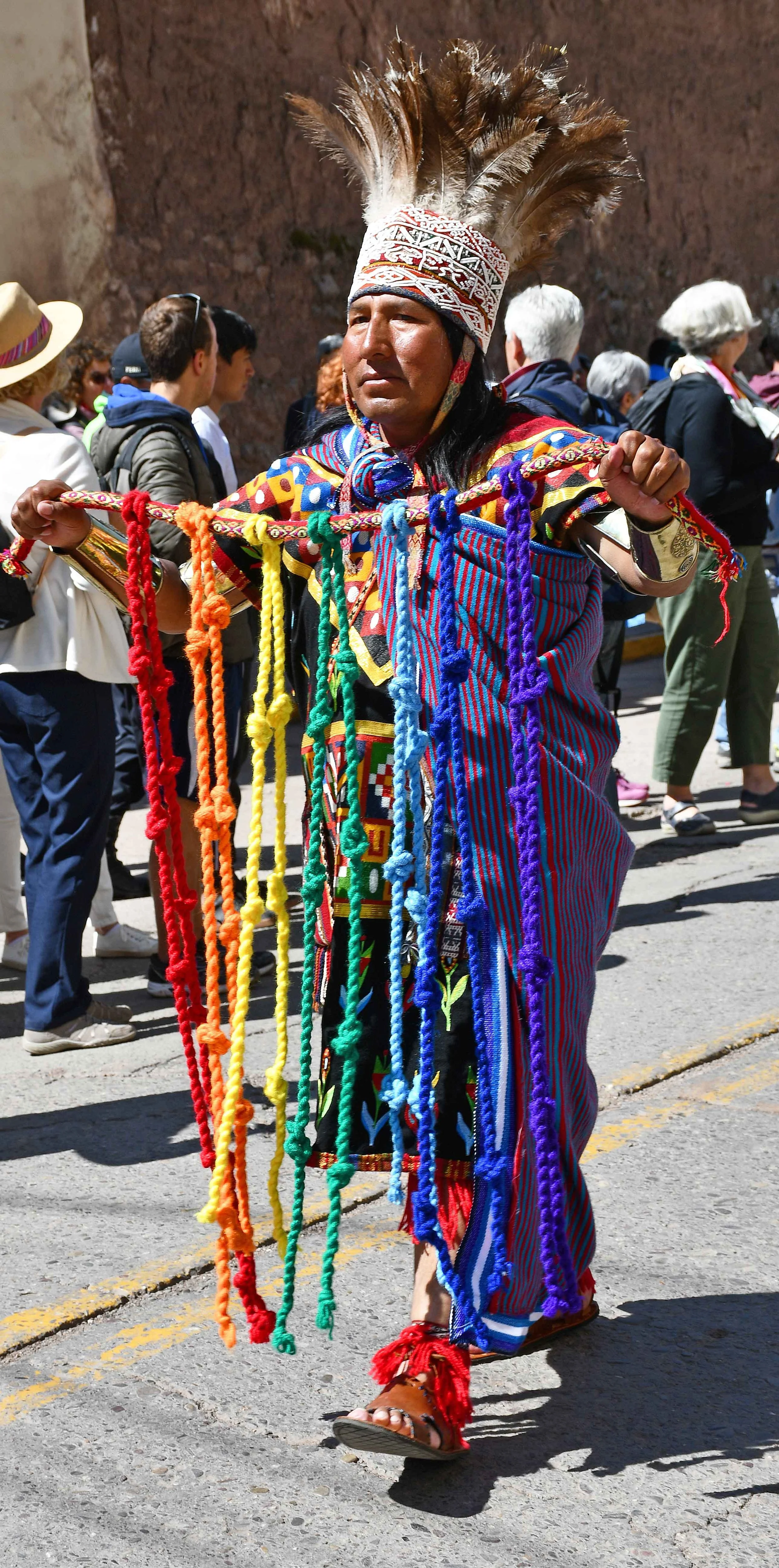
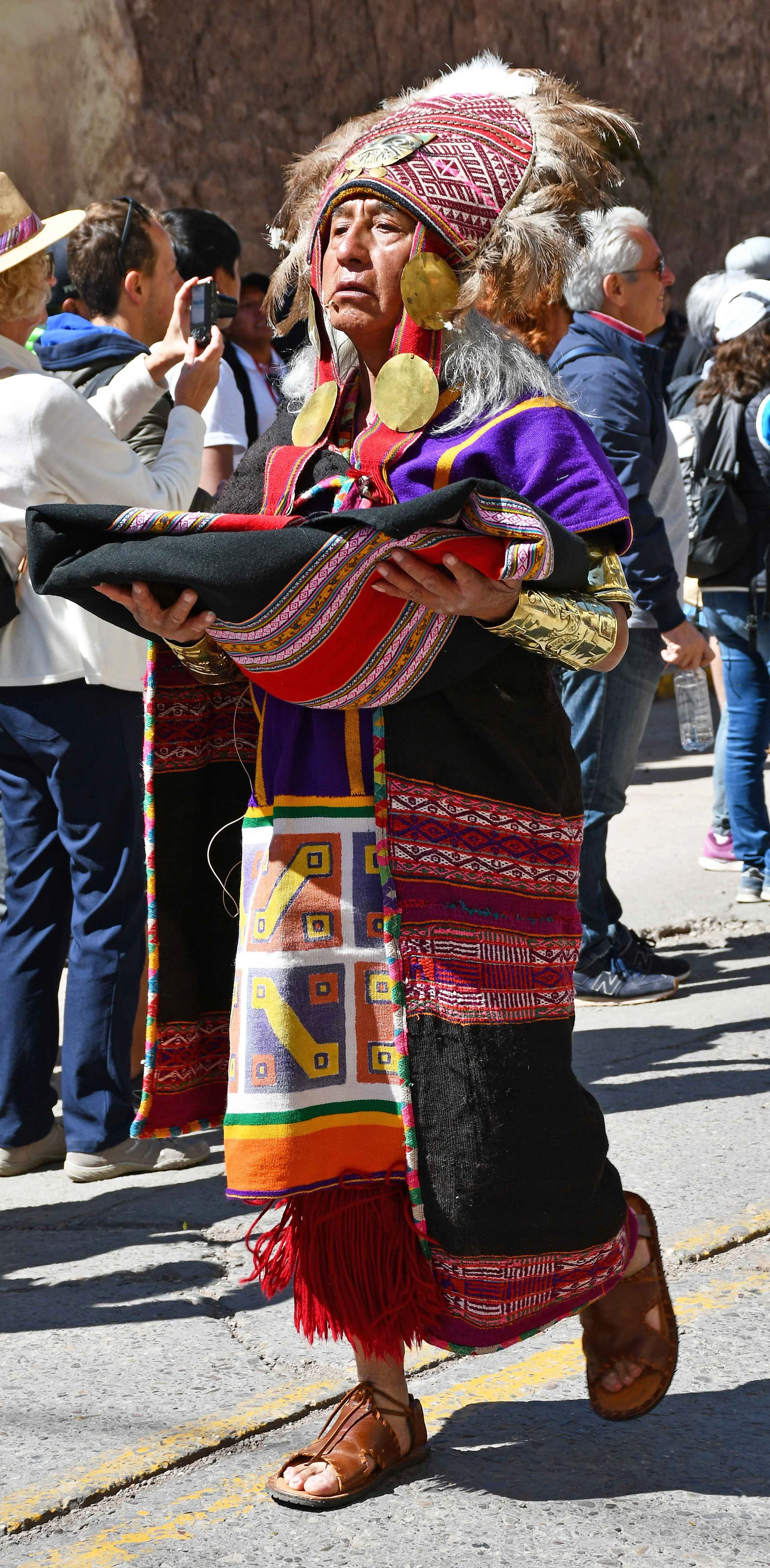
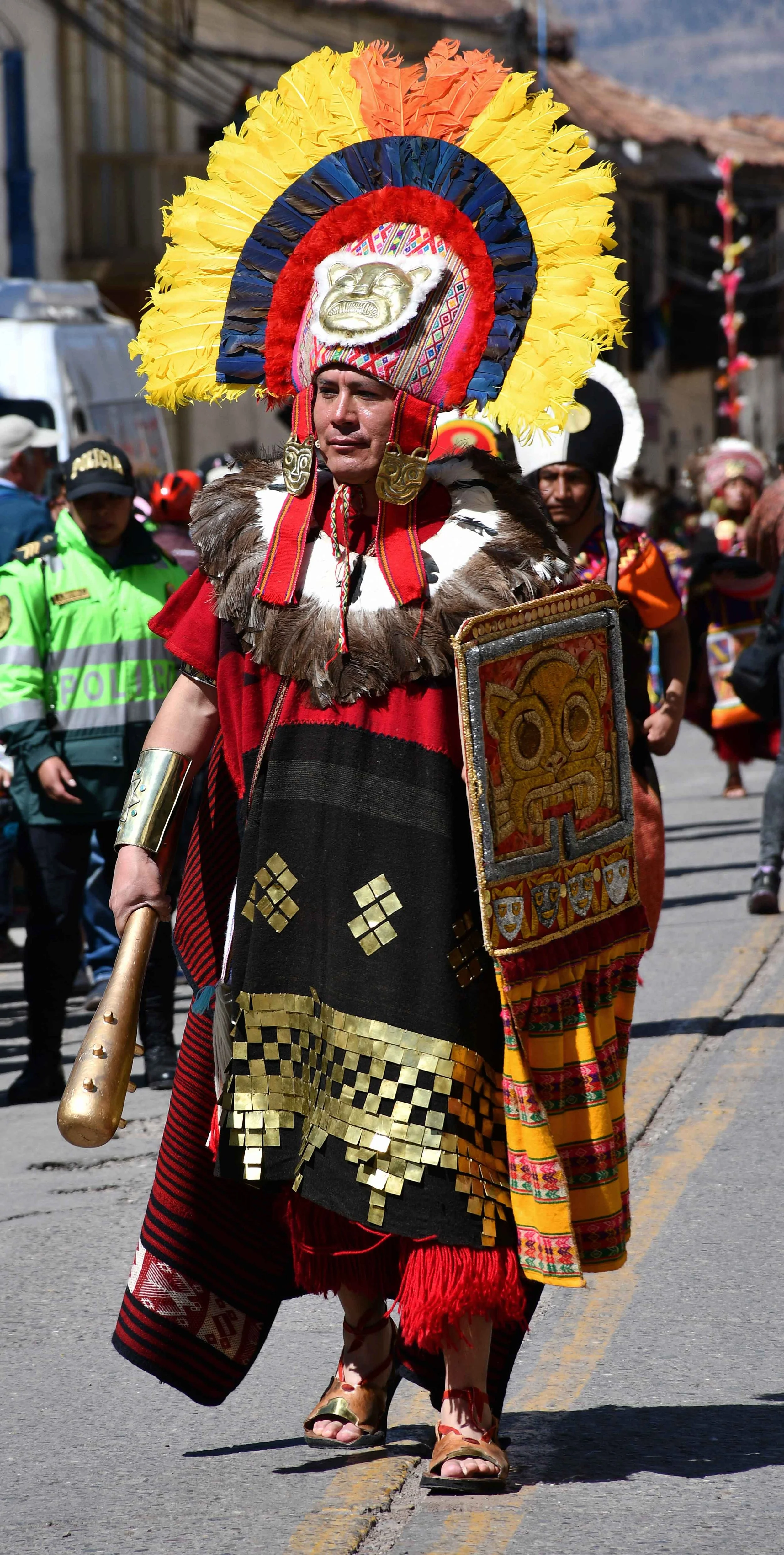
Afterwards I went up to Sacsayhuamán for offerings, sacrifice (not human) and dancing but by now I was tired so I decided to walk back. I passed lots of people and their families making their way up to the site and in many ways their enthusiasm and dedication was as interesting as the festivities. My route down the hill was along some of the charming narrow streets of the San Blas area and eventually back to the Plaza de Armas and my hotel to calm down after all the crowded excitement.
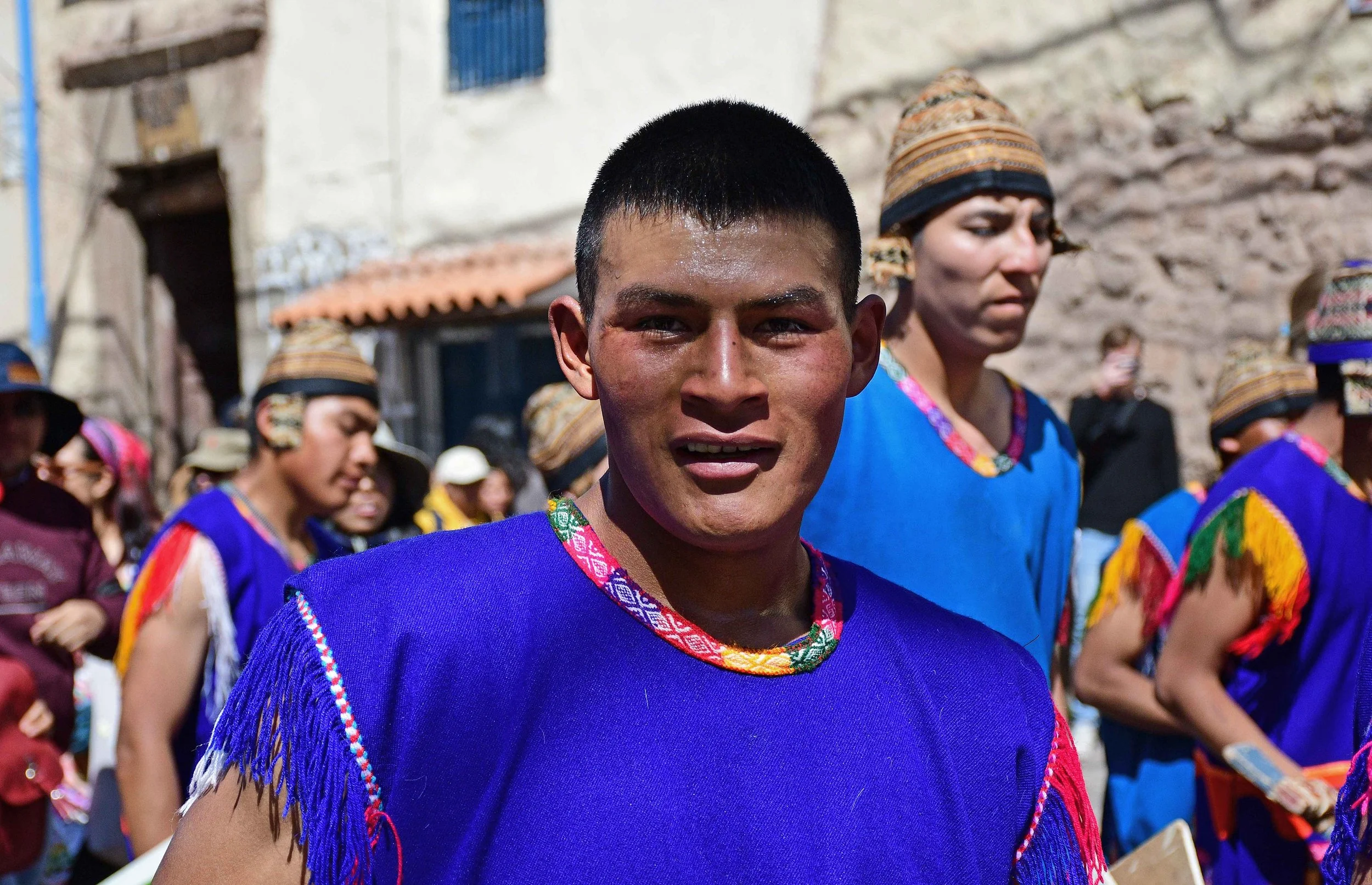
The Inca has built their empire by assimilation, often forced, absorbing different cultures and traditions into their own, unlike the Spanish who had tried to quash the Inca and everything they stood for. They clearly failed, 500 years later, the people still observe their traditional ceremonies, believe in their gods, worship the sun. In many respects Catholicism has been assimilated too and created hybrid festivals, languages and culture and I found it fascinating, particularly the art.
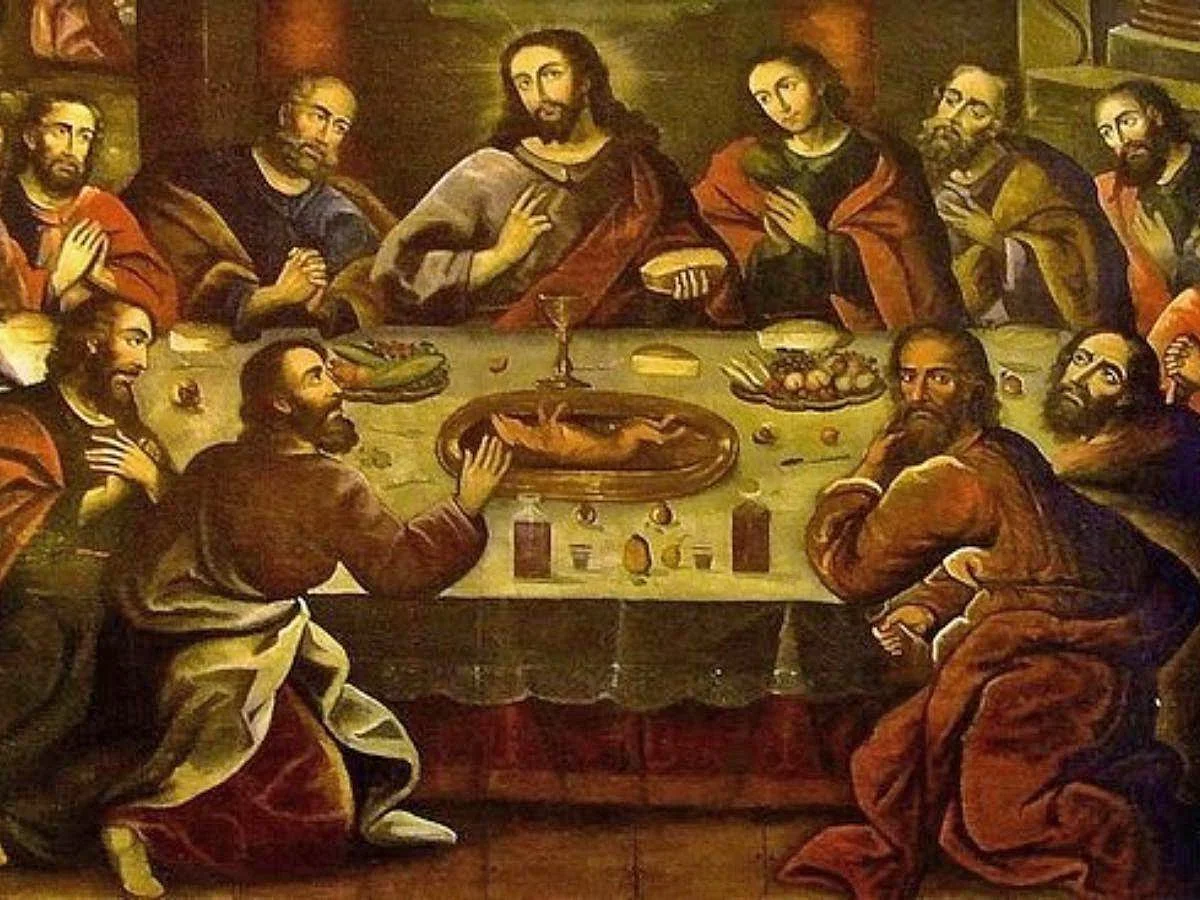
In Cusco the highlight is undoubtedly Marcos Zapata’s Last Supper in the otherwise gloomy cathedral. Here Christ and the disciples are portrayed as we are used to seeing in western art, but on the table they are being served chinchilla, an Andean rodent, and drinking what looks suspiciously like chicha morada.
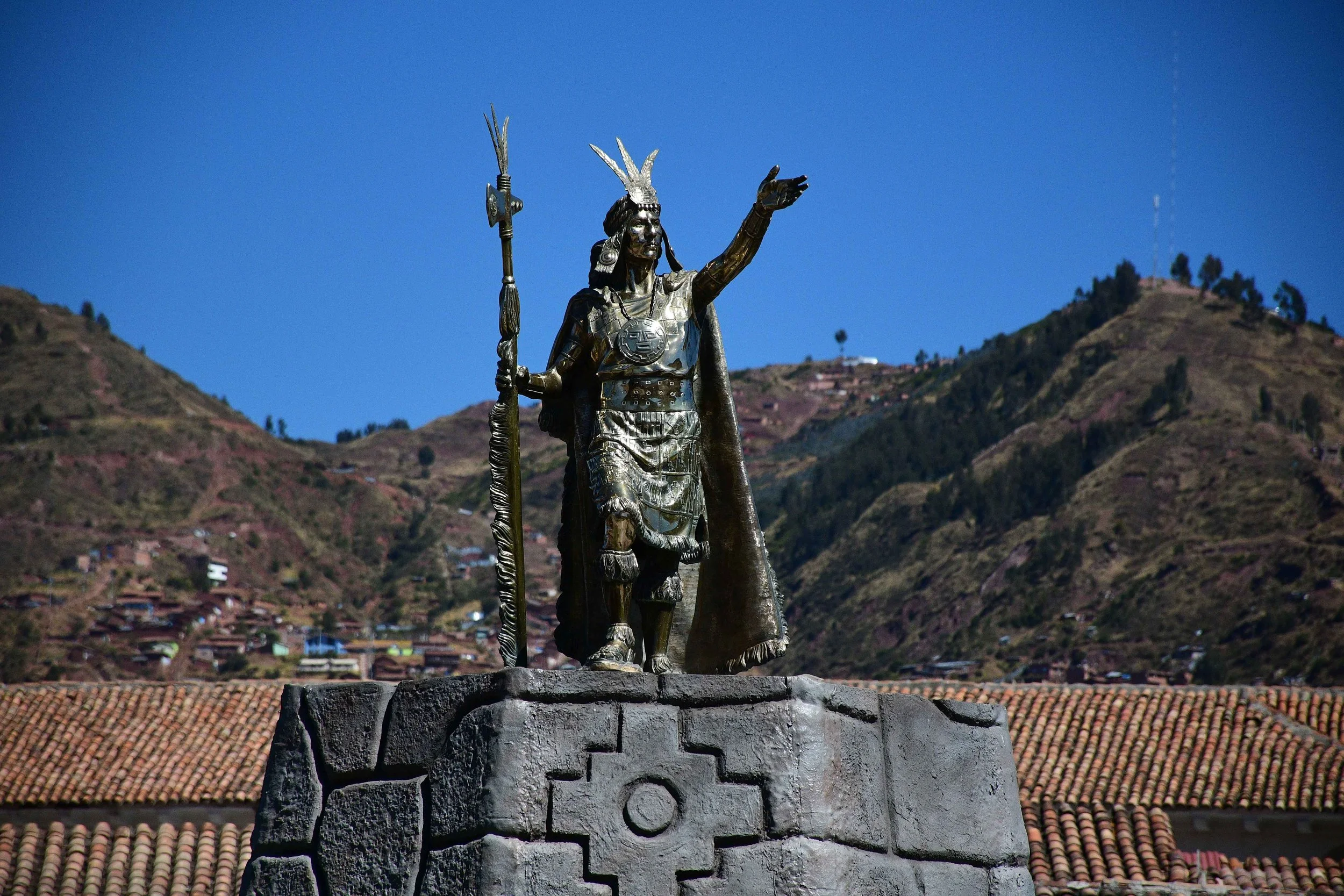
My last days in the city were spent doing all things Inca. I was excited to find the Museo Larco had a sister museum hidden away down a back street, and it was almost as ambient as the one in Lima: cool, dark, moody. I also walked up again to Sacsayhuamán on my final day to have a wander around the impressive ruins.
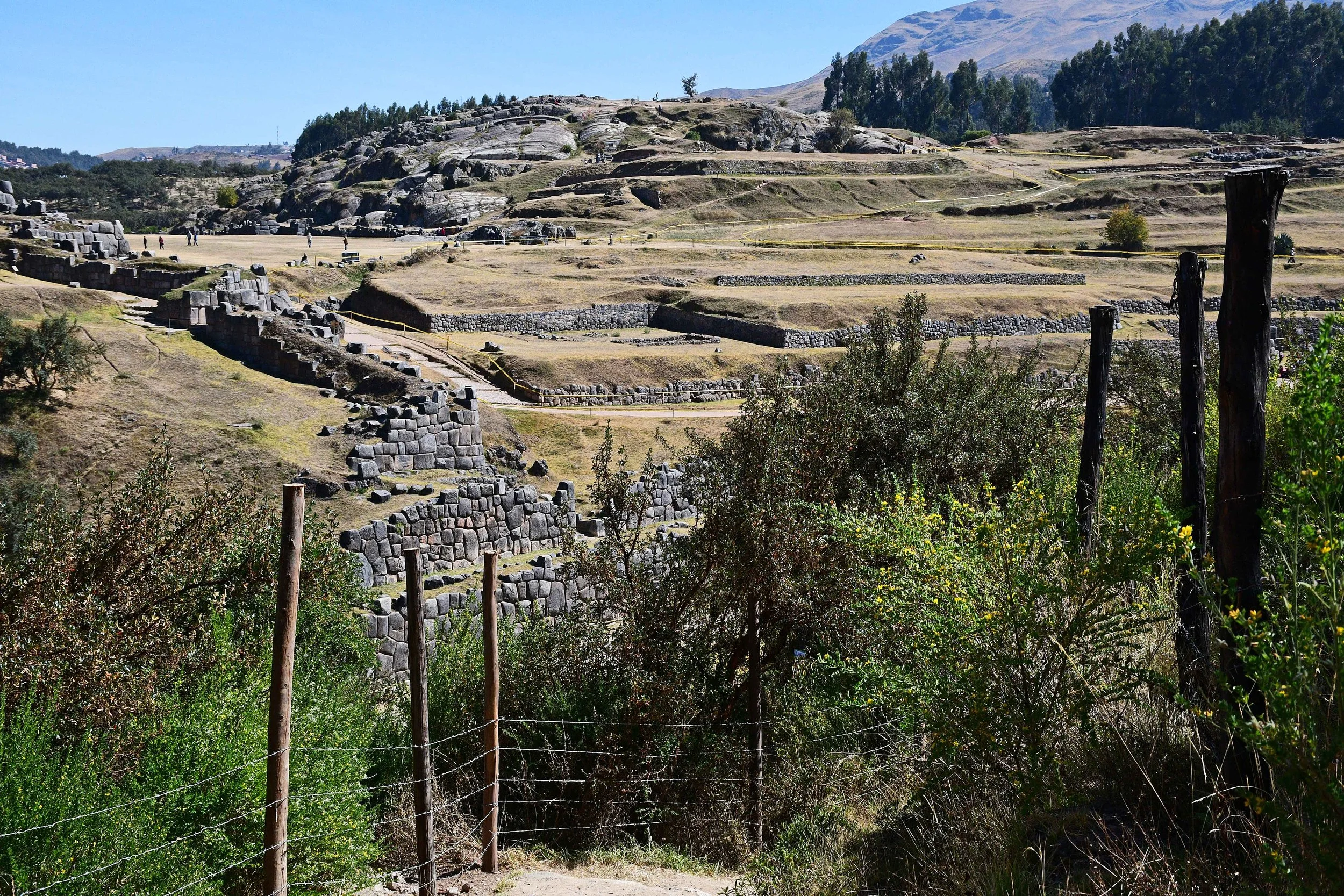
My time in Peru had been great, but I only skimmed the surface of the country. I had seen so much but am conscious I stuck to a well trodden path, and came away with little idea of the real Peru beyond the attractions.
This was definitely one of the more comfortable trips, staying at good hotels and enjoying a bit of luxury on the Andean Explorer, neither of which I regret but it made my experience feel a bit remote. I saw a lot of the major sights but so did lots of other people and I don’t really have a unique take on travel in Peru. Other than my shanty town encounter, I rarely met or talked to locals and see beyond what I was supposed to see. Given a second chance to go back, I would like to spend longer in the country and go off the beaten track. I’d like to learn more about the other civilisations: the Moche in the north, the Nazca in the south. I’d also like to do some homestays which I had done in Argentina when I didn’t have much money. I saw a lot but there’s a lot more to see and Peru has definitely left me wanting more.