GEORGIA
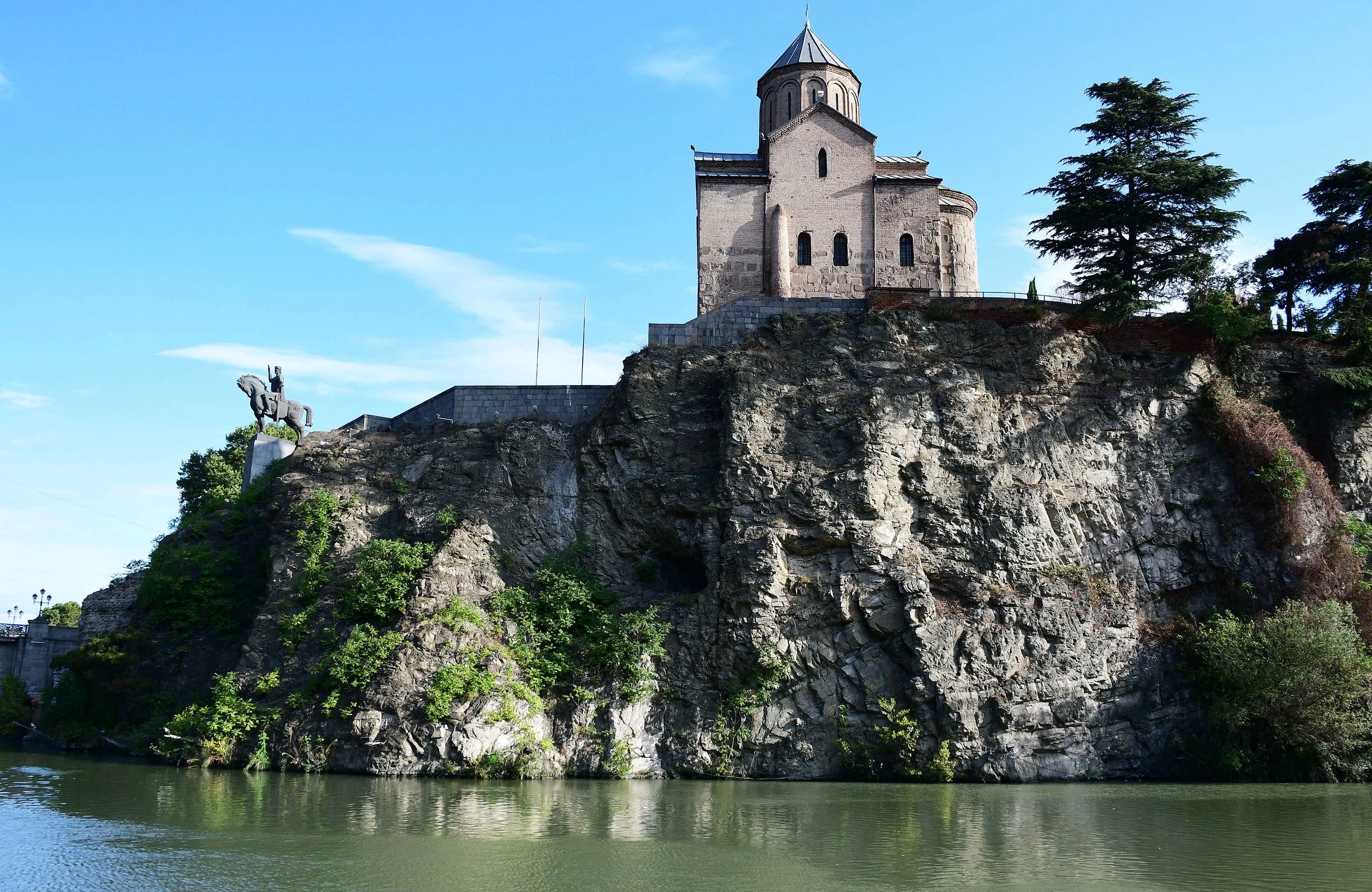
I went to Georgia primarily to eat. I was joining a small group being guided around the country by the wonderful Carla Capalbo, a food and wine expert who had written a definitive guide to the cuisine of Georgia. So my time there was mostly about the food but there were plenty of other things to enjoy in this beautiful place.
My flight with Turkish airlines was awful which I have come to expect every time I have to transfer in Istanbul. They had missed my planned connection and so, for the third time in a decade, I had to buy a visa for entry into Turkey so that I could transfer to another airport. I ended up getting to Tbilisi at 3 in the morning.
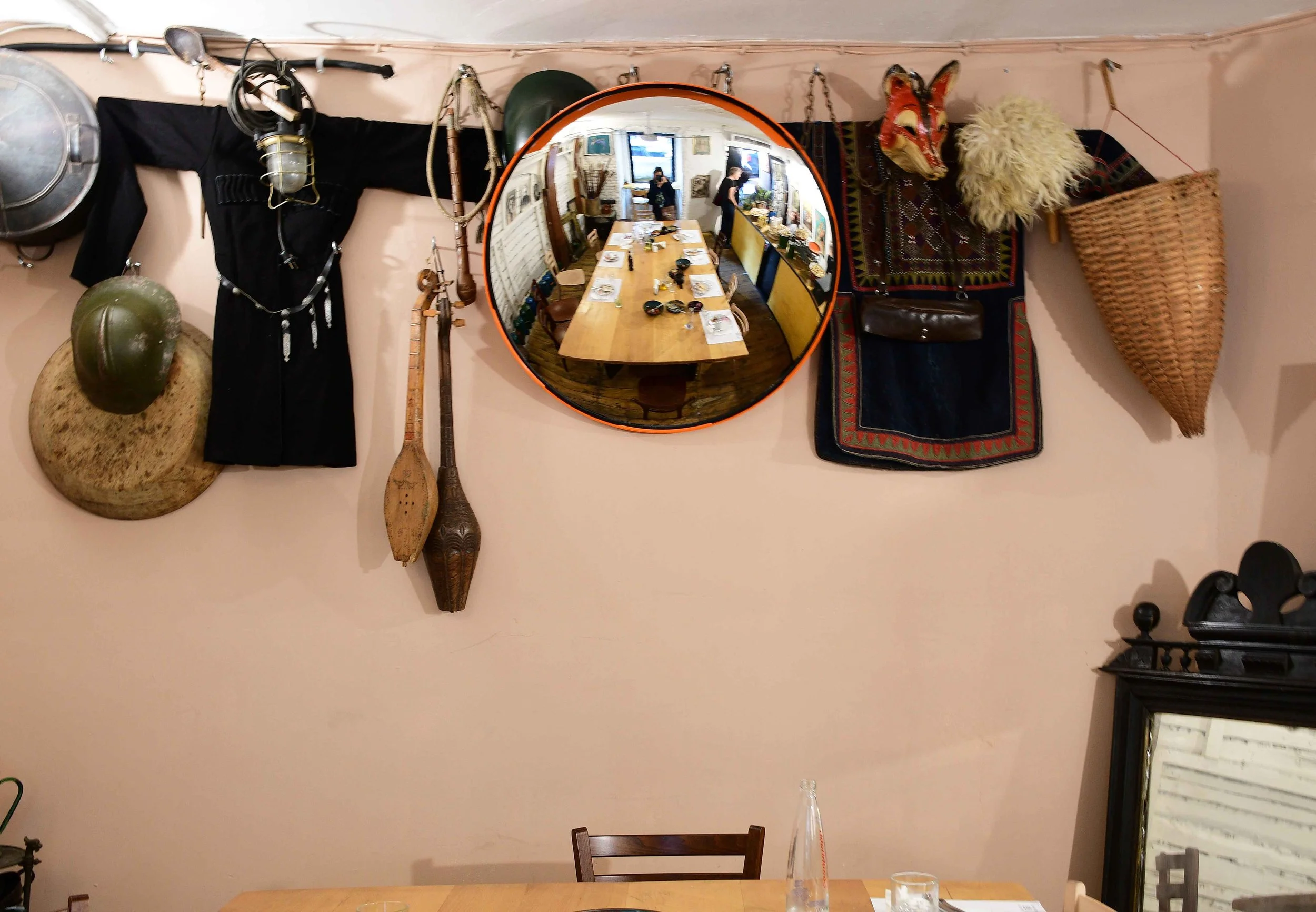
By the time I had recovered, it was lunchtime and we all met up at the Salobie Bia, a well known restaurant that doubles up as a museum of Georgian life. There were about eight of us in the group, and what a lovely group of people they were, everyone so enthusiastic and willing to try everything.
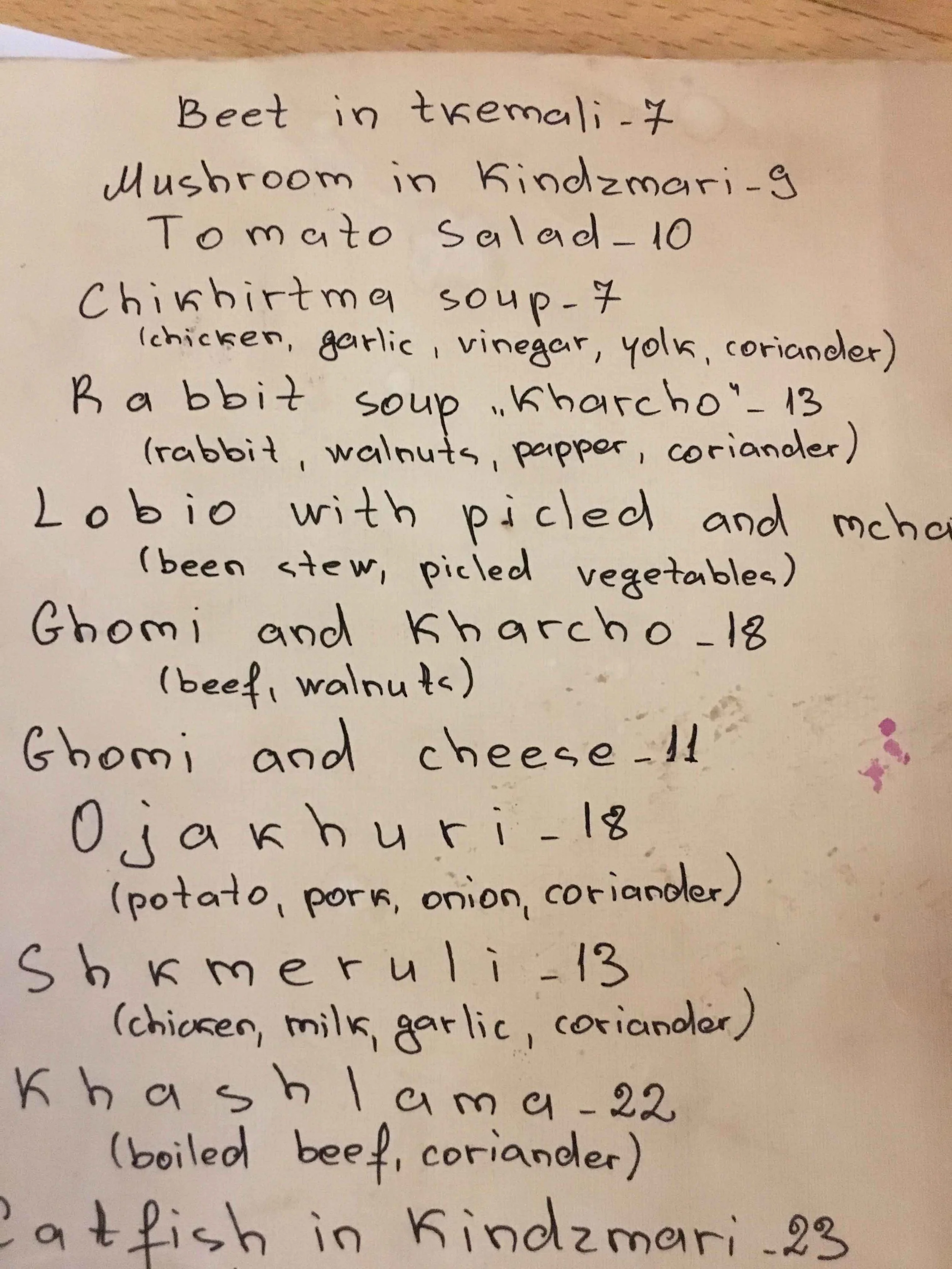
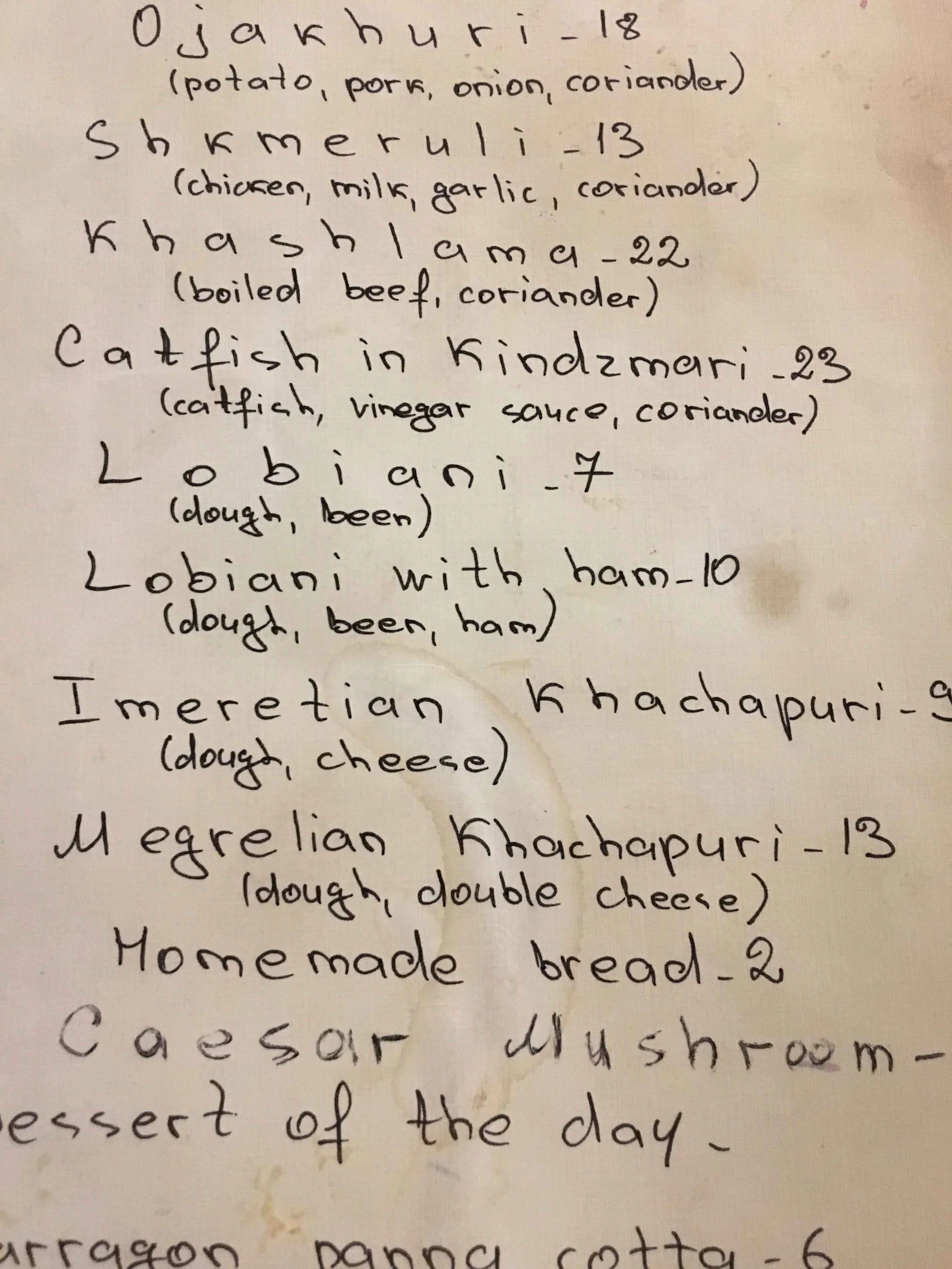
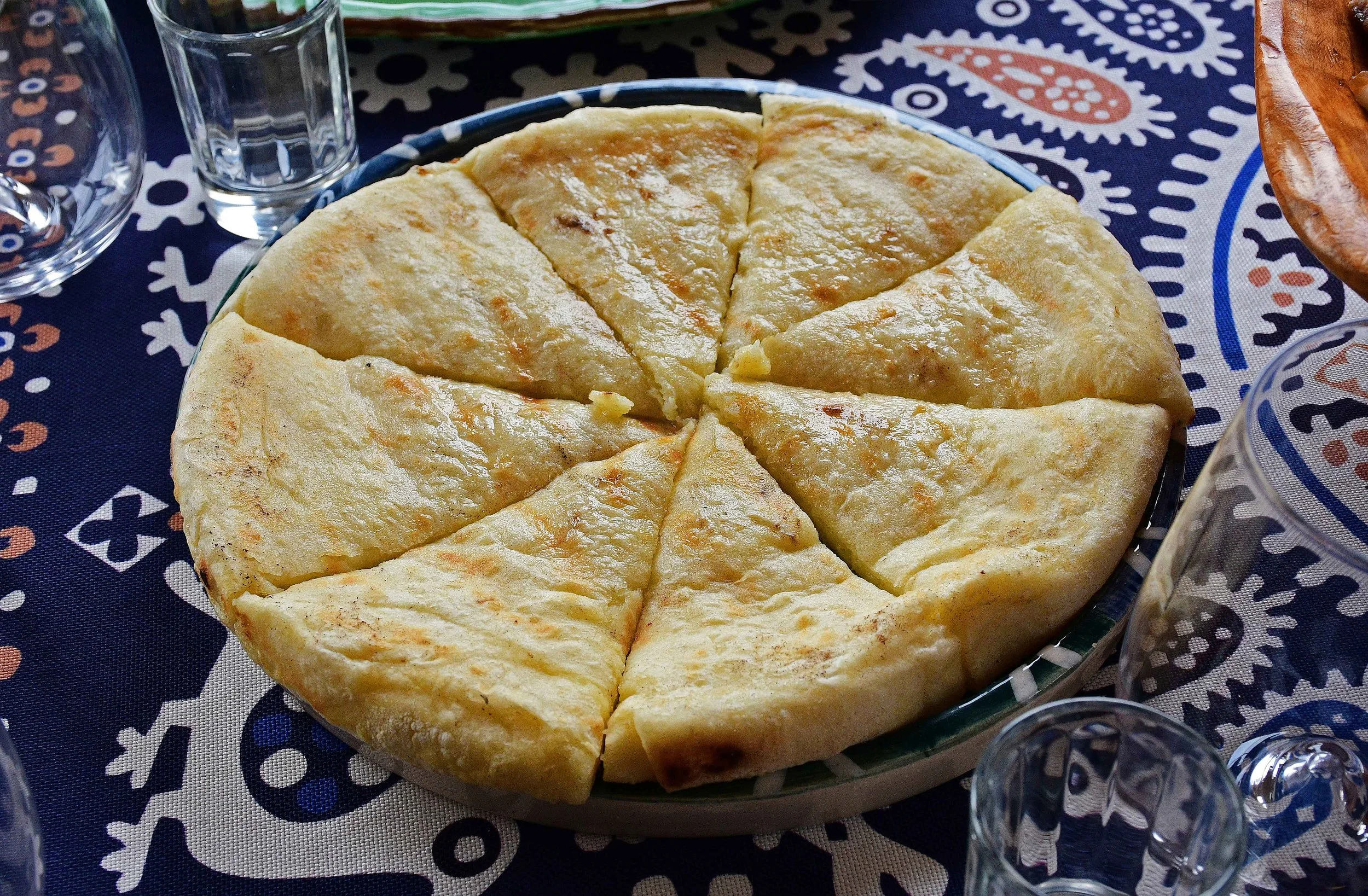
The first thing I ate is Georgia’s national dish, khachapuri, which was also my favourite thing to eat, Carla describes it as the ‘ultimate comfort food’. khachapuri is stuffed bread, usually with cheese but there are varieties with spinach and other vegetables. This one was Imeretian: simple, slightly crispy bread with an oozy fresh (rather than aged) cheese filling. We had tomato and beetroot salad with lots of herbs, another feature of Georgian cuisine. We shared creamy beef and walnut stew (kharcho) with very light millet polenta (ghomi) and chicken cooked in milk (shkmeruli) with beans and served with corn bread. There were also pickles, one very reminiscent of kimchi. I drank homemade lemonade.
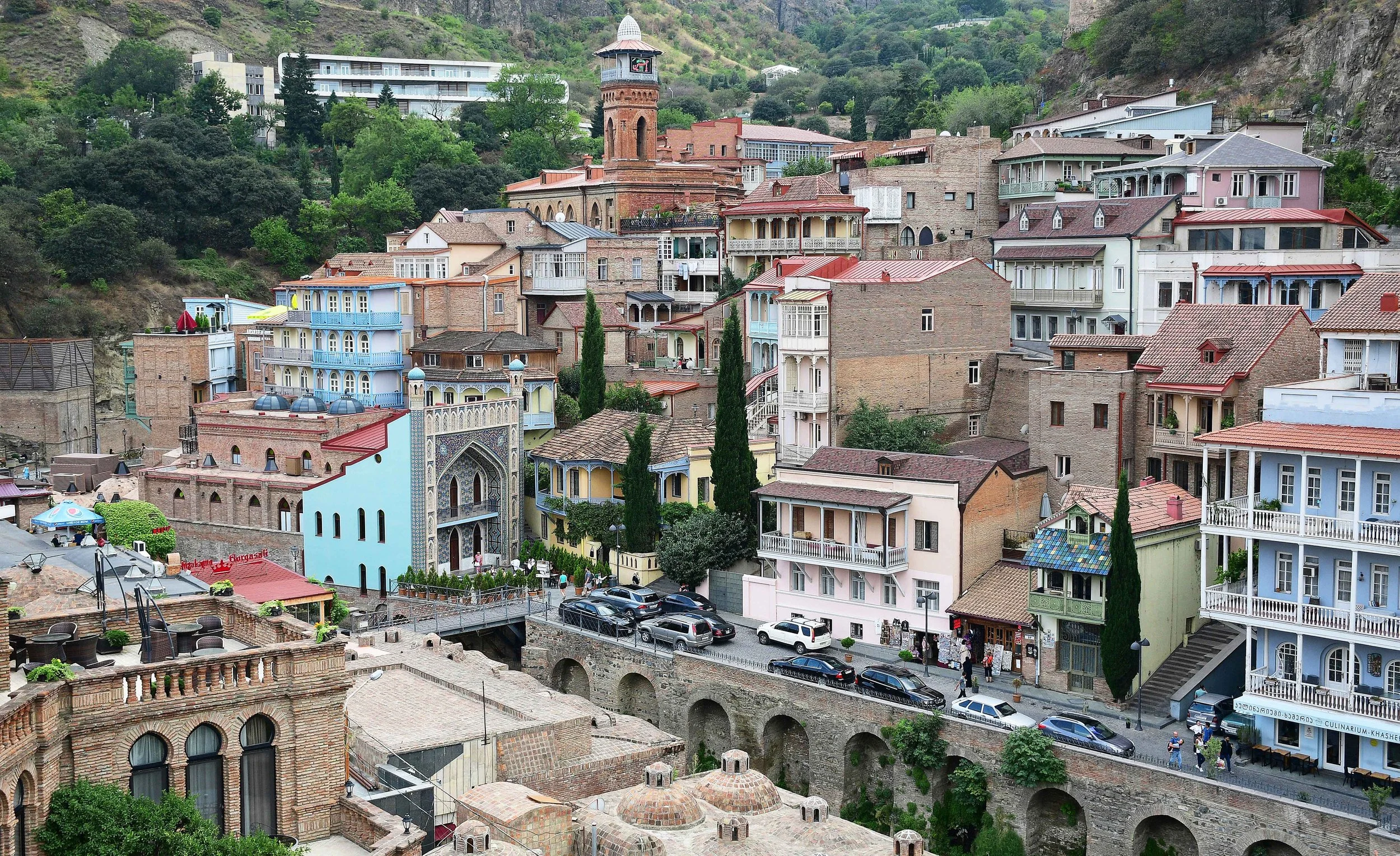
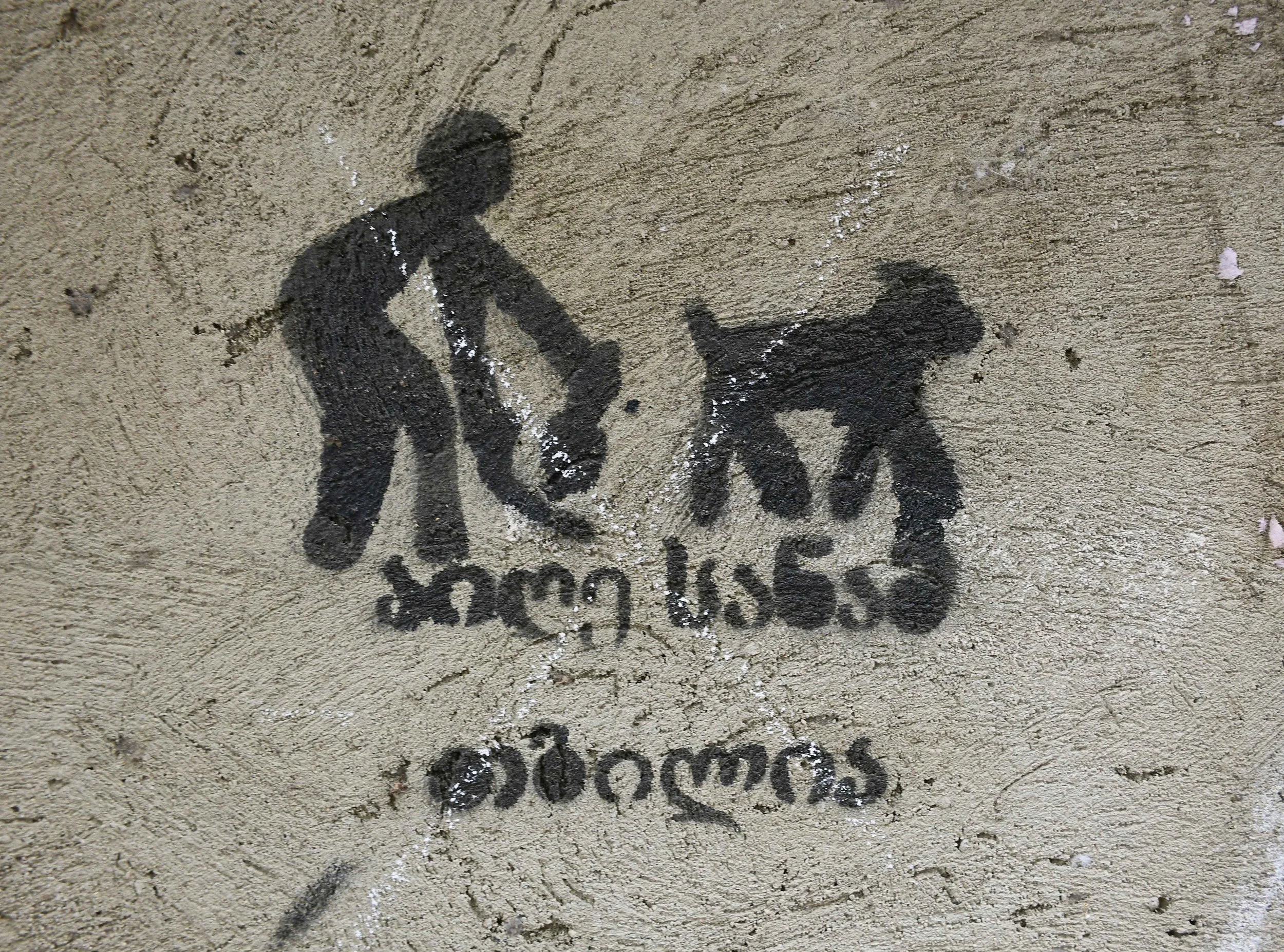
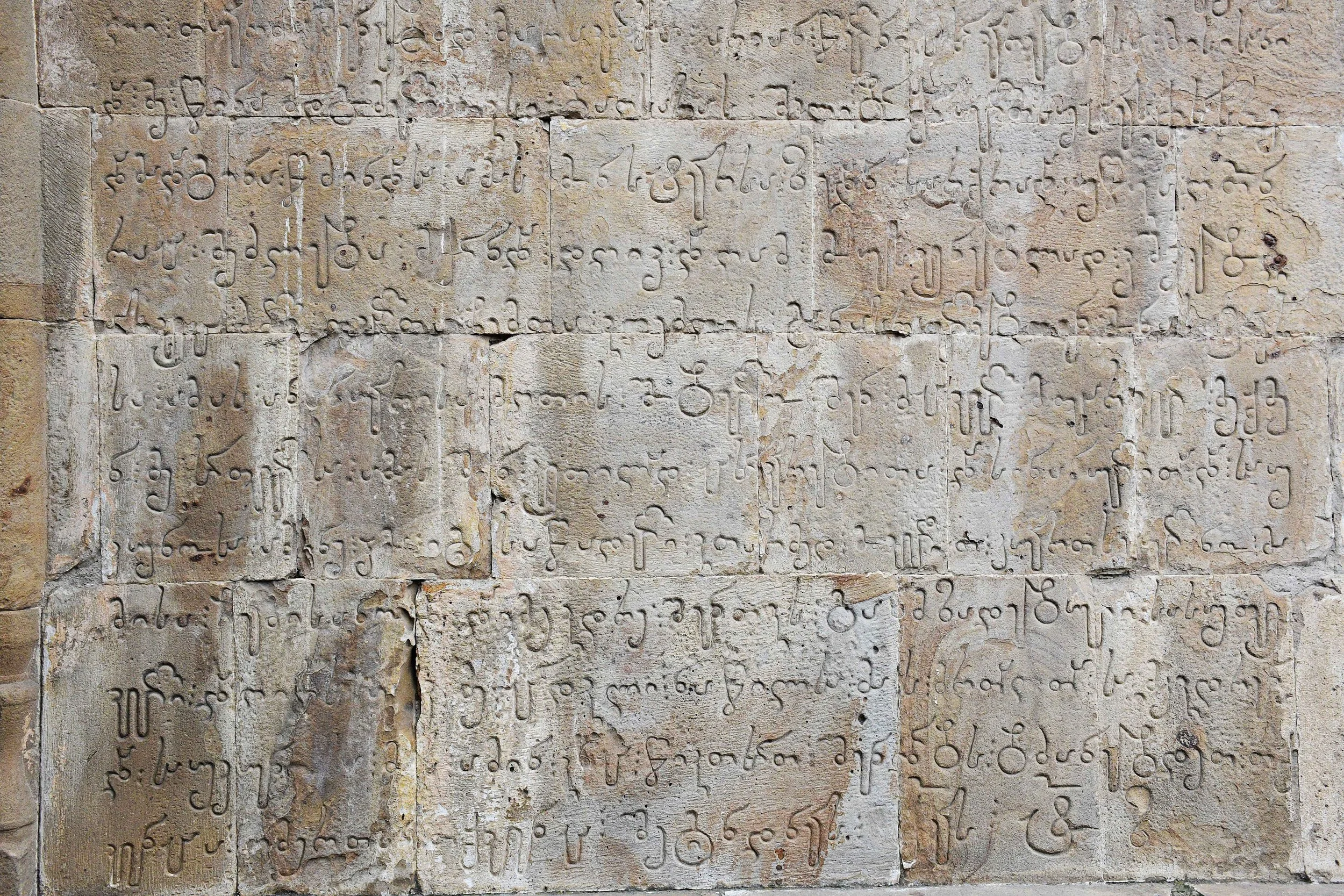
After lunch I went for a walk. It’s an extremely attractive city that is largely unspoilt or modernised apart from the dramatic Bridge of Peace. My hotel was right next to the Turkish baths, a reminder that this country has always been a crossroads between east and west, north and south. There are influences from everywhere here. What immediately caught my eye was the beautiful alphabet which is unlike any other. Even the most mundane notices look so artistic.
Our evening was spent at Vino Underground to taste the famous Georgian wine. Wine has been made here for at least 8000 years and is believed to be one of the oldest, if not the oldest in the world. Unfortunately I didn’t like the taste of the famous amber-coloured wine, it’s very distinct, almost like sherry, and too strong for me. The food wasn’t as good as lunch, but the company was excellent and I was looking forward to the days ahead.
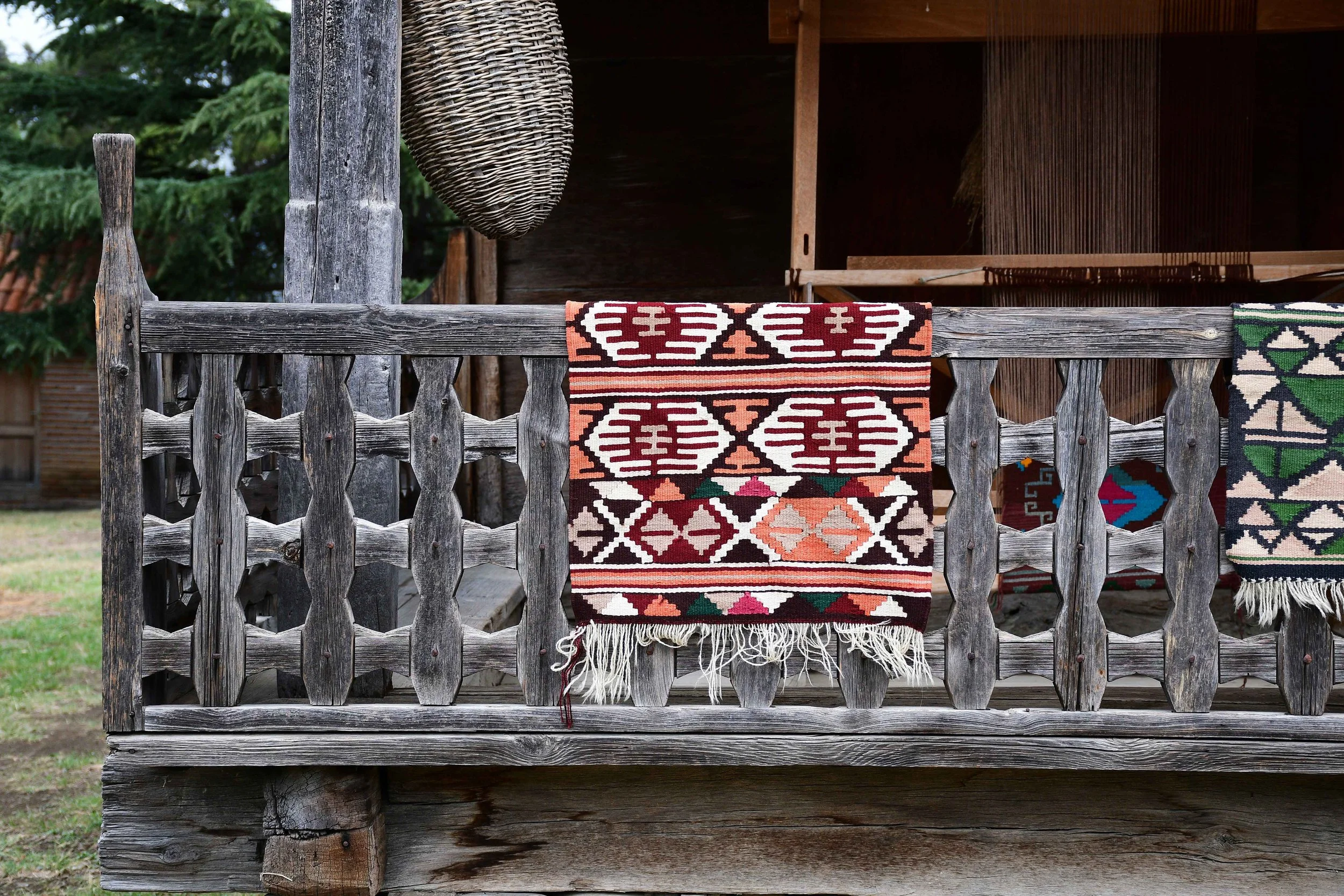
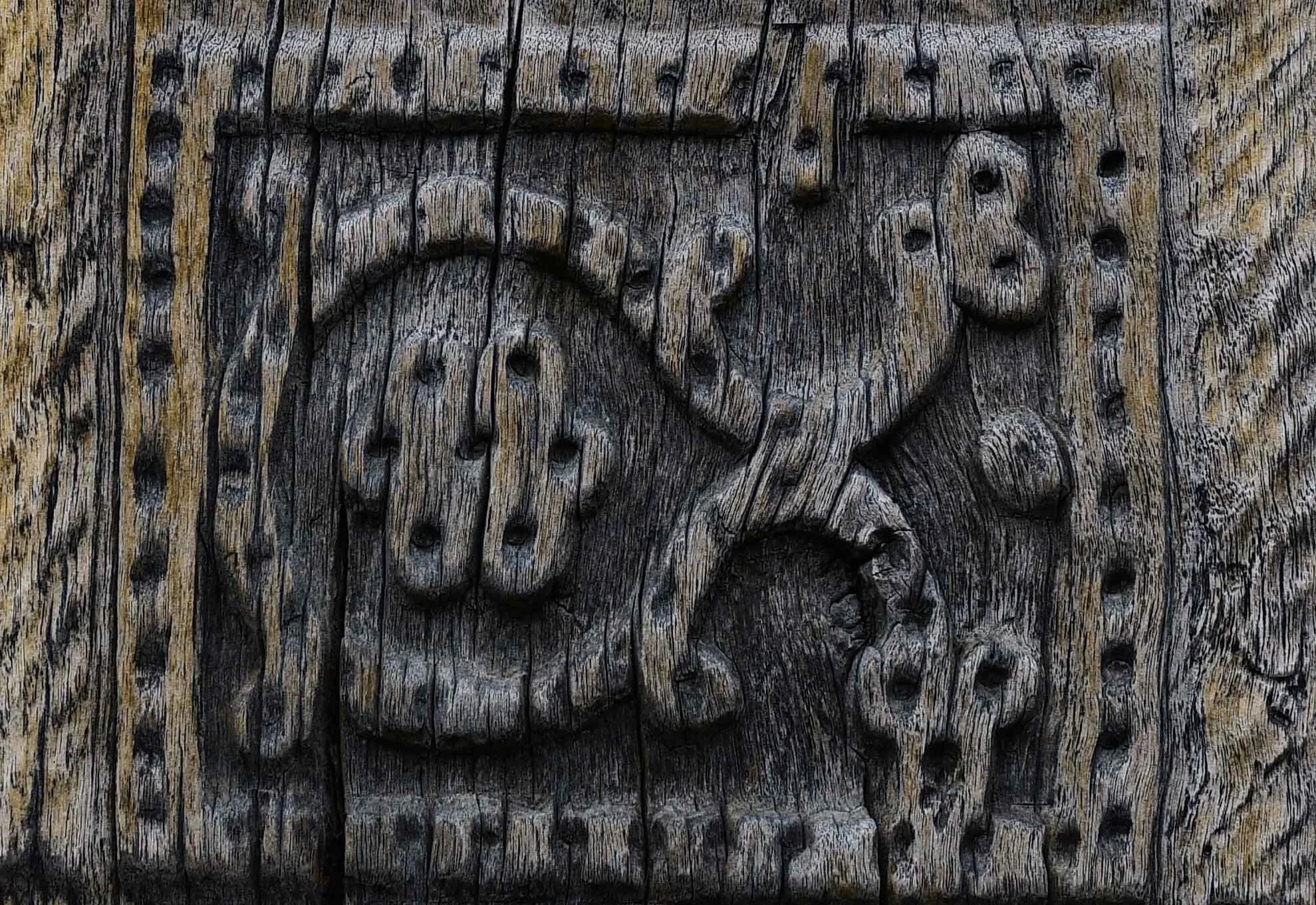
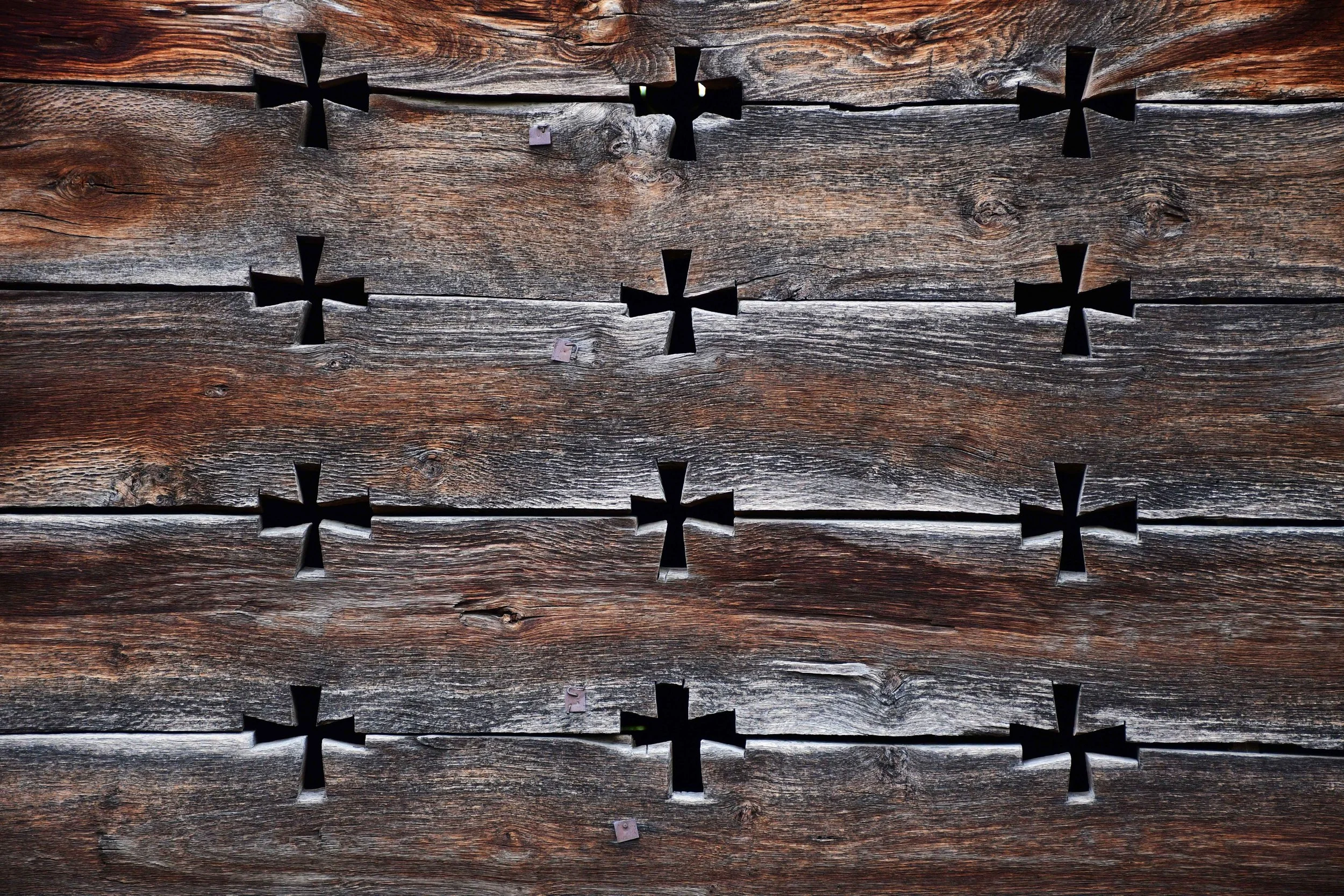
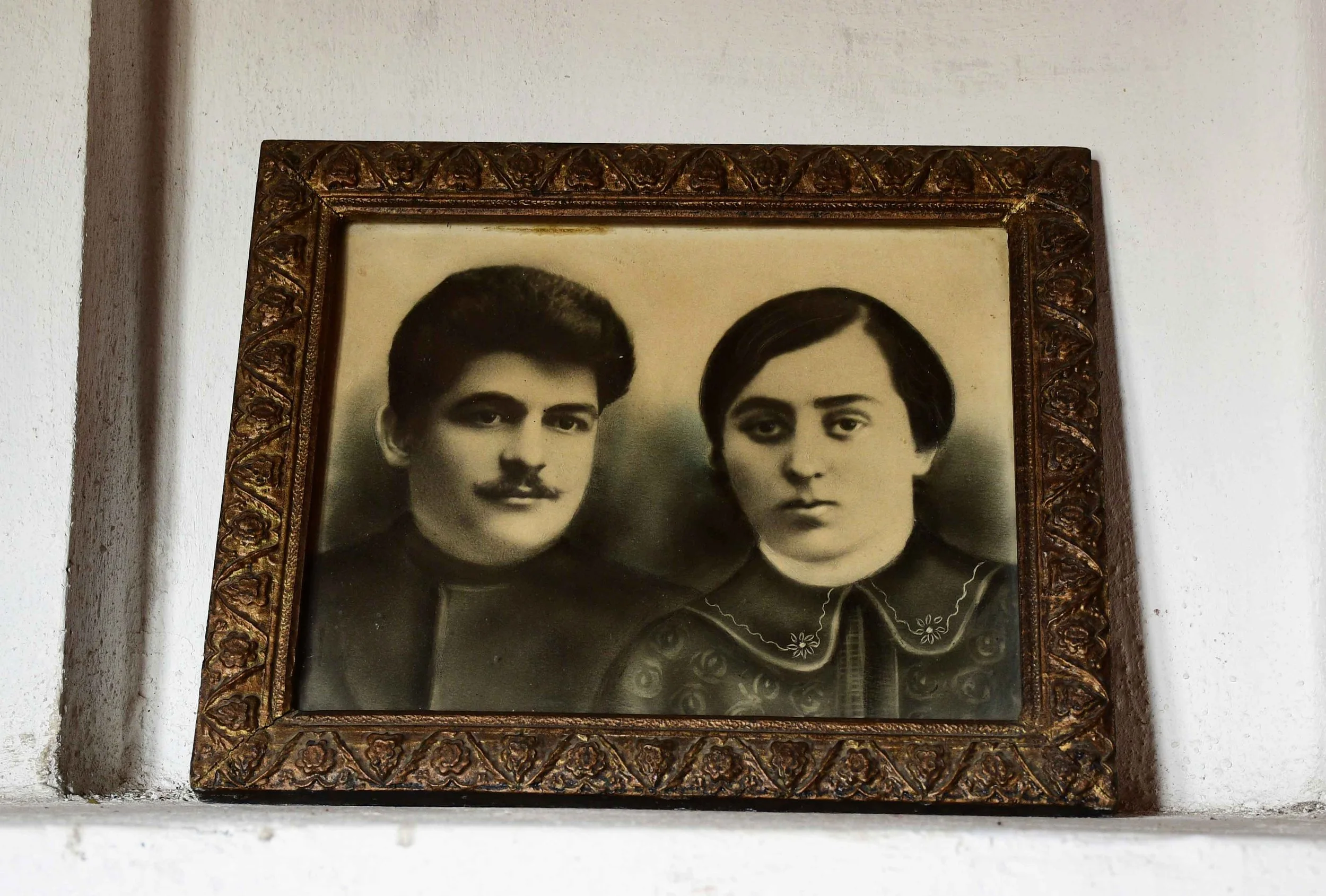
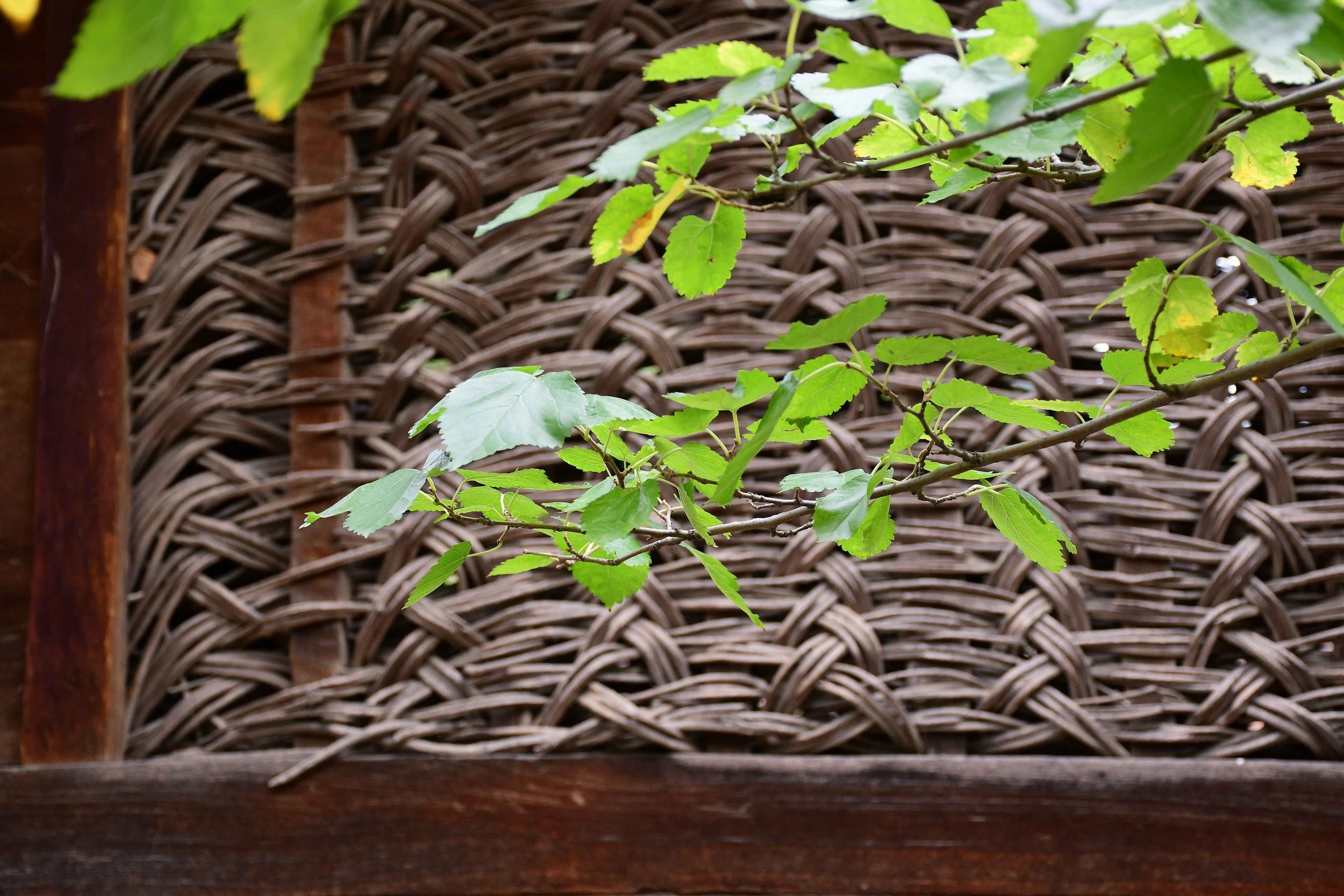
We went up to see the Open Air Museum of Ethnography which overlooks the city. I love these places where buildings of traditional architectural interest have been been relocated and reconstructed together in a new ‘village’. It was interesting to see so many textures, woven and carved, that are used to fabricate buildings, everything seems to be made from wood.
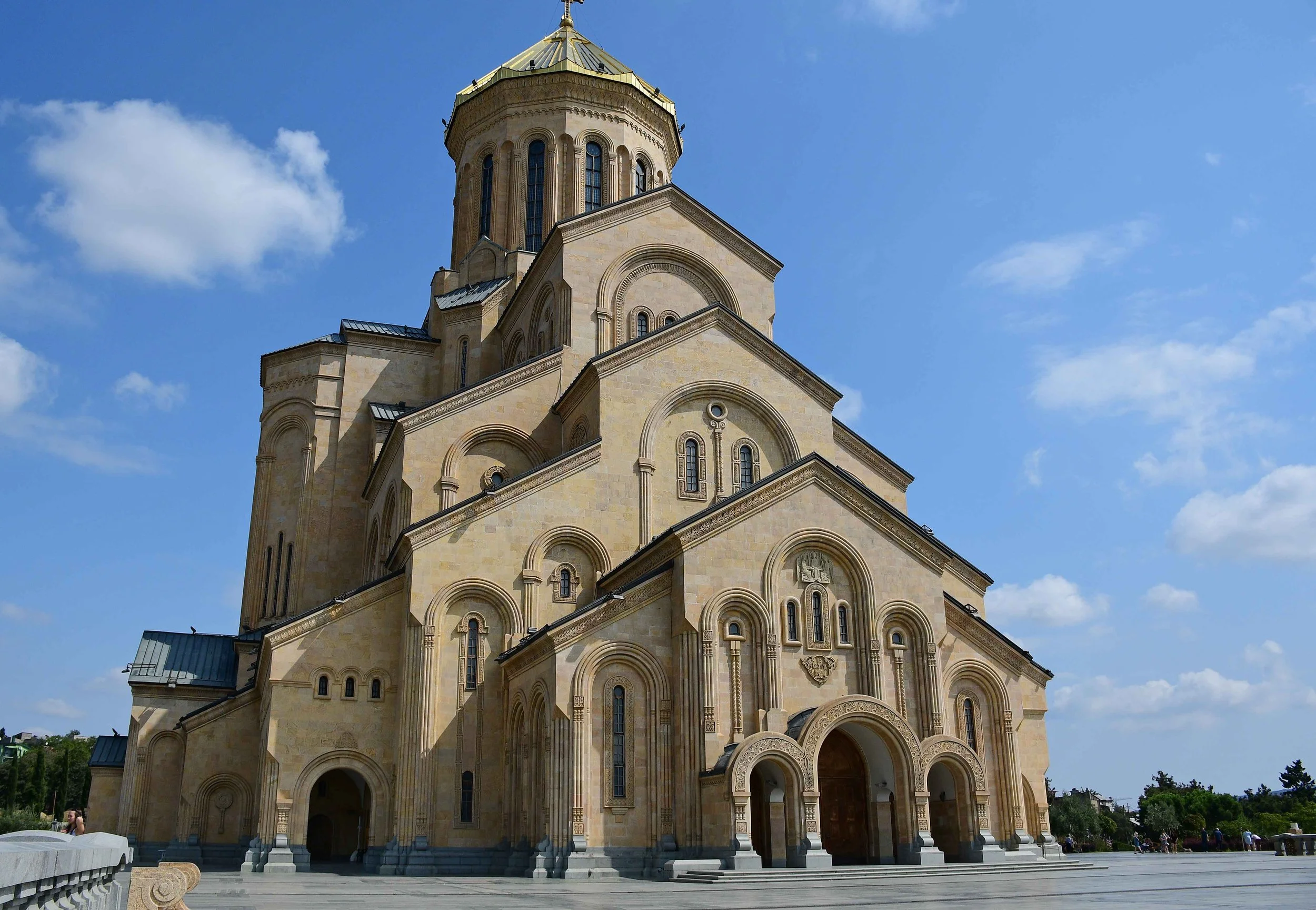
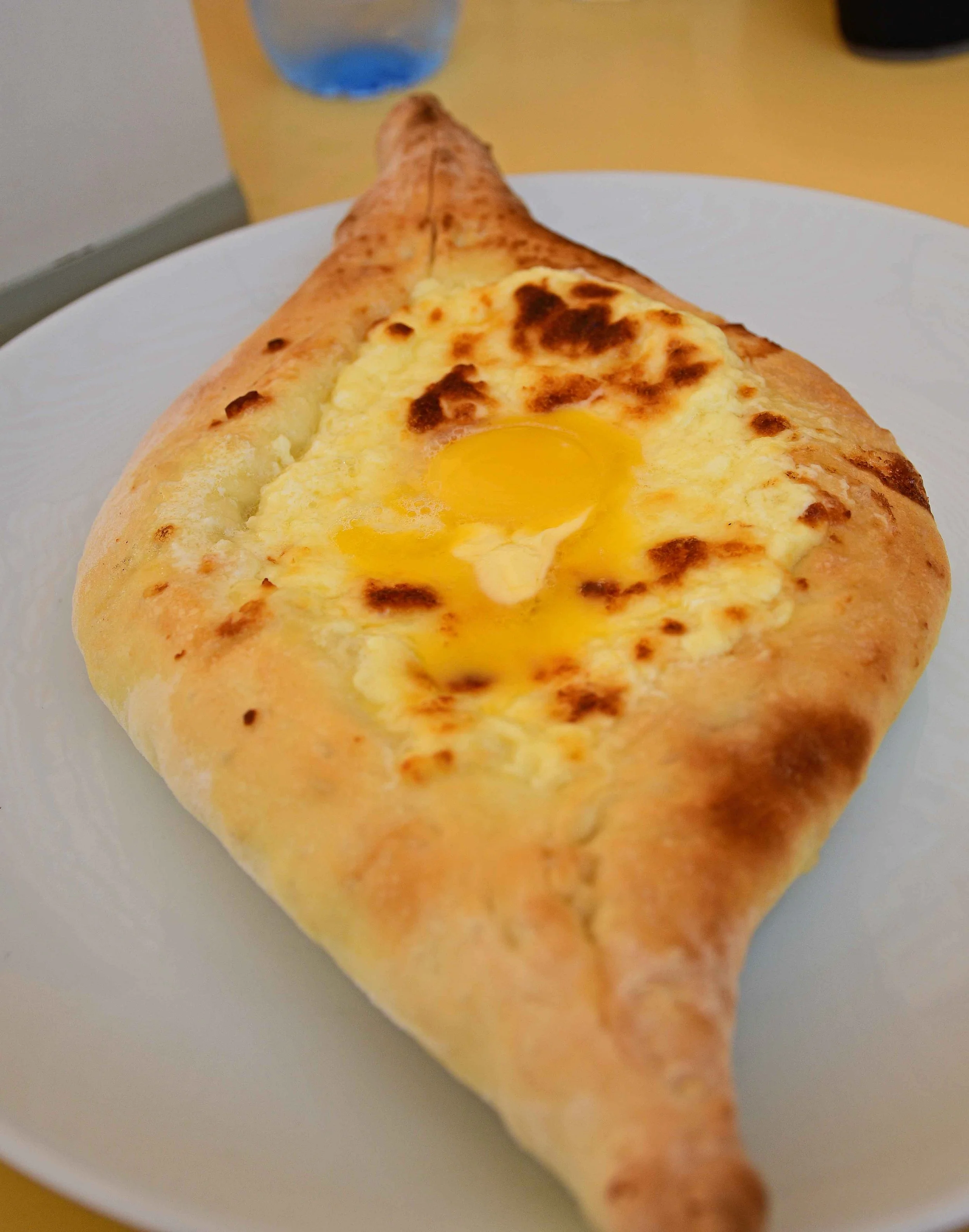
Lunch was at a bakery near the recently-built Sameda cathedral. The plan was to try the Adjarian, the most recognisable khachapuri, shaped like a boat with a fried egg on top but it was dripping in fat and I couldn’t face it. Instead I had a plain cheese one which was still a bit greasy. Making khachapuri is not as easy as it looks and using the right cheese is everything.
I spent the afternoon wandering round museums and shops and I bought some walnut paste in a little deli as it seems to be the basis for a lot of the cuisine.
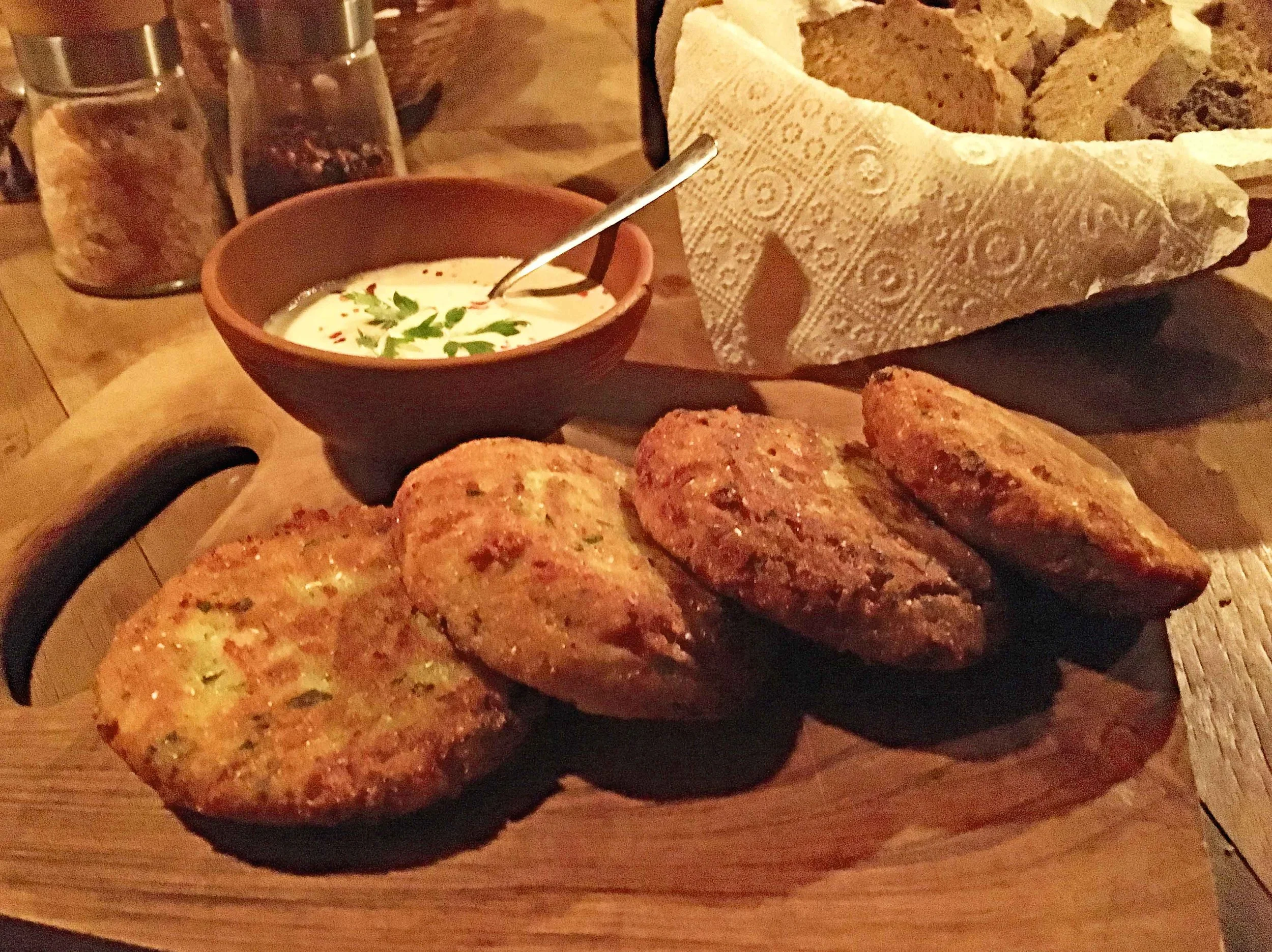
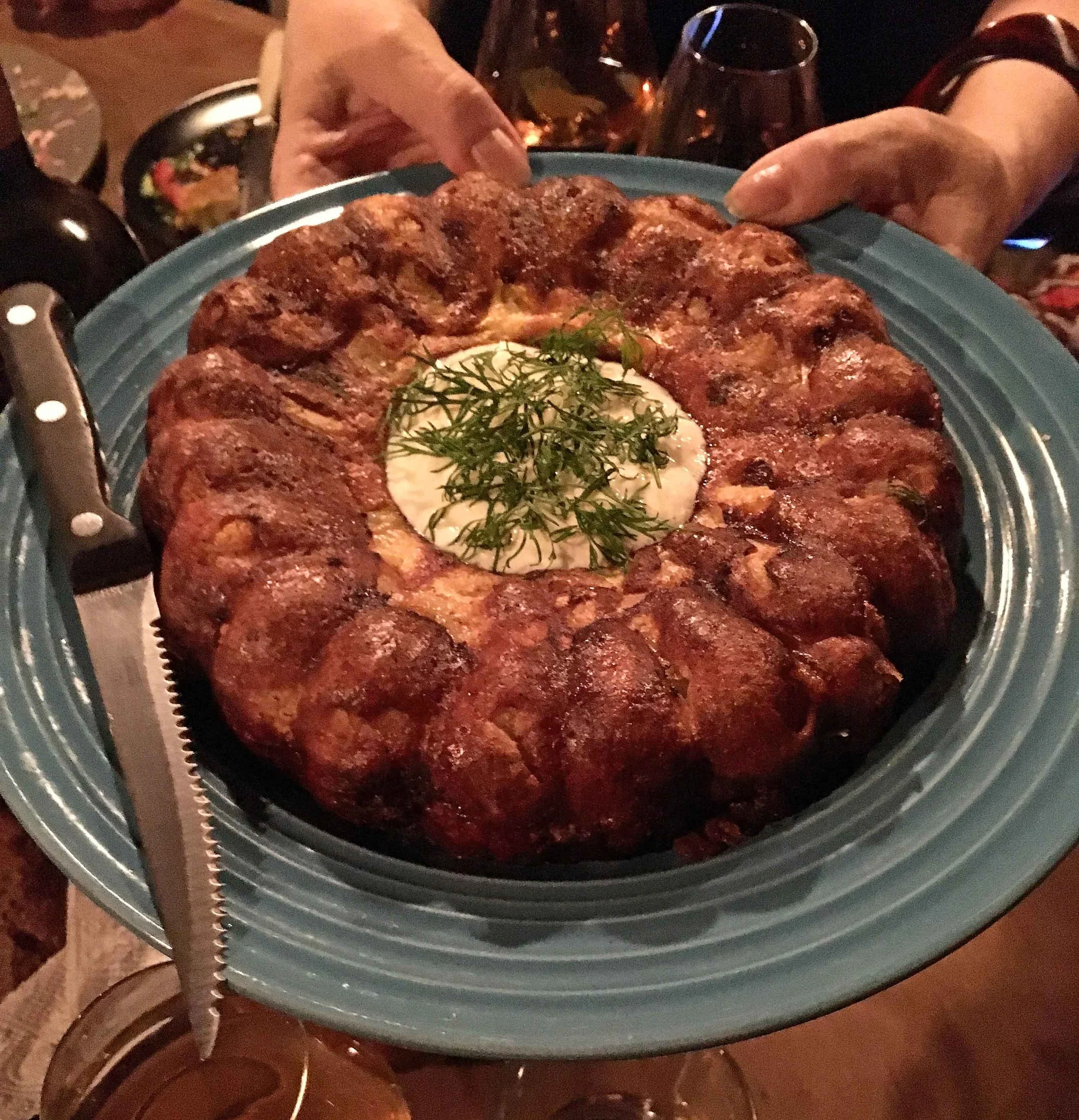
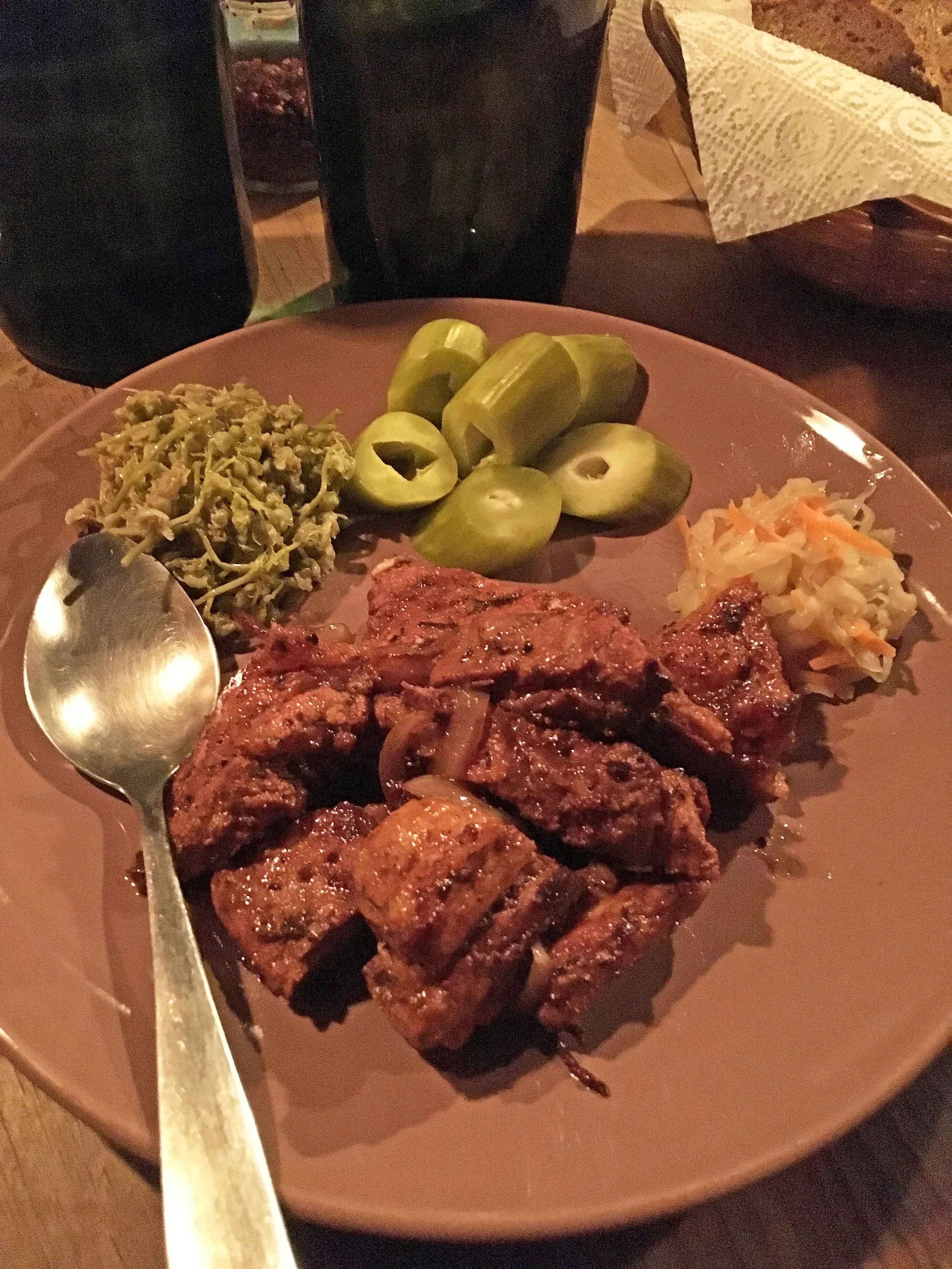
In the evening we went to Polyphonia and had a delicious meal. We started with a tomato and cucumber salad, scattered with sunflower seeds and drizzled with sunflower oil. This oil is a high quality version, grown in the Kalheti region and is used abundantly in the cooking. We then had corn cakes in a nut sauce. Anything called a ‘nut sauce’ looks as if something dairy has been added, but they are nearly all pure nuts that have been ground and diluted. Out came a cauliflower tart with a dipping sauce in the middle, a work of art. The main course was roasted pork with pickles, one of which looked like pickled flowers which is jonjoli, the blossom of bladdernut plants.
The Georgians feasts are called supra, they enjoy meals with friends and families and lots of dishes are brought out meze style, and you can eat as much of one as you want. I like this way of eating prevalent in so many cultures around the world. It’s so much more interesting than eating a meal on your lap in front of the tv although I did wonder how they typically ate at home on a school night.
The highlight (other than the excellent food) was being joined by one of Carla’s friends Luarsab Togonidze who is one of the co-owners of Polyphonia and other restaurants. He is a well known tamada, someone who is a toastmaster, a role that’s taken very seriously at supra which are usually punctuated by many toasts. He is also a very accomplished musician and he sang and played a few songs for us. At one point he was joined by his quite young daughter who seemed shy, but sang confidentally and beautifully. This was my first introduction to the singing of Georgia, always so beautiful and always so sad like the country itself.
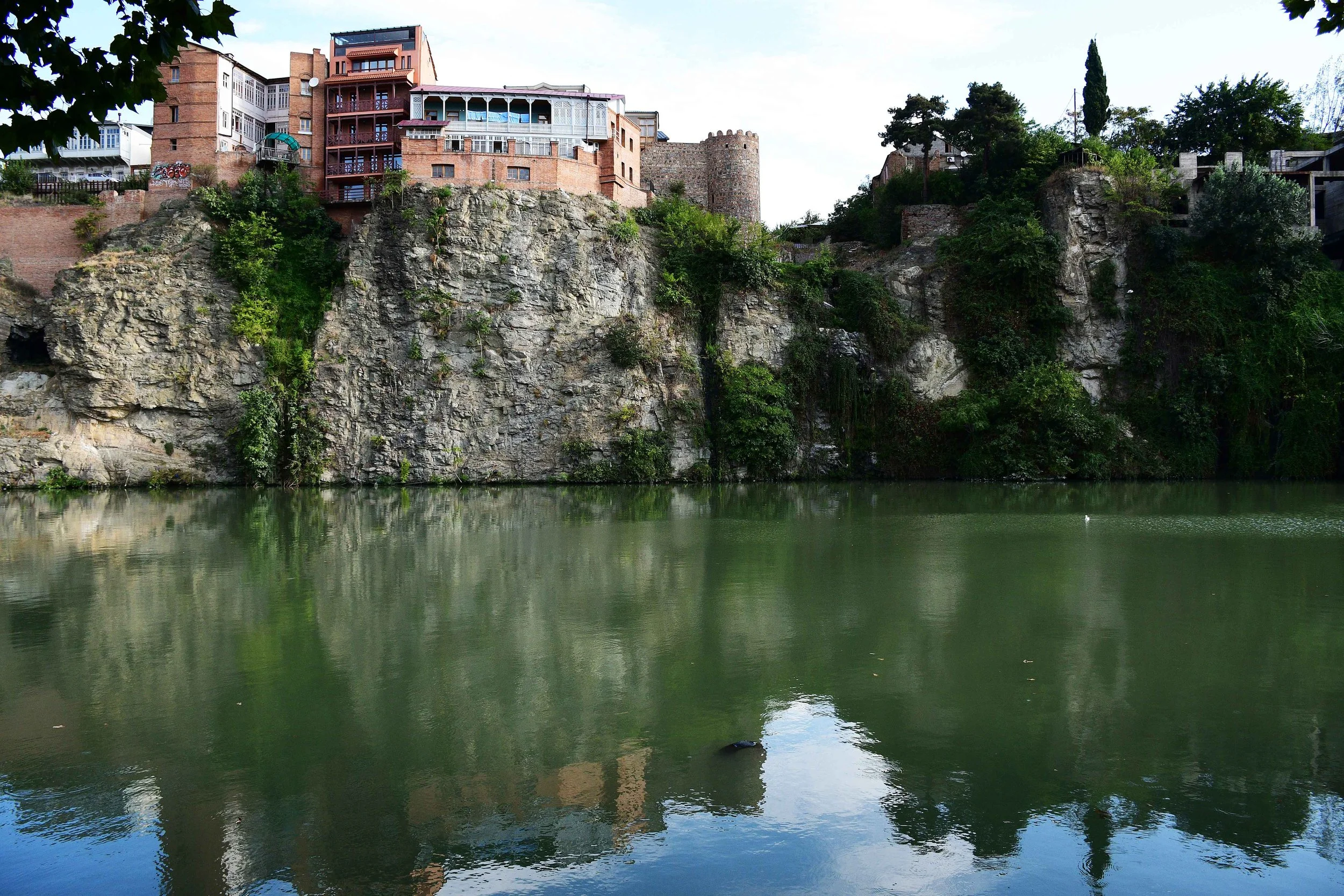
After a few days in Tbilisi we headed east to Kakheti, the wine producing area. So far I hadn’t liked the taste of the wines I had tried, I found them quite heavy and I normally go for light ones. However, I am no expert and many people, including my fellow travellers, loved the wine, particularly the famous amber-coloured one.
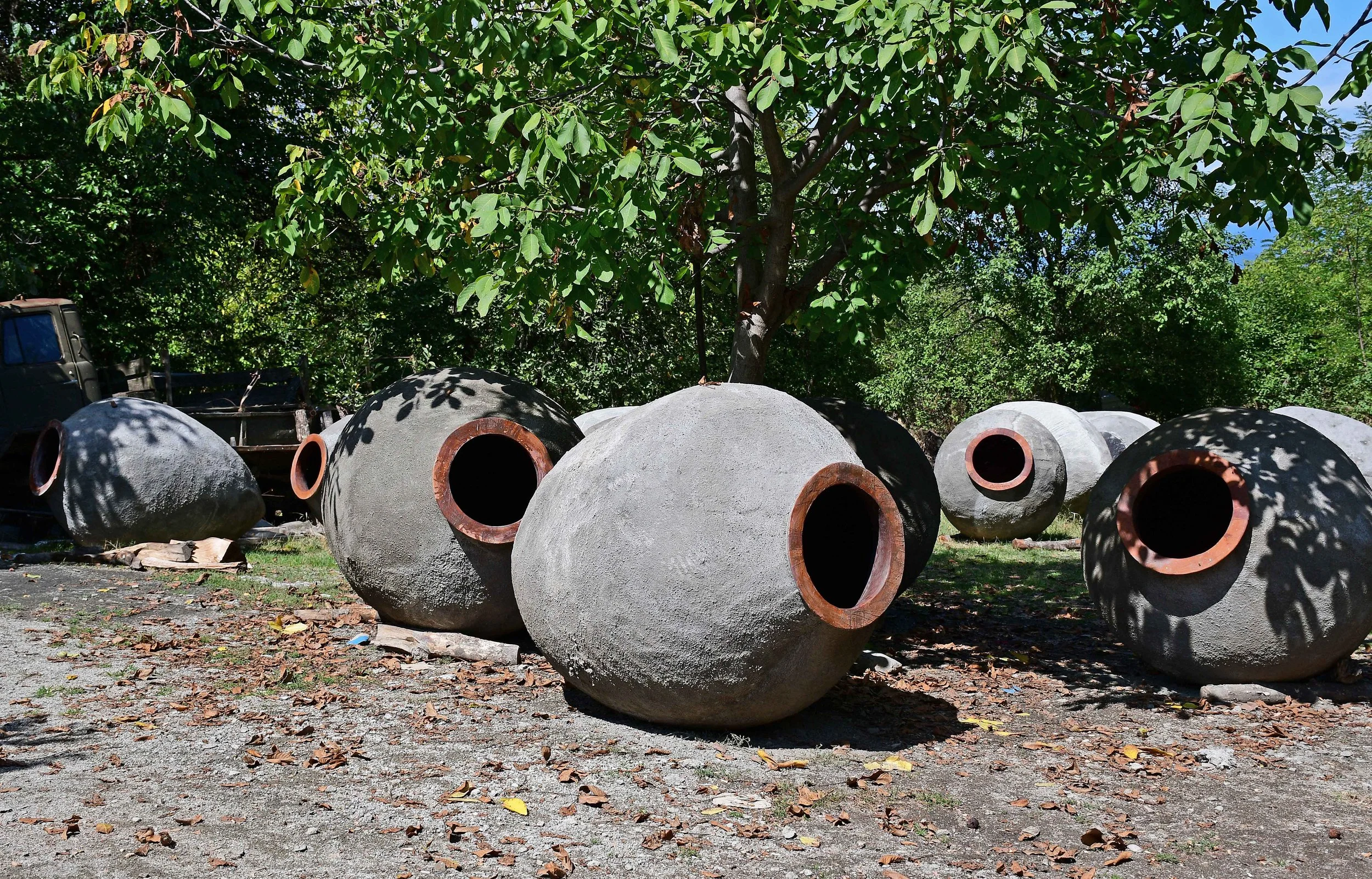
The unique flavour is partly due to the giant amphorae-like qvevri they are stored in, and are buried upright underground with just the opening visible. Qvevri remnants have been found and dated to 6000 BC, older than Stonehenge, and making Georgia one of the first known places in the world to make wine.
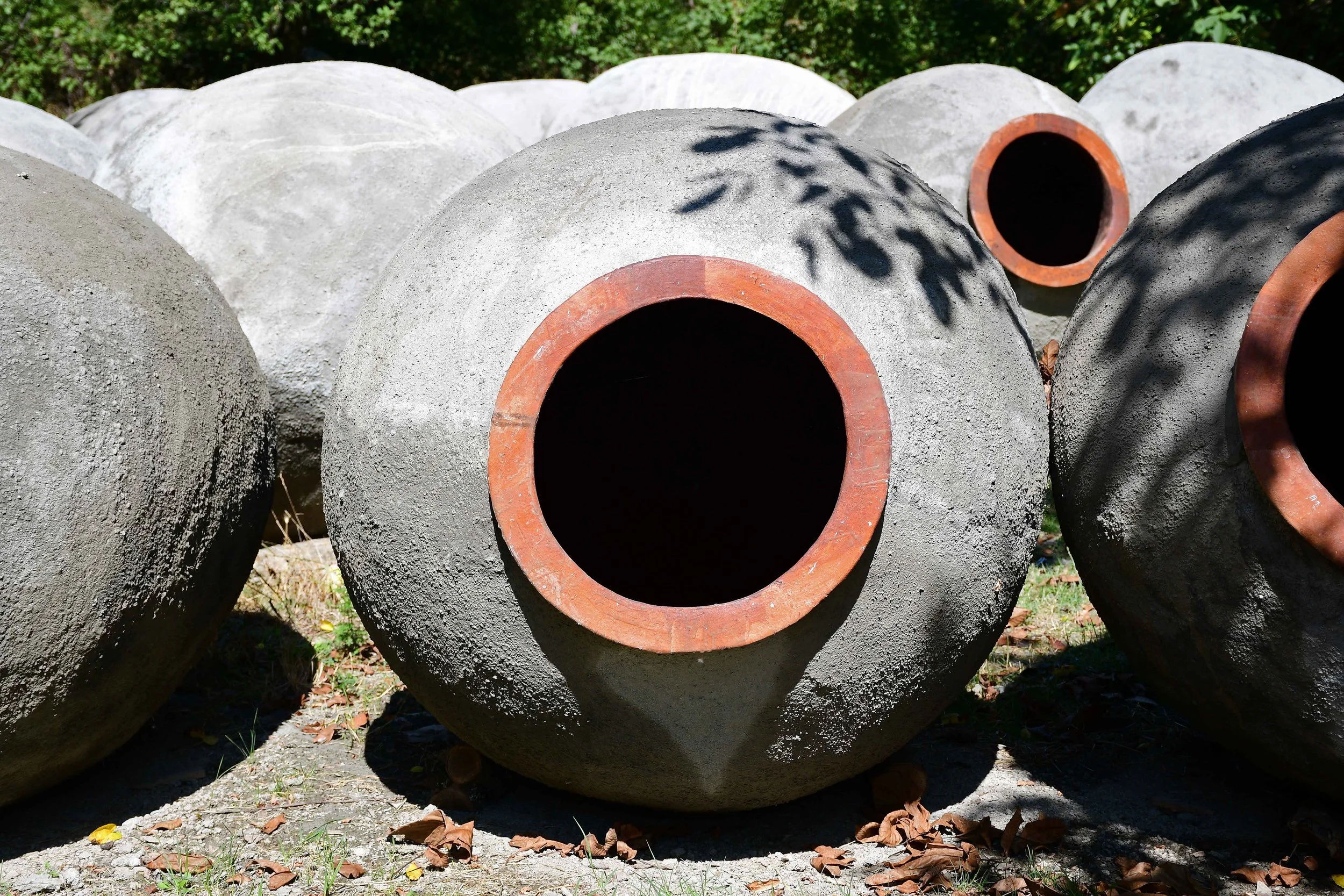
We were heading for Telavi so en route we stopped at the workshop of Remi Kbilashvili who is a qvevri master. In his cellar he has rows of half-finished ones that he is building very slowly using local clay. I imagined they were done in two halves and fitted together, but they are done as one, usually during the summer months, and then fired in a week-long process that involves constant monitoring. Once cool, the inside is covered in a layer of beeswax (I forgot to ask him how he does that) that stops the wine seeping out through the pores of the clay. A layer of limestone on the outside protects them from earthquakes. The Soviets were against small local traditions such as this and It’s incredible to believe that during that era this was all done in secret. Today, with the proximity of Russia and the encroachments into the north west of the country, It is no surprise that there is renewed enthusiasm for crafts like this, and that the Georgians so passionately defend their culture.
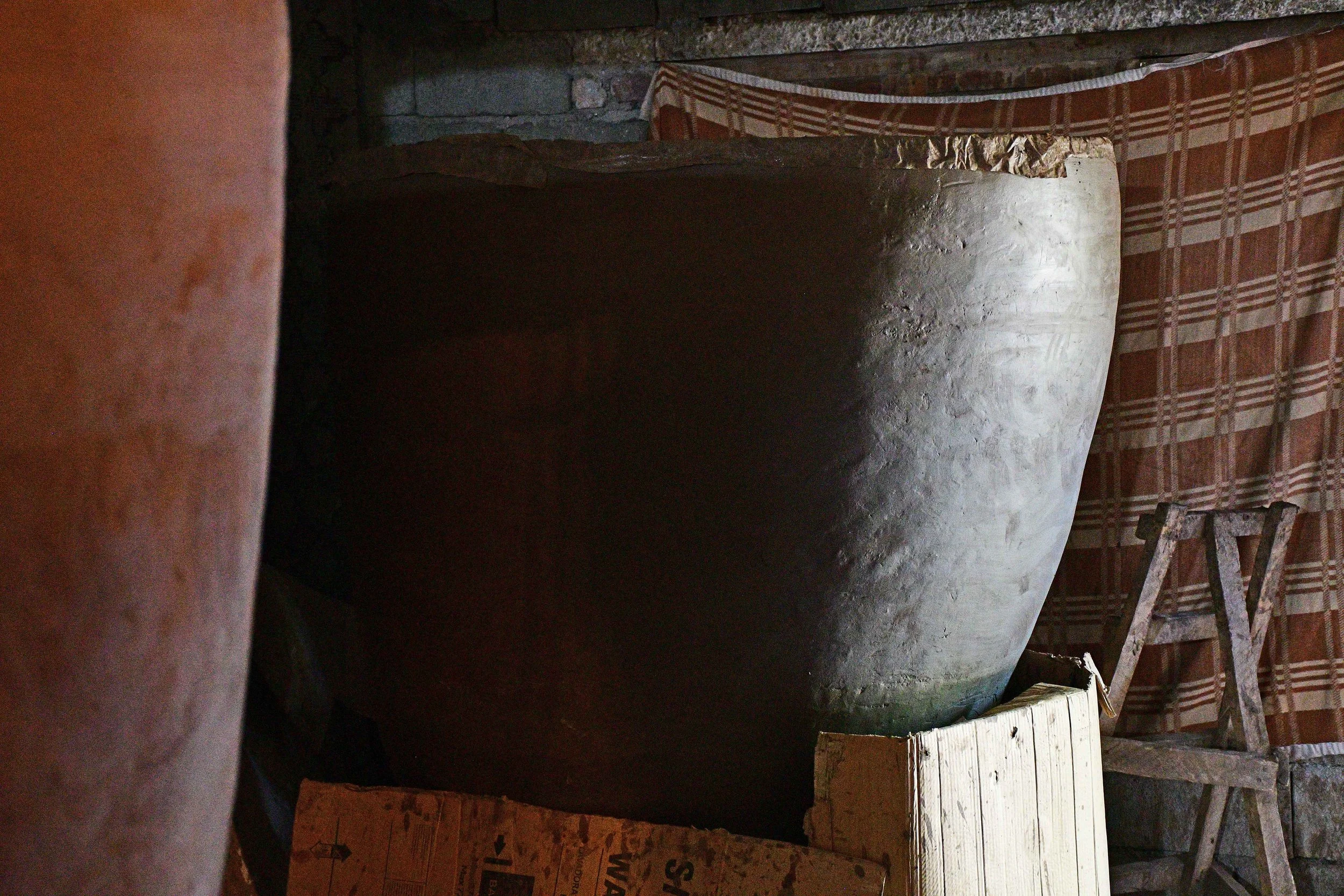
Remi’s garden is full of finished ones that look like marooned fish. Each one can hold up to 2000 litres of wine but, after a period of ageing, the grape skins are removed and the content of two qvevri are combined. Tasting is done using a ladle and we tried a small glass of what is quite potent wine.
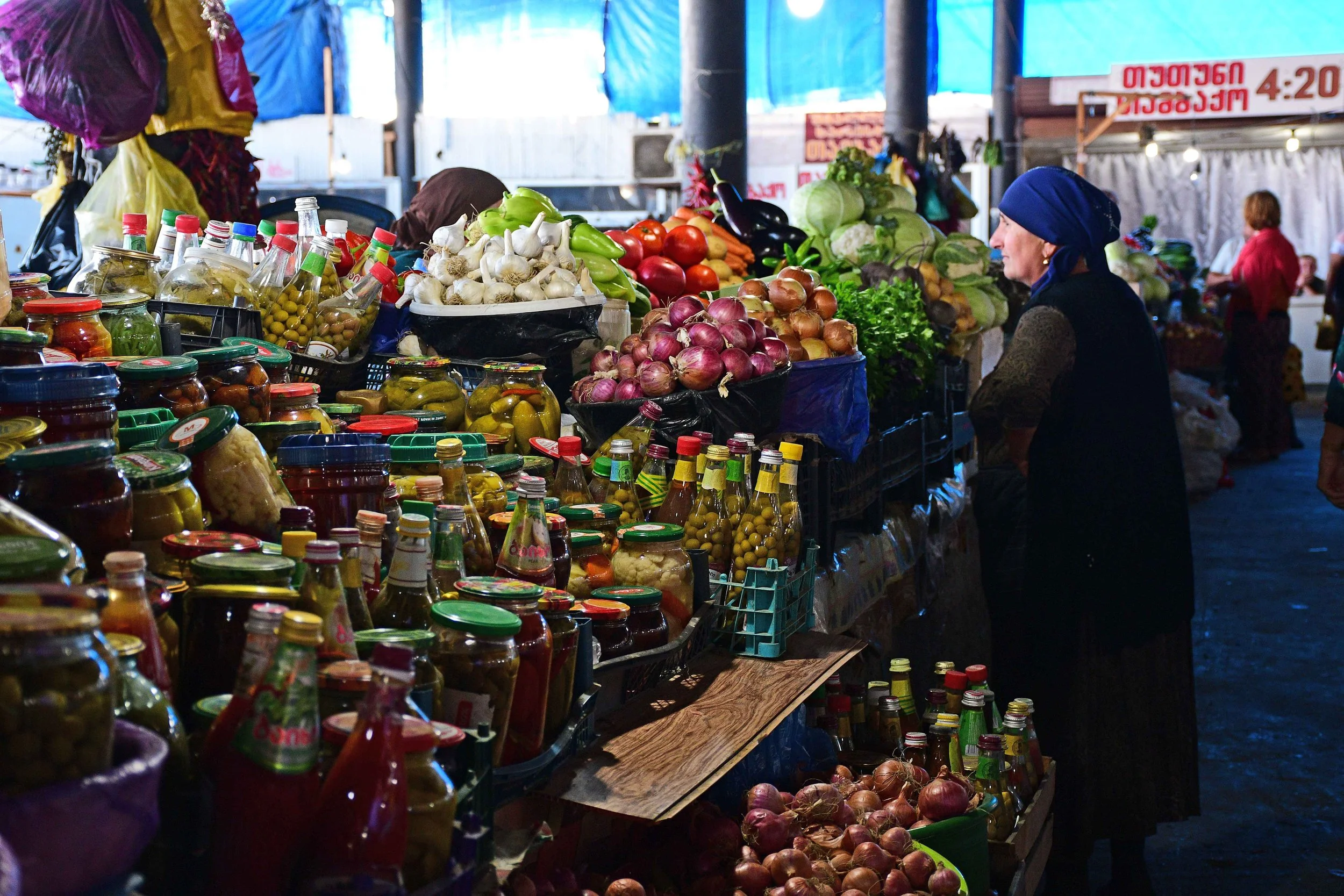
I like a good market and Telavi Bazaar is one of the best I have been to. It’s old, it’s been here since the 17th century and its location meant it was a stopping place for Silk Road traders who brought influences from places like Armenia and Persia. There is a huge range of produce here and it was a good introduction to some key ingredients in Georgian cuisine.
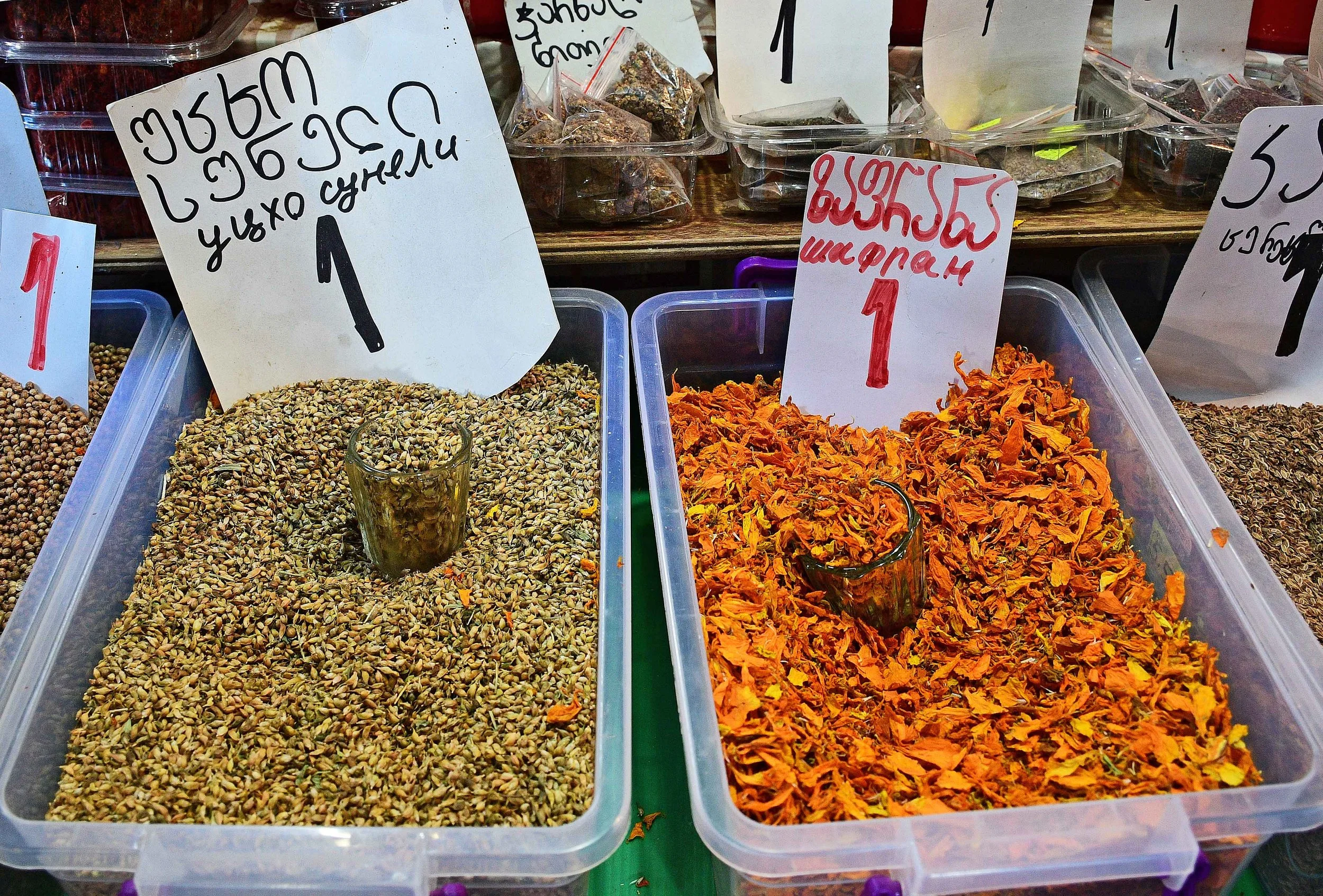
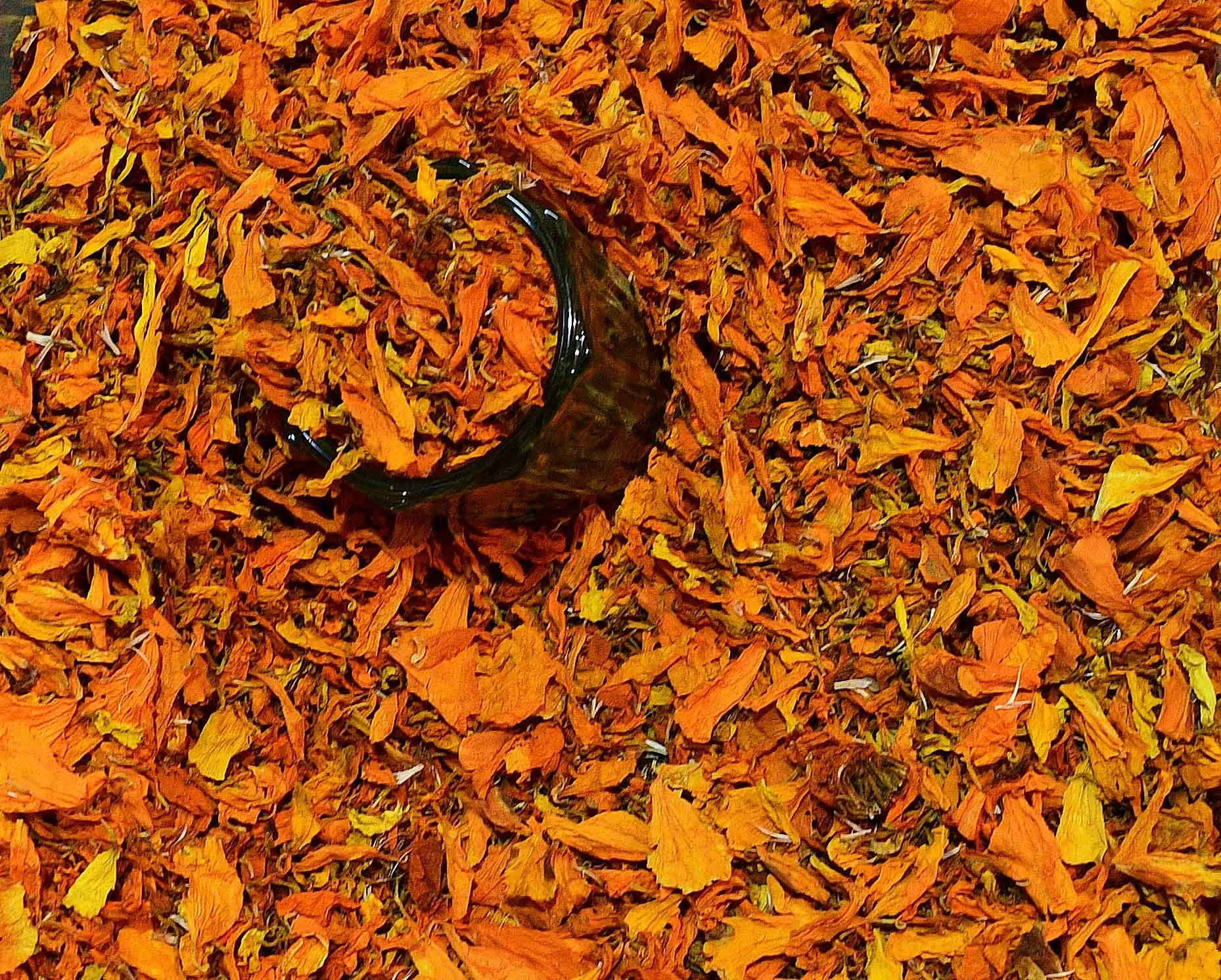
Blue fenugreek also known as utskho suneli is one of the most common ingredients. Its leaves and seeds are widely used, its name comes from the blue flowers. Cooked it has a milder taste than Indian fenugreek and adds a nuttiness to food. Georgian Saffron or marigold petals is another ubiquitous ingredient, adding colour to salads and an earthiness when dried and used as an ingredient. I bought some of both here with the hope that I might be able to reproduce Georgian food when I got home. I also bought a garland of dried marigolds which came apart before I even left the country.
One thing I noticed was how many stalls had stacks of old plastic and glass bottles and jars recycled to hold pickles.
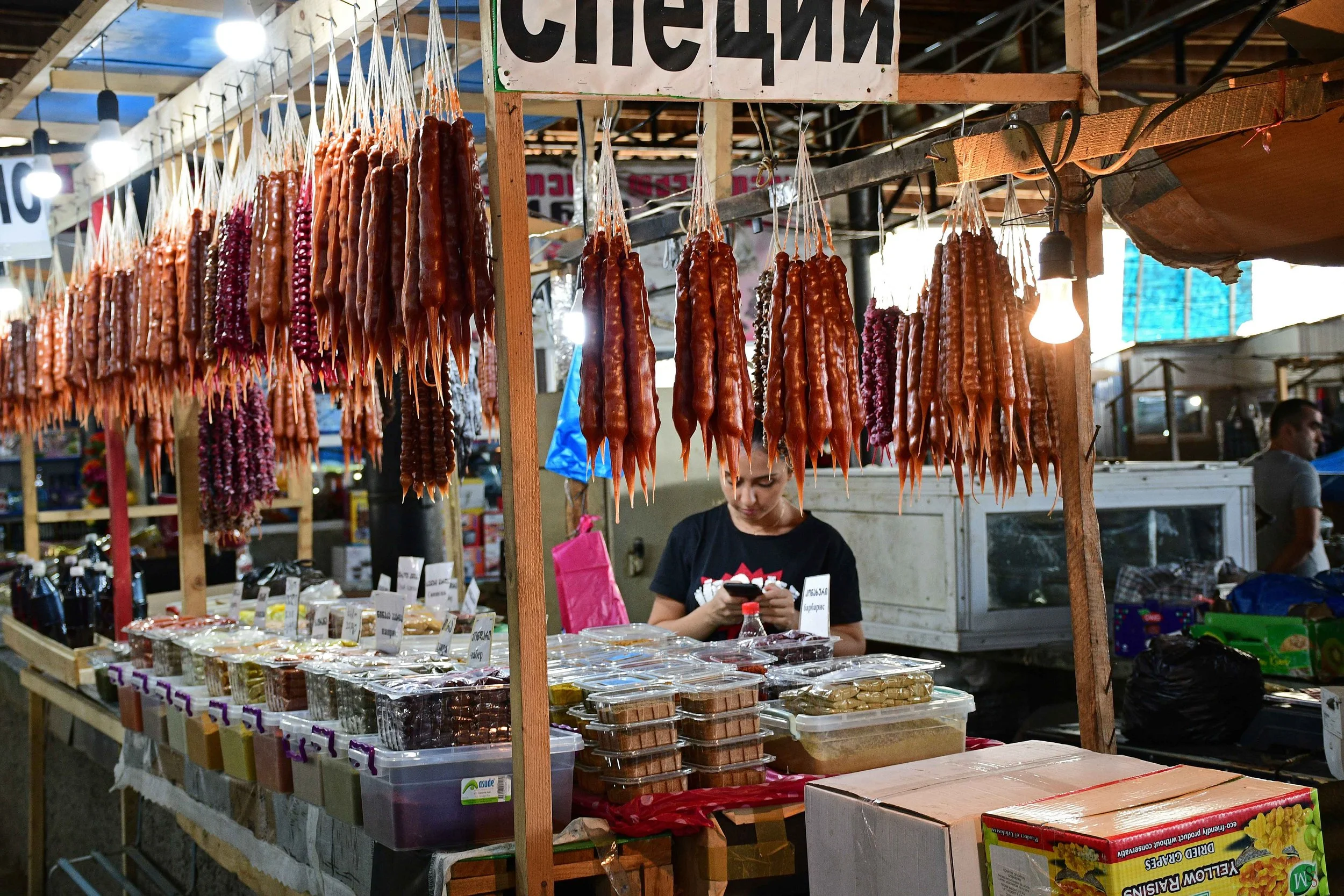
I kept seeing these strange long colourful sticks or churchkhela hanging down on market stalls. I assumed they were some kind of confection made from artificial additives and colours, but they are in fact made from strands of nuts that have been dipped in grape or mulberry juice and left to dry like candles.
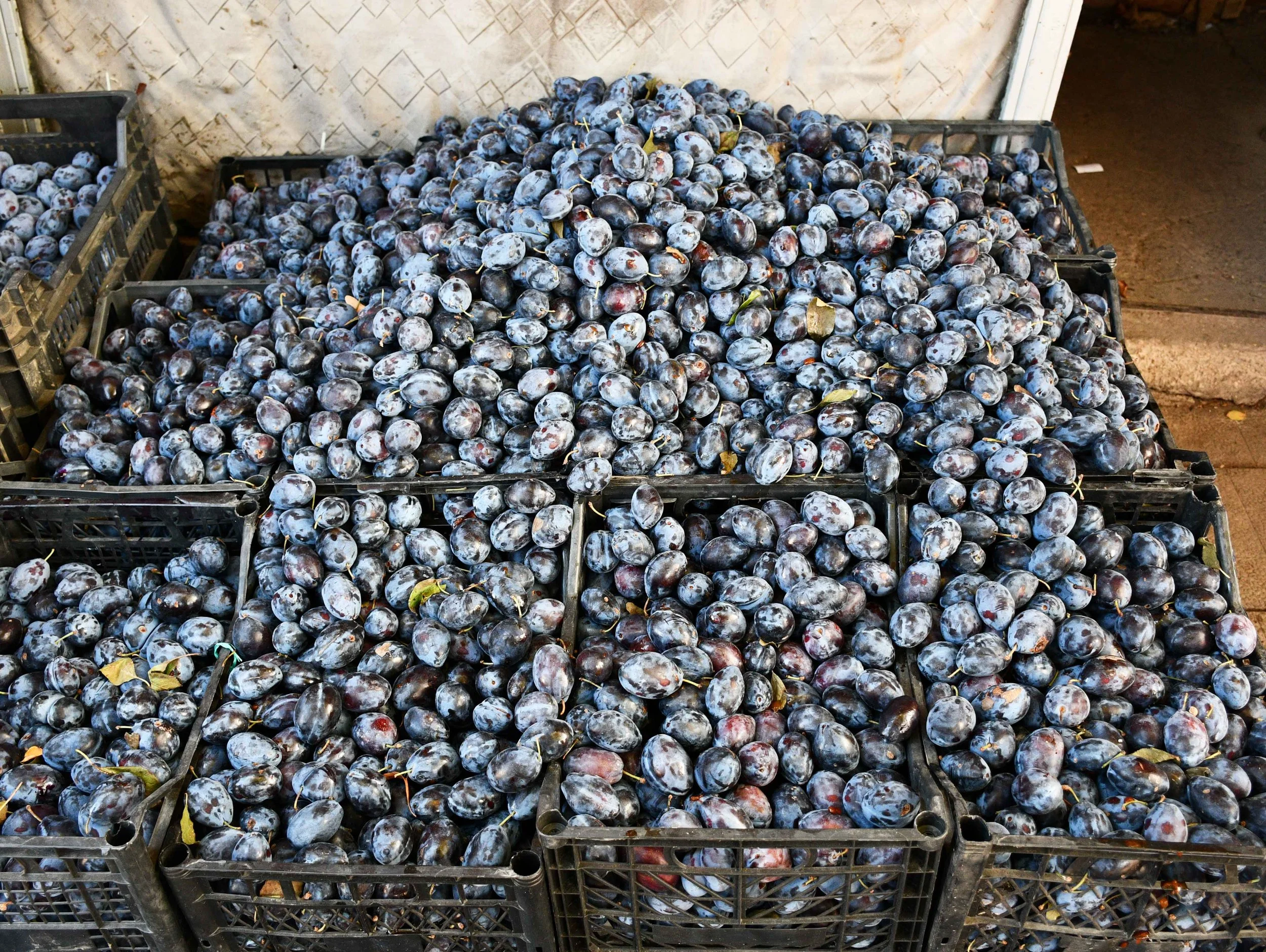
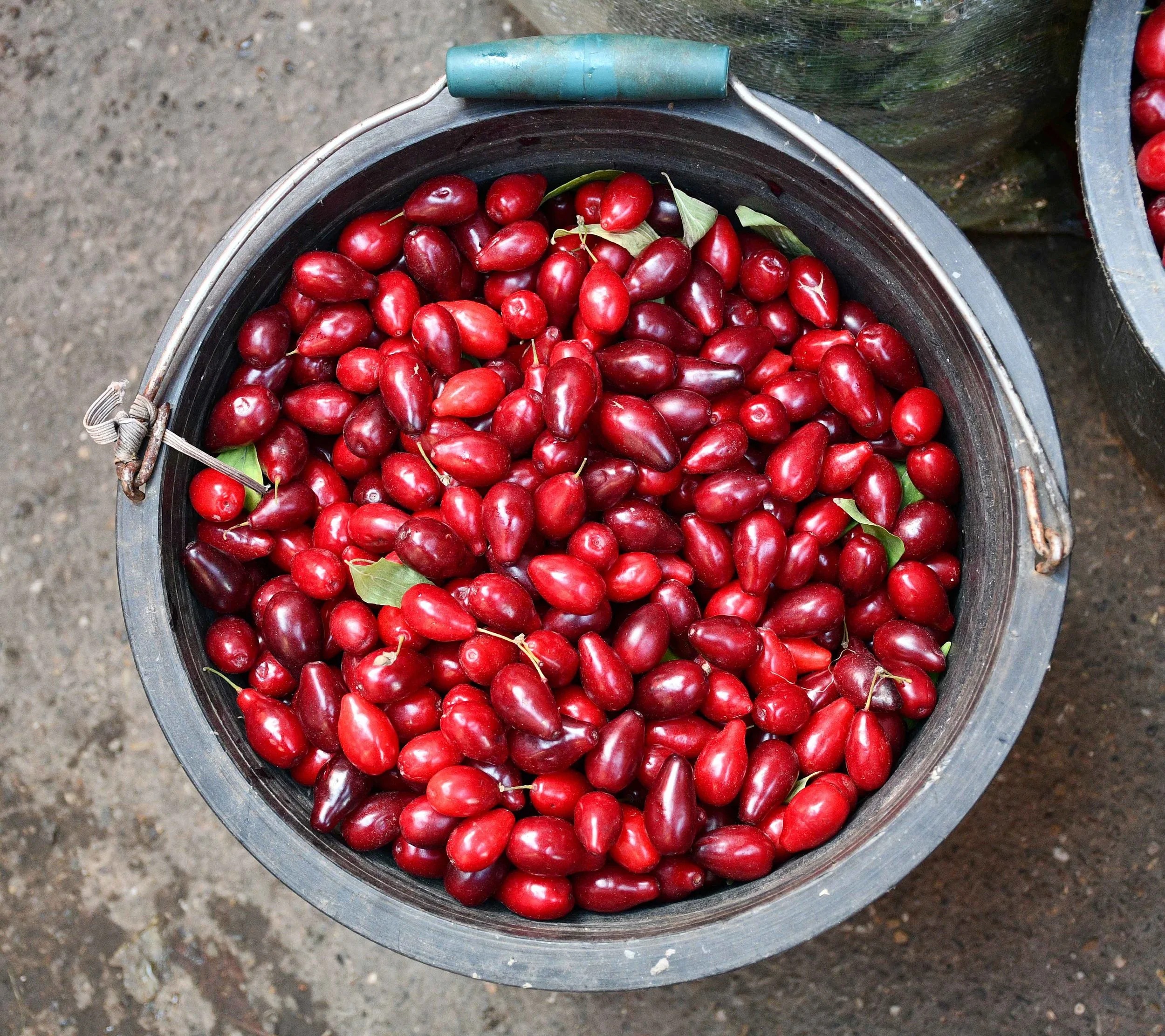
Above, what looks like Victoria plums which we grow in England but I have never seen them in such abundance. Green plums are used to make a standard Tkemali sour sauce. Below, Cornelian cherries also used to make a sauce.
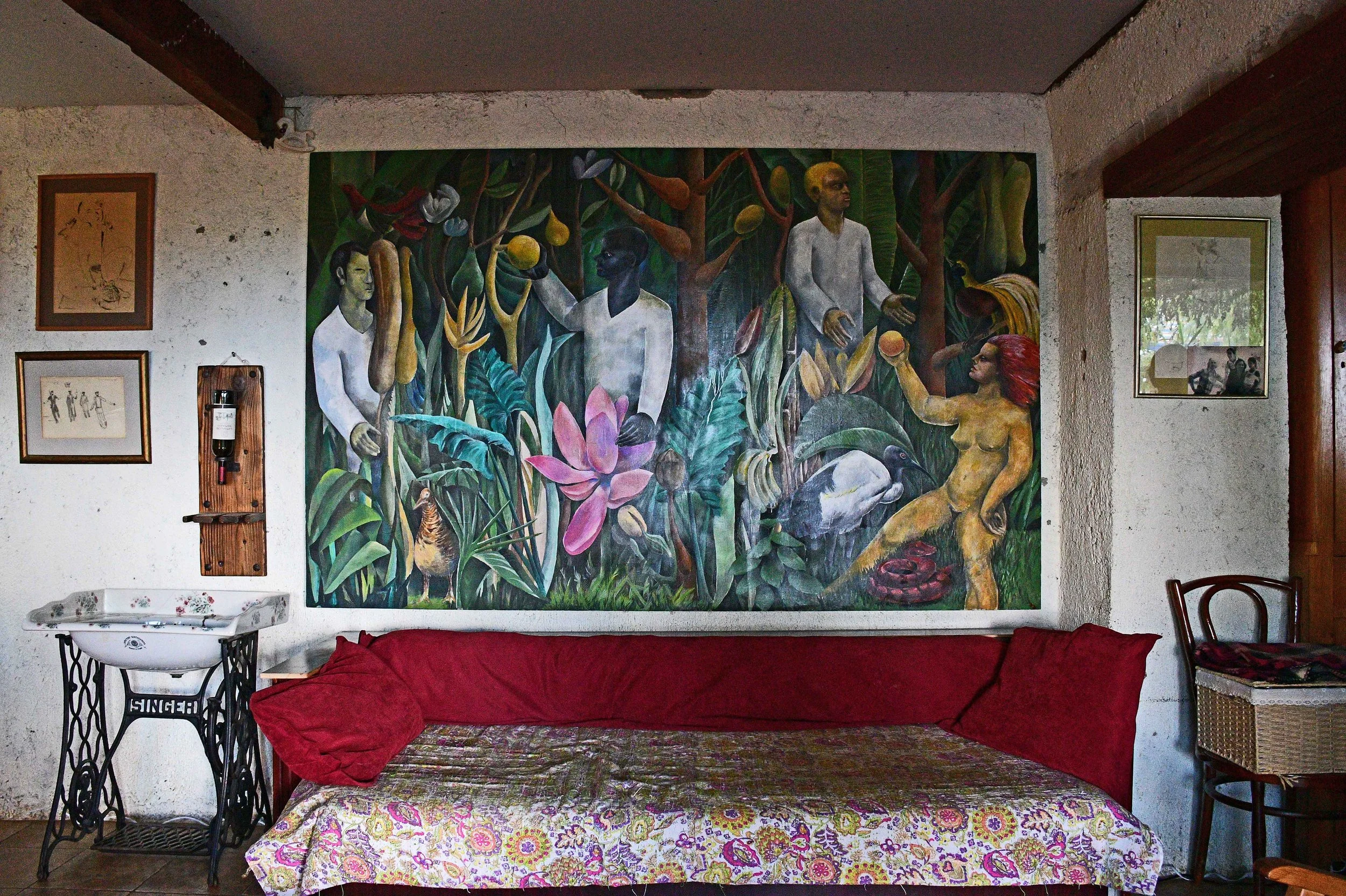
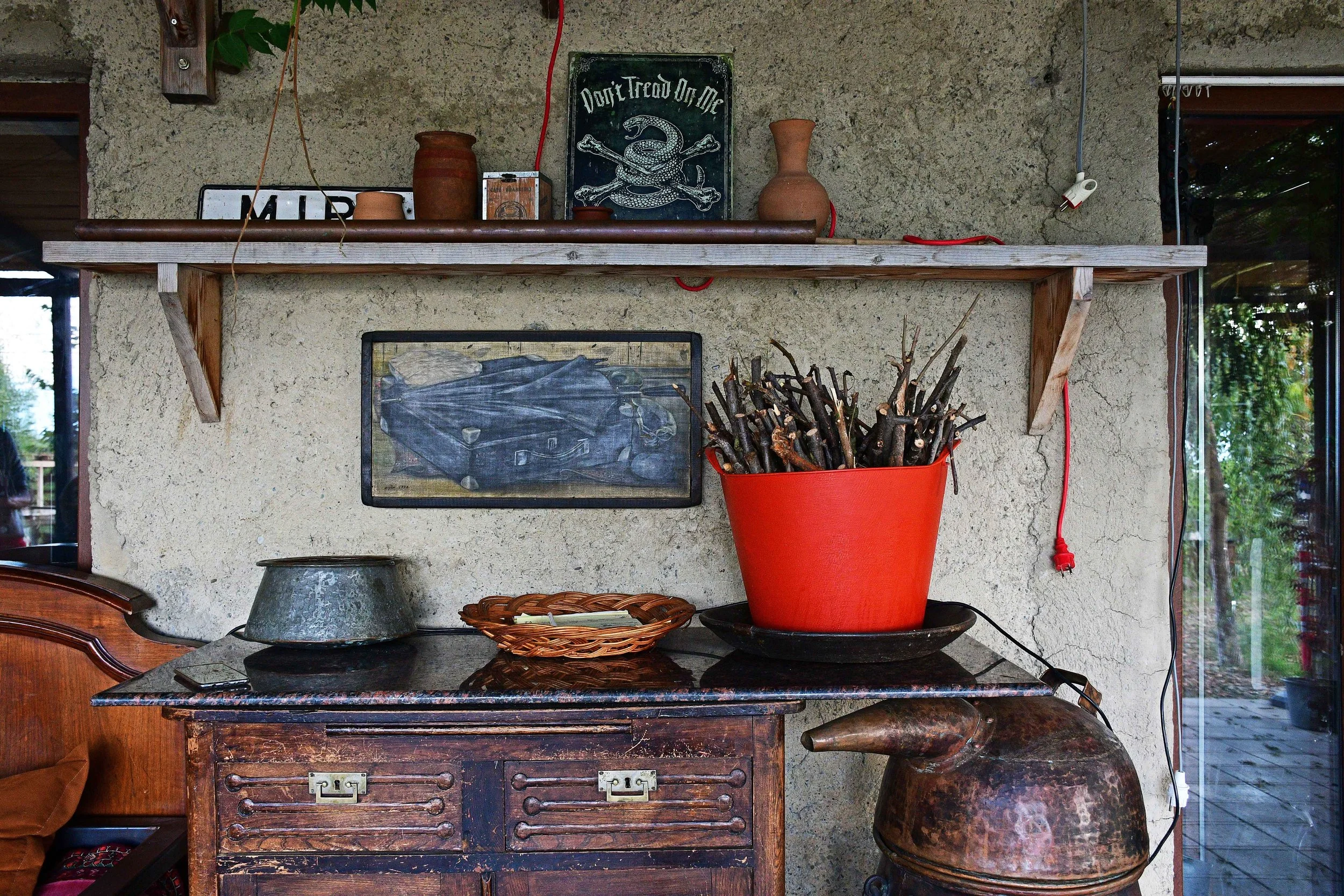
We had lunch at Marleta’s Farm, an organic dairy outside Telavi. It is owned by artist Sopo Gorgadze and her architect husband Leo. When they bought it they were given a cow called Marleta and from that sprung an interest in making cheese which grew into a business. Now they run a café and cooking classes in their lovely house full of interesting objects and paintings by Sopo’s father.
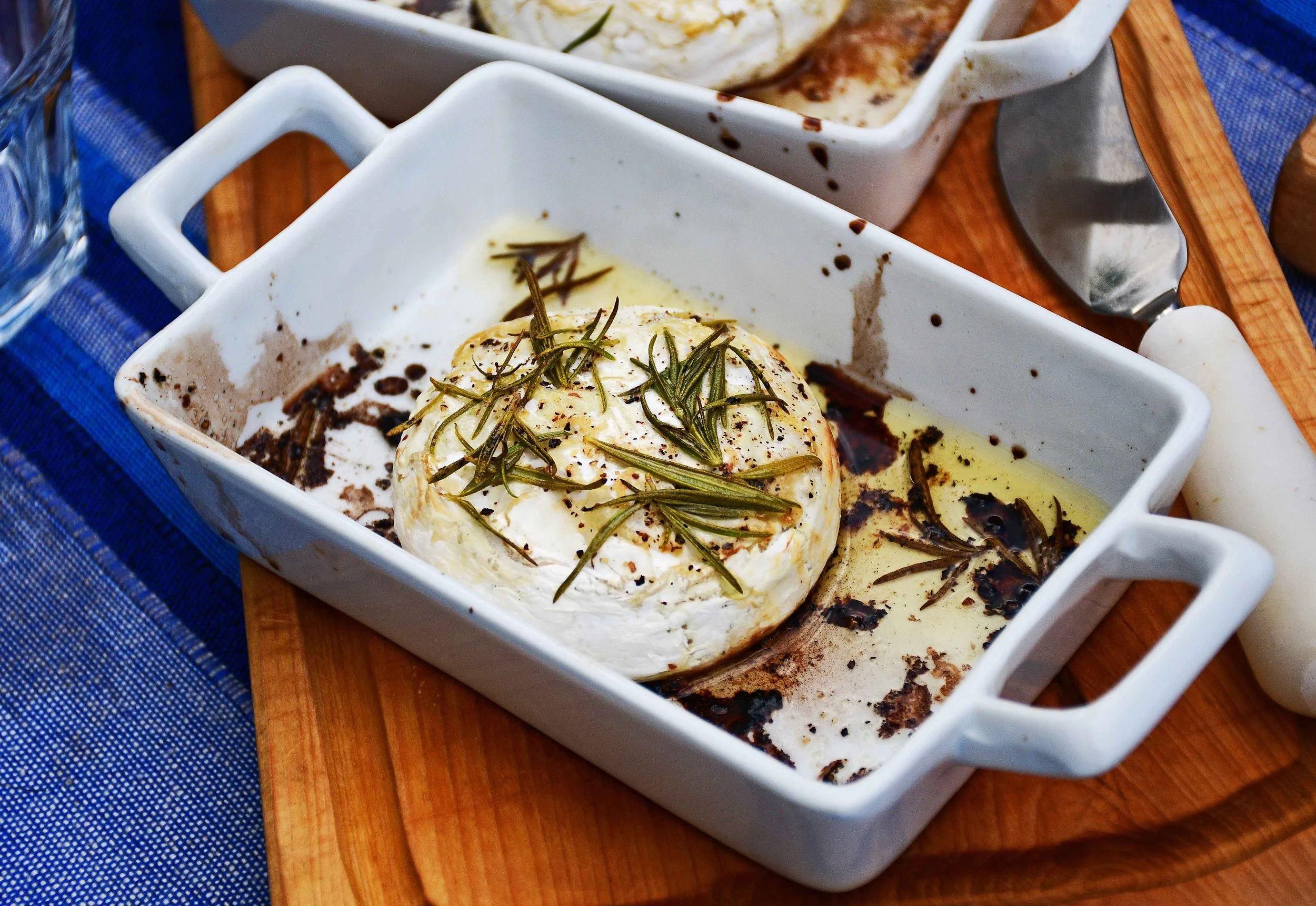
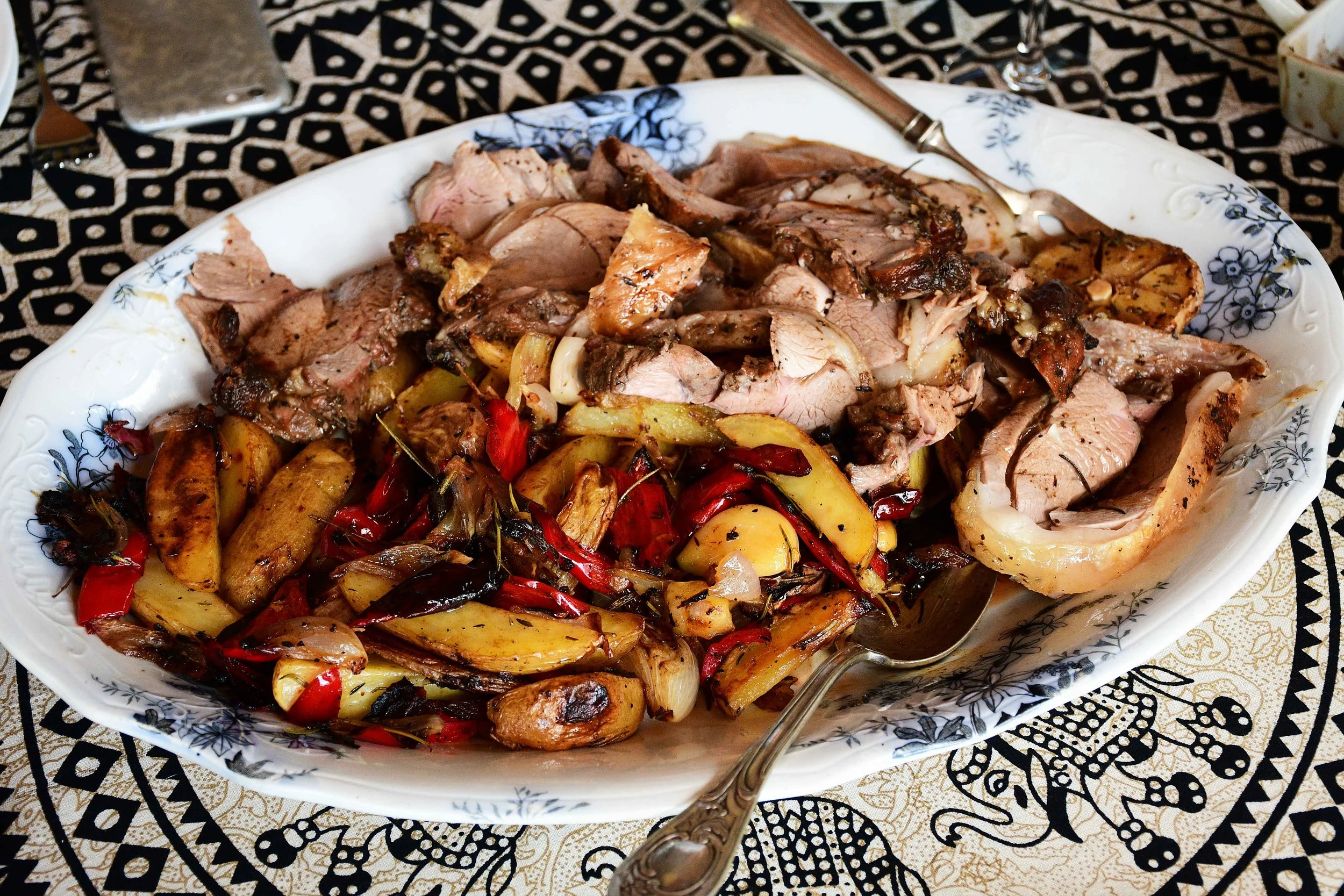
This was one of the best meals I had in Georgia, simple but delicious. We started off sitting outside looking at the hills. We dipped bread into baked homemade cheeses like Asmelo covered in charcoal, and a goat’s cheese called Bona, all produced on the farm. Main course was roast lamb and vegetables with a delicious sour plum sauce.
As it got too hot we moved under the verandah to eat candied fruit and pickled walnuts. Sopo was excellent company as well as a good cook.
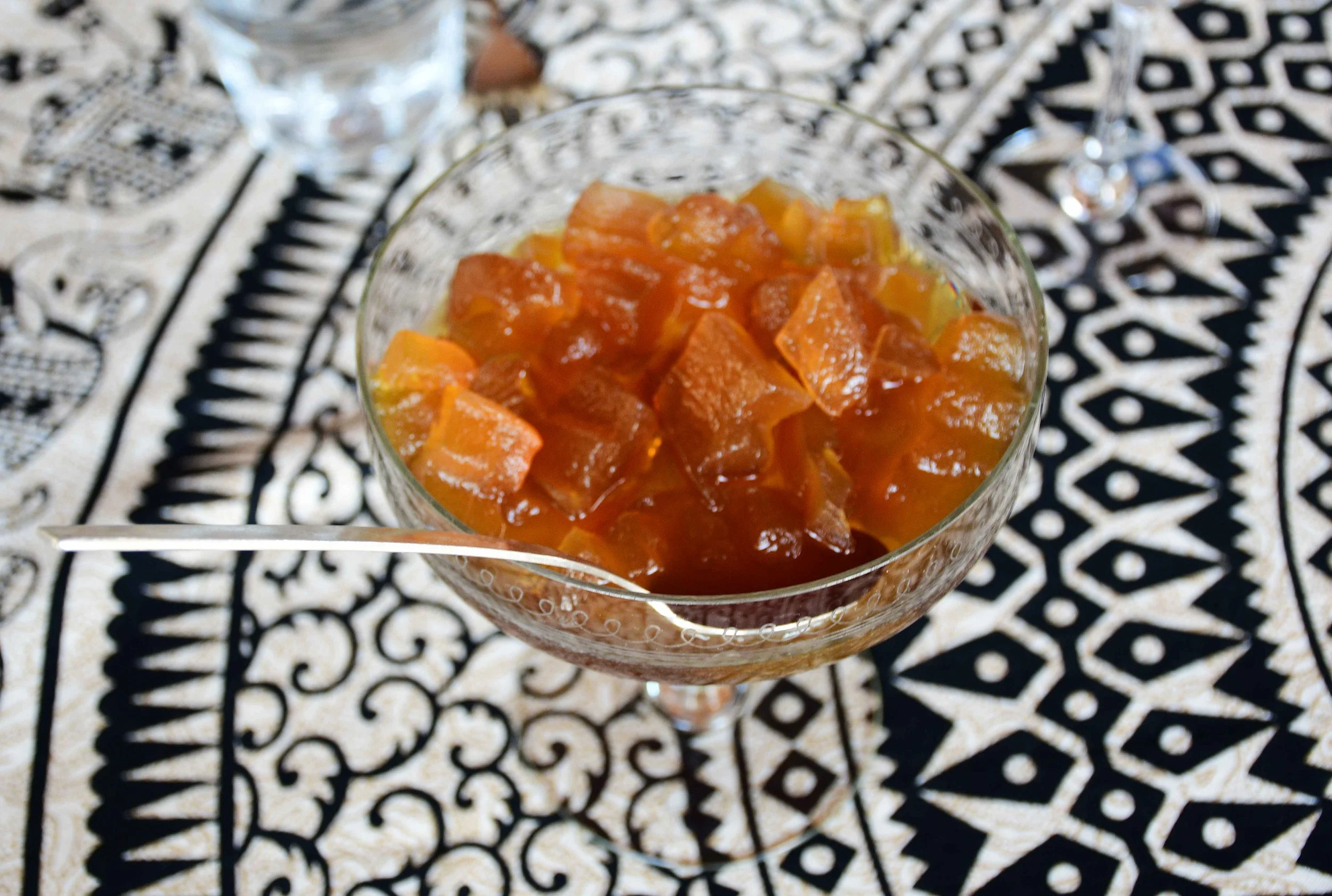
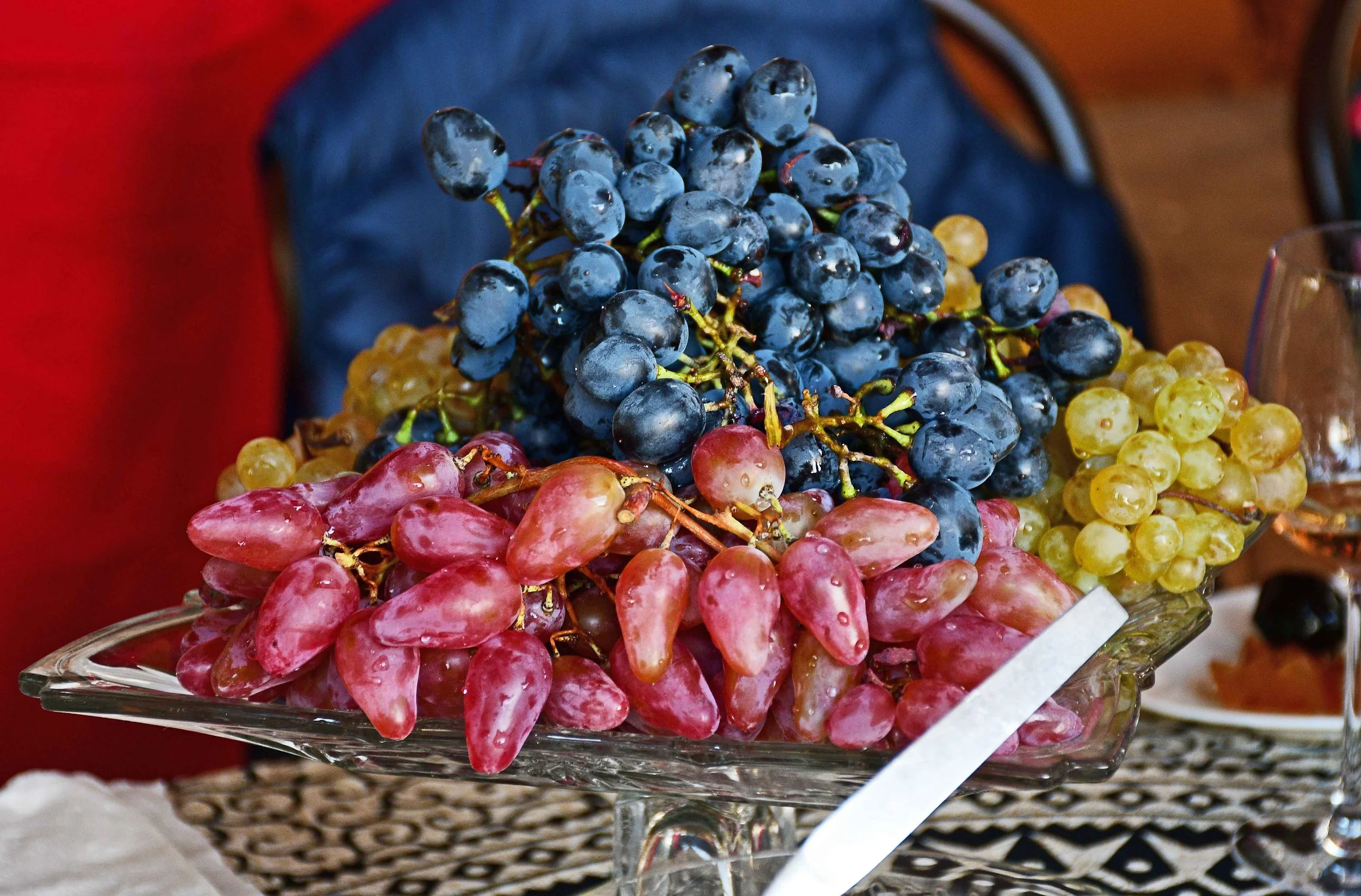
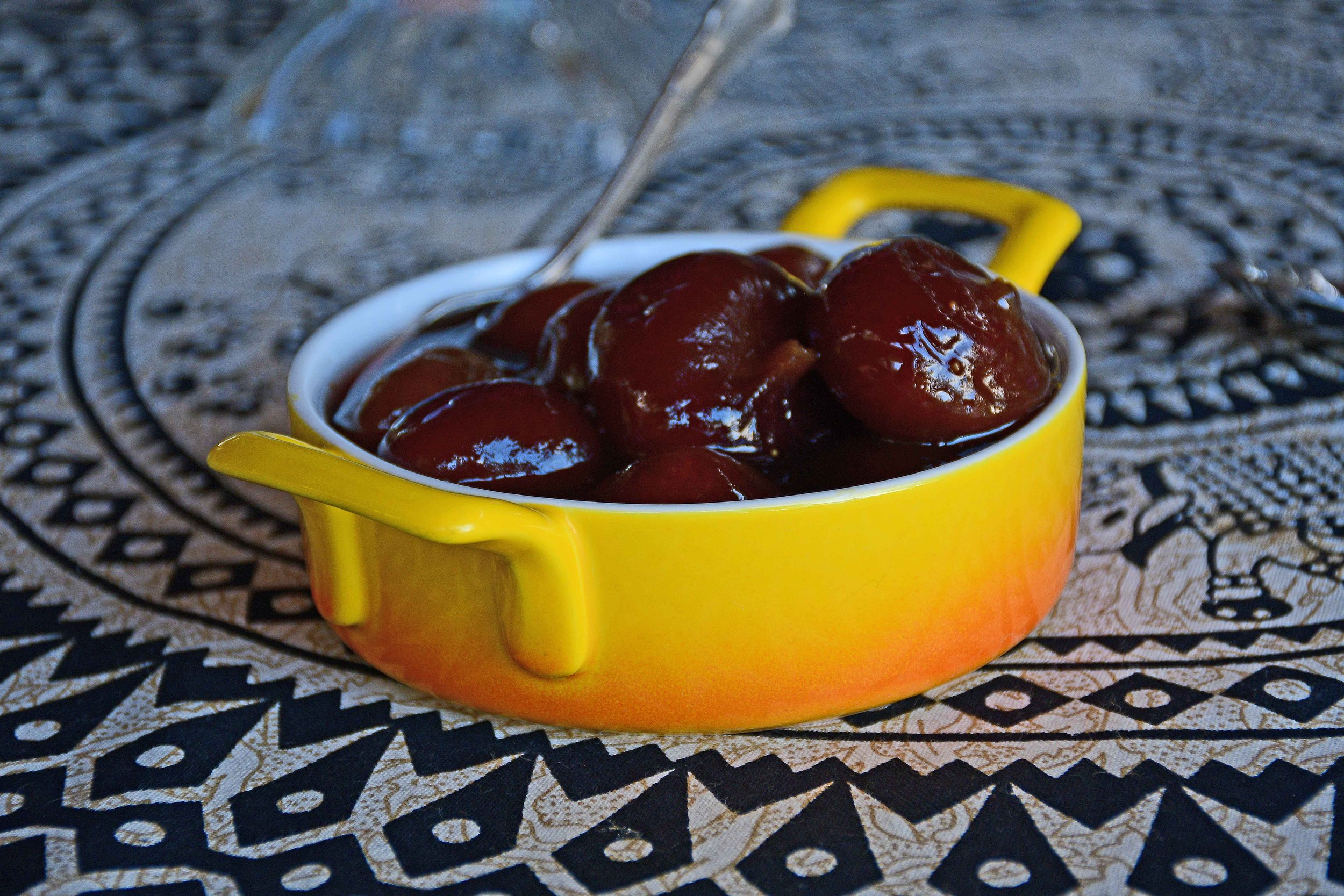
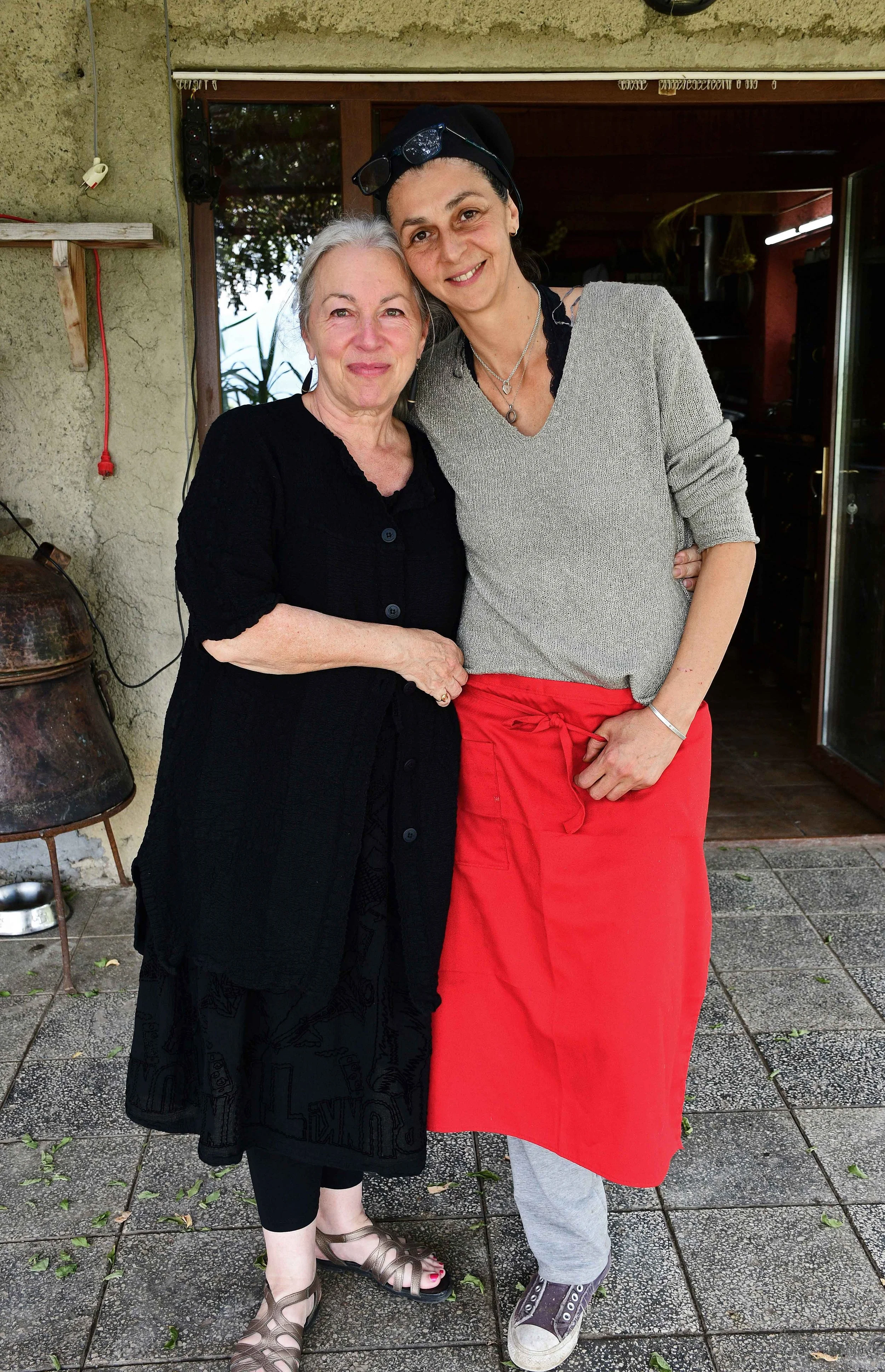
Carla with Sopo. Carla knows the family well including Sopo’s father the prominent Georgian artist Malkhaz Gorgadze who was at home while we were there but too unwell to come downstairs. The inclusion of his art around the house and the garden, as well as the delicious food and the views across the Alazani valley made this visit a very special Georgian experience.
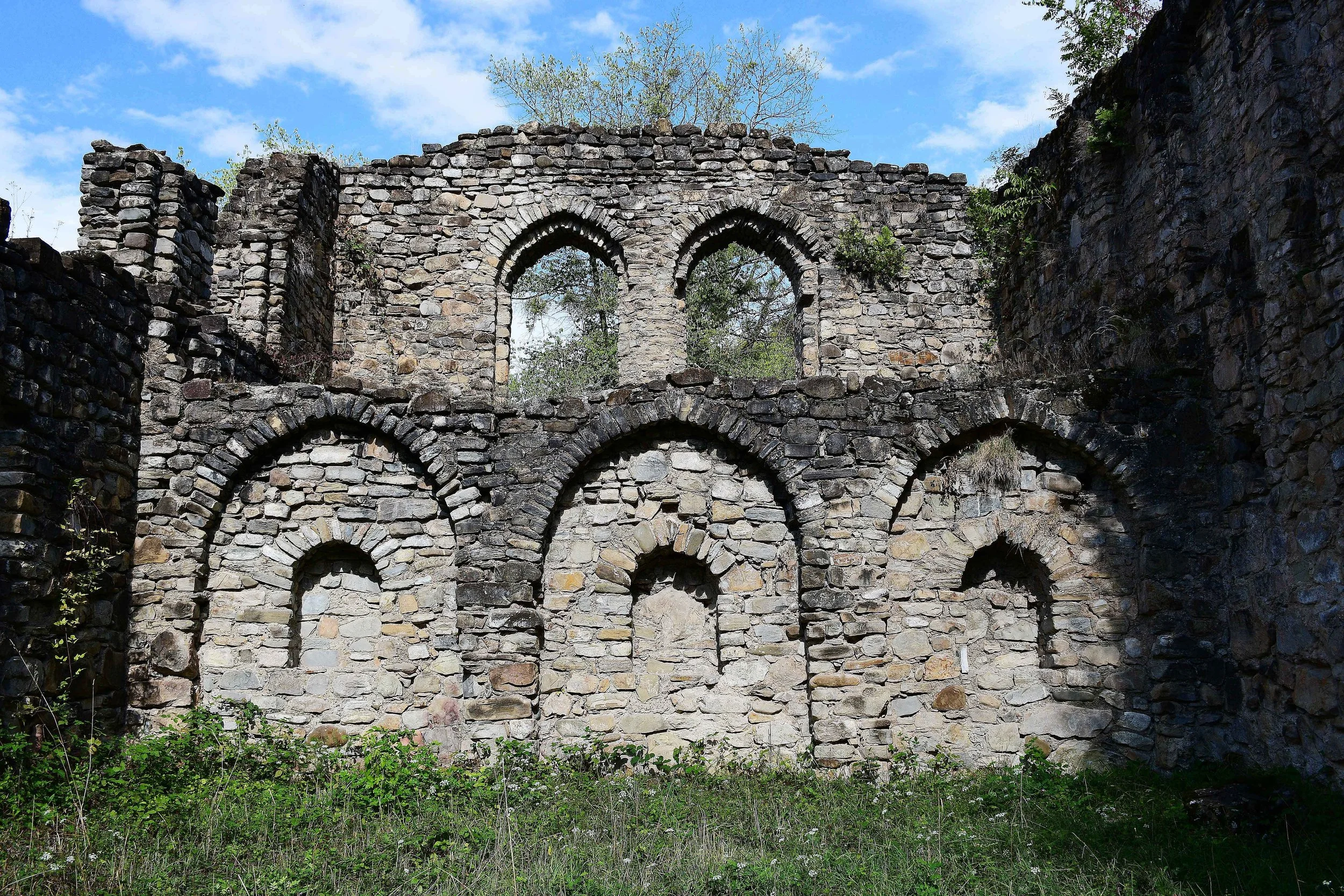
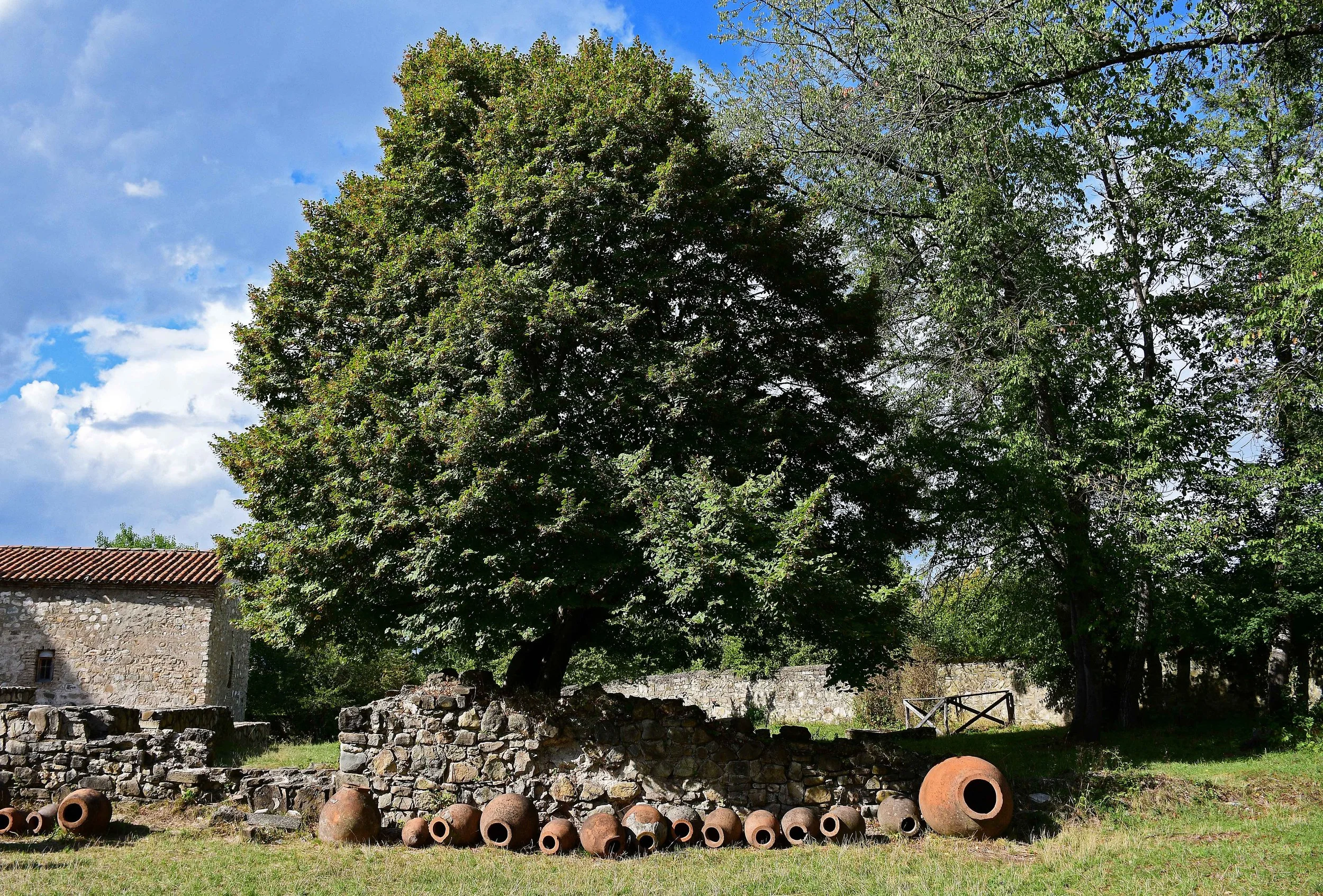
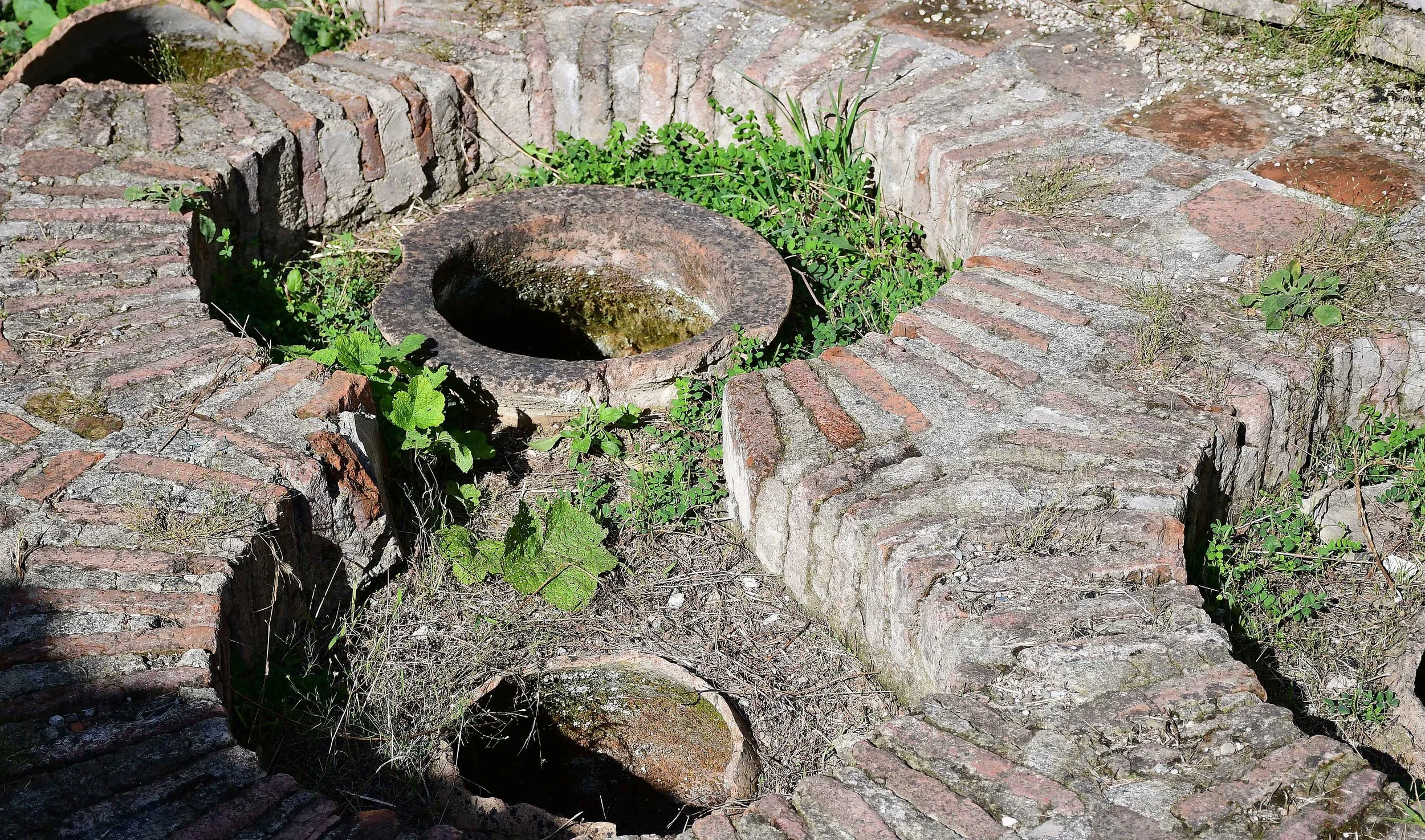
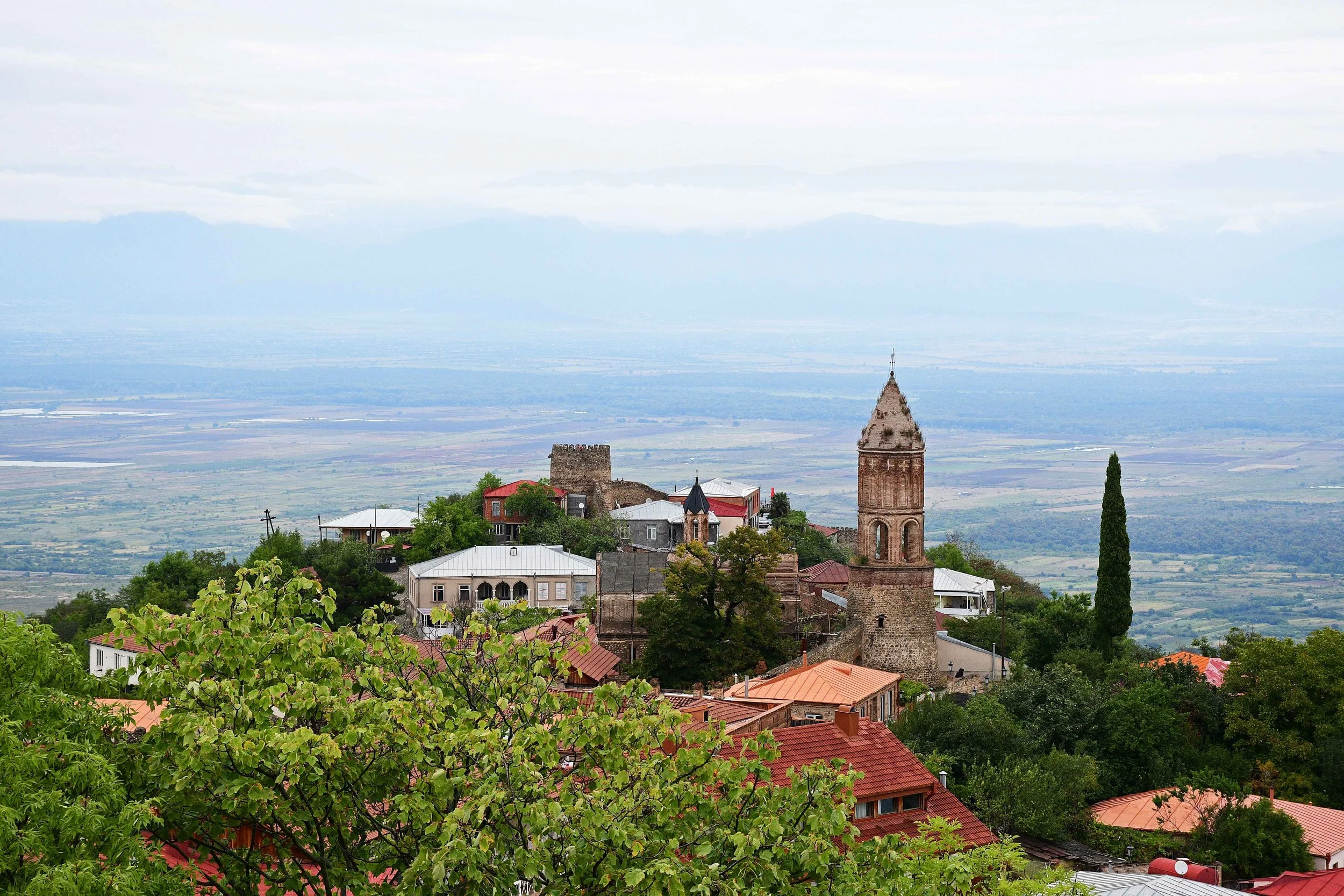
In the afternoon we drove to Sighhaghi, a pretty hilltop town stopping first at Ikalto Monastery which had piles of old qvevri in the gardens, and examples of qvevri holes in the ground. The Ikalto Academy was based here and wine making was among the skills taught.
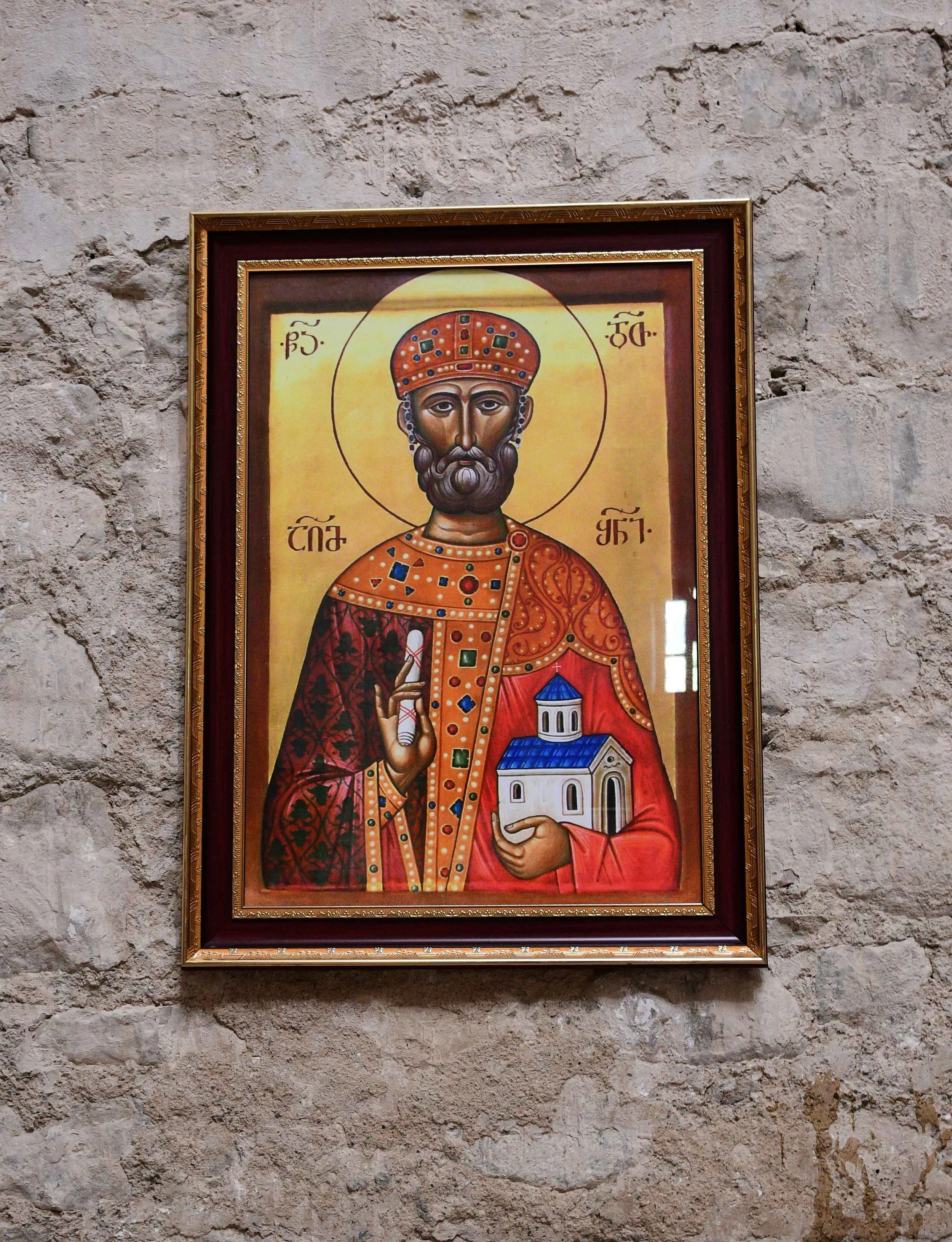
We were staying at the Lost Ridge Hotel, ironically named as it took us a while to find it. I liked it immediately: my room ‘Fig Garden’ was tastefully decorated and I had big windows and a balcony with an incredible view. I could have spent the entire holiday here.
That evening we went for a meal at the famous Pheasant’s Tears restaurant. It was started as a way of showcasing the wine from the Pheasant’s Tears vineyard but has acquired a solid reputation for its food too. When we arrived we went out to meet the old lady who bakes bread in a giant outdoor oven called a tone. The boat-shaped dough is firmly slapped to the hot wall of the oven and it stays there until it’s baked – apparently it’s all about the firmness of the slap.
I enjoyed the meal here and we were joined by John Wurdeman the American owner and another friend of Carla’s, who told us about how he came to live here and get so involved with wine and food. However my overwhelming memory of the evening is of the group of singers called Zedashe who sang traditional polyphonic songs while we were eating. What a beautiful sound it is, and so very moving like so much about Georgia.
The next morning we had an epic breakfast at the Lost Ridge and I sat on a swing looking at the lovely valley below.
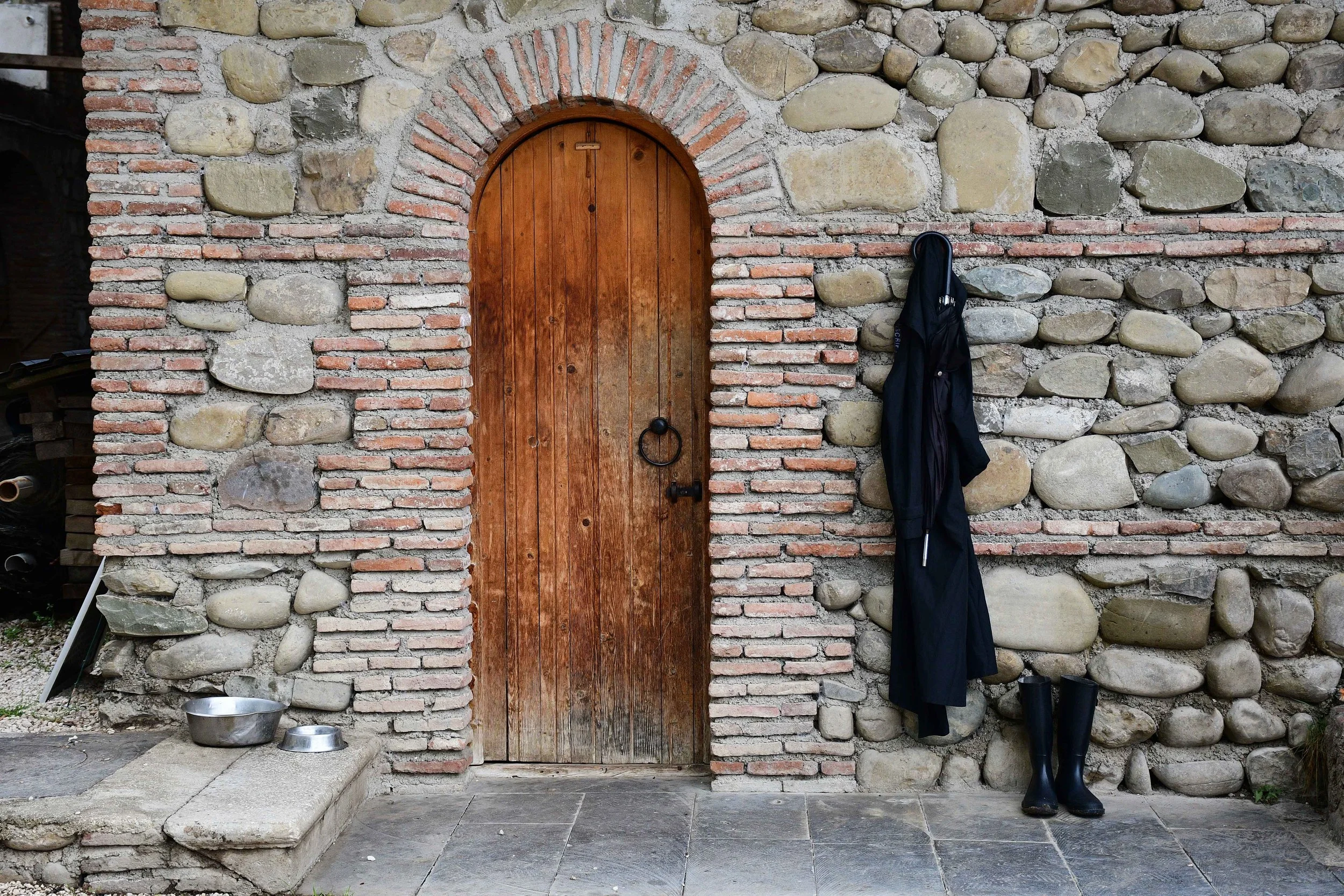
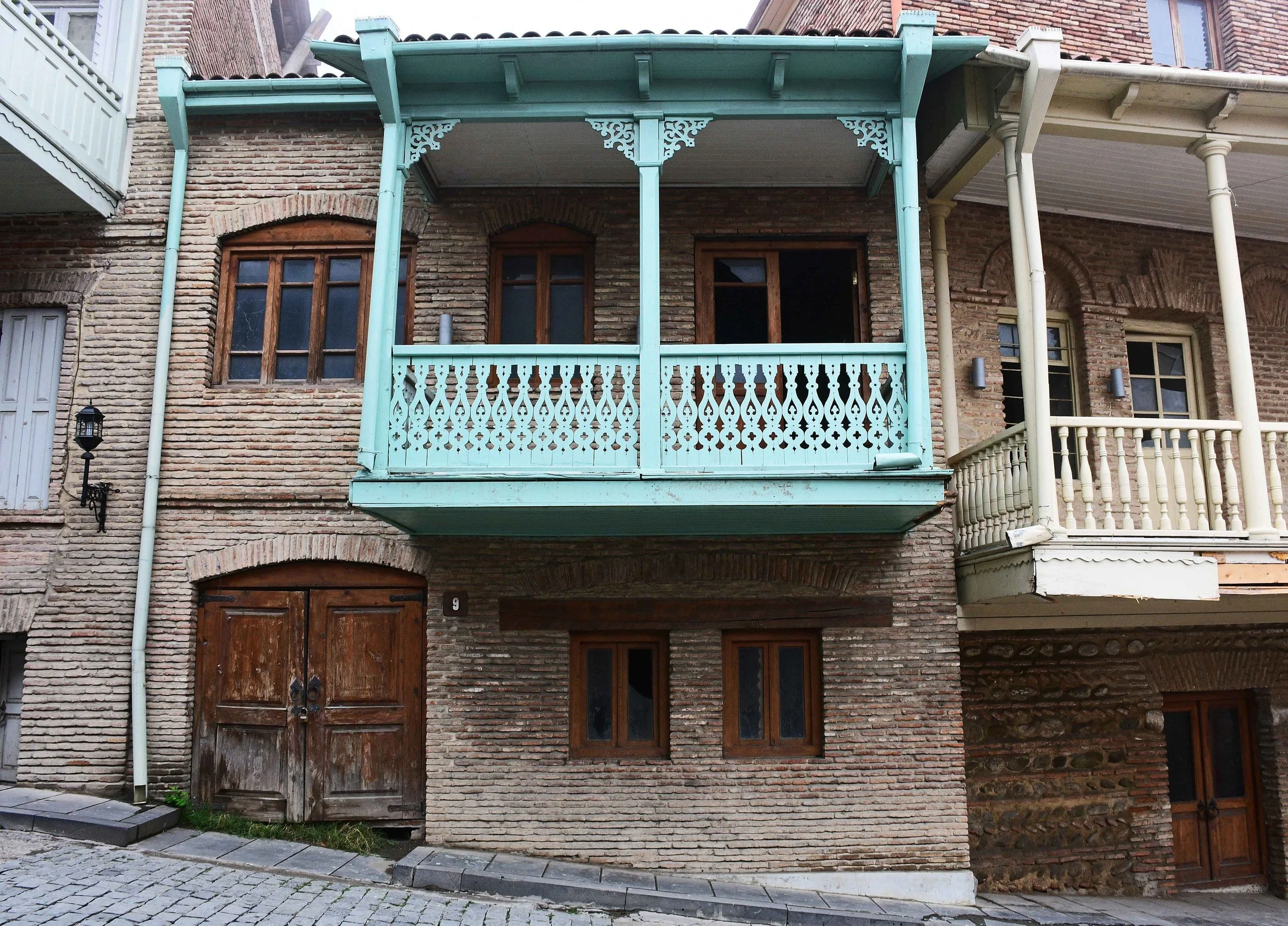
We spent a couple of days in and around Sighnaghi. That evening John’s wife Keto cooked us a ‘supra’, a Georgian mezze-like feast. She is such an interesting woman: as well as being an excellent cook, she collects and sings old Georgian folk songs (she is a member of Zedashe). There were lots of Pheasant’s Tears wines to try, but still too strong for me. With all this good food, wine and music, this small eastern town that looks over to Azerbaijan feels very much like the cultural hub of Georgia.
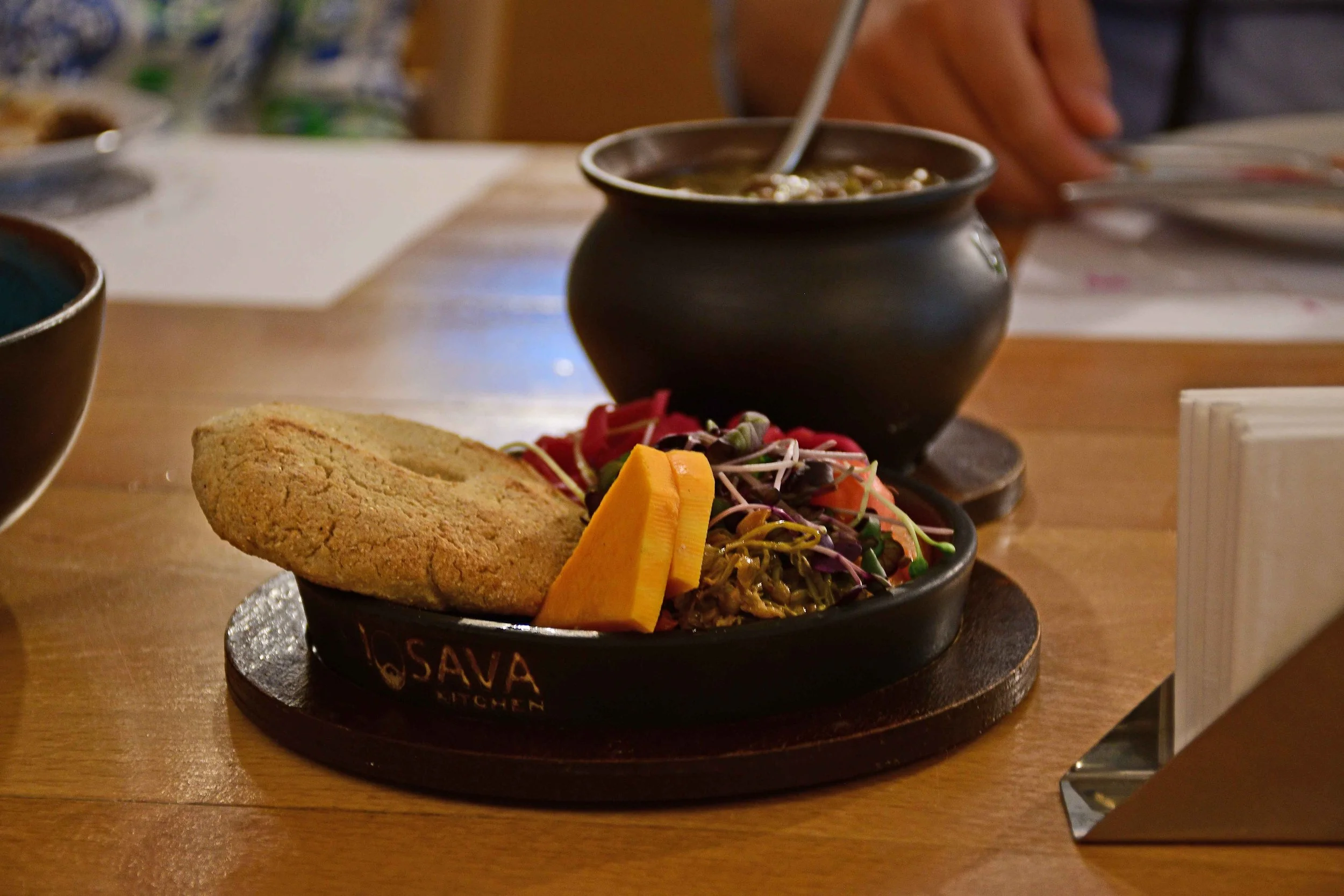
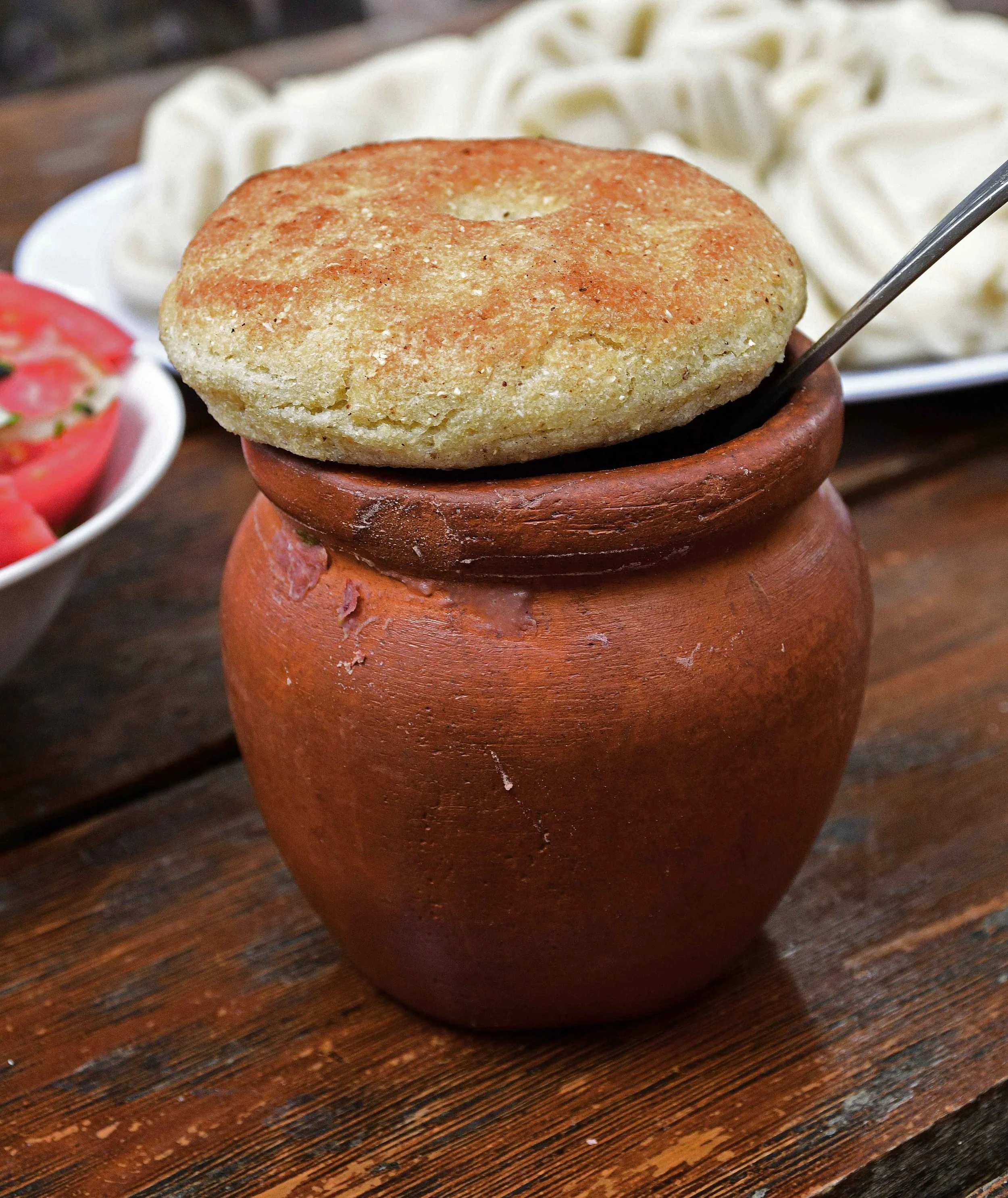
We next drove north towards the Russian border. En route we stopped at Salobie, which looks like a service station, but is well known for its baked beans and attracts hundreds of customers a day. The name Salobie means ‘beanery’ or ‘bean house’. They are served in these little terracotta pots with a round of corn bread on top and were very tasty.
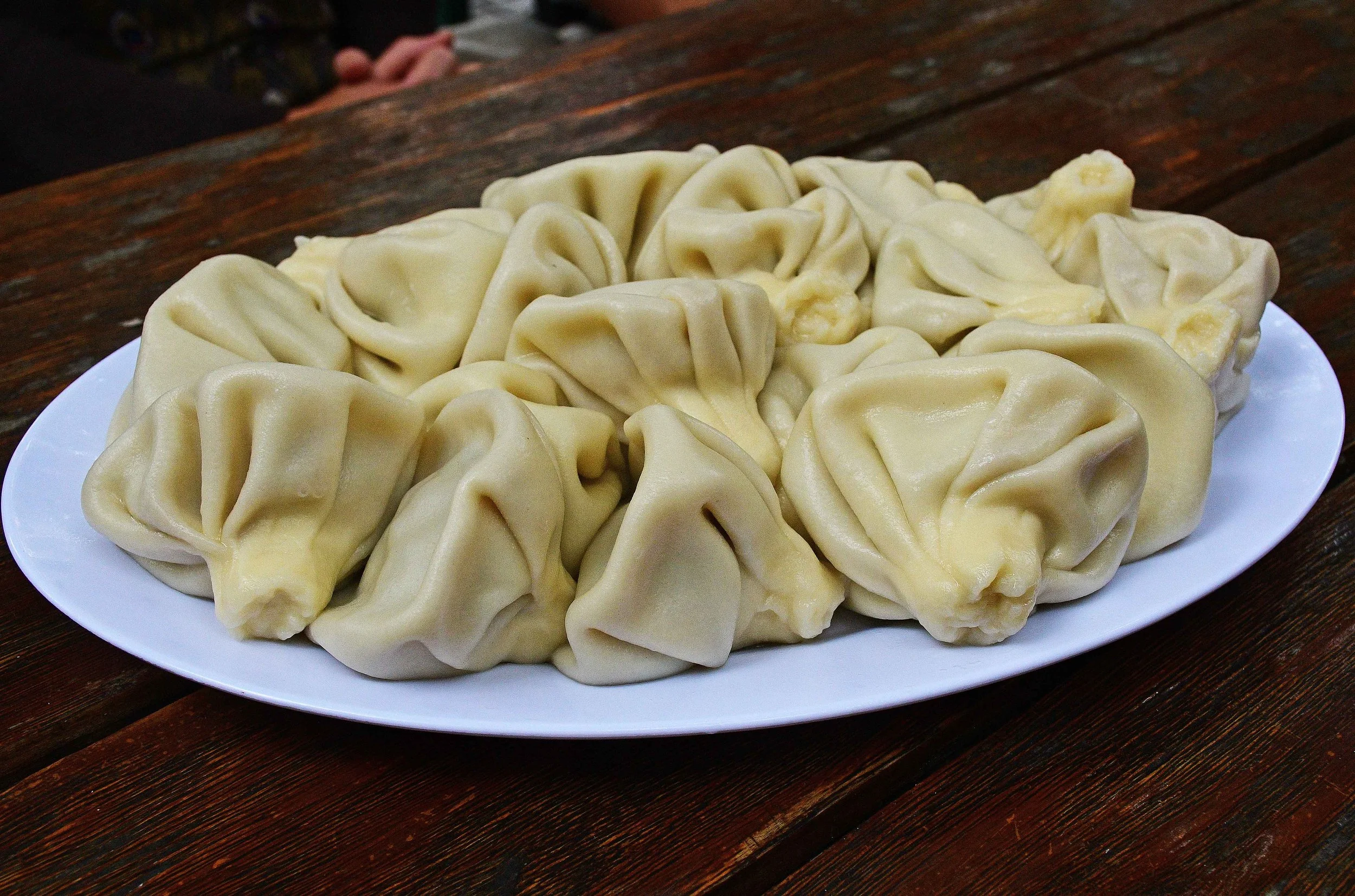
I also tried my first khinkali dumplings. There is an art to eating them. You hold them by the ‘stalk’ and bite off a small opening. As the insides are the temperature of the sun, it’s best to let the steam out before you suck out the juice through the hole. Then you bite into the dumpling itself and abandon the stalk.
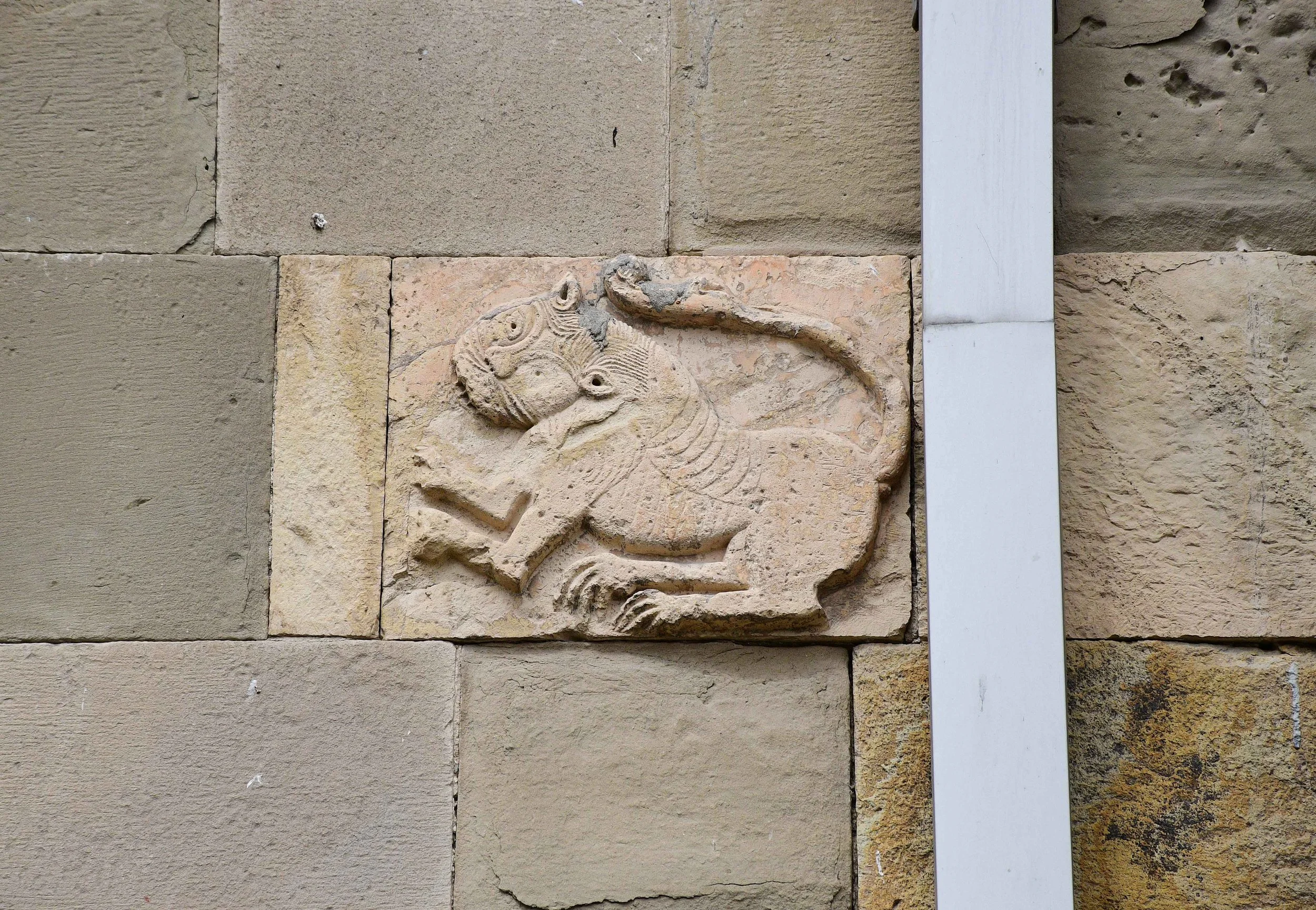
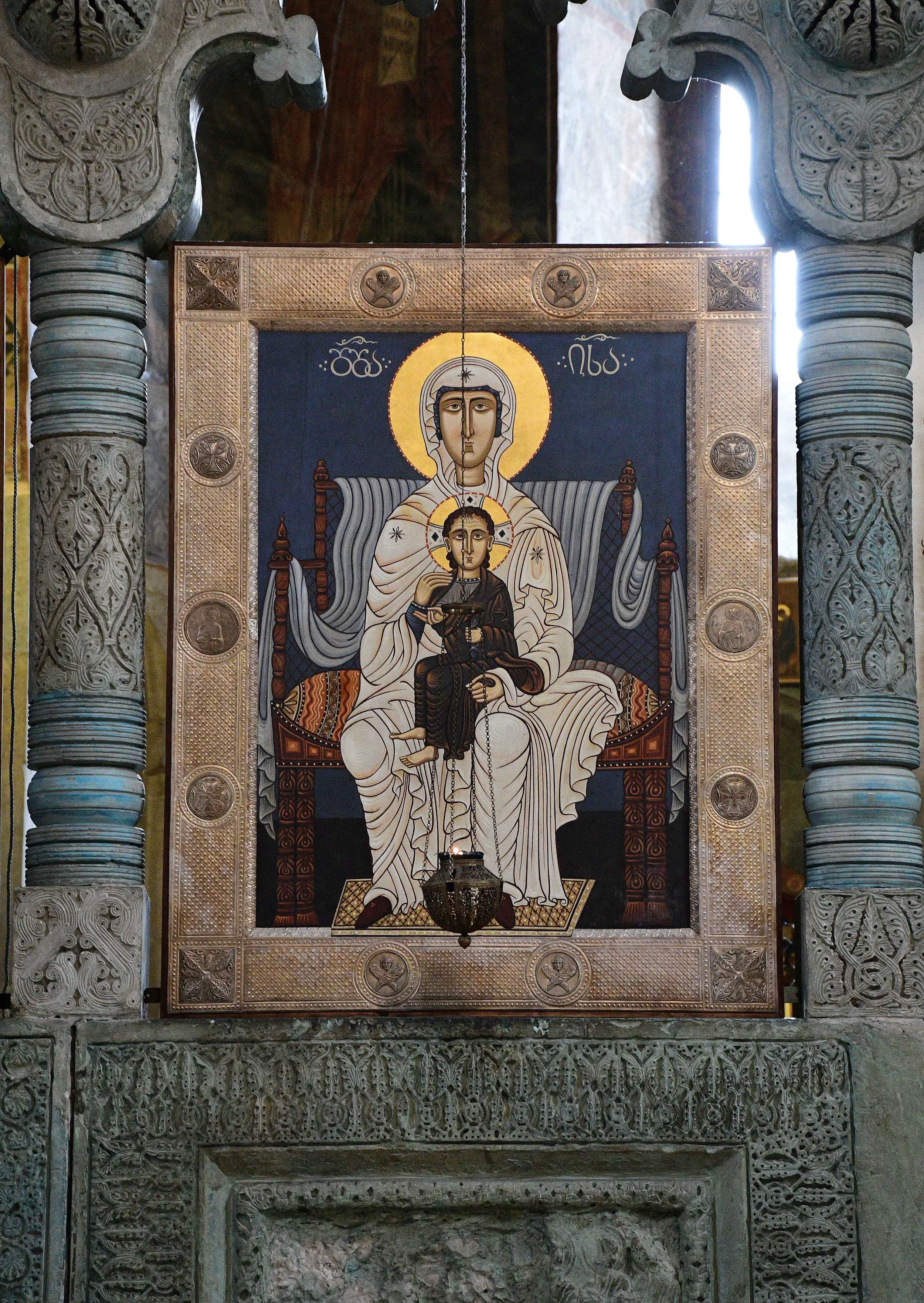
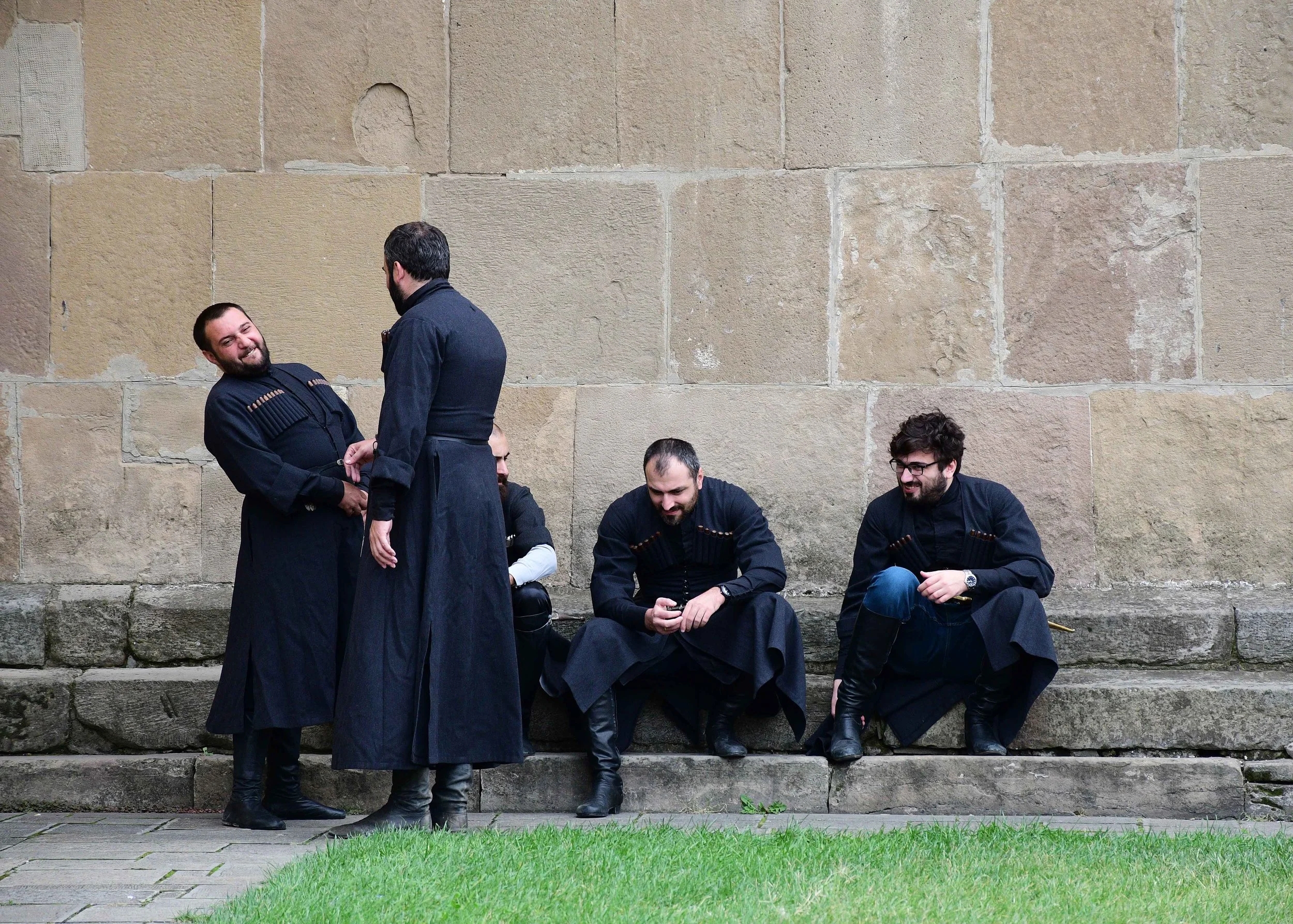
We drove on a bit and stopped at Svetitskhoveli Cathedral in Mtskheta, an old and beautiful orthodox church. It is known for its chant music, the music sung for services. As you expect from Georgia it manages to be beautiful and devastating at the same time. They weren’t singing when I was there but you can see a clip here. I did catch a group of singers relaxing outside.
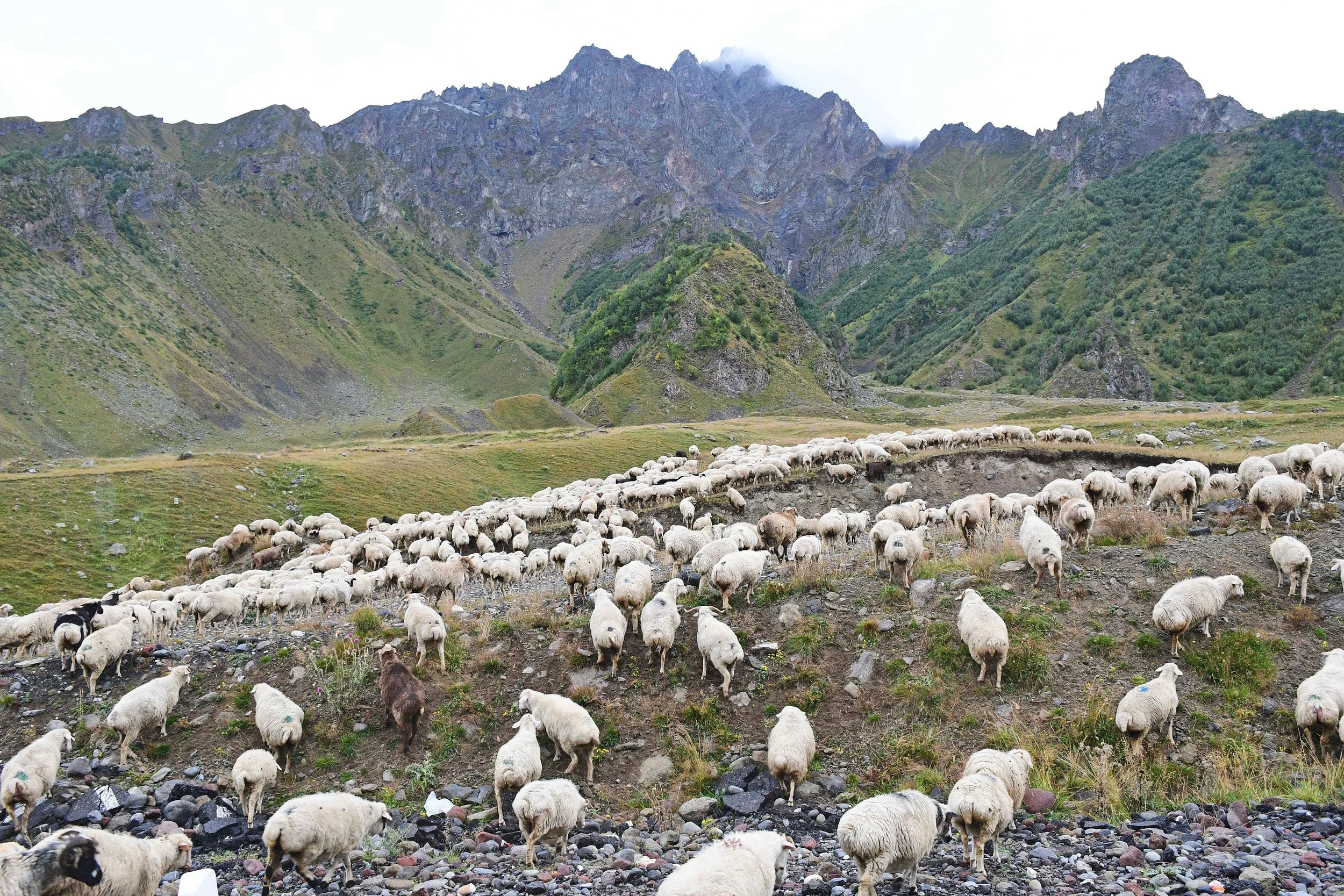
After Mtskheta we joined the military highway, an old route that goes from Tbilisi into Russia and has been used by both invaders and traders. It took us up into the mountains up to Kasbegi where we spent a couple of days. Along the way we were slowed down by what seemed like hundreds of sheep crossing the road. I asked if we could get out to take a photo and was warned that there is quite a well-known farmer around here who gets quite aggressive towards tourists which is fair enough. We also passed lots of bee hives in fields some beautifully painted.
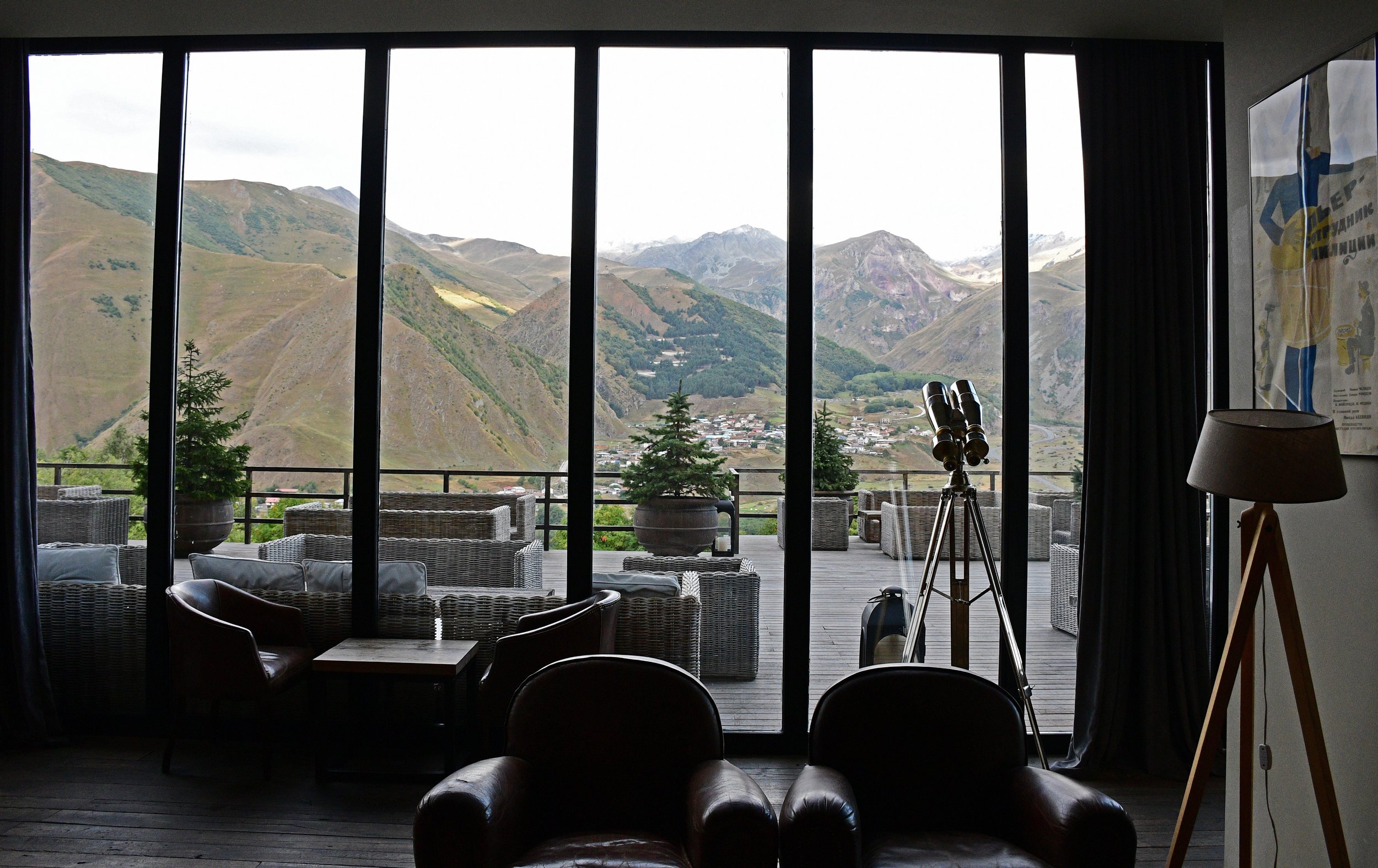
We arrived in the small town of Stepantsminda near Mount Kasbek, one of the highest peaks in the Caucasus mountains. The town is nestled in the middle of the mountains, many of which we could see from the Rooms Hotel where we were staying. The hotel was quite modern and comfortable, but very busy as you would expect. I made use of its swimming pool that opened out onto the views. My room was basic but clean, a bit Ikea in style. Breakfast the next day was delicious porridge and figs.
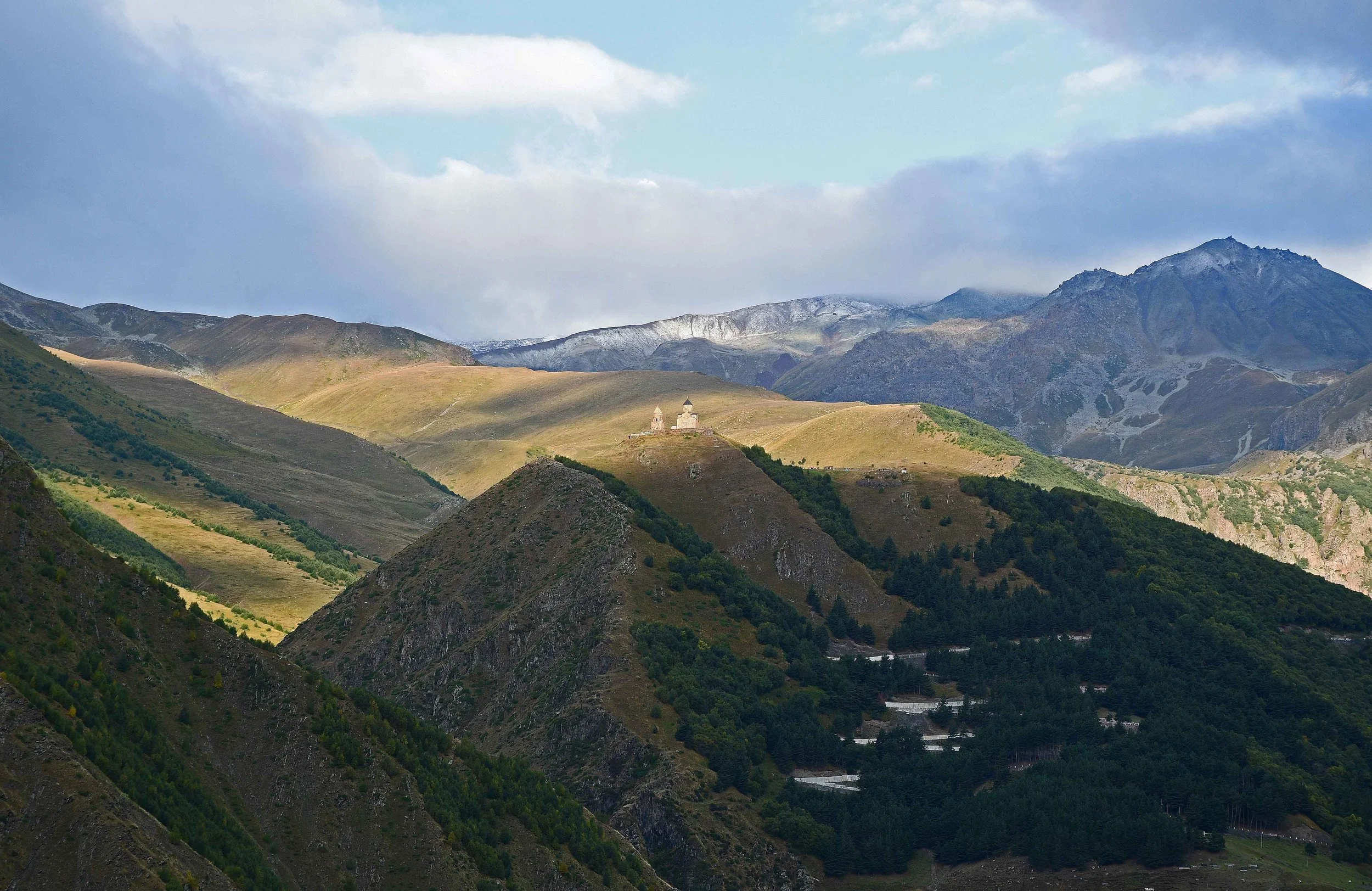
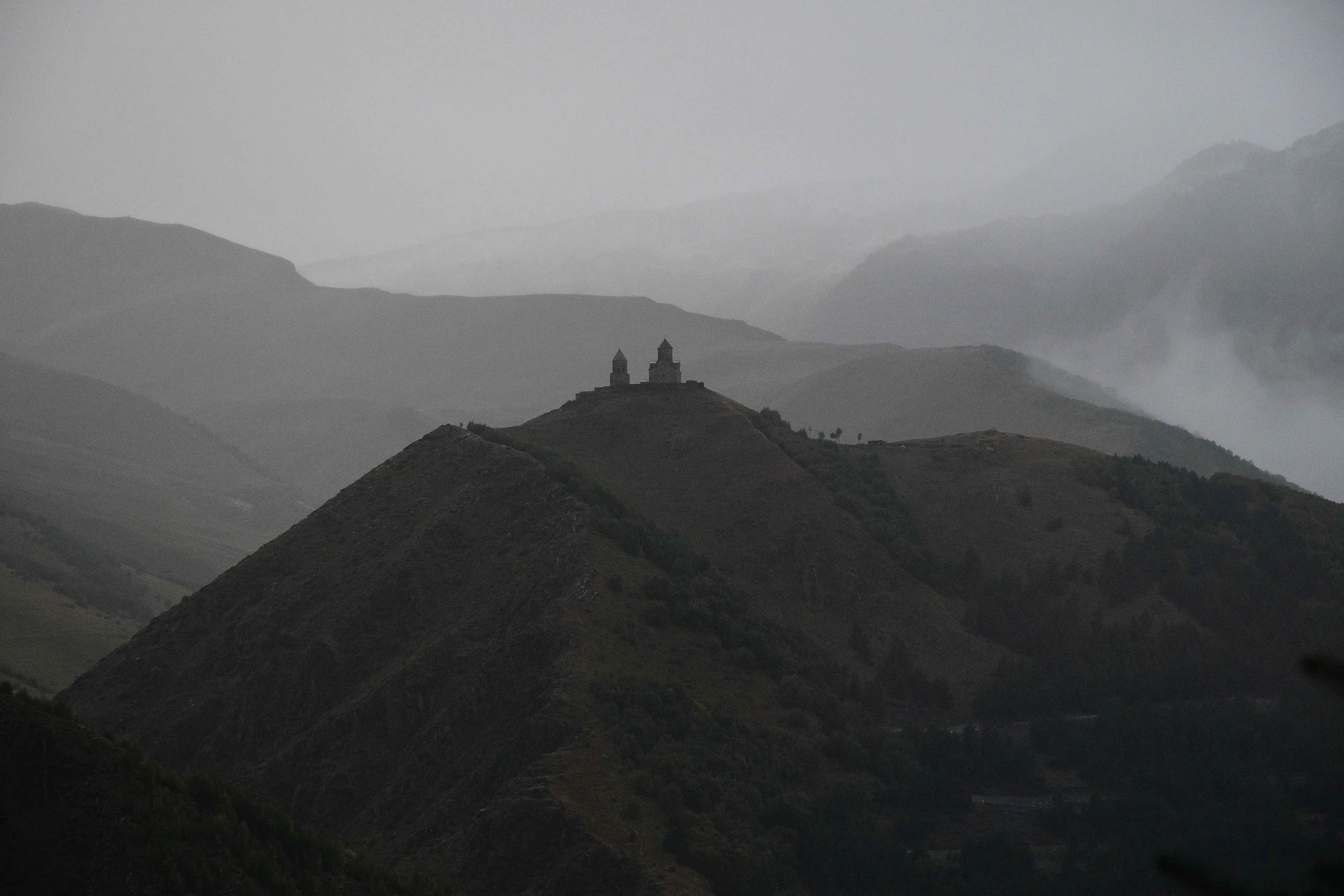
What caught my eye was the Gergeti Trinity Church on the slopes opposite. The next day the plan was to drive there and look around, or walk which I really wanted to do. You can see the zig zag road above, the footpath takes you through the pass on the left and up the slope behind.
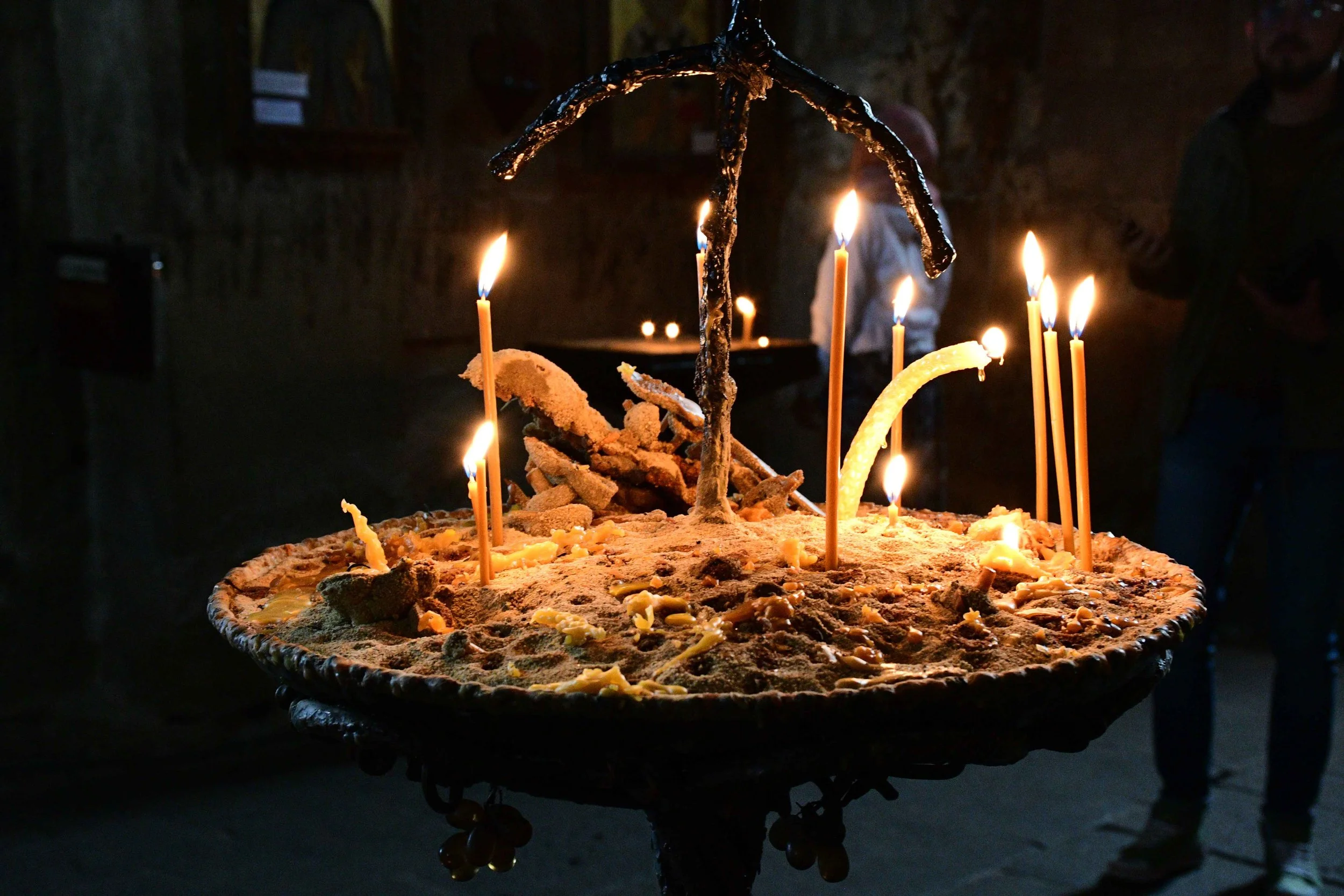
It sounded like a perfect walk apart from the torrential rain and cold winds in sharp contrast to the glorious sunshine when we had arrived the day before. Not put off I walked up anyway, at one point overtaken by a girl in shorts and flip flops, and entered the monastery dripping wet. It had been hard work but I was amazed it had taken little more than an hour. The Church was busy but peaceful and I was sure I wasn’t the first pilgrim who had come in from the elements.
We went for supper at the house of a local woman and ate well as we always seem to here. I also tried my hand at making khinkali, it’s harder than it looks! At one point the people at the table next to me burst into polyphonic song. Is there anyone in this country who doesn’t sing?
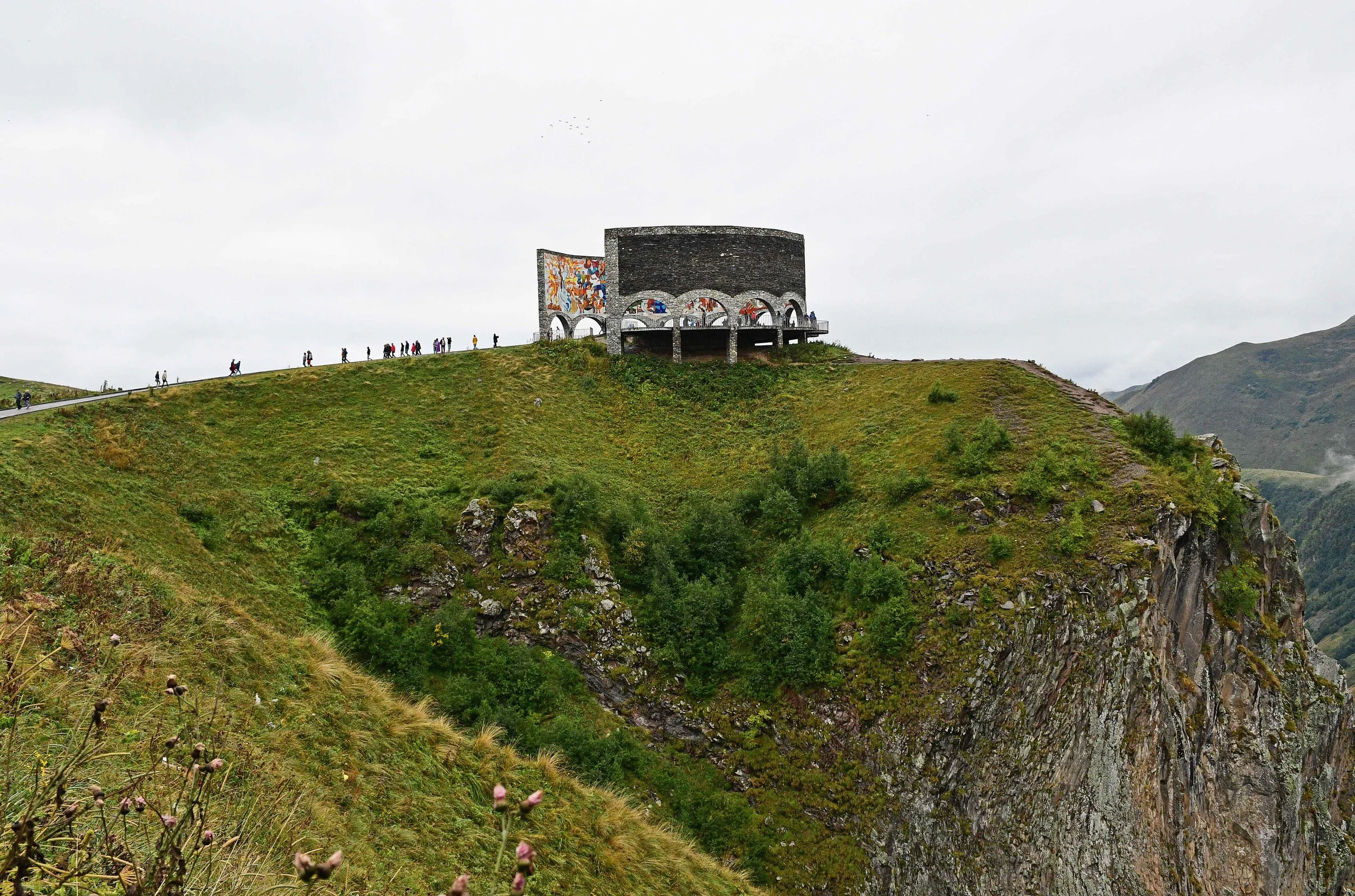
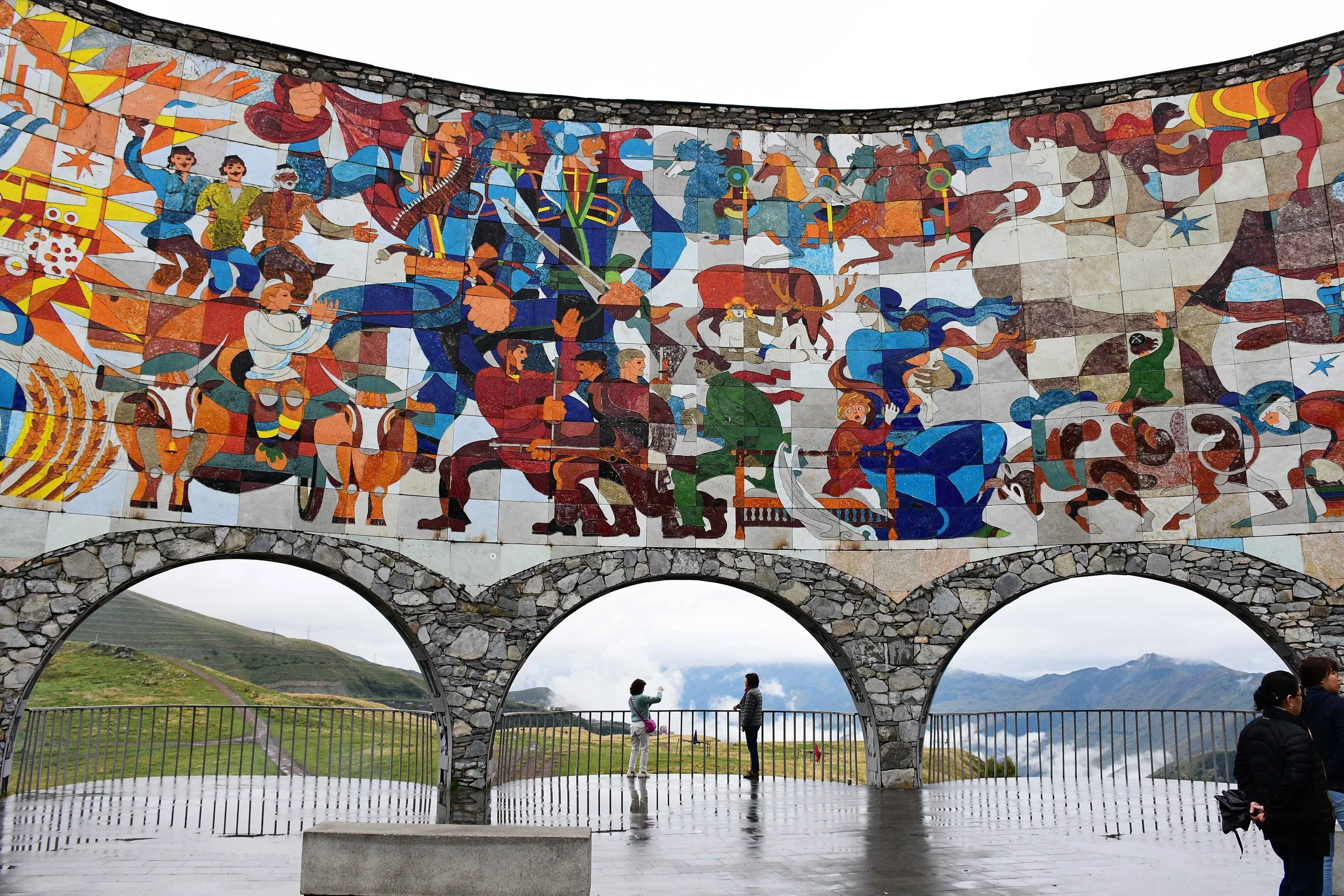
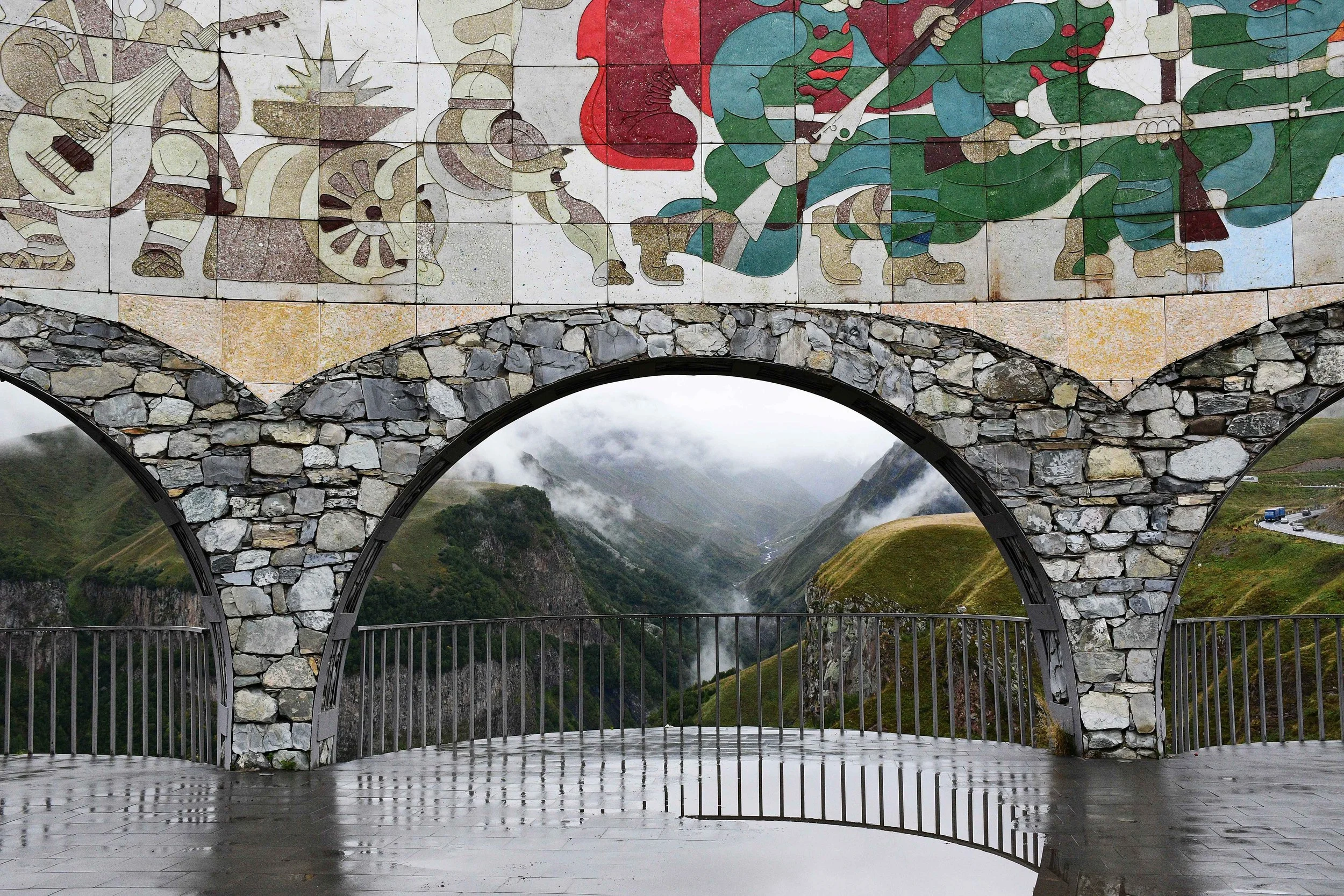
On our way back to Tbilisi the next day we stopped at the peculiar Monument of Friendship built by the Soviets. It’s like a huge amphitheatre covered in what looks like colourful mosaics of people being ‘friends’. The Russians’ encroachment into parts of Georgia make this monument a bit ridiculous but it’s impressive nevertheless.
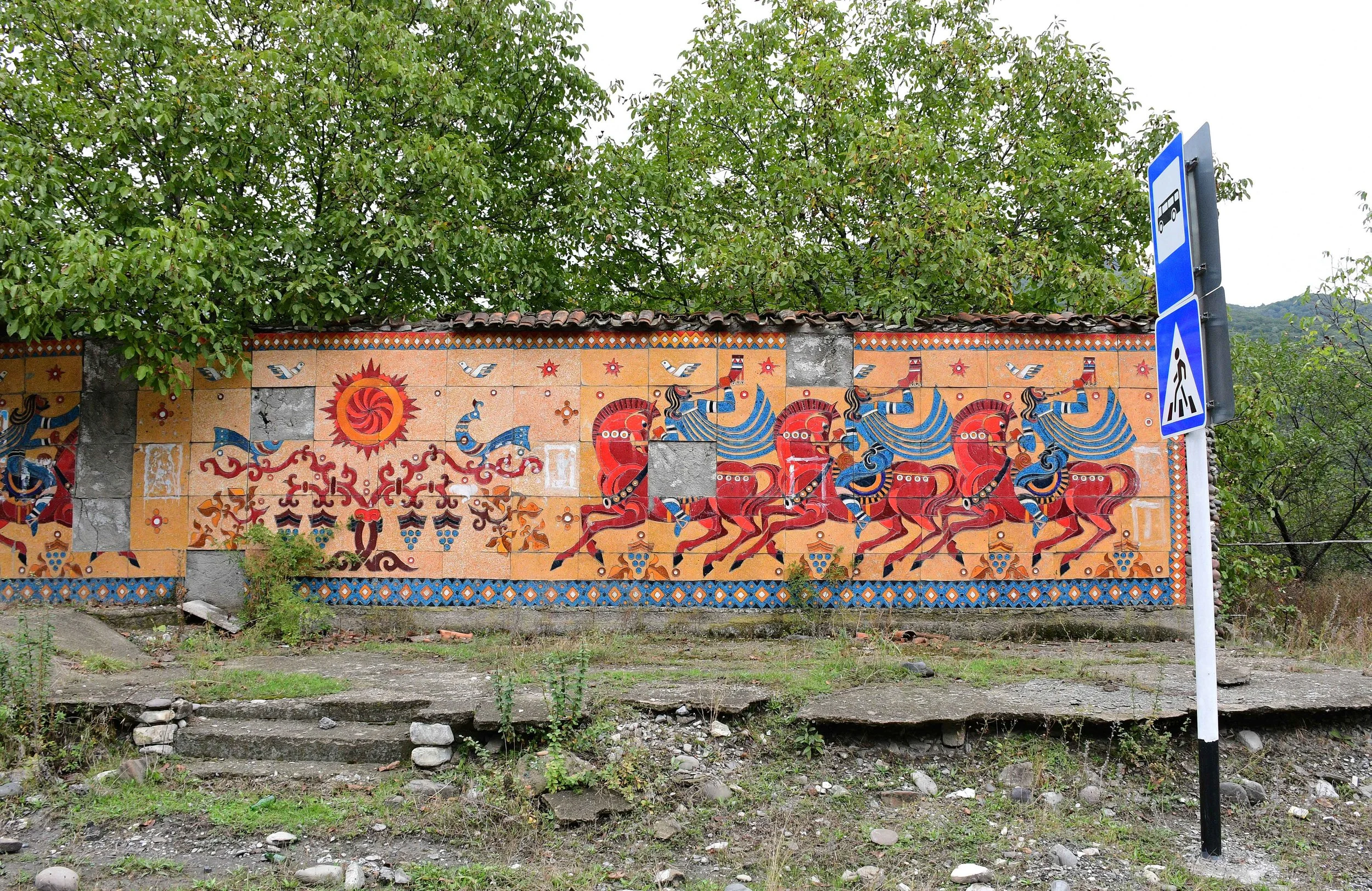
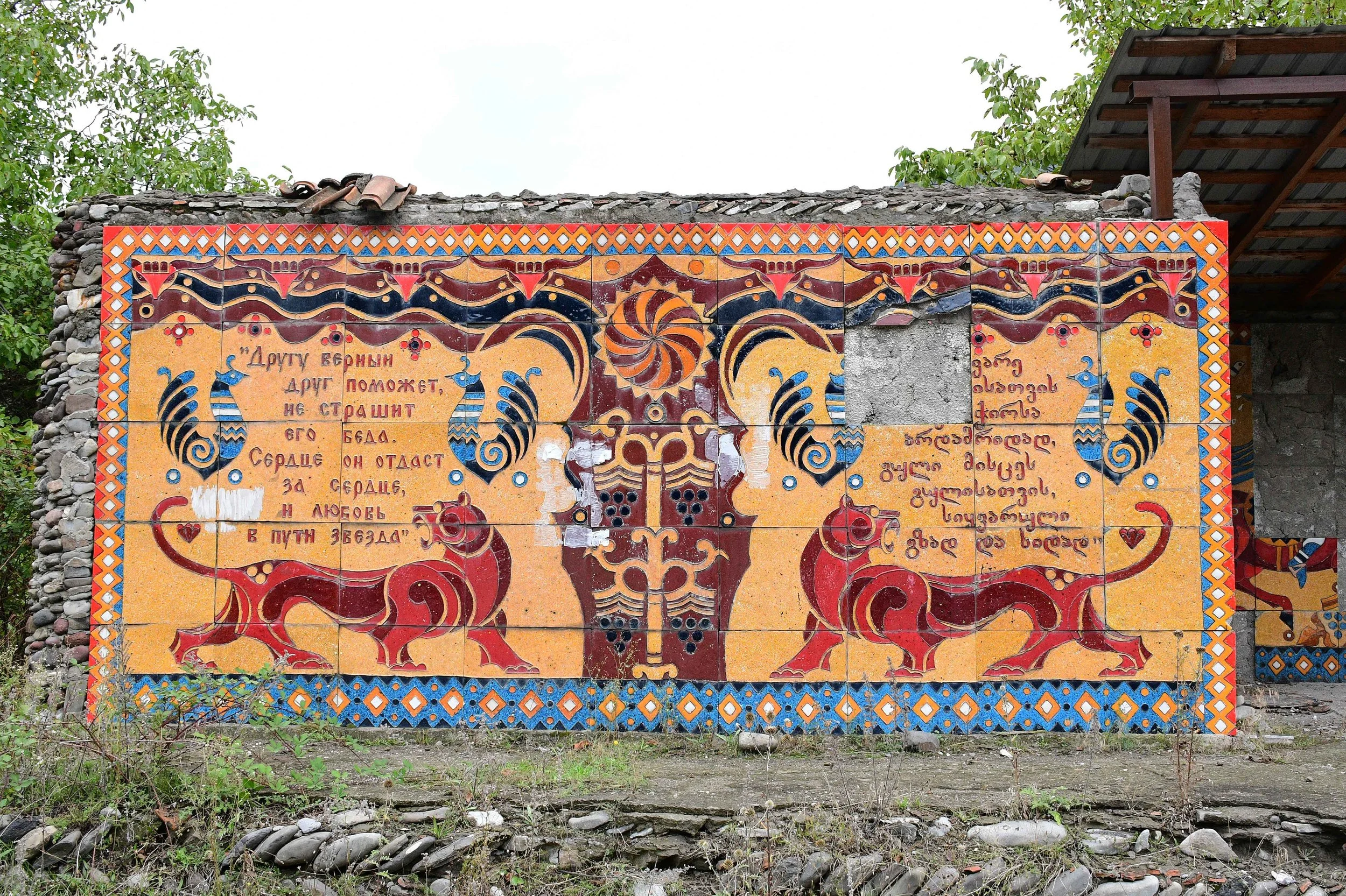
Continuing the theme of soviet art, we later stopped at an old soviet bus stop adorned with lions and mythical creatures. These and other bus stops like it were created in the late twentieth century as propaganda tools for people to look at while they wait for their bus. Now they are neglected and the local people take little interest.
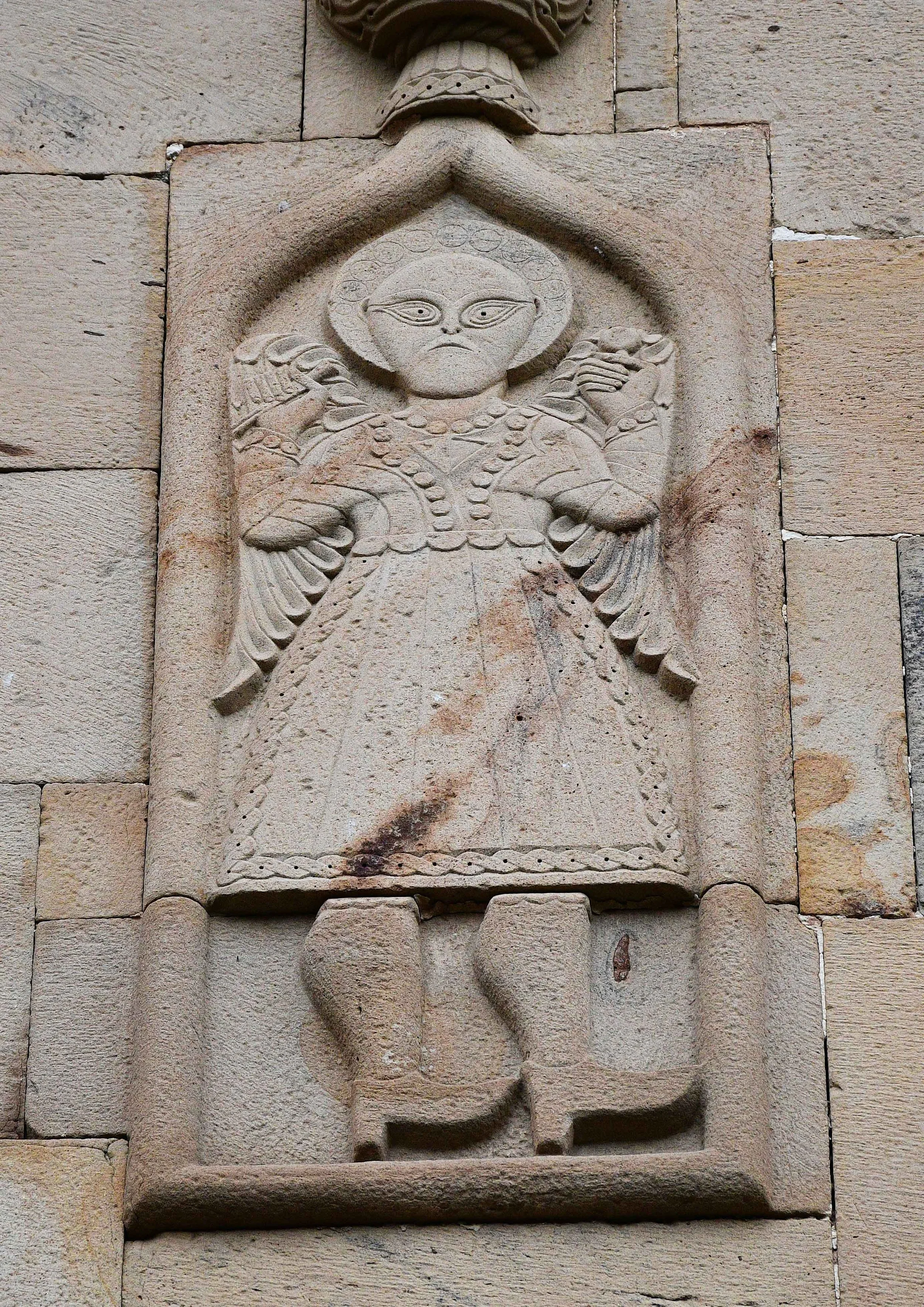
We had a long drive so only managed a brief visit to the Ananuri Castle, not long enough as it’s a huge complex and has a rich history. But it was a chance to stretch our legs and I was particularly impressed by some of the carvings and the inscriptions in the romantic Georgian script.
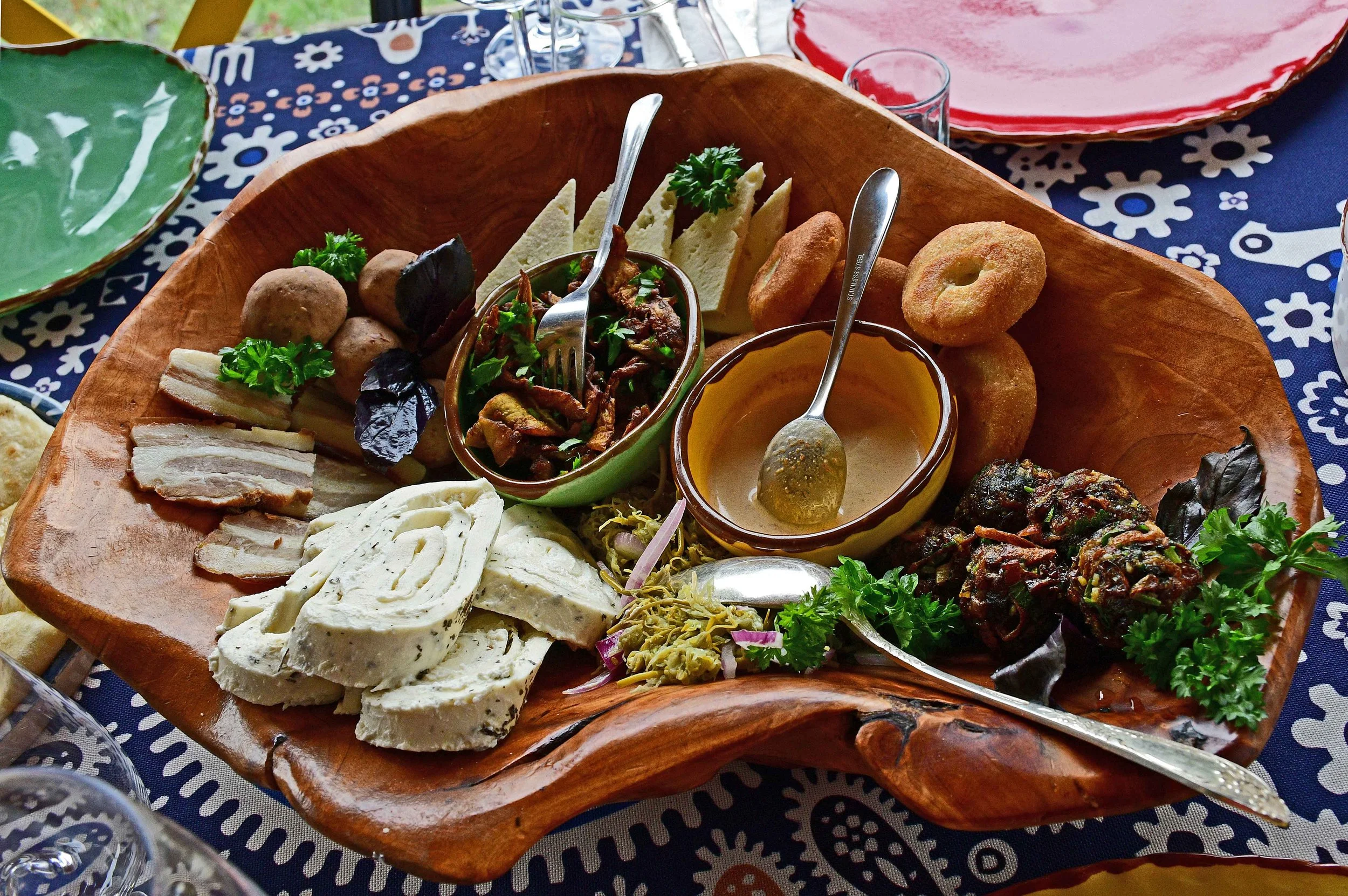
Lunch was at Iago’s winery owned by Iago Bitarishvili, another friend of Carla’s. He was one of the biggest champions of qvevri wine and all his wines (and food) are organic. Carla describes Iago’s wines as ‘easy to drink’ and I have to say I very much enjoyed drinking them. Lunch cooked by his wife, Marina, was delicious too – the best khachapuri bread and creamy cheeses. My only disappointment was that nobody sang!
Back in Tbilisi we had one more night and time for a final meal at the Café Littera, the Writer’s House, run by Tekuna Gachechiladze who is well known for her contemporary take on Georgian food. I didn’t enjoy this meal as much as I wanted to, for me it was not as tasty as Polyphonia. But it was a chance to say ‘thank you’ to Carla for her generosity giving us such a wonderful introduction to Georgian food. I was particularly inspired by how much she had come to love this country and its people, and how moved she was when talking about them. I had found it all very moving too, particularly the frequent unexpected singing.
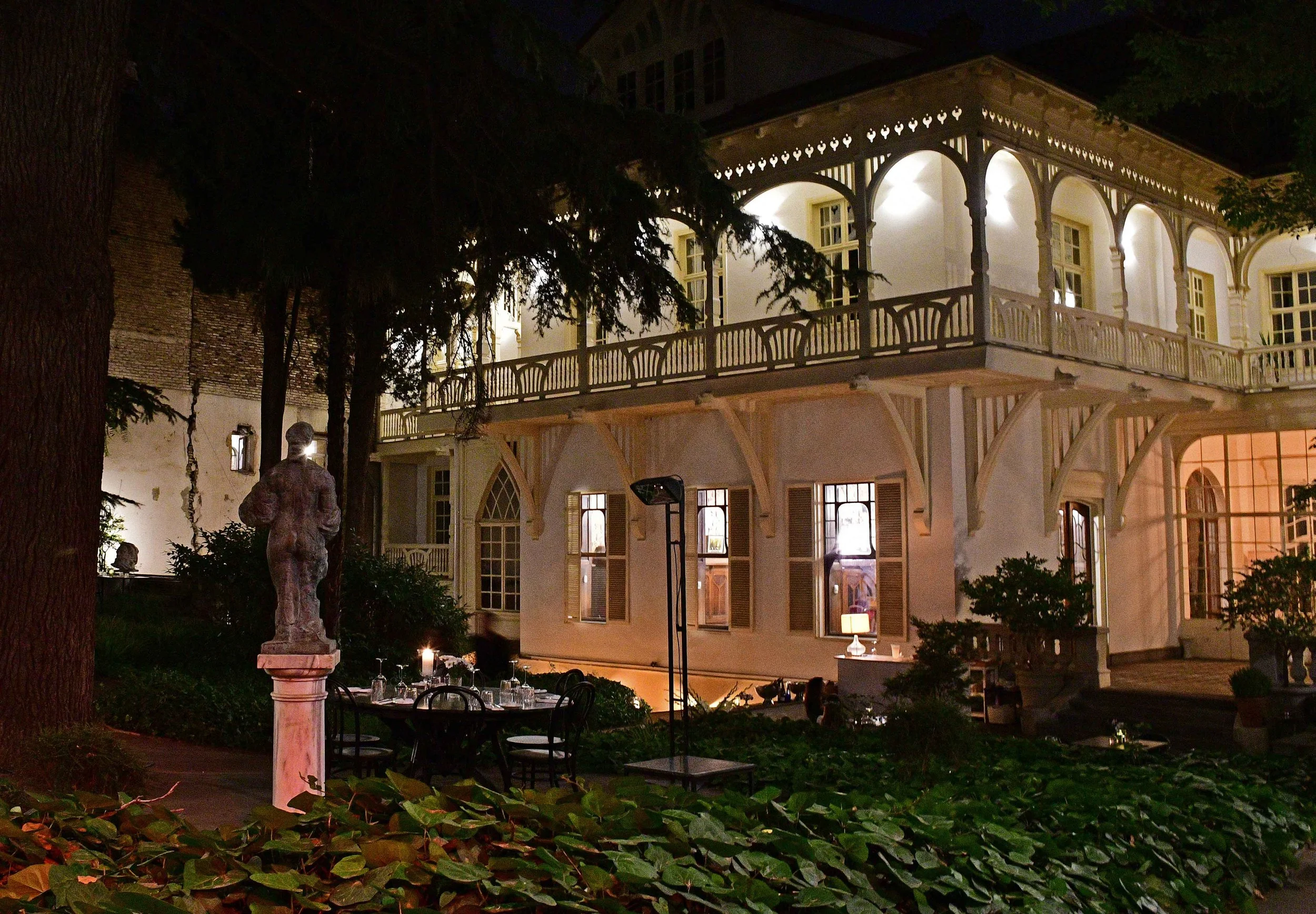
This had been a very special trip with very special people – not just Carla but our small group had been great company. I could have spent more time there.
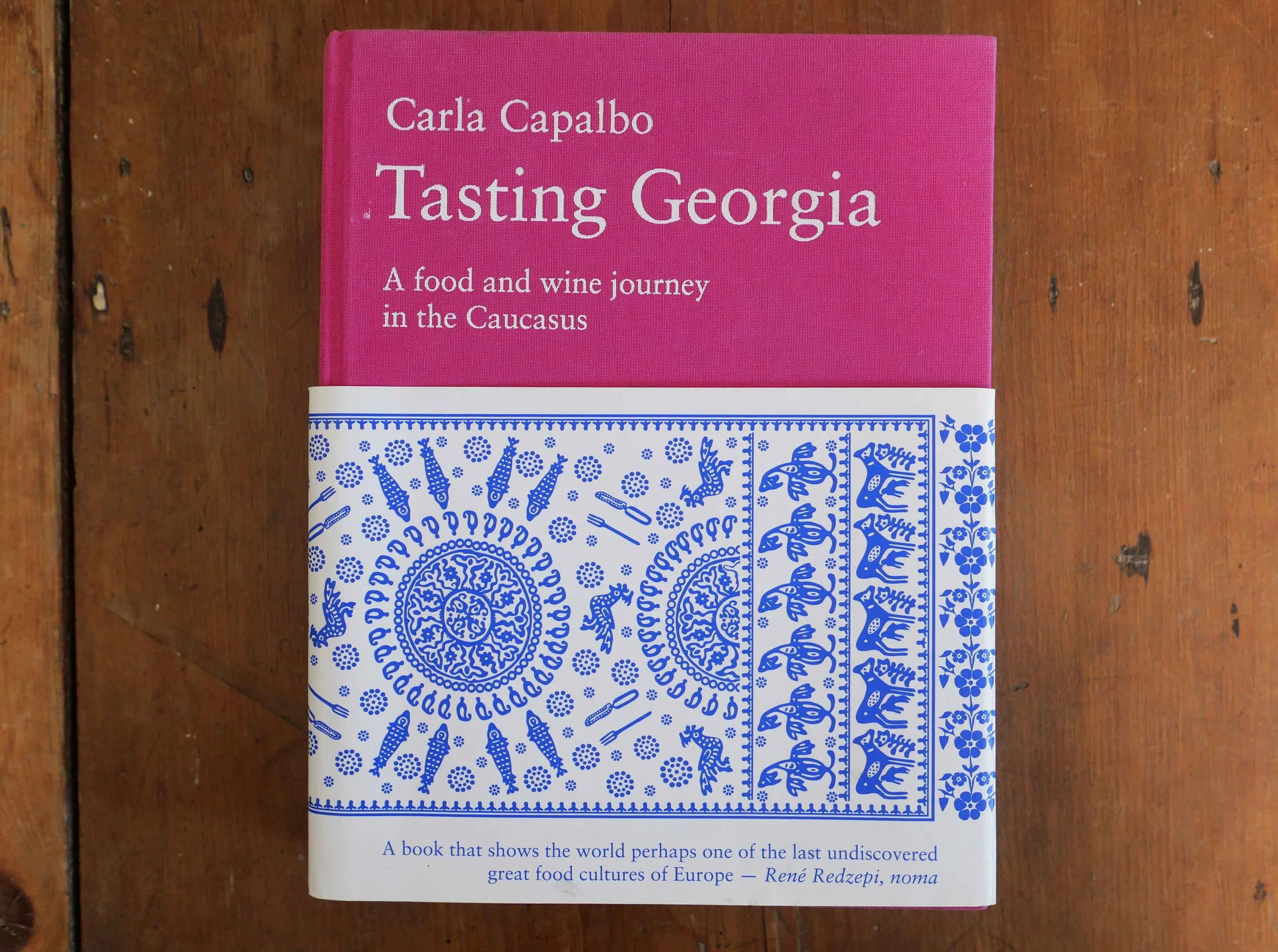
This is Carla’s book which I purchased and read after the trip. I really wish I had bought it before I went as it’s more than just a recipe book, there are stories and histories of the people, their country and their food, and it would have been useful prep. Carla’s website is https://carlacapalbo.com/